
An alcohol assessment is not a test you can pass or fail; it's a vital clinical tool that determines whether a community-based or residential life-saving intervention is required. If you've been feeling overwhelmed by your relationship with drink, seeking an alcohol addiction assessment UK services provide can feel like a daunting hurdle. You might worry about being judged by a GP or feel lost in a sea of medical jargon. However, this process is actually the most reliable bridge between the uncertainty you feel today and the structured, professional care you deserve.
It's completely natural to feel anxious about what a clinical evaluation might reveal, especially when NHS waiting lists for elective care reached 7.22 million in 2026. You need clarity now, not months from now. This guide will help you understand exactly how professional alcohol assessments work in the UK, from the AUDIT screening tool to specialist consultations. You'll discover how to identify your clinical risk level, find a clear roadmap for safe detoxification, and learn how to access private residential recovery options without the wait.
Key Takeaways
- Understand how a formal clinical evaluation distinguishes between hazardous drinking and harmful physical dependence to determine the safest level of intervention.
- Learn about the 10-question AUDIT framework used by UK clinicians to categorise your risk level and guide your personalised recovery journey.
- Navigate the differences between local NHS waiting times and the immediate access provided by a private alcohol addiction assessment UK services can offer.
- Prepare for your professional consultation by knowing what to expect during your medical history and mental health review.
- Discover how a confidential recovery consultation provides a direct route to residential detox and specialist treatment facilities tailored to your specific needs.
What is an Alcohol Addiction Assessment and Why is it Essential?
A professional alcohol addiction assessment UK clinicians provide is a structured, evidence-based evaluation. It isn't an interrogation. Instead, it's a careful review of your consumption patterns, psychological relationship with alcohol, and physical dependence levels. By looking at these factors, specialists can accurately diagnose an Alcohol use disorder. This clinical foundation ensures that your recovery plan is built on facts rather than guesswork. It moves you away from the cycle of trial and error toward a path of proven medical support.
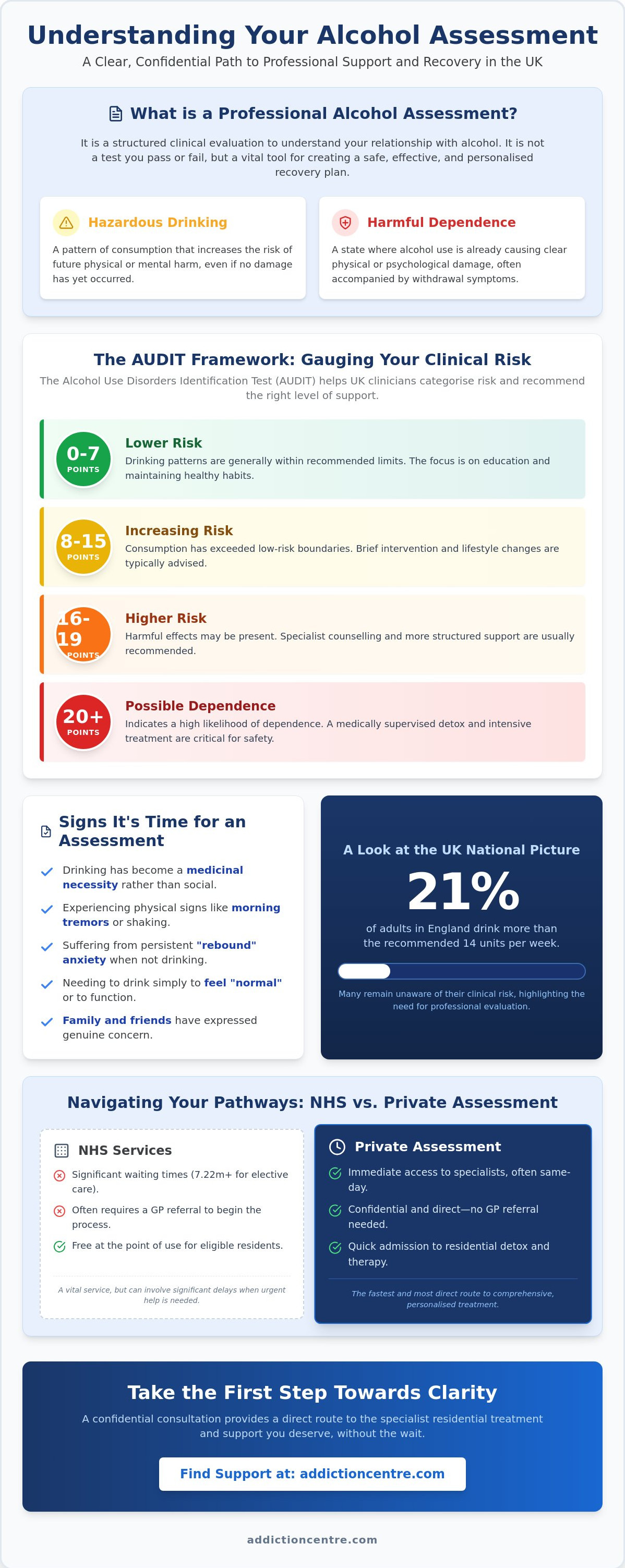
The primary purpose of this process is to distinguish between hazardous drinking and harmful dependence. In the UK, hazardous drinking refers to patterns that increase the risk of future harm, whilst harmful dependence indicates that alcohol is already causing physical or mental damage. Professional consultation is the definitive step. Whilst self-assessment tools provide a helpful starting point, only a clinician can identify high-risk withdrawal scenarios. This foresight is life-saving. It allows for the creation of a medically supervised detox plan that prevents dangerous complications like seizures or delirium tremens before they even begin.
The Psychology of the Assessment Process
Many people feel a sense of shame or stigma regarding their assessment score. It's helpful to view this number as a medical baseline, similar to a blood pressure reading or a cholesterol check. Honesty is your most powerful tool here. If a clinician doesn't have the full picture of your daily intake, they cannot design a safe detoxification strategy. Beyond your own safety, a formal assessment often acts as a bridge of understanding with your family. It validates your struggle as a clinical condition rather than a simple lack of willpower, providing a shared language for your recovery.
Who Should Seek a Professional Assessment in 2026?
You should consider a professional evaluation if your drinking behaviour has shifted from a social activity to a medicinal necessity. Data from 2024 shows that 21% of adults in England drink more than the recommended 14 units per week, yet many remain unaware of their clinical risk. If you find yourself checking for physical red flags like morning tremors, persistent "rebound" anxiety, or a need to drink to feel normal, it's time to speak with an expert. Often, family concerns outweigh our own perceptions. Their objective observations, combined with clinical tools, provide the clarity needed to move from uncertainty toward a structured recovery environment.
The AUDIT Tool and Clinical Diagnostic Criteria in the UK
The Alcohol Use Disorders Identification Test, commonly known as AUDIT, is the primary tool used during an alcohol addiction assessment UK specialists conduct. Developed by the World Health Organisation, this 10-question framework allows clinicians to look beyond just how much you drink. It focuses on three specific pillars: your consumption patterns, signs of physical or psychological dependence, and the presence of alcohol-related problems in your daily life. By following the NICE guidelines on alcohol-use disorders, UK professionals use these results to determine whether your situation requires a community-based approach or a more intensive residential intervention.
High scores on the AUDIT scale are not a judgement of character. They are clinical indicators that help practitioners identify when a medically supervised detox is necessary for your safety. If you're unsure where your current habits sit, a confidential recovery consultation can help you interpret these findings in the context of your personal health history and physical wellbeing.
Understanding Your AUDIT Score
UK healthcare providers categorise risk into four distinct levels based on your total score. Each level suggests a different path forward for your health.
- 0 to 7 (Lower risk): Your drinking is generally within recommended limits. Education and occasional monitoring are typically advised to maintain this status.
- 8 to 15 (Increasing risk): This score suggests you've exceeded low-risk boundaries. Brief interventions and lifestyle adjustments can often prevent further escalation.
- 16 to 19 (Higher risk): You may be experiencing harmful effects. Specialist counselling or structured outpatient support is usually recommended at this stage.
- 20 or more (Possible dependence): This score indicates a high likelihood of physical dependence. A residential assessment and medically supervised detox are strongly advised to manage withdrawal safely.
Beyond the Score: The DSM-5 Criteria
Whilst the AUDIT tool is excellent for initial screening, many private UK clinics also utilise the Diagnostic and Statistical Manual of Mental Disorders (DSM-5) to provide a deeper diagnosis. This framework looks for 11 specific symptoms within a 12-month period. These include factors such as a persistent desire to cut down but failing to do so, spending significant time recovering from alcohol use, and continuing to drink even when it causes clear physical or psychological harm.
Your diagnosis is then classified based on how many criteria you meet. Meeting two to three symptoms indicates a mild disorder, four to five suggest a moderate condition, and six or more result in a severe classification. These distinctions are vital because they dictate the length and intensity of your treatment. A severe classification often necessitates a longer stay in a residential facility to ensure all aspects of your physical and mental health are supported during the initial stages of sobriety.
NHS vs Private Assessments: Navigating the UK Treatment Landscape
When you decide to seek help, the route you choose for your alcohol addiction assessment UK wide will significantly impact the speed and style of your care. The standard NHS pathway typically begins with a consultation at your local GP surgery. From there, you are referred to community drug and alcohol teams for further evaluation. Whilst this service is free at the point of use, it is governed by NICE clinical guidelines for alcohol addiction assessment, which often involves a multi-stage process before any treatment begins. In contrast, the private referral pathway focuses on immediate expert consultation and same-day clinic matching. This route is designed for those who need a swift, confidential intervention without the administrative delays of the public sector.
Confidentiality is a major factor for many individuals. Private assessments often remain separate from your general medical record, providing a layer of discretion that many professionals find essential. Additionally, whilst a GP check-up might be brief due to time constraints, a private evaluation is typically multi-disciplinary. It involves a comprehensive review by specialists who focus solely on addiction. This ensures that co-occurring mental health issues or specific physical risks are identified before you start a recovery programme.
The Impact of Waiting Times on Recovery
The window of willingness is often short. When a person is ready to change, any delay can feel like an insurmountable barrier. With the overall NHS waiting list for elective care standing at 7.22 million in April 2026, the pressure on community services is immense. The median waiting time to start treatment was 11.9 weeks during this period. Waiting months for an initial appointment increases the risk of relapse or, more dangerously, unsupervised "cold turkey" attempts. A private referral service acts as a vital bridge to immediate safety. It ensures your motivation for recovery is met with an active treatment plan whilst your resolve is strongest.
Choosing the Right Environment for Your Assessment
Environment matters during the diagnostic process. Community-based assessments often take place in busy public clinics which can feel impersonal or exposing. For many, a residential-based assessment in a private, supportive environment allows for a deeper level of honesty. It removes the stress of travel and the fear of being recognised in a clinical public setting. By using a specialist directory, you can bypass the administrative hurdles of the public system. This allows you to find a facility that aligns with your personal preferences and specific clinical needs immediately.
Preparing for Your Consultation: What to Expect and How to Be Honest
The first professional alcohol addiction assessment UK specialists provide is often the moment a person feels truly heard for the first time. It's a collaborative dialogue designed to map out your unique needs. During this consultation, you'll walk through your medical history, current consumption levels, and your mental wellbeing. Assessors aren't there to judge your past; they're there to secure your future. They'll ask about your physical health and any co-occurring conditions, such as anxiety or depression. Disclosing these "dual diagnosis" factors is vital. In 2026, clinical guidelines increasingly emphasise integrated care, ensuring that your mental health is supported alongside your physical recovery.
You might find it helpful to involve a trusted family member in this process. Whilst your perspective is the most important, a loved one can often provide a holistic view of how alcohol has affected your daily life and relationships. This shared honesty helps the clinician build a more robust treatment plan. If you're ready to speak with a professional, you can book a recovery consultation today to begin your journey toward a safer environment.
A Checklist for Your First Consultation
Preparation can significantly reduce the anxiety of the first meeting. Try to have the following information ready:
- Weekly Units: Keep a realistic record of your consumption over the last seven days. Don't worry about the total; accuracy is what matters for your safety.
- Previous Attempts: Note down any times you've tried to stop drinking and the specific symptoms you felt when you did.
- Health History: List your current medications and any existing conditions, such as liver issues or high blood pressure.
Addressing the Fear of Withdrawal
One of the most significant barriers to seeking help is the fear of what happens when the drinking stops. Your assessment is the tool that determines your need for a medically managed detox. Being completely transparent about "morning shakes," heavy sweating, or past experiences with hallucinations is life-saving information. These aren't signs of failure; they're clinical indicators of physical dependence. Your assessor uses this data to provide immediate reassurance and a structured safety plan, ensuring that you never have to face the risks of withdrawal alone or unsupported.
Finding Your Path: How Addiction Centre Simplifies the Referral Journey
The transition from recognising a problem to entering a treatment facility is often where the most stress occurs. Addiction Centre acts as a dedicated referral bridge, providing the clinical authority of an expert advisor with the empathy of a dedicated counsellor. By facilitating a professional alcohol addiction assessment UK residents can access immediately, we remove the administrative hurdles that often stall recovery in the public sector. Our role is to guide you through the complexities of the UK treatment landscape, ensuring you don't have to navigate this life-changing decision alone.
Our confidential consultations are designed to translate your assessment results into a concrete action plan. We provide access to a vast network of recognised UK rehabilitation clinics and mental health providers, matching you with the environment best suited to your clinical risk level. Whilst the public system may leave you waiting for weeks, our private referral pathway can often facilitate admission to a specialist facility in as little as 24 hours. This speed is essential for maintaining the momentum of your initial decision to seek help.
Personalised Recommendations for Every Journey
Every recovery path is unique. We don't believe in a one-size-fits-all approach. Instead, we match your specific assessment findings with the specialisms of top-tier UK clinics. This includes considering practical factors like your preferred location and budget, as well as the therapeutic models that resonate with you, such as Cognitive Behavioural Therapy (CBT) or 12-step programmes. Addiction Centre remains a steady presence during this transition, providing the logistical support needed to ensure your move into residential care is as smooth and stress-free as possible.
Start Your Recovery Today
We've designed our online and phone-based assessment services to be as accessible as possible. For families in crisis, choosing a referral service reduces the overwhelming burden of researching hundreds of options whilst dealing with the emotional weight of a loved one's addiction. We provide the "calm in the storm," acting as your advocate and guide from the first phone call to the moment of admission. Speak to a recovery expert today for a confidential consultation and take the first definitive step toward a structured, professional recovery environment.
Taking the First Step Toward Lasting Recovery
The journey away from alcohol dependence begins with clinical clarity rather than guesswork. A professional alcohol addiction assessment UK residents can access today provides the vital foundation necessary for a safe and sustainable recovery. By understanding your specific risk level through evidence-based tools, you move beyond the uncertainty of self-diagnosis and into a structured environment where your physical and mental health are the absolute priority.
At Addiction Centre, we act as your steady guide through this transition. We provide confidential and impartial advice to help you navigate our recognised network of CQC-regulated UK clinics. Our team offers expert guidance on residential detox and rehab options, ensuring you find the right fit for your personal circumstances. You don't have to face the administrative hurdles of the healthcare system alone whilst in a state of crisis. Clarity is within reach, and a new chapter of restoration is possible.
Contact our expert team for a confidential recovery consultation. Taking this first step is a profound act of courage that leads toward a healthier, more stable future. We are ready to walk alongside you every step of the way.
Frequently Asked Questions
What happens during a professional alcohol addiction assessment?
A professional alcohol addiction assessment UK specialists conduct involves a thorough review of your drinking habits, physical health, and psychological wellbeing. You will discuss your daily intake, any withdrawal symptoms you've experienced, and how alcohol affects your personal life. This structured dialogue allows a clinician to identify the most appropriate level of care, ensuring that any subsequent detox or rehab plan is tailored specifically to your unique medical needs.
Can I take an alcohol assessment for a family member or friend?
Whilst a formal clinical assessment requires the participation of the individual seeking help, you can certainly initiate a recovery consultation to discuss your concerns. You can provide valuable observations about their behaviour and consumption patterns, which helps build a holistic view of the situation. We can guide you on how to encourage your loved one to engage with the process, acting as a supportive bridge toward their official evaluation.
How long does a full clinical assessment take to complete?
A comprehensive clinical assessment typically takes between 45 and 90 minutes to complete. This timeframe allows enough space for a detailed discussion without feeling rushed or overwhelming. During this period, the clinician will gather all necessary data to form a diagnostic opinion and a safety plan. If your situation is particularly complex, such as having multiple co-occurring health conditions, the process may naturally take slightly longer to ensure every detail is covered.
Will my alcohol assessment be shared with my employer or the NHS?
Confidentiality is a cornerstone of private care. If you choose a private alcohol addiction assessment UK services provide, the details are typically not shared with your employer or your NHS GP without your explicit consent. This provides a discreet environment for those concerned about their professional reputation. In contrast, an assessment conducted directly through the NHS will become part of your permanent health record, accessible to other healthcare providers within the public system.
Is there a cost for an initial recovery consultation with Addiction Centre?
We provide initial recovery consultations to help you navigate the various treatment pathways available in the UK. During this conversation, we discuss your needs and help match you with suitable CQC-regulated clinics from our directory. For specific details regarding the costs of clinical assessments or residential programmes at individual facilities, our advisors can provide the most current information based on the specific provider you choose to move forward with.
What is the difference between a self-test and a clinical diagnostic assessment?
A self-test is an initial screening tool designed to help you recognise when your drinking might be reaching hazardous levels. In contrast, a clinical diagnostic assessment is a professional evaluation performed by a specialist. Whilst a self-test provides a score, the clinical assessment provides a diagnosis and a medically sound roadmap for recovery. It identifies physical risks, such as potential withdrawal complications, that a simple online quiz cannot accurately detect.
How soon after an assessment can I start residential treatment?
In the private sector, admission to a residential facility can often occur in as little as 24 hours following a successful assessment. This rapid response is designed to capitalise on your motivation to change and ensures you enter a safe environment before any health complications arise. The exact timing depends on the availability of your chosen clinic, but our referral service focuses on bypassing the long waiting times often found in community-based public services.
What if my assessment shows I am not "addicted" but still want to stop drinking?
You don't need to reach a state of physical dependence to benefit from professional support. If your assessment indicates hazardous drinking rather than addiction, you can still access various interventions designed to help you stop. This might include specialist counselling, outpatient therapy, or short-term residential stays focused on wellness and behavioural change. The goal of any assessment is to help you achieve a healthier lifestyle, regardless of your current diagnostic classification.


