
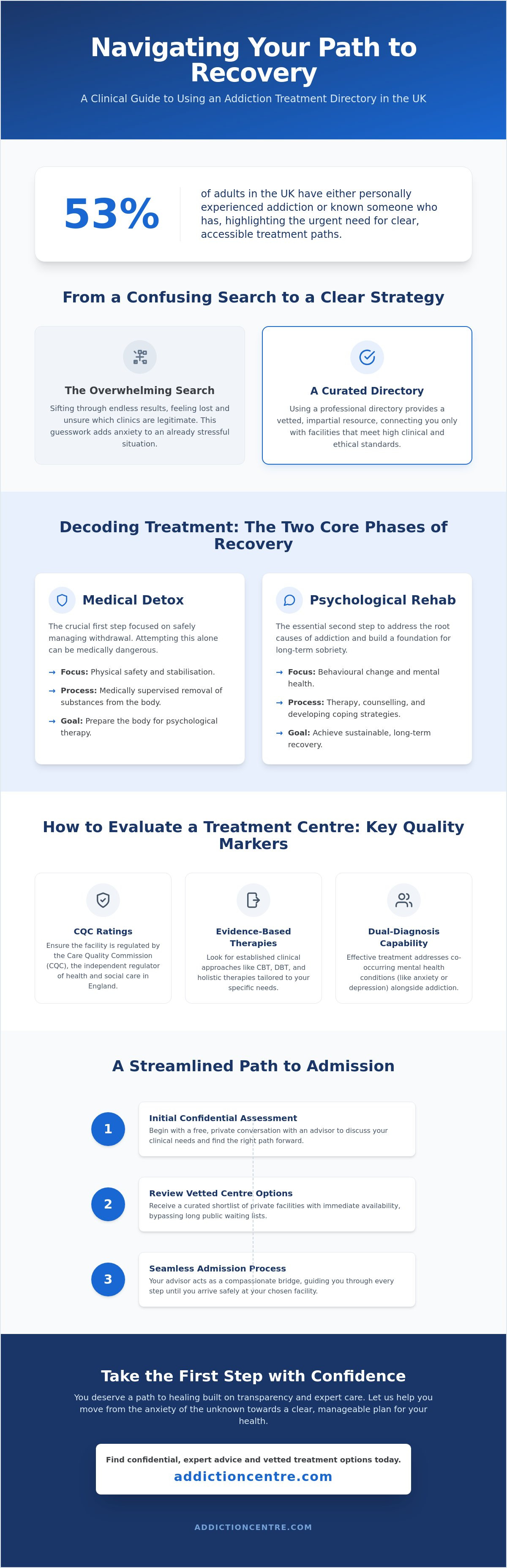
A recent 2025 poll revealed that 53% of adults in the UK have either personally experienced addiction or known someone who has. When you're facing this reality, the search for help often feels like a desperate attempt to find a calm harbour in a violent storm. It's completely understandable to feel overwhelmed by the difference between detox and rehab, or to worry about the integrity of the facilities you find online. Using a professional addiction treatment directory is the first step in replacing that confusion with a structured, clinical strategy for your recovery.
We believe you deserve a path to healing that's built on transparency and expert care rather than guesswork. This guide will teach you how to use a directory to find vetted private rehab options that meet the highest standards of safety and professional dignity. You'll learn how to spot quality markers, understand the admission process, and create a shortlist of facilities that align with your specific medical needs. Let's move away from the anxiety of the unknown and toward a clear, manageable plan for your health and restoration.
Key Takeaways
- Understand how a professional addiction treatment directory acts as a curated clinical resource to help you distinguish between public services and private residential care.
- Learn the vital distinction between medical detox and psychological rehabilitation to ensure your care plan addresses both physical safety and long-term behavioural change.
- Discover how to identify high-quality centres by interpreting Care Quality Commission (CQC) ratings and clinical success markers with professional nuance.
- Demystify the path to admission by following a step-by-step guide from your initial confidential assessment to arriving at a vetted facility.
- Gain the confidence to move forward by partnering with an impartial advisor who serves as a compassionate bridge to the UK's leading recovery clinics.
Understanding the UK Addiction Treatment Directory: Your Path to Recovery
Starting the search for recovery can feel like standing before a mountain of data with no compass. You might be sifting through endless search results, wondering which clinics are legitimate and which ones truly understand your struggle. An addiction treatment directory serves as your professional map. It isn't merely a list of names; it's a curated repository designed to help you identify clinical facilities that meet stringent standards of care. It filters out the noise, presenting only those facilities that have been vetted for their clinical excellence and ethical standards.
When you're in crisis, impartial advice is your greatest asset. Many individual clinic websites only show their own services, which might not be the right fit for your specific medical history. A directory allows you to compare different clinical philosophies side-by-side, ensuring you find a centre that prioritises your dignity and long-term health. This impartiality protects you from predatory practices; it ensures the focus remains entirely on your clinical needs rather than a facility's occupancy rates. You deserve a clear path, free from hidden incentives and confusing jargon.
The Role of a Directory in Addiction Recovery
In 2026, healthcare requires a level of digital transparency that wasn't previously available. A directory centralises complex information regarding detox protocols, residential stays, and various forms of therapy. By seeing multiple approaches in one place, you can better understand the full spectrum of Drug rehabilitation. This bird’s-eye view allows you to see how different facilities handle dual-diagnosis or specialised trauma care, helping you move from a state of confusion to one of informed confidence. This centralised approach is particularly vital because addiction medicine is rarely a "one-size-fits-all" solution. You might need a facility that focuses on holistic wellness, or perhaps one that specialises in medically-assisted detox.
Why Private Referrals Often Bypass Public Waiting Lists
The UK's public healthcare system is a remarkable resource, yet the reality of NHS waiting times for residential addiction care can be disheartening. For many, waiting months for a bed isn't an option when an acute crisis is unfolding today. Private directories facilitate immediate clinical intervention by connecting you directly with facilities that have current availability. This often includes the possibility of same-day assessments, which are crucial for those in a state of high stress. Choosing a private referral doesn't mean you're abandoning the standards of the NHS. It means you're prioritising speed and personalised attention during a window of opportunity where you feel ready to change. We understand that this readiness can be fleeting, so having a streamlined path to admission is essential for long-term success.
Decoding Treatment Options: Detox, Residential Rehab, and Outpatient Care
Choosing the right level of care is a decision that requires both clinical precision and personal reflection. A professional addiction treatment directory helps you distinguish between the biological necessity of detox and the psychological work of rehabilitation. These two phases are distinct yet deeply interconnected. Detoxification focuses on the safe removal of substances from the body; rehabilitation focuses on the behavioural changes required to stay sober. A "one-size-fits-all" approach often fails because it ignores the unique genetic, environmental, and mental health factors of the individual. Modern clinics now prioritise dual-diagnosis care, addressing underlying conditions like anxiety or depression alongside the addiction itself. This holistic approach ensures that the "why" behind the substance use is treated with as much urgency as the physical dependency.
Residential Alcohol and Drug Detox
Residential alcohol and drug detox is often the first, most critical step toward restoration. For many, attempting to withdraw alone at home is not only painful but medically dangerous. High-quality facilities follow the UK guidelines on clinical management to ensure every patient remains stable and safe. Alcohol withdrawal, for instance, requires specific pharmacological interventions to prevent seizures or other severe complications. Opiate detox protocols focus on managing intense cravings and physical discomfort to prevent early relapse. In a residential setting, clinical staff provide 24/7 monitoring, managing withdrawal symptoms amongst high-risk patients with a level of safety that outpatient settings simply cannot match.
Inpatient Rehab vs. Outpatient Support
Inpatient rehab provides an immersive environment where you can focus entirely on your recovery without the triggers of daily life. These intensive programmes typically last between 28 and 90 days, providing a structured schedule of individual therapy, group sessions, and educational workshops. The constant support found in residential care is often the deciding factor for those with a long history of relapse or complex social challenges. Outpatient care may be a viable alternative if you have a stable, supportive home environment and a lower risk of severe withdrawal. Many directories also highlight "sober living" environments, which act as a transitional bridge between intensive treatment and returning home. If you're unsure which path fits your current situation, a recovery consultation can provide the clarity you need to make an informed choice.
How to Evaluate a Treatment Centre: Quality Markers and Clinical Standards
Selecting a facility requires a discerning eye that looks beyond glossy brochures and idyllic photos. A comprehensive addiction treatment directory acts as a safeguard, ensuring you only engage with providers that meet established clinical benchmarks. The Care Quality Commission (CQC) serves as the primary regulatory body in the UK, monitoring and inspecting every residential clinic to ensure safety and effectiveness. Before committing to a programme, always verify the facility's current rating; anything less than 'Good' or 'Outstanding' warrants closer scrutiny. This regulatory oversight provides a baseline of safety, but your evaluation shouldn't stop there.
Whilst some providers advertise success rates as high as 93%, it's vital to view these figures with clinical nuance. Success in addiction medicine is rarely a simple percentage. You should ask how a facility defines success. Is it the completion of the detox phase, or is it long-term sobriety measured twelve months after discharge? A high staff-to-patient ratio is often a more reliable indicator of quality than a headline statistic. It ensures that you receive the personalised attention and frequent clinical check-ins necessary for a safe recovery. Bespoke aftercare plans are equally essential; a clinic that offers a generic discharge sheet rather than a tailored twelve-month support plan may not be prioritising your long-term restoration.
Verifying Clinical Accreditations and Expertise
You can check a facility's status directly on the CQC register to see their latest inspection report and any areas identified for improvement. Look for multidisciplinary teams that include doctors, nurses, and specialist therapists. This variety of expertise ensures that your physical safety and psychological well-being are managed simultaneously. For many, finding a centre with specific expertise in dual diagnosis is a non-negotiable requirement. If you're also seeking NHS addiction support or community-based resources, these accredited private facilities often provide the structured environment needed to transition back into public health pathways successfully.
The Therapeutic Environment and Holistic Care
The physical setting of a clinic plays a profound role in your healing process. Tranquil environments, such as those situated in the countryside, provide a necessary distance from the stressors of urban life, facilitating our "calm in the storm" philosophy. This isn't about luxury; it's about creating a space where the nervous system can finally settle. Many directories now highlight facilities that integrate holistic therapies like art, equine therapy, or mindfulness alongside traditional clinical interventions. These methods are evidence-based tools that help you reconnect with yourself, providing a more comprehensive approach to recovery than medication alone. When the environment and the clinical care align, the path to restoration becomes much clearer.
Navigating the Referral Process: From Assessment to Admission
The transition from deciding to seek help to actually entering a facility is often the most anxiety-inducing part of the journey. You've done the research and consulted an addiction treatment directory, but the practical "how" remains. This process is designed to be a bridge, not a barrier. It begins with a structured conversation that moves you away from a state of crisis and toward a manageable, clinical plan. For those organising an intervention for a loved one, this stage provides the logistical backbone needed to ensure the transition is safe, respectful, and immediate. You don't have to carry the weight of these arrangements alone.
Preparation is key to settling into a residential environment with a sense of peace. When packing for your stay, focus on comfort and necessity. Most centres recommend bringing enough comfortable clothing for a week, essential toiletries, and any current prescriptions in their original packaging. Leave behind items that could act as triggers or distractions, such as expensive jewellery or excessive electronics. This physical preparation helps signal to your mind that you're entering a dedicated space for restoration.
The Initial Clinical Assessment
The first step in any professional referral is a confidential recovery consultation. You'll be asked detailed questions about your substance use, your mental health history, and your physical well-being. It's vital to be entirely honest during this dialogue. Your transparency allows clinical advisors to match you with the perfect facility from their addiction treatment directory. This data ensures the clinic is prepared for your specific needs, whether that involves a complex detox or specialised trauma therapy. This isn't an interrogation; it's a collaborative effort to ensure your safety from the moment you arrive.
Organising Logistics and Immediate Admission
Once a facility is selected, the referral service handles the complex paperwork and clinical handovers. In the private sector, the timeline for admission is remarkably swift, with many patients entering treatment within 24 to 48 hours of their initial call. This speed is a stark contrast to public waiting lists and is often essential for those in acute distress. Understanding the financial commitment is also part of this clarity. In 2026, private residential rehab programmes in the UK typically start at £6,000 for a 7 to 10-day detox, whilst a full 28-day stay generally costs between £6,000 and £12,000 depending on the facility. If you're ready to take this step, you can start your confidential assessment today to secure your place in a vetted clinic.
Why Choose Addiction Centre for Your Recovery Journey
Choosing a path to recovery is perhaps the most significant decision you'll ever make. At Addiction Centre, we act as the impartial bridge between your current struggle and the UK’s most reputable clinical environments. We understand that behind every search for an addiction treatment directory is a person, a family, and a story that deserves to be heard with profound respect. Our advisors don't just provide information; they offer a steady hand to guide you through the noise of a complex healthcare market. We're committed to your dignity, ensuring that the facility you choose aligns perfectly with your medical requirements and your personal values. This personalised approach transforms a state of high stress into a structured, manageable journey toward health.
Families often find themselves in a state of crisis, unsure of how to help a loved one who may be resistant to care. We provide a "challenge-to-resolution" path that supports the entire family unit. By offering professional knowledge delivered with the warmth of a dedicated counsellor, we help lower the emotional frequency of the situation. This allows for clear, logical decisions to be made during a time when emotions often run high. Our role is to be the "calm in the storm," providing unwavering reliability and clinical authority to those who need it most. We don't act as distant observers. Instead, we walk alongside you, ensuring no question is left unanswered and no concern is ignored.
Impartial Advice in a Complex Market
In a market where many clinics compete for your attention, an independent referral service provides a vital layer of safety. Calling clinics directly can sometimes feel like a sales process rather than a clinical consultation. We filter our addiction treatment directory based on your unique needs, whether you require a specific residential drug detox protocol or a centre that specialises in complex trauma. This independence ensures that our recommendations are based solely on clinical suitability. Our track record of helping people find safety and restoration is built on this foundation of integrity. We take the time to understand the nuances of your history, ensuring that the clinical match is precise and effective.
Taking the First Step Toward Restoration
The movement from uncertainty toward clarity begins with a single, courageous conversation. Recovery is possible for everyone, regardless of how many times you've tried before or how heavy the burden feels today. We provide a steady, hopeful path that prioritises your agency and progress. You can access our confidential online self-assessment today to begin the process of matching with a vetted clinic. This tool is designed to be thorough yet accessible, providing us with the data needed to advocate for your care. When you're ready to move toward a life of holistic well-being, you can Speak with a compassionate advisor at Addiction Centre. Your journey toward restoration and lasting health starts with this one step.
Taking Your First Step Toward Lasting Health
Finding the right support is a journey from uncertainty toward clinical clarity. We've explored how to evaluate quality markers like CQC ratings and the vital difference between medically supervised detox and long-term psychological rehabilitation. By using a professional addiction treatment directory, you've already begun to filter out the noise, focusing instead on vetted facilities that prioritise your dignity and safety. You don't have to navigate these complex choices alone; expert guidance is available to help you build a personalised path to restoration.
Our recognised network of CQC-regulated clinics and expert recovery consultations provide the steady foundation you need for success. We offer confidential and impartial guidance designed to move you from a state of crisis to a structured environment of care. If you're ready to embrace a future defined by health and holistic well-being, we invite you to Begin your confidential assessment with Addiction Centre today. Restoration is possible, and a life of balance and peace is well within your reach.
Frequently Asked Questions
What is the difference between a rehab directory and a referral service?
A directory is a curated list of facilities, while a referral service acts as your personal guide through that list. Think of the addiction treatment directory as a library and our advisors as the specialist librarians who know exactly which resource fits your medical history. We don't just hand you a list; we provide a clinical assessment to ensure the match is safe and appropriate for your specific needs.
How much does private rehab cost in the UK in 2026?
In 2026, private residential rehab costs vary depending on the length of stay and intensity of care. A 7 to 10-day detox programme typically starts at £6,000, while a comprehensive 28-day residential stay usually ranges between £6,000 and £12,000. For those seeking less intensive options, outpatient programmes often cost between £600 and £1,000 per week. These figures reflect the high level of clinical supervision and personalised attention provided in private settings.
Can I get into a residential rehab centre without a GP referral?
You can certainly enter a private residential rehab centre without a referral from your GP. Private facilities allow for direct self-referral, which significantly streamlines the path to admission compared to public health routes. This autonomy is vital for those in immediate crisis who cannot wait for a standard appointment. Our advisors can facilitate this direct link, ensuring your medical history is professionally communicated to the clinical team at your chosen facility.
Is the information I share with a treatment directory confidential?
Every detail you share with us is handled with the highest level of clinical confidentiality and professional integrity. Your privacy is protected under UK data protection laws, ensuring that your journey remains a private matter between you and the clinical professionals involved. We understand the sensitive nature of addiction recovery and prioritise your dignity above all else. This secure environment allows you to be completely honest during your assessment without fear of judgment or exposure.
How do I know if a rehab clinic in the directory is reputable?
Reputability is primarily determined by a facility's rating with the Care Quality Commission (CQC), the UK's independent health regulator. A reputable addiction treatment directory only features clinics that maintain high clinical standards and ethical practices. You should look for "Good" or "Outstanding" ratings and verify that the facility employs a multidisciplinary team of doctors and therapists. We provide an additional layer of vetting to ensure every recommendation meets our own strict quality benchmarks.
What happens if I need dual diagnosis treatment for mental health and addiction?
Dual diagnosis treatment is a standard feature in many modern private clinics, addressing both addiction and underlying mental health conditions simultaneously. If you're struggling with anxiety, depression, or trauma alongside substance use, it's essential to treat both to prevent relapse. Specialist facilities in our directory employ clinical psychologists and psychiatrists who develop integrated care plans. This holistic approach ensures that the root causes of your addiction are treated with the same clinical urgency as the physical symptoms.
Can a directory help me find a clinic that accepts private health insurance?
Many private rehab clinics in the UK accept coverage from major health insurance providers like Bupa, AXA, or WPA. A professional directory can help you filter facilities based on their insurance partnerships, potentially reducing your out-of-pocket expenses. It's important to check the specifics of your policy, as coverage levels for residential detox and rehab vary. Our advisors can assist you in understanding which clinics align with your provider to make the financial process as clear as possible.
How quickly can I be admitted to a private detox programme?
Admission to a private detox programme is remarkably swift, often occurring within 24 to 48 hours of your initial assessment. This rapid response is designed to support you at the exact moment you're ready to make a change. Unlike public services that may have lengthy waiting lists, the private sector prioritises immediate intervention for acute cases. This quick transition from your first call to a clinical bed ensures that your window of opportunity for recovery isn't lost to administrative delays.


