
What if the most daunting part of seeking help isn't the treatment itself, but the silence surrounding the experience? For many, the mystery of what happens in rehab creates a barrier that feels far more intimidating than the reality of the process. You may feel a deep anxiety about losing your autonomy or fear the physical discomfort of withdrawal symptoms. It is completely normal to feel this way when you are standing at such a significant crossroads. However, when you view a rehabilitation centre as a professional "pause" designed to replace harmful patterns with sustainable life skills, the environment becomes a sanctuary rather than a source of stress.
We understand that you need clear, reliable information to navigate this transition with dignity. This guide offers a comprehensive mental map of the recovery journey in the UK, from the clinical safety of a residential detox to the rhythmic routines of daily therapy. You will discover how different facilities organise their care and what a typical day looks like for someone in recovery. By exploring these stages, you will gain the confidence to use our directory and expert consultations to find a facility that offers the safety and professional care you deserve.
Key Takeaways
- Understand exactly what happens in rehab, from the initial clinical assessment to the structured routines that support your long-term healing.
- Learn why a medically supervised detox is the vital first step for stabilising the body safely before you begin any psychological therapy.
- Discover how structured daily schedules and evidence-based treatments work together to break the cycle of isolation and restore your sense of autonomy.
- Recognise the importance of bespoke aftercare planning in creating a sustainable bridge between the treatment environment and your everyday life.
- Gain clarity on how to use professional referral services to navigate the various residential and community-based care options available across the UK.
Understanding the Rehabilitation Process in the UK
Rehabilitation is often misunderstood as a simple withdrawal phase. In reality, it's a sophisticated, multi-stage Drug rehabilitation process that combines medical stabilisation with intensive psychological work. By integrating these two pillars, a quality programme helps individuals break the immediate cycle of compulsion whilst equipping them with the emotional toolkit needed for long-term sobriety. Understanding what happens in rehab is the first step toward reclaiming your autonomy. To help you navigate these choices, a UK addiction treatment directory acts as an impartial guide, categorising services based on their clinical specialisms and the level of support they provide.
The Clinical Assessment and Referral
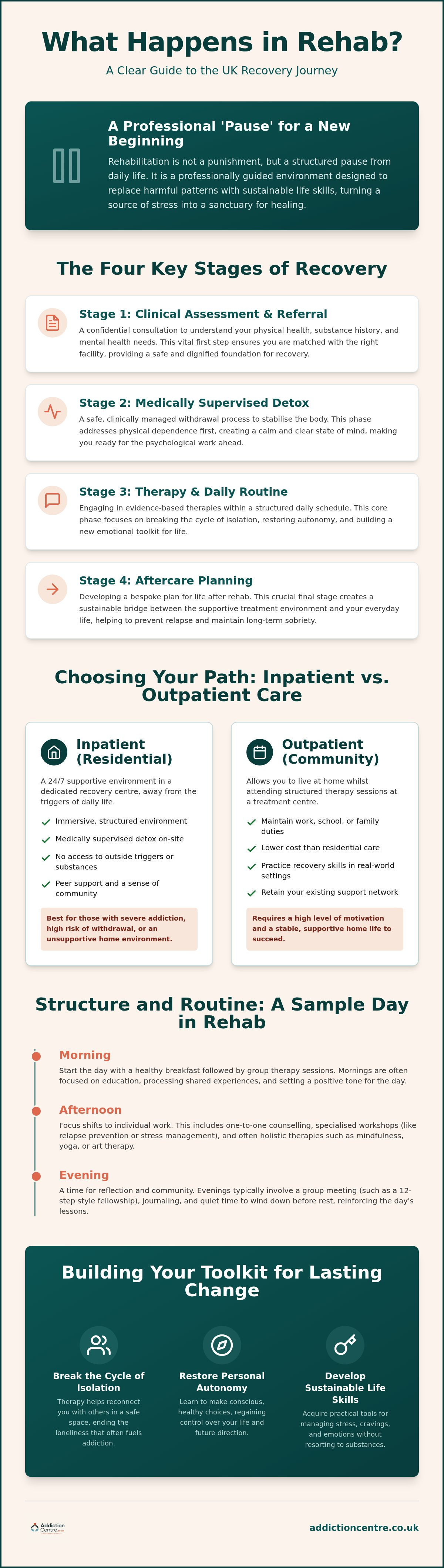
Every successful recovery starts with a thorough conversation. A confidential recovery consultation isn't just a formality; it's a vital safety measure. During this phase, specialists look at your physical health, your history with substances, and any co-occurring mental health needs, often referred to as dual diagnosis support. This review ensures you aren't just placed in any clinic, but in the right environment for your specific needs. Matching your clinical history with the appropriate facility reduces the risk of early dropout and provides a solid foundation for the psychological work ahead. It's about finding a "fit" that respects your dignity and addresses your unique challenges.
Inpatient vs. Outpatient: Which Path is Right?
Choosing between residential and community-based care is a decision based on your safety and the severity of your addiction. Residential rehab offers a 24/7 supportive environment in a dedicated recovery centre, away from the triggers and stresses of daily life. It's often the preferred choice for those with a high risk of severe withdrawal symptoms or those whose home environment isn't currently conducive to sobriety. In contrast, outpatient or community-based programmes allow you to maintain certain home or work commitments whilst attending structured therapy sessions. This path requires a high level of stability and a strong support network already in place. Both options aim to demystify what happens in rehab by providing a clear structure, ensuring you feel held and supported throughout this transition. Your choice will ultimately depend on which environment offers you the best chance of lasting restoration.
The Initial Phase: Clinical Medical Detox
Before you can engage with the psychological aspects of recovery, your body requires a period of stabilisation. This is the foundation of what happens in rehab during those critical early days. Medical detoxification is a clinically managed withdrawal process overseen by healthcare professionals. Attempting to stop "cold turkey" at home is often dangerous, particularly with certain substances where withdrawal can lead to severe complications like seizures or cardiovascular distress. In a professional UK setting, this process is managed with precision to ensure your safety and dignity at every step.
The goal of this phase is to move you from a state of physical dependence to one of mental readiness. When the body is in a state of crisis, it's nearly impossible to focus on the deep-seated emotional reasons behind substance use. By addressing the physical symptoms first, clinicians create a stable platform for your future progress. This transition isn't just about removing a substance; it's about restoring a sense of calm and clarity to your system.
Residential Alcohol Detoxification
When addressing alcohol dependency, the focus is on a safe, tapered withdrawal within a controlled environment. A residential alcohol detox UK programme typically follows a structured timeline of seven to ten days. During this period, clinicians may use approved medications to mitigate withdrawal symptoms, preventing the more severe physical reactions that cause anxiety for many. This clinical oversight allows your nervous system to recalibrate gradually. Once the physical cravings and tremors subside, you'll find yourself in a much stronger position to begin the cognitive work of therapy. If you're unsure which clinical setting is right for your needs, our team can provide a confidential recovery consultation to help you decide.
Residential Drug Detoxification
The approach to clearing substances from the body varies significantly depending on the substance involved. For example, the protocols for opiates differ greatly from those used for stimulants or prescription medications. A residential drug detox UK provides 24-hour clinical monitoring during the peak withdrawal phase. This constant care ensures that any discomfort is managed immediately, maintaining your safety whilst your body reaches a state of equilibrium. This phase is not merely about "getting clean"; it's about reaching a state of mental readiness. By removing the physical noise of addiction, you create the necessary space to explore the underlying behaviours that led to substance use in the first place. This transition is a key part of what happens in rehab as you move from survival toward restoration.
Inside the Daily Routine: What to Expect in Rehab
Structure serves as the essential scaffolding for a life in transition. When you're curious about what happens in rehab on a daily basis, it's helpful to view the schedule as a tool for safety rather than a set of restrictive rules. Most centres follow a rhythmic pattern that begins with a communal breakfast followed by a morning meditation or a "check-in" group meeting. These early sessions allow you to set intentions for the day in a supportive environment, ensuring you start each morning with a sense of purpose and connection.
Afternoons are typically dedicated to more intensive therapeutic work. This might involve one-to-one sessions with a lead therapist or educational workshops that explain the psychological drivers of behaviour. As the day draws to a close, evenings provide a space for reflection and community. You might attend a 12-step meeting or engage in sober socialising with peers who truly understand your journey. This consistent flow ensures that you aren't left to navigate difficult emotions in isolation, providing a steady "calm in the storm" as you progress.
The Importance of a Structured Schedule
A predictable routine is a powerful clinical tool. It helps to re-regulate the brain's reward system, which has often been disrupted by the unpredictability of addiction. By following a set plan, you significantly reduce "decision fatigue." This allows your mental energy to be spent on deep healing rather than navigating daily logistics. Many UK facilities also include light chores or personal responsibilities in the schedule. Whilst these tasks may seem small, they play a significant role in rebuilding self-esteem and a sense of agency. Controlling the daily environment in this way helps to eliminate the external triggers that often lead to a sense of overwhelm.
Free Time and Holistic Activities
Recovery requires a careful balance between intensive psychological work and necessary rest for the nervous system. Scheduled "down-time" isn't just a break; it's an opportunity for integration. You might use this time for journaling, reading, or light exercise to process the day's insights. Many centres amongst our network also offer holistic activities such as yoga, art therapy, or equine therapy. These practices help you connect with your body and emotions in non-verbal ways, providing a well-rounded approach to restoration. Understanding what happens in rehab means recognising that rest and creative expression are just as vital to the process as clinical therapy.
Therapeutic Interventions and Evidence-Based Treatments
Once the physical stabilisation of detox is complete, the focus shifts toward the psychological drivers of dependency. This is where the core work of what happens in rehab truly begins. It's not enough to simply remove the substance; practitioners must help you address the "why" behind the behaviour. Individual sessions provide a private, safe space to explore personal history and trauma with a specialist addiction therapist. These one-to-one meetings allow for a level of depth that isn't always possible in a group setting. Cognitive Behavioural Therapy (CBT) is a goal-oriented talking therapy that helps manage problems by changing how you think and behave. By identifying these patterns, you can develop healthier coping mechanisms for the future.
Group therapy acts as a powerful counterbalance to the isolation that often accompanies addiction. Sharing experiences amongst peers who face similar challenges helps to dissolve shame and foster a sense of belonging. This collective environment provides immediate feedback and support, allowing you to see your own struggles reflected in others. It creates a community of restoration where everyone is working toward a common goal of health. These interactions are a vital part of what happens in rehab, as they help you rebuild the social skills and empathy that addiction can often strip away.
Core Talking Therapies
Clinicians use a variety of evidence-based modalities to support your progress. Dialectical Behaviour Therapy (DBT) is often used to help with emotional regulation, whilst Motivational Interviewing focuses on finding your internal drive to change. These tools are designed to empower you, giving you the agency to make different choices when faced with old triggers. If you are struggling with mental health challenges alongside addiction, dual diagnosis treatment UK ensures that both conditions are treated simultaneously. This integrated approach is essential for preventing relapse, as it treats the whole person rather than just the symptoms.
The 12-Step Model and Peer Support
The 12-step philosophy remains a cornerstone of many UK programmes. It provides a structured framework for self-reflection and accountability that has helped millions worldwide. By integrating these steps into the daily routine, rehab centres help you build a support network that continues long after you leave the facility. This peer support is invaluable; it ensures you have a community to lean on as you transition back into everyday life. The transition from isolation to community is one of the most profound shifts you'll experience during your stay. If you feel overwhelmed by these options, you can search our directory of UK rehab providers to find a facility that offers the specific therapeutic approach you need.
Transitioning to Long-Term Recovery and Aftercare
The moment you complete your residential stay is a significant milestone, but it's helpful to view it as a commencement rather than a conclusion. Whilst the intensive phase of what happens in rehab provides the foundation, the true test of these new skills occurs when you return to your daily environment. To ensure this transition is safe and sustainable, every reputable UK facility will help you create a bespoke relapse prevention plan before you're discharged. This plan acts as a strategic roadmap, identifying specific personal triggers and outlining the exact steps you should take if you feel your sobriety is being challenged.
For some, moving directly back into the home environment feels premature. In these cases, secondary care or "sober living" houses in the UK offer a vital intermediate step. These environments provide a structured bridge, allowing you to re-engage with work or education whilst remaining amongst a supportive, substance-free community. Using a comprehensive directory to find centres with strong aftercare reputations is essential. It ensures the facility you choose views your recovery as a long-term commitment rather than a short-term stay. This ongoing support is what transforms a period of abstinence into a lifetime of health.
What an Aftercare Plan Includes
A robust aftercare strategy is multifaceted, addressing your emotional, social, and practical needs. It typically includes scheduled outpatient therapy sessions to reinforce the cognitive habits you developed during your stay. Many clinics also offer access to alumni groups, which provide a ready-made network of peers who've shared similar experiences. These connections are often the most effective tool for breaking the isolation that can occur in early recovery. Additionally, family therapy sessions are frequently integrated to help repair relationships and ensure your home environment is a source of strength rather than stress.
Finding the Right Centre for Your Journey
Every individual's path to health is unique, which means the facility that worked for someone else might not be the best fit for you. It's important to choose a rehab clinic UK that aligns with your specific clinical needs, personality, and long-term goals. Whether you require a facility that focuses on dual diagnosis or one that offers extensive holistic therapies, the right "fit" makes all the difference in your success. Understanding what happens in rehab and beyond allows you to approach this decision with clarity and confidence. If you're ready to take the next step, contact Addiction Centre today for a confidential consultation and a personalised referral to a trusted provider in our network.
Taking the Next Step Toward Restoration
Choosing to enter treatment is a profound act of courage. As we've explored, the journey moves methodically from the physical safety of a clinical detox to the transformative power of evidence-based therapy. By replacing the chaos of addiction with a structured daily routine, you allow your nervous system to recalibrate and your self-esteem to flourish. This professional "pause" isn't a loss of control; it's the moment you begin to reclaim your autonomy and build a sustainable future.
Understanding what happens in rehab is the first step toward removing the anxiety of the unknown. We provide expert, impartial advice for families and individuals, offering specialist support for dual diagnosis and complex cases. Through our nationwide network of CQC-regulated clinics, we help you find the specific environment that fits your unique needs. You don't have to navigate these choices alone. You can start your recovery journey with a confidential consultation today. A life of clarity and health is waiting for you.
Frequently Asked Questions
Is rehab like a hospital or a hotel?
Rehab is best described as a therapeutic residential environment that balances clinical safety with domestic comfort. Whilst you will find medical facilities for detox and 24-hour nursing care, the living areas are designed to feel warm and inviting rather than sterile. Most centres offer private or semi-private bedrooms and communal lounges to foster a sense of community. The focus remains on creating a "safe haven" where you can recover with dignity and peace.
Can I leave rehab whenever I want in the UK?
Residential treatment in the UK is almost always voluntary, meaning you have the autonomy to leave at any time. However, clinicians strongly advise against leaving "against medical advice" because the early stages of recovery are physically and emotionally volatile. If you feel the urge to leave, the staff will work with you to understand the underlying triggers and help you find a way to stay. Their goal is always your long-term safety and restoration.
Will I be allowed to use my mobile phone or laptop in rehab?
Most centres implement a "digital detox" policy during the initial phase of treatment to help you focus entirely on your recovery. You might be asked to hand in your devices upon arrival, with access granted during specific scheduled times once you've stabilised. This boundary helps to remove external stressors and triggers from the outside world. It's a vital part of what happens in rehab to ensure your mental energy is reserved for healing.
How long does a typical rehab programme last?
The duration of your stay depends on your clinical needs, but a 28-day programme is considered the standard for achieving meaningful psychological change. Shorter stays of seven to ten days usually focus solely on physical stabilisation and detox. Some individuals choose to stay for 60 or 90 days if they require more intensive support for complex cases or dual diagnosis. Your recovery consultant will help you determine the timeframe that offers the best chance of lasting success.
What happens if I relapse whilst I am in treatment?
If a relapse occurs during your stay, it's treated as a clinical incident rather than a moral failure. The medical and therapeutic teams will conduct an immediate review to understand the triggers and adjust your care plan accordingly. In some cases, you may need to restart the detox process or move to a different level of care. The priority is always to keep you safe and ensure you have the professional support needed to continue your journey.
Can my family visit me whilst I am in a residential centre?
Family involvement is encouraged, though most facilities have an initial "settling-in" period where contact is limited to help you bond with the recovery community. Once this phase is complete, scheduled visits and family therapy sessions become a key part of your programme. These sessions help to repair relationships and educate your loved ones on how to support you after discharge. It ensures your home environment is as supportive as the clinical one you're currently in.
Are all rehab centres in the UK regulated by the government?
Every professional rehabilitation centre in the UK must be registered with and inspected by the relevant national regulator. In England, this is the Care Quality Commission (CQC), whilst in Scotland, it's the Care Inspectorate. These bodies ensure that facilities meet strict standards for safety, effectiveness, and leadership. When you use our directory, you can feel confident that we only refer to recognised clinics that prioritise patient safety and clinical excellence across the entire recovery sector.
What should I pack for my stay in a residential clinic?
You should focus on packing comfortable, modest clothing suitable for therapy sessions and light exercise. It's also helpful to bring alcohol-free toiletries, family photos, and a journal for reflection. Most centres provide a specific list of prohibited items, such as sharp objects or products containing high levels of alcohol. By packing thoughtfully, you can make your transition into the centre much smoother. This preparation is an often overlooked but practical part of what happens in rehab.


