
What if the unsettling tremors and racing heart you're experiencing aren't a failure of willpower, but a sign that your nervous system is struggling to find its balance? It's deeply distressing to feel trapped between the desire to change and the fear of alcohol withdrawal symptoms, especially when the line between a heavy hangover and a medical emergency feels dangerously blurred. You aren't alone in feeling anxious about the risk of seizures or wondering where to turn for discreet, immediate support whilst facing these challenges.
We're here to offer a steady hand, providing you with a clear understanding of the physical and psychological stages of recovery so you can move forward with confidence and clinical safety. This guide details the complete withdrawal timeline, highlights the critical moments when professional intervention is essential, and explains how choosing a structured residential detox can provide the "gold standard" of care you deserve. By understanding the journey ahead, you can replace uncertainty with a clear path towards restoration and health.
Key Takeaways
- Recognise that alcohol withdrawal symptoms are a neurological response to abstinence, allowing you to view your recovery through a clinical lens rather than one of personal failure.
- Identify the critical milestones of the first 72 hours, helping you prepare for everything from mild tremors to the more complex psychological shifts that can occur whilst your body adjusts.
- Understand the physiological risks of stopping "cold turkey" and why a medically supervised residential detox provides the safest environment for your nervous system to recalibrate.
- Discover how to navigate the UK recovery landscape, including the practical steps to access private residential clinics and bypass lengthy community waiting lists.
Understanding Alcohol Withdrawal Symptoms: The Body's Neurological Reaction
When someone stops drinking after a period of heavy use, they often encounter alcohol withdrawal syndrome. This isn't a sign of weak character; it's a predictable physiological response. For a long time, alcohol has acted as a depressant on your central nervous system, effectively "slowing down" your brain's communication. When that influence is suddenly removed, your brain doesn't immediately know how to function at a normal pace. It remains in a state of high alert, leading to the various alcohol withdrawal symptoms that can feel so overwhelming.
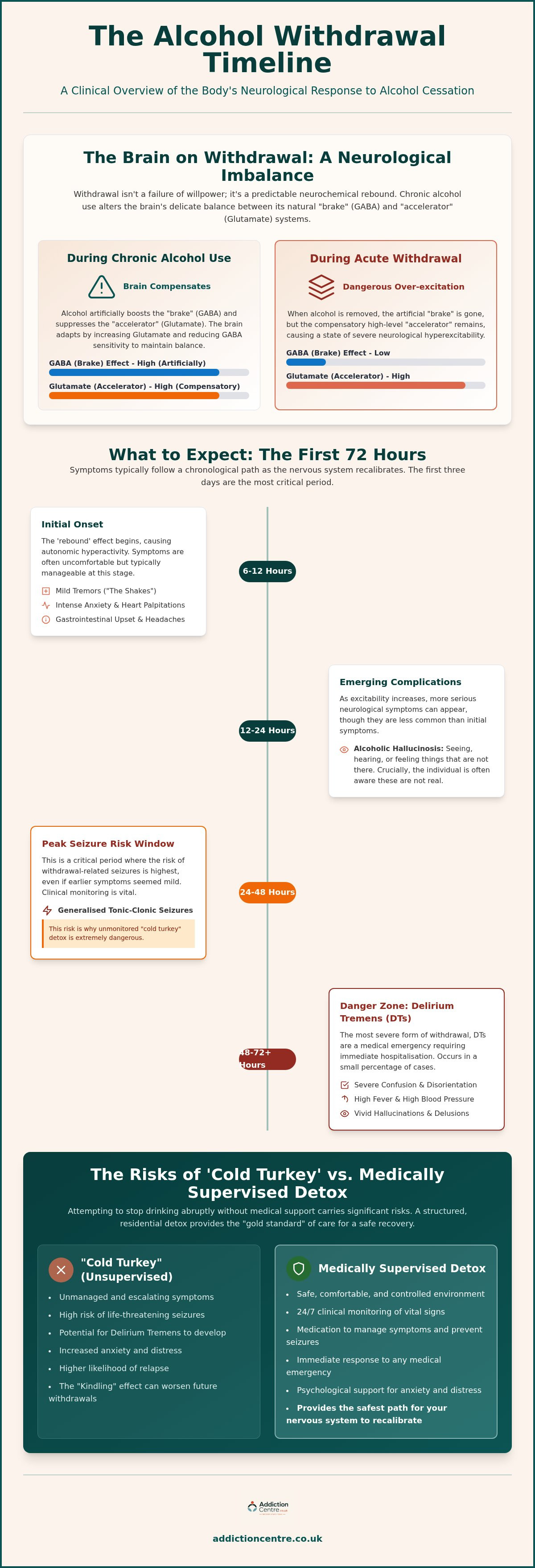
This reaction is driven by a delicate balance between two primary neurotransmitters: GABA and Glutamate. Think of GABA as your brain's natural "brake" and Glutamate as the "accelerator." Chronic alcohol consumption artificially enhances GABA and suppresses Glutamate. To compensate, your brain naturally ramps up its Glutamate production and reduces its GABA sensitivity. When you stop drinking, the brakes are suddenly gone, but the accelerator is still floored. This creates a "rebound" effect that leaves your nervous system in a state of dangerous over-excitation.
It's vital to distinguish this clinical state from a standard hangover. Whilst a hangover is primarily caused by dehydration and the toxic byproducts of alcohol metabolism, withdrawal is a sign of physical dependence. You may also encounter a phenomenon known as "kindling." Each time you go through a withdrawal cycle and then return to drinking, your brain becomes more sensitive to the process. This means subsequent attempts to stop can result in increasingly severe symptoms, making professional oversight even more critical.
Common Physical Symptoms of Withdrawal
The physical manifestation of this neurological surge often begins with gastrointestinal distress. Nausea and vomiting are common as your body struggles to regulate its basic functions. You might also notice the "shakes," which are hand tremors caused by autonomic hyperactivity. This isn't just "nerves"; it's your body's motor system misfiring due to the lack of chemical suppression. Autonomic arousal during detox is the physical manifestation of a central nervous system that has lost its ability to regulate itself without the presence of alcohol. These tremors are often accompanied by a racing heart, heavy sweating, and a rise in blood pressure.
Psychological and Emotional Indicators
The neurological "rebound" also takes a heavy toll on your emotional well-being. Many people experience "hangxiety," a term for the intense anxiety and panic attacks that occur as the brain's excitability peaks. This can make it difficult to concentrate or even hold a basic conversation. Sleep disturbances are almost universal, ranging from total insomnia to vivid, disturbing dreams and night sweats. You might find yourself feeling uncharacteristically irritable or confused, as your cognitive functions struggle to adapt to the absence of alcohol's sedative effects. These psychological symptoms are just as much a part of the clinical picture as the physical tremors, and they require equal compassion and care.
The Alcohol Withdrawal Timeline: What to Expect in the First 72 Hours
Understanding the progression of alcohol withdrawal symptoms can transform a frightening, unpredictable experience into a manageable medical process. These symptoms typically follow a specific chronological path as the central nervous system attempts to recalibrate without the presence of a depressant. Whilst every individual's journey is unique, the following timeline represents the standard clinical progression observed during acute detox.
- 6 to 12 Hours: The initial onset usually involves mild tremors, intense anxiety, and headaches. You may also experience gastrointestinal upset and heart palpitations as the "rebound" effect begins.
- 12 to 24 Hours: Some individuals may experience alcoholic hallucinosis. This involves seeing, hearing, or feeling things that aren't there, though unlike later stages, the person is often aware that these sensations are not real.
- 24 to 48 Hours: This is the peak risk window for withdrawal-related seizures. These can occur even if the earlier symptoms seemed manageable, which is why clinical monitoring is so vital during this period.
- 48 to 72 Hours and Beyond: This is the danger zone for Delirium Tremens (DTs). Symptoms include severe confusion, high fever, and dangerous spikes in blood pressure. DTs are a medical emergency and require immediate hospital-level care.
The Critical First 24 Hours
The initial "crash" often feels completely overwhelming. As the brain's chemical brakes are removed, the sudden surge of adrenaline and anxiety can be so distressing that it frequently leads to immediate relapse. During this window, monitoring vital signs like heart rate and blood pressure is not just a precaution; it's a necessity. Early intervention through specialised detox services can often stabilise these vitals and prevent mild symptoms from escalating into the more dangerous stages of the timeline.
Days 3 to 7: Stabilisation and Post-Acute Phase
By the third or fourth day, the most acute physical dangers typically begin to subside. Your heart rate may start to settle, and the risk of seizures diminishes. However, this is often when psychological cravings peak and the emotional weight of recovery feels heaviest. This transition often marks the beginning of Post-Acute Withdrawal Syndrome (PAWS), where mood swings and sleep issues persist. While the physical danger may pass in a week, the brain needs months to heal and fully return to its natural equilibrium. This is why transitioning from detox into a structured rehab environment is so beneficial for long-term success.
Distinguishing Between Mild, Moderate, and Severe Symptoms
Every person's experience with alcohol withdrawal symptoms is unique, yet medical professionals categorise the severity into three distinct stages to determine the necessary level of care. This framework isn't meant to cause alarm; rather, it's designed to help you recognise when your body is signalling for professional support. Understanding where you sit on this spectrum allows for a more tailored and effective approach to your recovery.
Mild symptoms often feel like an intense hangover that simply won't subside. You might struggle with restlessness, minor sleep issues, or a general sense of unease. As the condition progresses to moderate withdrawal, the physical signs become more pronounced. You may notice a significantly increased heart rate, heavy sweating even in cool rooms, and persistent nausea that makes it difficult to stay hydrated. These signs indicate that your nervous system is under significant strain and requires careful observation.
It is vital to monitor for 'red flag' symptoms that indicate a medical emergency. If you or a loved one experiences any of the following, you should call 999 immediately:
- Loss of consciousness or violent muscle contractions
- Severe chest pain or breathing difficulties
- Extreme confusion or an inability to recognise familiar faces
- A body temperature exceeding 38.5°C
- Auditory or visual hallucinations that cause extreme distress
Understanding Delirium Tremens (DTs)
Delirium Tremens, or DTs, represents the most severe form of withdrawal and usually appears between 48 and 72 hours after the last drink. It is a state of profound neurological chaos characterised by severe confusion, a rapid heartbeat, and high fever. Unlike the mild hallucinations that can occur early on, DTs involve a complete loss of contact with reality and can lead to dangerous cardiovascular collapse. Clinical data suggests that DTs can be fatal in approximately 5% of patients even with medical intervention, a figure that rises significantly if the condition is left untreated. This makes it a critical medical emergency that requires hospital-level stabilisation.
The Risk of Withdrawal Seizures
One of the most dangerous aspects of detox is that life-threatening seizures can occur even in people who do not feel particularly ill. These are typically tonic-clonic seizures, which involve a sudden loss of consciousness and physical rigidity. They place an immense strain on the central nervous system and can lead to permanent injury if they occur whilst the person is alone. Because these events are so unpredictable, the safest path forward is a structured residential alcohol detox UK. In a residential setting, clinical staff can administer medication to prevent the brain from reaching this state of dangerous over-excitation, ensuring your safety throughout the most volatile days of the recovery journey.
The Risks of 'Cold Turkey' vs. Medically Supervised Detox
Deciding to stop drinking is a brave and life-changing choice, but for those with a physical dependency, attempting to do so through willpower alone can be hazardous. When your brain has spent months or years adapting its chemistry to the presence of alcohol, sudden cessation triggers the volatile "rebound" effect mentioned earlier. This isn't a reflection of your mental strength; it's a physiological reality where your nervous system becomes dangerously overactive. Attempting a "cold turkey" detox at home without professional monitoring leaves you vulnerable to the most severe alcohol withdrawal symptoms without any medical safety net.
In a clinical environment, the focus shifts from endurance to safety and comfort. Medical professionals typically use a pharmacological taper to protect your brain during this transition. Benzodiazepines, such as Chlordiazepoxide, are often utilised to mimic the sedative effects of alcohol. This allows your nervous system to ramp down gradually rather than crashing, significantly reducing the risk of seizures. Clinicians also prioritise nutritional restoration, specifically the administration of high-dose Thiamine (Vitamin B1). This is vital for preventing Wernicke-Korsakoff syndrome, a serious neurological condition that can develop when chronic alcohol use has depleted the body's essential vitamin stores.
The Benefits of a Controlled Environment
A residential setting provides a sanctuary away from the immediate triggers and easy access to alcohol that often lead to relapse during the first 48 hours. You're supported by staff who provide 24/7 clinical observations, allowing them to manage blood pressure spikes or early signs of autonomic arousal before they escalate. If you are worried about the practicalities of accessing this level of care, you can read our guide on paying for rehab in the UK to explore the financial pathways available for private treatment.
Psychological Support During Detox
The first few days of sobriety often bring a significant emotional fallout as the numbing effects of alcohol wear off. Having a dedicated team of counsellors ensures you aren't facing this psychological shift alone. Once you're physically stable, the introduction of talking therapies helps you begin to understand the patterns behind your drinking. This structured approach sets a firm foundation for dual diagnosis treatment UK, ensuring that any underlying mental health challenges are addressed alongside the addiction.
If you're ready to move toward a safer, supported future, you can search our directory of recognised UK detox clinics to find a facility that matches your specific needs.
Finding Professional Support: Alcohol Detox and Rehab in the UK
Once you've recognised the severity of alcohol withdrawal symptoms, the next step is choosing a path that ensures your safety and long-term success. In the UK, the treatment landscape is divided into two primary routes: community-based NHS services and private residential rehab. Whilst the NHS provides vital support, their services are often overstretched, leading to lengthy waiting lists for the residential beds required for a safe detox. Private residential rehab, by contrast, offers immediate admission and 24/7 medical supervision. This is the "gold standard" for safety because it removes you from the triggers of your daily environment and places you in a clinical setting specifically designed to manage the volatile acute phase of recovery.
The journey from a confidential assessment to clinic admission is designed to be as seamless as possible. You'll typically begin with a recovery consultation, where an expert guide listens to your history and assesses your current physical and psychological needs. This isn't an interrogation; it's a supportive conversation intended to match you with the right level of care. Whether you require a intensive 7-day detox or a comprehensive 28-day residential programme, this initial step ensures that your treatment plan is tailored to your unique circumstances.
Navigating the UK Treatment Directory
Finding the right facility can feel overwhelming when you're already in a state of stress. Our addiction treatment directory simplifies this process by allowing you to filter recognised clinics based on your specific needs and budget. We prioritise transparency and safety, which is why we only partner with facilities that are regulated by the Care Quality Commission (CQC). This ensures that the clinical standards, staffing levels, and safety protocols meet the highest national requirements, giving you and your family peace of mind during a vulnerable time.
Preparing for Residential Treatment
Once you've chosen a clinic, the focus shifts to practical preparation. You'll need to organise a few weeks away from work or family commitments, which can feel daunting but is a vital investment in your future. Most clinics provide a clear packing list, focusing on comfortable clothing and personal essentials. Family involvement is often encouraged during the referral process, as their support can be a powerful motivator during the admission stage. Remember, taking this step isn't a sign of defeat; it's a profound act of courage. A life free from the cycle of dependency is possible, and with the right professional guide, you can navigate the challenges of withdrawal and begin the process of genuine restoration.
Moving Toward a Safer Future
Choosing to address your dependency is a powerful step, and understanding that alcohol withdrawal symptoms are a physiological response rather than a personal failing is essential for your recovery. You've learned that the first 72 hours are a critical window for neurological recalibration, and that a structured, medically supervised environment offers the highest level of safety. By prioritising clinical oversight, you're protecting your physical health whilst laying the groundwork for long-term emotional restoration.
You don't have to manage this complex process by yourself. We offer confidential 24/7 support and expert clinical assessments to guide you toward the right care. You can find a safe, CQC-regulated alcohol detox centre today and connect with the UK's leading residential rehab network. This path allows you to bypass waiting lists and enter a supportive environment dedicated to your well-being. Remember, the journey to health begins with a single, courageous decision. A life of clarity and balance is waiting for you, and we're here to help you reach it.
Frequently Asked Questions
Is alcohol withdrawal fatal if not treated?
Alcohol withdrawal can indeed be fatal if severe complications like Delirium Tremens or tonic-clonic seizures are left untreated. These conditions can lead to cardiovascular collapse or respiratory failure. Clinical data indicates that Delirium Tremens carries a mortality rate of up to 5% even with medical intervention. This is why professional monitoring is the "gold standard" for safety, ensuring that any dangerous spikes in heart rate or blood pressure are managed immediately by trained clinical staff.
How long do alcohol withdrawal symptoms typically last?
The acute phase of alcohol withdrawal symptoms typically lasts between five and seven days. Most people experience the peak of physical discomfort within the first 48 to 72 hours. While the immediate physical dangers usually subside after a week, many individuals experience a secondary phase called Post-Acute Withdrawal Syndrome (PAWS). This can involve mood swings, anxiety, and sleep disturbances that persist for several months as the brain continues its long-term healing process.
Can I detox from alcohol at home safely?
Detoxing at home is generally not recommended for anyone with a significant physical dependency due to the unpredictable nature of withdrawal. Without medical supervision, you lack access to the pharmacological tapers and 24/7 monitoring required to prevent life-threatening seizures. A residential detox provides a controlled environment where clinical professionals can ensure your safety and comfort. It also removes you from the triggers of your daily life, which significantly reduces the risk of an early relapse.
What are the first signs of alcohol withdrawal?
The first signs of alcohol withdrawal symptoms typically appear within six to twelve hours of your last drink. These early indicators often include a noticeable tremor in the hands, often called "the shakes," alongside intense anxiety and headaches. You might also experience nausea, sweating, and heart palpitations. These initial symptoms are your body's way of signalling that the central nervous system is becoming over-excited as the sedative effects of alcohol begin to wear off.
What medication is used for alcohol withdrawal in the UK?
In the UK, clinicians commonly prescribe benzodiazepines like Chlordiazepoxide to manage the acute phase of withdrawal. These medications help to calm the nervous system and prevent seizures by mimicking some of alcohol's effects. Additionally, high-dose Thiamine (Vitamin B1) is essential to prevent Wernicke-Korsakoff syndrome, a serious neurological condition. These treatments are most effective when administered within a structured residential setting where dosages can be adjusted based on your specific vital signs and progress throughout the detox.
What is Delirium Tremens and how do I recognise it?
Delirium Tremens (DTs) is a severe medical emergency characterised by profound confusion, vivid hallucinations, and autonomic hyperactivity such as high fever and rapid heart rate. It usually develops between 48 and 72 hours after cessation. You can recognise it by a total loss of contact with reality or extreme physical agitation. If you suspect someone is experiencing DTs, call 999 immediately, as this condition requires urgent hospital-level care to prevent fatal complications and stabilise the nervous system.
Will my GP put me on a register if I ask for help with withdrawal?
Your GP is bound by strict confidentiality rules, and there is no public "addict register" that would impact your employment or legal standing. Seeking help is a medical matter and is recorded in your private health records, similar to any other long-term condition. GPs are there to support your health and can provide referrals to community services. However, many people choose private residential options through our directory for a higher level of immediate, discreet clinical care and shorter waiting times.
How do I know if I am physically dependent on alcohol?
Physical dependence is often marked by an increased tolerance and the appearance of withdrawal symptoms when you try to stop or cut down. If you find that you need to drink just to feel "normal" or to stop your hands from shaking in the morning, your body has likely adapted its chemistry to the presence of alcohol. A confidential recovery consultation can help you understand the extent of your dependency and determine the safest path toward a professionally managed residential detox.


