
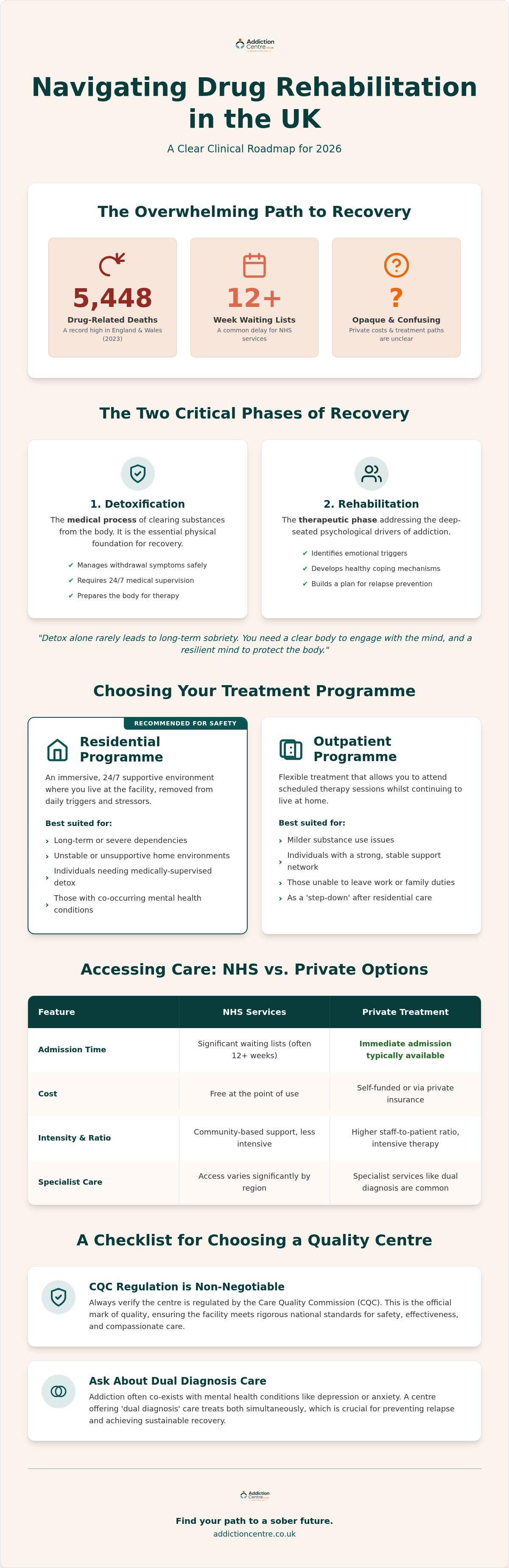
What if the most daunting part of recovery isn't the physical challenge, but the overwhelming confusion of where to start? In 2023, drug-related deaths in England and Wales reached a record high of 5,448, yet finding the right drug rehab still feels like a labyrinth of 12-week waiting lists and opaque private costs. It's natural to feel anxious about the discomfort of withdrawal or the stigma of reaching out, but you don't have to face these hurdles without a map.
We understand that you're looking for more than just a list of facilities; you're looking for a way back to yourself. This guide provides a clear clinical roadmap for 2026, breaking down everything from residential detox protocols to the latest outpatient costs. You'll gain a thorough understanding of the treatment landscape, learn how to bypass lengthy delays, and discover a curated selection of vetted centres. By the end of this article, you'll have a structured plan and the confidence to take that first, vital step toward a sober future.
Key Takeaways
- Understand that effective drug rehab is a structured clinical journey that moves beyond mere cessation to address the underlying psychological drivers of addiction.
- Learn to distinguish between the intensive, 24/7 support of residential programmes and the flexibility of outpatient care to identify which environment best suits your recovery.
- Evaluate the trade-offs between free NHS services and private treatment, focusing on how to navigate waiting lists and access immediate, personalised care.
- Gain the tools to vet potential facilities by checking CQC ratings and clinical specialisms, ensuring your chosen centre meets rigorous national safety standards.
- Discover how to streamline your search for recovery using a comprehensive directory that provides impartial guidance and confidential self-assessments.
What is Drug Rehab? Understanding the Clinical Path to Recovery
At its core, Drug rehabilitation is a structured medical and psychological programme designed to treat substance use disorders. Whilst many people view it simply as a place to stop using substances, the clinical reality is far more complex. A high-quality drug rehab focuses on the "why" behind the addiction, not just the "what". It's a journey that moves beyond the initial cessation of use to address the deep-seated behaviours and emotional triggers that sustain dependency. This comprehensive approach ensures that you aren't just surviving without a substance, but building a life where the substance is no longer necessary.
Professional intervention is vital because attempting to quit "cold turkey" is often more than just difficult; it's dangerous. Unmanaged withdrawal can lead to severe physical complications, including seizures and cardiovascular distress. Choosing a facility regulated by the Care Quality Commission (CQC) ensures that you're entering an environment that meets strict national standards for safety, effectiveness, and compassionate care. These regulations provide a safety net, ensuring the clinical pathways used are evidence-based and prioritised around your physical and mental well-being.
The Distinction Between Detox and Rehabilitation
Understanding the difference between these two phases is essential for managing expectations. Detoxification is the medical process of clearing substances from your system. It's the physical foundation, often involving medication to manage withdrawal symptoms safely. However, detox alone rarely leads to long-term sobriety. Rehabilitation is the subsequent therapeutic phase. This is where the real work happens: identifying psychological triggers, developing coping mechanisms, and planning for relapse prevention. In a professional setting, one rarely succeeds without the other. You need a clear body to engage with the mind, and a resilient mind to protect the body.
De-stigmatising the Rehab Experience in 2026
The image of drug rehab has shifted dramatically in recent years. Gone are the days of sterile, institutional corridors. Modern centres in 2026 are designed as holistic, supportive environments that prioritise your dignity. They offer a non-judgmental atmosphere where you're treated as an individual with a health condition, not a moral failing. This shift is crucial. When you feel safe and respected, your capacity for honest reflection and growth increases. Recovery isn't about punishment; it's about restoration and finding a path back to a life you value.
Types of Drug Rehabilitation Programmes in the UK
Finding the right drug rehab involves matching the intensity of care to the complexity of your individual needs. In the UK, treatment generally falls into two primary categories: residential and outpatient. Residential rehab provides a 24/7 immersive environment where you live at the facility, making it the most effective option for those with long-term dependencies or unstable home environments. Outpatient treatment allows you to attend therapy sessions whilst remaining at home, which can be an effective route for those with strong support networks and milder substance use issues.
The choice between private and statutory services often comes down to the urgency of the situation. Whilst the NHS provides vital community-based support, Getting help for drug addiction through public channels often involves navigating significant waiting lists. Private providers, conversely, typically offer immediate admission and a more intensive ratio of staff to patients. For many, the most critical factor is the availability of specialist dual diagnosis care. This approach treats addiction alongside co-occurring mental health conditions, such as depression or anxiety, ensuring that the root causes are not left unaddressed. If you're feeling overwhelmed by these choices, exploring our treatment directory can help you compare options with clarity.
Residential Drug Detox: The Gold Standard for Safety
The first 7 to 10 days of sobriety are often the most physically demanding. A Residential Drug Detox UK: A Guide to Safe, Clinical Recovery in 2026 ensures that this transition happens under constant medical supervision. Within a controlled environment, clinicians can administer medication to ease withdrawal symptoms and monitor your vital signs around the clock. This level of safety is difficult to replicate at home, where the risk of relapse or medical complications is significantly higher during the acute withdrawal phase.
Therapeutic Approaches in Modern Rehab
Once physical stabilisation is achieved, the focus shifts toward psychological healing. Cognitive Behavioural Therapy (CBT) remains a cornerstone of modern treatment, helping you identify and dismantle the thought patterns that lead to substance use. This is often complemented by group therapy, where peer support creates a sense of shared purpose and reduces the isolation often felt during early recovery. In 2026, clinical excellence also integrates holistic support. Nutrition, exercise, and mindfulness are utilised as essential tools to help repair the brain's reward system and improve overall resilience. By combining these diverse methods, a high-quality drug rehab addresses every facet of your health, from the neurological to the emotional.
NHS vs Private Drug Rehab: Comparing Costs, Timelines, and Care
Choosing between public and private drug rehab is a decision that balances your financial resources against the urgency of your clinical needs. Both pathways share the same ultimate goal of long term recovery, yet the experience of accessing them differs significantly in terms of speed and intensity. Whilst the NHS provides essential support, the path you choose often depends on how quickly you require intervention and the level of personalised care your specific situation demands.
Statutory services through the NHS are free at the point of use, making them accessible to everyone. However, the primary challenge is the timeline. With community drug teams facing high demand in 2026, waiting lists for intensive support can be lengthy. Private rehab, by contrast, typically allows for immediate admission, often within 24 to 48 hours. This speed is frequently a decisive factor for those in a state of crisis, where a delay of even a few days can feel insurmountable. Beyond speed, private facilities offer a higher staff to patient ratio, allowing for a more intensive and tailored therapeutic experience.
Cost in the private sector isn't uniform; it's influenced by the facility type, the duration of your stay, and your specific clinical requirements. A complex case involving dual diagnosis or a history of severe withdrawal may require more robust medical supervision, which affects the overall investment. It's also vital to consider the "hidden cost" of delay. The ongoing financial, physical, and emotional toll of active addiction often far outweighs the one-time cost of an effective treatment programme. Investing in a structured recovery plan is often the most cost-effective way to reclaim your health and future stability.
Navigating NHS Waiting Times in 2026
As of August 2026, waiting times for various rehab facilities across the UK can range from immediate availability to 12 weeks. Whilst some areas have seen improvements in community-based referrals, securing a residential spot through the NHS remains increasingly difficult due to strict funding criteria. Most statutory funding is directed toward outpatient programmes, which may not provide the level of immersion needed for everyone. If you're concerned about how to fund your recovery, our Paying for Rehab in the UK: 2026 Financial Guide provides a detailed breakdown of the options available to you.
The Advantages of Private Referral Services
Utilising a private referral service allows you to bypass the traditional GP bottleneck. Instead of waiting for a series of appointments, you can access an immediate clinical assessment to determine your needs. This impartial approach ensures you're matched with a facility that aligns with your personal values, lifestyle, and clinical requirements. A directory-led search simplifies the process, providing you with a vetted shortlist of centres that have the specific expertise to support your journey without the stress of an unguided search.
How to Choose the Right Rehab Centre for Your Needs
Selecting a drug rehab is one of the most significant health decisions you'll ever make. It requires a balance of clinical scrutiny and personal intuition. You aren't just looking for a facility; you're looking for a clinical team that understands your specific history and substance use. Start by assessing specialisms. A centre that excels in treating alcohol dependency might have different protocols than one focused on synthetic opioids. You need a team that speaks the language of your specific recovery needs.
Safety is paramount. Always verify the Care Quality Commission (CQC) ratings for any UK facility. These reports provide an impartial look at whether a centre is safe, effective, and well-led. Beyond the clinical data, consider the environment. Some people find healing in rural, tranquil settings that promote focus, whilst others prefer the structure of a more clinical, urban environment. The right setting is the one that allows you to feel safe enough to be vulnerable.
Look ahead to life after treatment. A robust aftercare programme is the bridge between the supportive bubble of rehab and the realities of daily life. Ask about alumni groups or ongoing therapy sessions. Because the UK landscape is vast, using a professional treatment directory can help you filter these variables quickly, ensuring you only consider centres that meet your specific criteria.
Questions to Ask During a Recovery Consultation
When you speak with an admissions coordinator, be direct. Ask about the staff-to-patient ratio and the qualifications of the clinical lead. You should also understand how your family will be involved. Are family therapy sessions integrated into the weekly schedule? Finally, clarify the medical detox protocol. You need to know exactly how withdrawal symptoms are managed and what medical professionals are on-site overnight. These details define the quality of your care.
Organising the Logistics of Admission
Preparing for entry involves managing both emotional and practical ties. If you're employed, the "Leave of Absence" conversation can be daunting, but remember that addiction is a health matter. Many employers have supportive policies for those seeking treatment. Preparing your family is equally vital; they need to understand the boundaries of residential care. If you're seeking help for a loved one who is hesitant, read our guide on Can You Force Someone into Rehab in the UK? A Guide for Families to understand the legal and ethical boundaries of intervention.
Starting Your Recovery Journey with Addiction Centre
Finding the right drug rehab shouldn't be another obstacle in your path to wellness. At Addiction Centre, we've designed our addiction treatment directory to act as a bridge between the confusion of crisis and the clarity of a structured plan. We understand that when you're searching for help, you're often doing so under immense emotional pressure. Our role is to simplify this search by providing a curated, impartial view of the UK's most recognised recovery facilities. We don't just provide a list; we offer a connection to a national network of clinics that have been vetted for their clinical excellence and safety standards.
When you reach out, you aren't speaking to a salesperson. You're connecting with an expert advisor who understands the complexities of substance use and mental health. Our guidance is entirely confidential and prioritises your dignity above all else. During your initial assessment, we listen to your specific clinical needs, your financial considerations, and your personal preferences. This allows us to provide a shortlist of options that are genuinely suitable for you, rather than a one-size-fits-all recommendation. This methodical approach ensures you feel both informed and emotionally held as you prepare for the next stage of your life.
The Benefits of a Personalised Referral
In the midst of a crisis, your emotional energy is a finite resource. Spending hours researching clinical protocols or trying to verify CQC ratings can lead to decision fatigue and unnecessary delay. A personalised referral saves you this vital energy by matching you with facilities that already meet our rigorous vetting criteria. You can learn more about this process in our guide on Navigating the UK Addiction Treatment Directory: A Comprehensive Guide to Recovery in 2026. By filtering the landscape for you, we ensure that your focus remains on your health, not on administrative hurdles.
Your Path to Long-Term Wellness
The motivation to change is a powerful but often fleeting window of opportunity. Taking immediate action whilst you feel that drive is one of the most effective ways to ensure a successful outcome. The right choice today doesn't just address the symptoms of addiction; it builds the foundation for a life defined by restoration and holistic health. Every journey begins with a single, brave conversation. If you're ready to explore your options and find a drug rehab that aligns with your needs, please contact our expert team for a confidential consultation. We're here to walk alongside you, providing the professional support and clinical insight you need to move forward with confidence.
Taking the First Step Toward a Restored Life
Choosing the right path for recovery is a profound act of self-care. It requires moving past the initial crisis to embrace a structured clinical environment that addresses both physical dependency and psychological triggers. Whether you opt for the immersive support of residential care or the flexibility of outpatient services, the key is ensuring the facility is CQC-regulated and aligned with your personal needs. By understanding the nuances of the UK treatment landscape, you've already dismantled the most significant barrier to change: uncertainty.
Finding a reputable drug rehab doesn't have to be a solitary or overwhelming task. You deserve a recovery plan that is as unique as your own history. Through our nationwide network of recognised clinics, we provide the impartial, expert guidance needed to bypass waiting lists and secure immediate support. Our advisors offer confidential consultations tailored to your specific circumstances, ensuring that you and your family feel held throughout this transition.
Begin your recovery with a confidential consultation today. You have the strength to start this journey, and with the right professional guidance, a life defined by wellness and clarity is entirely within your reach.
Frequently Asked Questions
How much does private drug rehab cost in the UK in 2026?
Private treatment costs vary significantly based on the level of care and facility chosen. In 2026, a standard 28-day residential programme typically ranges from £6,000 to £16,000, whilst outpatient sessions may cost between £50 and £150 each. These figures reflect the intensity of clinical supervision and the range of therapeutic amenities provided. It's best to consult with an advisor to find a drug rehab that aligns with your specific financial profile.
Can I get drug rehab on the NHS without a waiting list?
Accessing immediate treatment through the NHS is challenging due to high demand and limited statutory funding. Whilst community drug teams provide vital support, waiting lists for intensive residential spots can often extend to 12 weeks. If your situation is a crisis and requires an immediate start, private referral is usually the most efficient route. This allows you to bypass the GP bottleneck and enter a structured environment within days rather than months.
How long does a typical residential drug rehab programme last?
Most residential programmes are structured around a 28-day cycle, which provides enough time for a supervised detox followed by intensive therapy. However, the duration is often tailored to the individual's progress and the complexity of their addiction. Some people benefit from extended stays of 60 or 90 days to reinforce relapse prevention techniques. The length of your stay is a clinical decision made to ensure you feel stable before transitioning home.
Is drug rehab confidential, and will my employer find out?
Confidentiality is a legal and ethical cornerstone of all recognised treatment centres in the UK. Your medical records and attendance are protected by strict data privacy laws, meaning your employer won't be notified unless you choose to disclose the information yourself. Many professionals find that honesty with HR departments can lead to supportive leave-of-absence policies. However, the choice to share your journey remains entirely within your control to protect your professional reputation.
What is the difference between inpatient and outpatient drug rehab?
Inpatient rehab involves living at a dedicated facility with 24-hour medical and emotional support, which is ideal for managing severe withdrawal and high-risk dependencies. Outpatient care allows you to attend scheduled therapy sessions whilst continuing to live at home. Whilst outpatient treatment offers more flexibility for work or family life, it doesn't provide the immersive, substance-free environment that residential care offers. The right choice depends on the stability of your home environment and clinical needs.
Can I receive treatment for depression and drug addiction at the same time?
Yes, this is known as dual diagnosis care and is increasingly common in modern treatment centres. Addressing mental health conditions like depression alongside substance use is essential, as these issues are often deeply interconnected. By treating both simultaneously, clinicians can help you understand how your mood affects your cravings. This holistic approach significantly improves the chances of long-term recovery by ensuring that the underlying psychological drivers of your addiction aren't left unaddressed.
What happens if I relapse after leaving a drug rehab centre?
Relapse is often viewed as a part of the recovery process rather than a failure of the treatment itself. If this happens, it's vital to reconnect with your aftercare team or advisor immediately to adjust your recovery plan. Many centres offer refresher sessions or alumni support to help you identify what triggered the slip. The goal is to learn from the experience and strengthen your coping mechanisms to prevent a return to long-term substance use.
Do I need a GP referral to enter a private drug rehab clinic?
You don't need a referral from your GP to access private treatment. Most private clinics allow for direct admission following a confidential clinical assessment by their own medical team. This is often the fastest way to start your recovery, as it removes the need for multiple primary care appointments. An impartial drug rehab directory can help you manage this process, ensuring you find a centre that matches your needs without the delays typical of statutory services.


