
What if the most daunting part of your recovery journey isn't the decision to change, but the fear of choosing a facility that doesn't truly see you? When you search for an addiction treatment directory UK, you're met with thousands of results, making it difficult to distinguish between high-quality clinical care and subpar "cowboy" clinics. It's natural to feel overwhelmed by the choice between private residential options and the NHS, especially whilst facing the reality of long waiting lists that can stretch for months. You deserve a clear path forward that prioritises your dignity and safety above all else.
We understand that you're looking for more than just a list; you need a professional guide to help you find a sanctuary for healing. This article provides a comprehensive roadmap to the UK's 2026 treatment landscape, ensuring you can identify CQC-regulated clinics and specialist detox services tailored to your specific needs. We'll examine the differences between inpatient and outpatient care, clarify the current costs of private treatment, and show you exactly how to filter for the most effective support. By the end of this guide, you'll have the clarity and confidence to take the next vital step toward restoration.
Key Takeaways
- Discover how a structured addiction treatment directory UK helps you bypass the confusion of random searches by focusing on CQC-regulated and accredited facilities.
- Learn to distinguish between residential rehab, medical detox, and outpatient clinics to ensure the level of care matches your specific recovery needs.
- Gain a clear understanding of the 2026 pricing spectrum for private treatment and how to find providers that work with major health insurance firms.
- Identify the specialist support available for complex cases, including dual diagnosis and behavioural addictions, within the current UK landscape.
- Find out how to move from browsing listings to receiving a professional recovery consultation for a confidential and tailored clinical assessment.
Why Use an Addiction Treatment Directory in the UK?
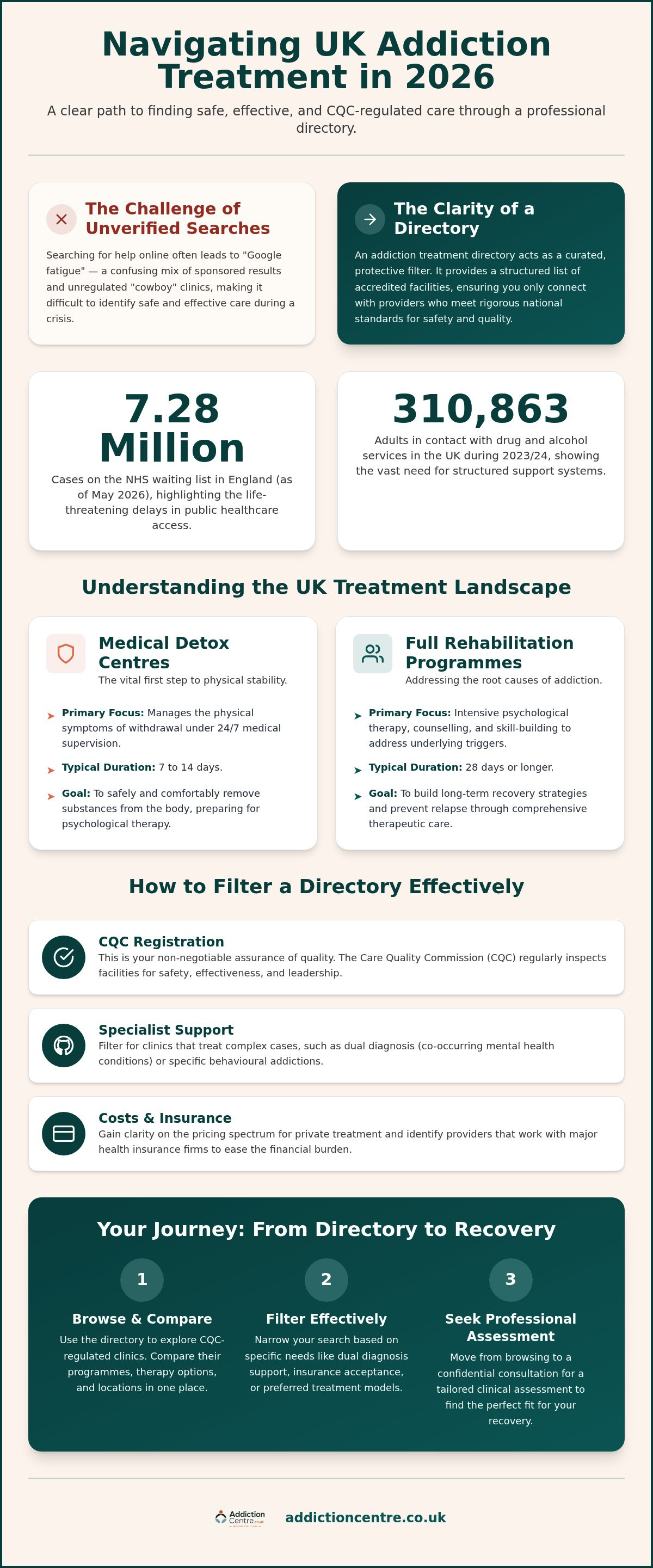
Selecting a recovery path is one of the most significant healthcare decisions you'll ever make. An addiction treatment directory UK acts as a curated database of accredited rehab facilities, designed to replace the chaos of unverified online searches with clinical structure. When you're in a state of high stress or crisis, searching for help often leads to "Google fatigue," where endless sponsored results and conflicting claims make it difficult to identify which centres are safe and regulated. A directory provides a protective layer, ensuring you only encounter facilities that meet rigorous standards of care.
This resource also serves as a vital bridge for those struggling with the current state of public healthcare. With the NHS waiting list in England reaching 7.28 million cases by May 2026, the delay in starting treatment can be life-threatening. By centralising information on private providers, a directory allows you to move from a state of uncertainty to a structured environment in a matter of hours. It provides a necessary alternative for those who cannot wait for community-based referrals and require immediate, specialist intervention.
The Benefits of Centralised Treatment Information
Using a centralised resource allows you to compare multiple facilities in a single location, saving precious time when every day counts. You'll find standardised details regarding detox protocols and therapy options, allowing you to assess the clinical suitability of a clinic without visiting dozens of different websites. This structured approach helps you understand the specific differences between residential drug detox and alcohol-specific programmes. Whether you require a facility in a quiet rural setting or a clinic in a major city, the directory offers a comprehensive view of UK-wide availability, ensuring your specific geographic and medical needs are met.
Impartiality vs Direct Provider Listings
Whilst individual clinic websites are designed to market their own services, a third-party directory offers a more objective perspective. It allows you to explore a variety of drug rehabilitation methods, from traditional 12-step programmes to holistic and medical models, without being pressured toward a specific outcome. This impartiality is crucial for finding a genuine fit for your personality and history. The Addiction Centre prioritises your long-term recovery over clinic quotas, acting as a compassionate advocate that guides you toward the right provider based on your unique assessment. This professional distance ensures that the advice you receive is focused entirely on your health and restoration, providing a calm and reliable foundation for your journey.
Understanding the UK Treatment Landscape: What’s in the Directory?
To navigate the UK's recovery options, you must first understand the clinical distinctions between different types of care. An addiction treatment directory UK organises these facilities into clear categories, such as residential rehab, outpatient clinics, and specialised detox centres. According to official UK treatment statistics, 310,863 adults were in contact with drug and alcohol services during the 2023/24 period. This vast number highlights the necessity for a structured system that identifies Care Quality Commission (CQC) registered providers. CQC registration isn't just a badge; it's your assurance that a facility is regularly inspected for safety, effectiveness, and leadership. When a directory lists a provider as "recognised and accredited," it means they have met these stringent national standards, providing you with a layer of protection against poor-quality care.
Detox Centres vs Full Rehabilitation Programmes
A common point of confusion is the difference between a clinical residential alcohol detox and a comprehensive rehabilitation programme. Detox focuses purely on the physical withdrawal process under medical supervision, typically lasting 7 to 14 days. It's a vital first step, but it doesn't address the psychological triggers of addiction. In contrast, a full rehab stay usually lasts 28 days or longer, incorporating intensive therapy. You might look for a standalone detox facility in the directory if you've already arranged community-based therapy or if you require immediate physical stabilisation before committing to a longer stay. Medical supervision is non-negotiable during this phase to manage withdrawal symptoms safely and with dignity.
Dual Diagnosis and Mental Health Integration
Success in recovery often depends on treating more than just the substance use. Searching for dual diagnosis treatment UK is critical because government data shows that 72% of people entering treatment have an identified mental health need. If you struggle with anxiety, depression, or trauma alongside addiction, a standard rehab might not suffice. You need a clinic that offers integrated psychiatric support, where mental health professionals and addiction specialists work together. This holistic approach ensures that the underlying causes of your behaviour are addressed, reducing the risk of future relapse. If you're unsure which level of care is right for your situation, you can speak with a recovery advisor for personalised guidance and support.
How to Filter the Addiction Treatment Directory Effectively
A directory is only as good as the criteria you use to filter it. When you first access an addiction treatment directory UK, the sheer volume of choices can feel overwhelming. To find a facility that aligns with your specific needs, we recommend a methodical approach that moves from clinical requirements to personal preferences. Whilst many people begin their search by looking for NHS addiction support through their GP, those seeking private residential care must take an active role in vetting their options. Following these steps ensures you don't just find a clinic, but the right clinic for your restoration.
- Identify the primary focus: Start by filtering for the specific substance or behaviour you're struggling with, as many clinics specialise in either alcohol, narcotics, or behavioural addictions like gambling.
- Select the level of care: Decide if you require a medically managed detox, a full residential programme, or the flexibility of an intensive outpatient clinic.
- Check for clinical specialisations: If you have a history of trauma, ensure the facility offers trauma-informed care and employs staff trained in complex psychological needs.
- Verify the regulatory standing: Always cross-reference directory listings with the latest inspection reports to confirm the facility's current performance.
- Assess the therapeutic model: Look for a match between the clinic's philosophy and your values, whether that involves Cognitive Behavioural Therapy (CBT), 12-step participation, or holistic methods like equine therapy.
The Crucial Role of CQC Ratings
Reading a Care Quality Commission (CQC) report is the most reliable way to gauge the quality of a UK facility. These reports score clinics across five key domains: Safety, Effectiveness, Caring, Responsiveness, and Leadership. You should prioritise facilities that achieve "Good" or "Outstanding" ratings in these areas. We strongly advise that you avoid any UK-based facility that isn't currently registered with the CQC, as they operate outside the legal framework designed to protect patients. As of 2026, the CQC remains the primary statutory body responsible for monitoring and inspecting addiction services to ensure they provide safe, compassionate, and high-quality clinical care.
Comparing Treatment Models and Philosophies
Every individual responds differently to various recovery philosophies. Some facilities focus on abstinence-based models, which require a total cessation of all substances, whilst others may utilise harm reduction approaches that focus on gradual stability. You'll also find a choice between purely clinical environments, which feel like modern hospitals, and holistic retreats set in tranquil rural locations. It's vital to match the treatment philosophy to your personality; if you value structure and tradition, a 12-step programme might be ideal. Conversely, if you prefer a science-led, individualised approach, a clinic focused on evidence-based psychotherapy may be more effective. Choosing a model that resonates with your values creates a sense of partnership in your recovery, making the journey feel more manageable and hopeful.
Navigating Costs and Access Through the Directory
Understanding the financial commitment required for recovery is often the final hurdle before seeking help. An addiction treatment directory UK provides a transparent view of the price spectrum, allowing you to compare facilities ranging from basic clinical care to luxury residential rehab. Whilst the NHS offers free addiction services, the reality of the current landscape involves significant waiting times, with a median wait of 12.4 weeks to start treatment in England as of May 2026. For many, this delay is a risk they can't afford to take. Private options provide immediate speed of access, often securing a bed within hours of an initial inquiry.
When you're browsing the directory, it's important to look beyond the headline price. You should identify facilities that accept private health insurance, as many leading UK providers work with firms like Bupa or AXA. Be mindful of potential hidden costs that might not be included in a standard quote, such as specific detox fees, required medication, or extended aftercare programmes. A comprehensive directory helps you uncover these details early, ensuring you can make an informed decision without financial surprises during your stay.
Private Rehab Cost Factors in 2026
Several variables influence the final cost of your treatment. Location plays a significant role; clinics in the south of England or in secluded rural estates often carry a higher price point than those in more urban or northern regions. Amenities also vary widely, with luxury facilities offering private en-suite rooms and holistic therapies that can cost up to £10,000 per week. For a more detailed breakdown of how to manage these expenses, you can consult our 2026 financial guide. We generally recommend all-inclusive programmes, as they provide a fixed cost for accommodation, meals, and medical detox, offering more financial certainty than pay-as-you-go therapy models.
Accessing Treatment Without a Waiting List
The timing of an intervention is often the most critical factor in its success. Waiting weeks for a community referral can lead to a loss of motivation or a dangerous escalation in substance use. Using the directory allows you to identify clinics with immediate availability, such as Banbury Lodge or Castle Craig, which often have beds ready for admission. Private treatment facility referrals can often secure a placement faster than direct enquiries because advisors have real-time data on occupancy across the entire network. If you're ready to begin your journey today, you can view our full directory of accredited UK clinics to find a facility that matches your budget and timeline.
From Directory to Recovery: The Next Steps
Moving from the research phase to active engagement is often the moment where uncertainty feels most acute. Once you've used an addiction treatment directory UK to shortlist potential facilities, the next step is to transition from browsing to booking a clinical assessment. This shift requires moving beyond static listings and engaging with the reality of the treatment environment. Whilst a solo search provides a foundation of knowledge, a personalised recommendation from a professional advisor often identifies nuances in care that an algorithm might miss. Taking this step transforms a list of names into a concrete plan for your restoration.
Preparing for your first conversation with a facility is essential for your peace of mind. You'll want to have a brief history of your substance use and any previous attempts at recovery ready to share. It's also the time to ask specific questions about the daily schedule, the qualifications of the medical staff, and the specific aftercare support provided. This dialogue ensures that the clinic isn't just "good" in a general sense, but is the right clinical and cultural fit for your personality and history.
The Value of Expert Consultations
Expert recovery consultations provide a vital bridge between the directory and the clinic doors. At the Addiction Centre, our advisors act as compassionate advocates who help you narrow down your list based on real-time availability and clinical suitability. This process often begins with a confidential online self-assessment, which allows us to understand your needs without judgement or pressure. By matching your specific clinical requirements, such as dual diagnosis support or a specific detox protocol, we ensure that the facility you choose is equipped to handle the complexities of your journey. This professional guidance provides a sense of "calm in the storm," allowing you to focus on your health whilst we handle the clinical matching.
Organising the Transition to Care
The logistics of entering treatment require careful organisation to ensure a smooth transition. You'll need to consider transport to the facility, the transfer of relevant medical records, and how to involve your family in the process. If you're supporting a loved one, you may find our guide on how to get someone into rehab helpful for managing family-led transitions with dignity. Upon arrival at a directory-listed clinic, the first 24 hours are typically focused on a thorough medical intake and settling into your new environment. You can expect a warm, structured welcome designed to lower your anxiety and prepare you for the therapeutic work ahead. This initial period is about safety and stabilisation, providing the steady foundation needed for long-term healing.
Embracing Clarity on Your Path to Healing
Finding the right support is a deeply personal process that requires both clinical precision and compassionate guidance. By using a reputable addiction treatment directory UK, you've already begun the work of filtering through the noise to find a facility that prioritises your safety and dignity. Whether you require an immediate residential alcohol detox or a long-term therapeutic programme, the choice you make today defines the trajectory of your health for years to come. It's a transition from a state of uncertainty toward a structured environment where restoration can truly begin.
You don't have to navigate this complex landscape alone. Accessing CQC-regulated facilities and receiving expert guidance from addiction specialists ensures that your path to recovery is built on a foundation of integrity and professional excellence. We invite you to start your confidential assessment with Addiction Centre today to receive the impartial advice you need to move forward. Your journey toward a healthier, more fulfilling life is entirely possible, and we're here to walk alongside you every step of the way.
Frequently Asked Questions
How do I know if a rehab centre in the directory is trustworthy?
Trustworthy centres are identified by their current Care Quality Commission (CQC) registration and "Good" or "Outstanding" ratings. A reliable directory only includes clinics that have undergone rigorous statutory inspections. You should also look for clear information regarding medical supervision and evidence-based therapy models. If a facility isn't transparent about its clinical leadership or regulatory standing, it's best to seek an alternative that prioritises your safety and long-term restoration.
Is there a difference between an addiction directory and a referral service?
A directory is a curated database for independent research, whilst a referral service provides active, professional guidance to help you choose. Whilst you can browse a directory on your own, a referral service involves a confidential assessment to match your clinical needs with a specific provider. Many platforms combine these tools, allowing you to move from general browsing to a personalised recommendation that ensures you find the most suitable environment for your recovery.
Can I find NHS-funded treatment in a private addiction directory?
Private directories primarily list residential and outpatient facilities that require payment or insurance, though some offer guidance on local community pathways. Because the NHS waiting list for treatment can be lengthy, these directories are designed for those seeking immediate admission. If you're looking for state-funded options, your GP remains the primary point of contact. However, a directory is invaluable for comparing the speed and specialist services available within the private sector.
What should I look for in a CQC report for an addiction centre?
You should prioritise the "Safe," "Effective," and "Caring" domains within a CQC report. These scores tell you how well a facility manages medical detox and whether they treat patients with the dignity they deserve. It's also vital to check the date of the last inspection to ensure the report reflects current 2026 standards. A high rating in leadership often indicates a well-organised clinic with consistent clinical outcomes and reliable aftercare support.
How much does private addiction treatment cost in the UK in 2026?
Prices for private care depend on the facility’s location, the length of your stay, and the level of medical intervention required. A 7 to 10-day detox programme is generally the entry point, whilst 28-day residential stays with intensive therapy represent a more comprehensive investment. Luxury facilities with en-suite rooms and holistic amenities will sit at the higher end of the spectrum. Always ask for an all-inclusive quote to avoid unexpected fees.
Are the listings in the directory updated regularly for 2026?
Yes, a professional addiction treatment directory UK is updated constantly to reflect the latest CQC inspection results and changes in clinical offerings. In 2026, it's more important than ever to have real-time data on bed availability and specialist service updates. Regular audits ensure that every listed clinic continues to meet the high standards required for accreditation, providing you with a reliable and current resource during a time of crisis.
Can I find specialist support for dual diagnosis in the directory?
Specialist support for dual diagnosis is a standard filter in high-quality directories because integrated care is essential for long-term success. You can use an addiction treatment directory UK to find clinics that employ both psychiatric professionals and addiction specialists. This ensures that underlying conditions like anxiety or depression are treated simultaneously with the substance use, which is vital for the 72% of people who enter treatment with co-occurring needs.
How do I filter for the best rehab clinics in the UK for my specific addiction?
To find the most effective clinic, filter by the primary substance or behaviour you need help with and the level of care required. You can further refine your search by therapeutic philosophy, such as 12-step or holistic models. This targeted approach ensures you're looking at facilities with proven expertise in your specific area. Matching the clinic's specialisation to your personal history is the most effective way to ensure a successful and sustainable recovery.


