
With the 18-24 age group now facing a 7.1% addiction rate, the landscape of gambling-related harm in Britain has reached a critical turning point in 2026. You might feel as though you're trapped in a cycle of mounting financial debt and the painful silence of broken trust with those you love most. It's a heavy burden to carry alone, but finding the right gambling addiction treatment UK pathway is the first step toward reclaiming your life and your dignity.
We understand that the choice between navigating NHS waiting lists and seeking immediate private care can feel overwhelming when you're in a state of crisis. This guide offers a clear, compassionate roadmap to the most effective recovery options available right now. We'll examine the expansion of specialist NHS clinics, the specific costs and benefits of private residential centres, and how to build a support network that prevents relapse; giving you the tools to regain both financial and emotional control for the long term. You don't have to navigate this journey without a steady, professional hand to guide you.
Key Takeaways
- Understand the neurological mechanisms of disordered gambling and why "chasing losses" is a biological loop rather than a failure of willpower.
- Explore evidence-based gambling addiction treatment UK pathways, including how Cognitive Behavioural Therapy (CBT) helps deconstruct the gambler’s fallacy.
- Learn to navigate the differences between specialist NHS clinics and private residential recovery, ensuring you find the right level of care for your specific needs.
- Discover how to use confidential self-assessments and impartial directories to bypass long waiting lists and access high-quality, CQC-registered facilities.
- Gain practical steps for building a long-term support network that prioritises your dignity and helps you regain financial and emotional control.
Recognising the Need for Gambling Addiction Treatment in the UK
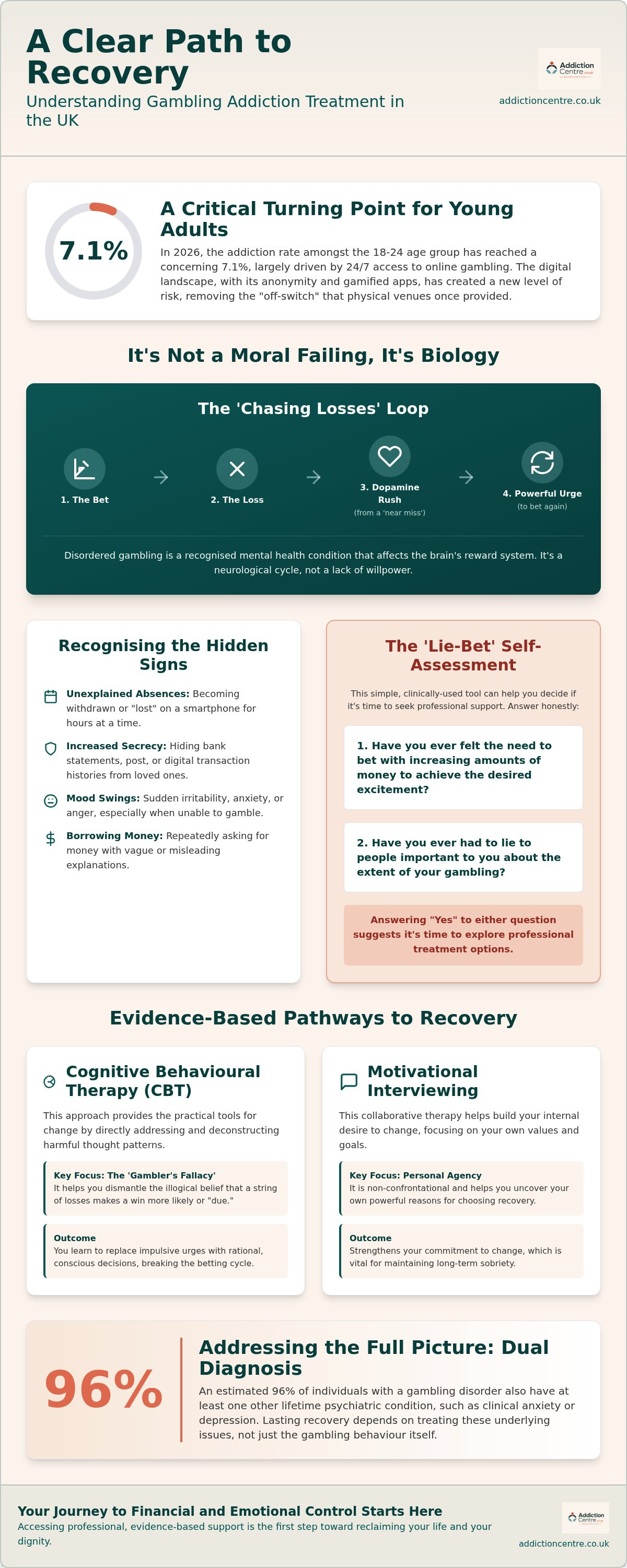
Admitting that a recreational habit has transformed into a compulsive need is a courageous first step toward restoration. In the medical community, we define this struggle as disordered gambling, a recognised mental health condition that affects the brain's reward system in ways remarkably similar to substance use disorders. When you begin seeking gambling addiction treatment UK, it's helpful to understand that this isn't a failure of character. It's a neurological shift where the "chasing losses" cycle creates a powerful loop; the brain becomes conditioned to value the dopamine hit of the "near miss" more than the reality of the financial loss.
Because Problem gambling often carries a heavy weight of shame, the signs are frequently hidden from family and colleagues until a crisis occurs. You might notice subtle shifts in your behaviour or the behaviour of a loved one, such as:
- Unexplained absences or becoming "lost" in a smartphone for hours at a time.
- Increasingly secretive behaviour regarding bank statements, post, or digital transaction histories.
- Sudden irritability, mood swings, or anxiety when a sporting event or betting window is missed.
- Borrowing money from friends or family under vague or misleading pretences to cover "short-term" gaps.
Early intervention is vital. It's far easier to rebuild trust and financial stability whilst the situation is still manageable, rather than waiting for legal complications or total insolvency to force your hand. Acknowledging the problem early allows you to access a wider range of outpatient and community-based support before residential care becomes the only viable path.
The Impact of Online vs In-person Gambling
The transition from high-street bookmakers to 24/7 smartphone access has fundamentally changed how harm develops in the UK. Digital anonymity allows a problem to grow in total isolation, away from the watchful eyes of friends or staff at a physical venue. Modern gaming features like "loot boxes" and the heavy gamification of betting apps have further blurred the lines between entertainment and risk. In 2026, with the 18-24 age group seeing addiction rates as high as 7.1%, these digital triggers are particularly potent. This constant availability means the "off switch" that once existed when leaving a casino or betting shop has effectively vanished.
Self-Assessment: When to Seek Professional Support
If you're unsure whether your habits warrant clinical help, consider your relationship with time and honesty. The "lie-bet" screening tool, which remains a gold standard for UK clinicians, asks two primary questions. First, have you ever felt the need to bet more and more money? Second, have you ever had to lie to people important to you about how much you gambled? Answering "yes" to either suggests it's time to explore professional gambling addiction treatment UK options.
In 2026, the threshold for clinical intervention is met whenever gambling activities cause persistent distress or impede your ability to maintain stable personal, financial, or occupational health.
Evidence-Based Treatment Pathways for Gambling Recovery
Recovery is rarely a linear path. It requires a clinical framework that addresses both the external behaviour and the internal psychological triggers. Effective gambling addiction treatment UK programmes focus on deconstructing the cognitive distortions that keep the cycle of betting alive. One of the most successful methods is Cognitive Behavioural Therapy (CBT). This approach specifically targets the "gambler’s fallacy," which is the illogical belief that a win is "due" because of a string of previous losses. By identifying these patterns, you can begin to replace impulsive urges with rational thought processes.
Whilst CBT provides the tools for change, Motivational Interviewing helps build the internal desire to use them. This technique is particularly effective for those who feel conflicted about stopping. It doesn't use confrontation; instead, it works with you to explore your personal values and goals, helping you find your own reasons for choosing a life free from gambling. This sense of agency is often the missing piece in maintaining long-term sobriety.
Crucially, high-quality care must address the "dual diagnosis" aspect of recovery. It's estimated that approximately 96% of individuals diagnosed with a gambling disorder have at least one other lifetime psychiatric condition, such as clinical anxiety or depression. If these underlying issues are ignored, the urge to gamble often returns as a form of self-medication. Accessing NHS gambling addiction support or private clinical care ensures that your mental health is treated as a whole, rather than in isolation. If you're unsure which path fits your needs, an impartial recovery consultation can help clarify your options.
Residential Rehab for Gambling Addiction
For individuals in a state of high risk or those with a history of severe relapse, a residential stay is often the safest option. These facilities provide a 24/7 gambling-free environment, removing the immediate access to betting apps and venues that can undermine early recovery efforts. This "therapeutic bubble" allows you to focus entirely on your healing without the distractions of daily life. For those experiencing cross-addictions, such as using alcohol or substances to cope with gambling stress, integrating residential drug detox UK services can provide the necessary medical foundation for a safe recovery.
Outpatient and Community-Based Support
Outpatient programmes offer a flexible alternative for those who need to maintain work or family commitments whilst receiving professional care. These pathways often combine individual therapy with peer-support groups like Gamblers Anonymous (GA). The power of shared lived experience in these groups is immense, as it directly combats the intense shame that often accompanies financial loss. To support these efforts, we recommend utilising digital barriers such as GAMSTOP, which provides a centralised way to self-exclude from all UK-licensed gambling sites, creating a vital safety net during vulnerable moments.
Comparing NHS, Charitable, and Private Treatment Options
Choosing the right environment for recovery is a decision that balances your immediate needs with available resources. In the UK, the landscape of gambling addiction treatment UK is divided into three primary tiers: the NHS, charitable organisations, and private residential centres. The NHS has expanded its reach to 15 specialist gambling clinics across England as of 2026, offering high clinical standards at no direct cost. However, the 130% surge in referrals over the last two years means that regional availability is often a hurdle. Whilst charities like GamCare provide excellent peer-led guidance and initial support, they may not offer the high-intensity, round-the-clock intervention required for those in a deep state of crisis.
For many, the decision involves a difficult cost-benefit analysis. It's helpful to weigh the one-off investment of professional care against the compounding, daily financial losses of an active addiction. When you consider the legal worries and total insolvency that often accompany disordered gambling, the structured safety of a private facility often becomes the most logical path toward long-term stability. You're not just paying for a bed; you're investing in a clinical framework designed to halt a downward spiral before it becomes irreversible.
The Benefits of Private Residential Recovery
In a financial or emotional crisis, waiting is rarely a safe option. Private residential centres offer immediate admission, providing an instant circuit-breaker to the gambling cycle. These facilities deliver personalised therapy plans that go far beyond standard community care, allowing you to address deep-seated psychological triggers in a focused, distraction-free setting. If you're concerned about the financial commitment, our guide on how to pay for rehab UK explores various funding pathways, including private insurance and structured payment plans.
Navigating NHS Waiting Lists and Referrals
Accessing state-funded care begins with a GP referral, which leads to an assessment by the National Problem Gambling Clinic or a regional hub. Clinicians will evaluate your level of harm to determine the most appropriate placement. It's important to be realistic about timelines; as of August 2026, wait times for some specialist centres, such as BAC O'Connor, can range from 10 to 12 weeks. During this interim period, it's vital to stay connected to community support groups and use digital blocking tools to manage the risk of relapse whilst you wait for a residential bed to become available.
How to Access Professional Gambling Support in the UK
Accessing gambling addiction treatment UK shouldn't feel like a second job. When you're already exhausted by the cycle of betting and debt, a clear, five-step pathway provides the structure you need to move forward. This methodical approach ensures that you don't just find a bed, but that you find the specific clinical environment that gives you the best chance of long-term success.
The journey begins with a confidential self-assessment to clarify the level of care required for your specific situation. From there, you can research recognised clinics through a comprehensive directory; this allows you to see the full range of UK options rather than being limited to a single provider's view. Once you've narrowed your choices, arranging a recovery consultation allows you to discuss your triggers and budget in a safe, non-judgemental space. After securing a placement at a centre that specialises in disordered gambling, the final step is organising your work and family commitments. This preparation ensures you can enter treatment with a clear mind, knowing your responsibilities are managed whilst you focus on your health.
The Role of Recovery Consultations
A consultation is more than just a booking call; it's a clinical matching process. A professional advisor helps identify hidden mental health needs that might be driving your behaviour, ensuring you're matched with a clinic that understands your specific type of gambling, whether it's high-stakes sports betting or anonymous online slots. This is particularly important for ensuring you receive dual diagnosis treatment UK if you're also struggling with co-occurring anxiety or depression. Without this integrated approach, the underlying causes of your addiction may remain unaddressed.
Supporting a Loved One into Treatment
If you're reading this on behalf of a family member, your approach is critical. It's best to initiate the conversation during a period of calm, rather than immediately after a financial loss, to avoid triggering defensiveness. Focus on your concern for their well-being and the person they were before the addiction took hold. If they're resistant to help, professional intervention services in the UK can help facilitate a breakthrough in a supportive manner. For families dealing with severe cases, it's also helpful to understand the legal context around can you force someone into rehab UK to manage expectations and explore all available protective avenues.
You can start this process today by using our confidential addiction treatment directory to find a specialist centre that meets your specific needs.
Finding the Right Recovery Centre via the UK Treatment Directory
Navigating the sheer variety of gambling addiction treatment UK providers can be a daunting task, especially when you're already managing the weight of a personal or financial crisis. An impartial directory simplifies this search by offering a transparent, bird's-eye view of the clinical landscape. Instead of being limited to the services of a single provider, you can compare different facilities based on their specific specialisms, therapeutic approaches, and regional locations. This clarity is essential for moving from a state of uncertainty toward a structured plan for restoration.
When selecting a facility, one non-negotiable factor is ensuring the centre is registered with the Care Quality Commission (CQC). This registration is your guarantee that the facility meets the essential standards of safety, effectiveness, and compassionate care required by UK law. Beyond the clinical environment, it's also vital to consider the value of aftercare. A gamble-free life is sustained through long-term support networks and continued therapy that helps you navigate high-risk situations in your daily life. Addiction Centre acts as a vital bridge in this process, connecting you with providers who view recovery as a lifelong journey rather than a short-term fix.
Why Addiction Centre is a Trusted Referral Partner
We maintain a vetted network of the UK’s leading addiction rehab centres, ensuring that every referral we make meets our rigorous standards for clinical excellence. Your confidentiality and dignity are prioritised throughout the process; we understand the sensitive nature of the financial and relationship strains you may be facing. Our expert advisors provide advice that considers the holistic needs of the individual and their family, ensuring the chosen path is both clinically sound and practically sustainable. We don't just find you a bed; we find you a partnership for change.
Taking the First Step Toward a Gamble-Free Future
The most important action you can take is to stop the cycle of harm today. Every day spent in active addiction compounds the financial and emotional damage, but a single phone call or assessment can change the trajectory of your recovery. It's about moving from a state of confusion to a structured, professional environment where you feel both informed and emotionally held. By accessing the right gambling addiction treatment UK now, you can begin the process of regaining control and rebuilding the trust that has been lost.
Explore our UK addiction treatment directory and start your journey today.
Reclaiming Your Future from Disordered Gambling
The path to recovery is built upon the understanding that compulsive betting is a treatable mental health condition rather than a failure of willpower. By identifying the neurological loops that drive the "chasing losses" behaviour and accessing evidence-based therapies, you can begin to dismantle the cognitive distortions that have kept you trapped. Whether you choose the clinical excellence of a specialist NHS clinic or the immediate, intensive environment of a private residential facility, the most critical step is moving from isolation into a structured support network.
Finding the right gambling addiction treatment UK pathway allows you to address the hidden emotional triggers and financial stressors that perpetuate the cycle. You don't have to navigate these complex choices alone. At Addiction Centre, we provide impartial advice on recognised UK rehab clinics and offer confidential recovery consultations to help you find the best fit for your needs. Begin your confidential assessment with Addiction Centre today to access our comprehensive directory of CQC-registered providers. Taking action now is the most powerful way to protect your future and restore the trust of those you love. There's a life of clarity and control waiting for you.
Frequently Asked Questions
Is gambling addiction treatment free on the NHS?
Yes, gambling addiction treatment UK services are available free of charge through the NHS for those who meet the clinical criteria. You'll typically need a GP referral to access one of the 15 specialist gambling clinics currently operating across England. Whilst this is a high-standard clinical option, demand has increased by 130% over the past year; this means you may face a wait before your assessment begins.
How long does residential gambling rehab typically last in the UK?
Most residential recovery programmes in the UK last for 28 days, though the duration can be tailored to your specific needs. Shorter intensive stays of 7 to 14 days focus on immediate crisis stabilisation, whilst longer stays of up to 90 days are available for those with complex mental health needs. The length of your stay is determined during your initial clinical assessment to ensure the best possible outcome.
Can I get private gambling treatment through my health insurance?
Yes, many leading UK private health insurers provide coverage for gambling addiction treatment as part of their mental health and behavioural health provision. It's essential to check your specific policy details for terms like "disordered gambling" or "compulsive behaviour." Most CQC-registered facilities work directly with major insurance providers to facilitate your admission, allowing you to bypass the waiting lists often found within state-funded services.
What is the difference between Gamblers Anonymous and professional therapy?
Gamblers Anonymous is a peer-led support network based on shared lived experience, whilst professional therapy is a clinical intervention delivered by qualified experts. GA uses a 12-step model to provide community support and accountability in a group setting. Professional therapy, such as Cognitive Behavioural Therapy, focuses on deconstructing the neurological triggers and psychological patterns that drive the addiction, providing you with evidence-based tools for long-term recovery.
Will my employer find out if I attend a gambling treatment centre?
No, your right to medical confidentiality is strictly protected under UK law, and your employer won't be informed without your explicit consent. Both the NHS and private clinics operate with high levels of discretion to protect your professional reputation. If you require a "fit note" for a period of absence, your clinician can provide one that lists a general medical reason rather than specifying the exact nature of your treatment.
What happens during a typical day in residential gambling rehab?
A typical day in residential rehab is highly structured to create a safe, distraction-free environment for your recovery. Your schedule will usually include individual CBT sessions, group therapy workshops, and educational seminars on relapse prevention. Most centres also incorporate holistic activities like mindfulness or exercise, whilst restricting access to smartphones and digital devices to ensure you're fully protected from the triggers of online betting apps.
Can a gambling addiction be fully cured, or is it lifelong management?
Disordered gambling is generally viewed as a chronic condition that requires ongoing management rather than a permanent "cure." Recovery is a lifelong journey of maintaining the tools and resilience you develop during your initial gambling addiction treatment UK programme. Whilst the urge to gamble may diminish significantly over time, staying connected to a support network ensures you can navigate future high-risk situations without returning to old behaviours.
How do I help a family member who refuses to admit they have a gambling problem?
Helping a family member begins with expressing your concerns during a calm period, focusing on your love for them rather than their financial failures. Avoid using shaming or confrontational language, as this often triggers further defensiveness and secrecy. You might suggest a confidential, third-party assessment with a recovery advisor; this can help them understand the clinical nature of their struggle without feeling directly attacked by those closest to them.


