
If you are searching for a specific date on the calendar to mark the end of your journey, you might be asking the wrong question. When you find yourself wondering how long does rehab take, it is often because you are balancing the urgent need for help with the anxiety of being away from your family or the worry of losing your position at work. It's natural to feel this pressure, yet true recovery is a structured clinical process that prioritises your long-term stability over a fast exit.
This guide will help you understand the essential stages of treatment, from the initial physical detox to the intensive psychological work required for lasting change. By exploring the differences between short-term stays and comprehensive residential programmes, you can gain the confidence to choose a recovery duration that truly supports your health and helps prevent the cycle of relapse. We will walk you through the various UK options available; helping you move from a state of confusion toward a clear, manageable path tailored to your unique circumstances.
Key Takeaways
- Understand the distinct clinical stages of recovery, from the immediate physical stabilisation of detox to the long-term psychological healing of residential care.
- Discover how long does rehab take by exploring standard timelines, ranging from 7-day medical detoxes to comprehensive 28-day intensive programmes.
- Learn how the specific substance and the duration of use dictate the time required for your brain’s chemistry to safely recalibrate.
- Compare the high-intensity immersion of residential rehab with the flexibility of outpatient settings to find the right environment for your lifestyle.
- Gain clarity on why professional consultations are the most reliable way to determine a treatment duration that minimises the risk of future relapse.
Understanding Rehab Durations: Why There Is No One-Size-Fits-All
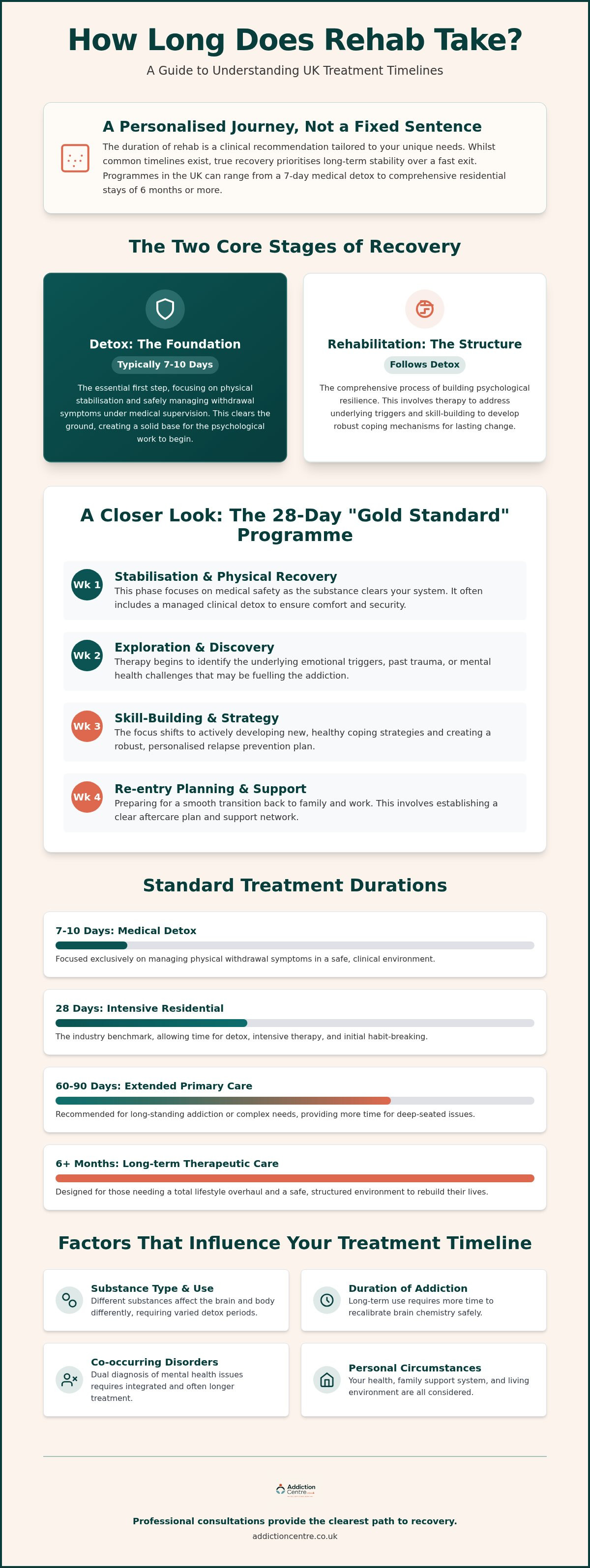
One of the most frequent questions we hear from those seeking support is, naturally, "How long will I be away?" It is a query rooted in both practical necessity and a deep desire to return to a life of health and purpose. When you find yourself asking how long does rehab take, it is vital to view the duration not as a fixed sentence, but as a clinical recommendation tailored to your physical health and the severity of your dependency. Whilst a 28-day stay is often cited as the industry benchmark, clinical programmes in the UK can range from a 7-day intensive detox to 6-month residential stays for complex cases.
It is helpful to remember that time spent in a residential facility is only the first phase of a lifelong recovery journey. Comprehensive Drug rehabilitation involves more than just a period of abstinence; it requires a fundamental recalibration of your habits, environment, and emotional responses. Your clinical team will work with you to determine a timeline that provides enough space for this transformation to take root, ensuring you don't return to your daily life before you are truly ready.
The Difference Between Detox and Full Rehabilitation
A common point of confusion involves the distinction between detox and full rehabilitation. Detox is the essential first step, typically lasting between 7 and 10 days, where the primary focus is on physical stabilisation and managing withdrawal symptoms safely. You can think of detox as the foundation of a house; it's necessary to clear the ground and set a solid base before you can begin to build. However, a foundation alone does not make a home. Rehab is the process of building the walls and roof, providing the psychological tools and coping mechanisms that protect you from the elements of everyday life. Without the therapy and skill-building that follow detox, the risk of relapse remains high because the underlying triggers have not been addressed.
The "Gold Standard": Why 28 Days is the Bench-mark
The 28-day model remains the "gold standard" for many UK clinics because it aligns with the psychological time required to break old cycles and begin forming new, healthier behaviours. When determining how long does rehab take for your specific needs, clinicians often look at how you might progress through these four distinct weeks:
- Week One: Stabilisation and physical recovery. This phase often includes a residential alcohol detox UK programme to ensure medical safety whilst the substance clears your system.
- Week Two: Exploration. You begin to identify the underlying emotional triggers, trauma, or mental health challenges that fuel the addiction.
- Week Three: Skill-building. The focus shifts to developing new coping strategies and robust relapse prevention plans.
- Week Four: Re-entry planning. Preparing for the transition back to your family and workplace with a clear support network in place.
Standard Treatment Timelines: What to Expect
Understanding the standard timelines for recovery helps demystify the process and sets realistic expectations for your journey. When you ask how long does rehab take, the answer is usually categorised by the depth of clinical support required. These programmes are designed to move you through specific stages of healing, ensuring that each step provides a stable platform for the next. These timelines aren't arbitrary; they're based on clinical evidence regarding how the human brain and body recover from dependency.
- 7 to 10 Days: This period focuses almost exclusively on clinical detox and the immediate management of physical withdrawal symptoms.
- 28 Days (4 Weeks): The most frequent duration for residential stays, this timeline allows for intensive daily therapy, group sessions, and the start of psychological habit-breaking.
- 60 to 90 Days: Known as extended primary care, this is often recommended for individuals with long-standing chronic addiction or complex needs.
- Long-term Residential Care (6 Months+): These therapeutic communities are designed for those requiring a total lifestyle overhaul and a safe environment to rebuild their lives from the ground up.
Short-term Stays: The 7-Day Detox
A short-term stay is typically reserved for individuals with a lower level of physical dependency or those who intend to transition immediately into a highly structured intensive outpatient programme. Whilst it's a vital first step, it's important to recognise its limitations. A 7-day stay addresses the body's physical need for the substance, but it rarely provides enough time to tackle the complex psychological triggers that lead to use. For many, a residential drug detox UK is the safest way to navigate this initial week, providing medical supervision during the most vulnerable phase of withdrawal.
Extended Care: When 90 Days is Recommended
For some, the standard 28-day stay doesn't offer enough space to address deep-seated issues. Clinicians often recommend a 90-day programme for "dual diagnosis" cases, where addiction co-exists with mental health conditions like depression, anxiety, or PTSD. This extended timeframe allows for more intensive trauma work and the thorough integration of Cognitive Behavioural Therapy (CBT). It ensures that both the mental health condition and the addiction are treated simultaneously, which is crucial for preventing future relapse. You can find more detail on these integrated approaches in our dual diagnosis treatment UK guide. If you're unsure which timeline fits your situation, a professional recovery consultation can provide the clarity you need to move forward with confidence.
Factors That Influence How Long Your Treatment Will Take
While standard programmes provide a helpful framework, the actual answer to how long does rehab take depends on a complex interplay of biological and psychological variables. No two journeys are identical because no two individuals arrive with the same history or health profile. Clinicians assess several key factors to determine whether a standard 28-day stay is sufficient or if a more extended period of care is required to ensure your safety and long-term success.
- Type of Substance: The chemical nature of the substance significantly impacts the timeline. Whilst alcohol and heroin detox can often be managed within 7 to 10 days, benzodiazepines require a meticulous, months-long taper to safely manage the risk of seizures and severe rebound anxiety.
- Severity and Duration of Use: Long-term, heavy use causes deep structural changes in the brain. The longer the history of dependency, the more time the brain’s chemistry requires to recalibrate and return to a state of natural balance.
- Dual Diagnosis: If you are managing depression, PTSD, or anxiety alongside addiction, your therapeutic timeline will naturally extend. Treating co-occurring disorders requires an integrated approach that cannot be rushed if you are to achieve lasting stability.
- Physical Health and Age: Your body's ability to process medications and recover from the strain of withdrawal varies. Older individuals or those with complications such as liver or heart issues may require a slower, more cautious detox protocol to ensure medical safety.
The Biological Timeline of Brain Recovery
Neuroplasticity is the brain's remarkable ability to reorganise itself by forming new neural connections, a process that serves as the biological engine of recovery but requires significant time to override years of addictive patterns. It is a common clinical observation that the cognitive "fog" of active addiction often takes between 21 and 30 days to lift. It is only after this initial month that you can begin to engage meaningfully with the deep, transformative work of psychological therapy. Furthermore, clinicians must account for Post-Acute Withdrawal Syndrome (PAWS), which involves lingering symptoms like mood swings and sleep disturbances that can persist for months, requiring ongoing professional monitoring and support.
Personal Progress and Engagement
Your treatment plan is not a static schedule; it's a living document that evolves as you do. If certain clinical milestones aren't met within the initial timeframe, your care team may suggest extending your stay to solidify your progress. Your personal "readiness to change" plays a vital role here. Those who are fully engaged and proactive in their therapy often find they move through the initial phases with more clarity, whereas those struggling with deep-seated resistance may need additional time to feel confident in their new coping mechanisms. When considering how long does rehab take, it's often more productive to focus on the quality of your milestones rather than the number of days on the calendar.
Comparing Treatment Settings: Residential vs. Outpatient Time Commitments
When you're deciding on a treatment path, you must weigh the intensity of the environment against the time you can realistically spend away from your daily responsibilities. The question of how long does rehab take is inseparable from the setting you choose. Residential care offers a complete "reset" through 24/7 immersion, typically for 28 days or more. This high-intensity approach provides the highest success rates for severe cases because it removes you from the immediate triggers and stressors of your home environment.
In contrast, community or NHS support often involves weekly appointments that can last for months or even years. Whilst these services are vital, they lack the concentrated therapeutic "dose" found in a residential setting. In the UK, the choice between private and public care also impacts your timeline significantly. Private facilities often provide immediate admission, whereas the typical waiting time for NHS-funded residential rehab in England ranges from 3 to 9 months, depending on your local authority’s funding and availability in 2026.
- Residential Rehab: 24/7 clinical supervision for 28+ days; provides a safe, substance-free bubble for intensive healing.
- Intensive Outpatient (IOP): 3 to 5 days a week for several hours; allows you to remain at home but requires much longer to complete.
- NHS Community Services: Weekly sessions that provide long-term maintenance but may not offer the rapid stabilisation required for acute dependency.
The Pros and Cons of Private Residential Care
The primary advantage of private residential care is the speed of intervention. When you're in crisis, waiting months for an NHS bed isn't always a safe option. Private clinics can often admit patients within 24 to 48 hours, concentrating months of outpatient therapy into a focused four-week window. For many, the private rehab cost UK is viewed as an investment in "buying back time." It aims to prevent the years of failed attempts and health complications that often accompany less intensive treatment routes. If you're ready to explore these options, you can speak with a recovery consultant to find a clinic that matches your specific timeline and needs.
Outpatient Care: The Long-Term Commitment
Outpatient care is often perceived as "faster" because you aren't living at a clinic, but the therapeutic journey is actually much longer. To achieve the same number of therapeutic hours as a 28-day residential stay, an outpatient programme might need to last between 12 and 24 weeks. This format requires a high degree of self-discipline, as you'll be returning to the same environment where your addiction developed every evening. The risk of encountering environmental triggers is constant, which is why outpatient care is generally recommended for those with strong home support networks and lower-level dependencies.
Choosing the Right Duration: How to Decide Your Next Step
Deciding on the length of your stay is a clinical choice that should always be made in partnership with an addiction specialist. While it's natural to feel anxious about the time spent away from your career or family, it's helpful to shift your focus from the "cost" of your absence to the "value" of a lasting recovery. When you ask how long does rehab take, you're really asking what it'll take to secure your future. At Addiction Centre, we specialise in helping you find that answer by matching your specific needs with a clinic in our network that offers the most appropriate duration for your circumstances.
Our goal is to ensure you aren't just "finishing a programme," but building a resilient foundation for the rest of your life. By looking past the calendar dates, you can prioritise the clinical milestones that lead to genuine healing. This personalised approach ensures that your treatment is long enough to be effective, yet focused enough to respect your desire to return to your life with renewed strength and clarity. We act as a bridge between your current state of confusion and a structured, professional environment where your dignity is the highest priority.
The Role of Aftercare in Your Timeline
It's a common misconception that the recovery journey ends the moment you leave the residential facility. In reality, the most successful outcomes are achieved when the initial stay is followed by a robust period of aftercare. Whilst your time in rehab may conclude after 28 or 90 days, your recovery continues through weekly aftercare sessions that can last for up to a year. This ongoing support is often the most critical factor in maintaining the progress you made during those intensive first weeks. Many of the leading clinics in the UK include these aftercare services within their initial programme fee, recognising that the transition back to daily life is a phase that requires its own dedicated timeline and professional guidance.
Taking the First Step Toward Clarity
The journey toward health begins with a professional assessment to determine whether a 7, 28, or 90-day programme is the right fit for your biological and psychological needs. You don't have to calculate how long does rehab take on your own; expert help is available to map out each stage of your journey with precision and care. This assessment provides the clarity needed to move from a state of uncertainty into a professional environment where you feel both informed and emotionally held. You don't have to navigate these complex choices alone. If you're ready to find the right path for your unique situation, speak with a recovery advisor at Addiction Centre today to begin your journey with confidence.
Start Your Journey with Professional Clarity
Choosing the right path for recovery is a significant decision that prioritises your long-term health over a quick fix. We've explored how treatment ranges from 7-day stabilisation to intensive 28-day programmes and beyond, depending on your specific needs. You now understand that the answer to how long does rehab take is rarely found on a calendar; it's found through clinical milestones and personal growth.
Addiction Centre provides a confidential UK-wide referral service designed to remove the guesswork from this process. Through expert consultations with addiction specialists, we provide access to a network of CQC-recognised clinics that offer the precise level of care you require. Our goal is to ensure you feel both informed and emotionally held as you move toward a life of restoration and lasting well-being.
Find the right rehab programme for your needs today. Taking this first step can feel daunting, but it's the most courageous choice you can make for your future. With the right support, you can build a stable foundation that lasts far beyond your time in treatment.
Frequently Asked Questions
How long is the shortest rehab stay available in the UK?
The shortest residential stay available in the UK is typically a 7-day intensive detox programme. This duration is strictly focused on physical stabilisation and the safe management of withdrawal symptoms under medical supervision. Whilst it provides a vital clinical foundation, it's usually recommended as a precursor to longer-term therapy or intensive outpatient support rather than a standalone solution for complex dependency.
Can I leave rehab early if I feel I have recovered?
You have the legal right to leave a private rehab facility at any time because treatment is voluntary. However, clinicians strongly advise against early departure, as the feeling of "being recovered" often occurs during the initial "honeymoon phase" before the deep psychological work begins. Leaving before completing your recommended timeline significantly increases the risk of immediate relapse and can undermine the progress you've made.
Does the NHS provide 28-day residential rehab programmes?
The NHS rarely operates its own residential rehab centres; instead, local councils may fund a 28-day stay at a private clinic for those who meet strict criteria. Accessing these programmes through the NHS involves a lengthy assessment process and significant waiting times, which can range from 3 to 9 months. Many people find that private referrals are a more immediate way to secure the intensive care they need.
How long does it take for the brain to recover from addiction?
While the initial cognitive "fog" often begins to lift after 30 days, the brain's neural pathways typically require 6 to 12 months of abstinence to achieve significant recalibration. This biological timeline is why many specialists recommend a minimum of 28 days in residential care followed by a year of structured aftercare. It takes time for the brain's reward system to return to a state of natural balance and stability.
Will my employer be informed about how long I stay in rehab?
Your medical records and the details of your treatment stay are protected by strict confidentiality laws and GDPR regulations. Your employer will not be informed of your whereabouts or the nature of your treatment unless you explicitly provide written consent to share that information. Many individuals choose to categorise their absence as medical leave, which protects their privacy whilst they focus on their recovery journey.
Is a 7-day detox enough to stop an addiction?
A 7-day detox is rarely sufficient to stop an addiction permanently because it only addresses the physical aspect of dependency. When considering how long does rehab take, it's important to distinguish between clearing the substance from your body and healing the psychological triggers that caused the use. Without follow-up therapy to build new coping mechanisms, the underlying reasons for the addiction remain, making relapse highly likely.
What happens if I need to extend my stay in rehab?
Extending your stay is a common and supportive adjustment made when a clinical team feels you would benefit from more time to stabilise or complete trauma work. If you reach the end of your initial programme and feel unready for the transition home, your consultant will discuss the options for an extension. This ensures that your discharge is based on your personal progress rather than a rigid calendar date.
How do I know if I need residential rehab or outpatient treatment?
The choice between residential and outpatient care is determined by the severity of your dependency and the safety of your home environment. If you have a high risk of withdrawal complications or lack a substance-free support system, residential rehab is usually the safest recommendation. A professional assessment can help you determine how long does rehab take in each setting and which environment offers the best chance for a successful recovery.


