
What if the most exhausting part of your recovery journey isn't the treatment itself, but the overwhelming search for where to begin? When you're in the midst of a crisis, the sheer volume of conflicting information online can feel like an impossible weight to carry. You've likely spent hours scrolling through websites, wondering which facilities are actually regulated and which are merely well-advertised. It's completely natural to feel a sense of dread about choosing the wrong path. Using a professional addiction treatment directory is the first step towards replacing that confusion with a sense of quiet confidence.
This guide will help you identify high-quality clinical care, from residential drug detox to comprehensive rehabilitation programmes. We'll explore the updated 2026 CQC assessment frameworks, ensuring you know exactly how to interpret a provider's clinical standards whilst navigating your options. By the end of this article, you'll have a clear roadmap for finding a vetted facility that matches your specific needs. This will allow you to move from a state of uncertainty towards a structured, professional environment where your dignity and health are the priority.
Key Takeaways
- Learn how to distinguish between public and private listings within a professional addiction treatment directory to ensure you're accessing the most relevant care for your situation.
- Understand how to filter results by specific addiction types and clinical specialisms, which is vital for managing complex or co-occurring mental health conditions.
- Discover how to interpret the latest 2026 CQC inspection frameworks to verify that a facility meets the highest safety and effectiveness standards.
- Follow a clear, two-step pathway that begins with a confidential self-assessment to determine whether residential rehab or a detox programme is the right choice for you.
- See how personalised recommendations and expert guidance can simplify your search, moving you from a state of overwhelm to a clear plan for restoration.
Understanding the UK Addiction Treatment Directory Landscape
An addiction treatment directory serves as a specialised, curated database of clinical providers designed to bridge the gap between those in need and the professional care they deserve. In the UK, the healthcare system offers two primary pathways: the public sector via the NHS and the private sector. Whilst the NHS provides vital community-based support and harm reduction, it's often constrained by long waiting lists. Private directory listings, by contrast, offer a broader view of residential facilities that can often facilitate admission within 24 to 48 hours. Having a centralised resource is essential because the UK's recovery network is vast and can feel fragmented. Without a structured starting point, finding the right clinical fit is often an exhausting task during a time of crisis.
By providing a clear overview of available services, these directories offer the impartial advice necessary to make a life-changing decision. Understanding Drug Rehabilitation and its various models is a fundamental part of this process, as it helps you grasp the diverse levels of care available, from medically supervised detox to long-term therapeutic programmes. A directory doesn't just list names; it provides a framework for comparing clinical standards and specialisms across the country.
Why a Professional Directory Beats a General Web Search
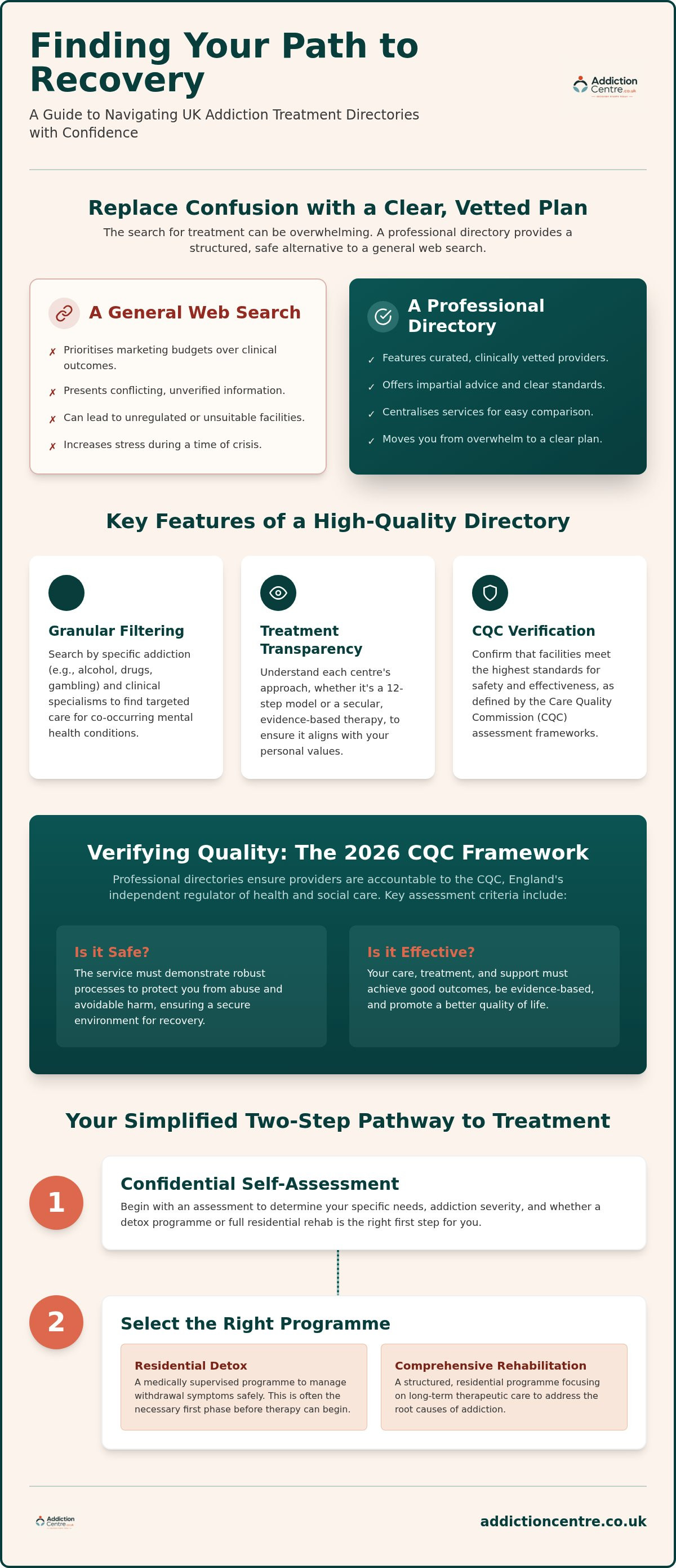
Searching for help on a standard search engine often prioritises businesses with the largest marketing budgets rather than those with the best clinical outcomes. This can lead you toward 'sponsored' results that might prioritise profit over your specific medical needs. A professional directory acts as a vital safeguard, verifying the legitimacy and registration of treatment centres before they're ever featured. It brings together detox services, residential rehab, and outpatient therapy in one place. This ensures you don't have to piece together a recovery plan from disparate, unverified sources whilst dealing with the stress of addiction.
Navigating the 2026 Recovery Sector
The landscape of addiction care in 2026 has shifted significantly toward integrated mental health support. We've moved past the era where addiction was treated in isolation; today's leading facilities focus on co-occurring disorders like anxiety, depression, and trauma. Because of this, an outdated 'one size fits all' approach to searching simply won't work. Modern referral services simplify this complexity by offering personalised recommendations that look beyond the surface. They act as a steady guide, helping you identify which centres have adapted to the latest clinical guidelines and which ones offer the specific therapeutic environment you need for lasting restoration.
Key Features to Look for in a High-Quality Rehab Directory
A high-quality addiction treatment directory must offer more than just names and locations. It should empower you to find a facility that understands your specific struggle. When you're searching for help, the ability to filter by addiction type is paramount. Whether you're dealing with alcohol, drugs, gambling, or behavioural issues like gaming or compulsive spending, the directory needs to provide granular results that match your reality. According to the UK Addiction Treatment Statistics, the complexity of presentations is increasing, particularly with synthetic substances. This means that a directory that groups all addictions together is often insufficient for modern recovery needs. You need to see exactly which clinics have the expertise to handle your specific substance or behaviour.
Transparency regarding treatment methods is another essential feature that separates a basic list from a professional resource. You deserve to know whether a facility follows a traditional 12-step model or prioritises secular, evidence-based clinical therapies before you make a commitment. Some individuals find comfort in spiritual frameworks, whilst others require a strictly medical approach. If you're feeling unsure about which path suits your personal values, navigating a professional addiction treatment directory can provide the clarity needed to make an informed choice. This transparency ensures that you won't be surprised by the philosophy of your care once you arrive at the centre.
Clinical Specialisms and Dual Diagnosis
Many individuals don't just face addiction; they also manage co-occurring mental health challenges like anxiety, PTSD, or depression. A directory should highlight clinics that offer on-site psychiatric support and integrated care plans. You can find more detailed information on this in our resource about Dual Diagnosis Treatment UK: A Guide to Integrated Recovery in 2026. Prioritising facilities with these clinical specialisms is often the difference between a temporary fix and long-term restoration. These specialised filters allow you to identify centres where psychiatrists and therapists work together to treat the whole person rather than just the addiction.
Detox vs. Rehabilitation: Distinct Directory Categories
It's vital to recognise that detox and rehabilitation are distinct stages of the recovery journey. A medical detox focuses on the physical withdrawal process in a safe, clinical environment, often requiring 24-hour nursing care. Rehabilitation, on the other hand, focuses on the psychological and behavioural changes required for lasting health through therapy and counselling. If you're searching for the initial safe phase of withdrawal, consult our guide on Residential Drug Detox UK: A Guide to Safe, Clinical Recovery in 2026. A reliable directory will clearly distinguish between these two categories. This prevents confusion and ensures you don't accidentally book a therapeutic programme when you still require the medical stabilisation that only a residential detox can provide.
How to Evaluate Providers Using a Treatment Directory
Finding a name in an addiction treatment directory is the first step, but assessing the quality of that provider is what ensures your safety and long-term success. It's not enough to find a centre with a pleasant website; you must look for concrete evidence of clinical excellence. High-quality directories should act as a filter, providing you with the data needed to distinguish between a marketing-led facility and a clinically-driven one. This vetting process protects you from choosing a sub-standard or unregulated environment during a vulnerable time.
One of the most reliable ways to gauge quality is by examining staff-to-patient ratios and the specific qualifications of the clinical team. A reputable centre often maintains a low ratio to ensure you receive the personalised attention required for complex recovery. Check for the presence of multi-disciplinary teams, including psychiatrists, Registered Mental Health Nurses (RMNs), and accredited therapists. These professionals should adhere to the Quality Standards for Addiction Treatment, which set the benchmark for effective recovery services across the UK. By prioritising these standards, you ensure that the care you receive is rooted in evidence-based practice rather than just comfortable amenities.
Regulatory Compliance and CQC Ratings
The Care Quality Commission (CQC) is the independent regulator of health and social care in England, responsible for ensuring that addiction services are safe, effective, and well-led. You should never choose a UK facility that isn't CQC registered, as this registration is a legal requirement that guarantees a baseline of medical oversight. A professional addiction treatment directory should display current inspection reports directly on the provider's profile, allowing you to read the latest holistic judgments from inspection teams.
When interpreting these ratings, an 'Outstanding' grade indicates that the facility consistently exceeds expectations in patient care and safety. Conversely, a 'Requires Improvement' rating suggests that the CQC has identified specific gaps, such as leadership or safety protocols, that need urgent attention. In 2026, these assessments have become even more sector-specific, providing a clearer picture of how a rehab centre handles the unique challenges of substance misuse. Understanding these distinctions helps you move past the aesthetic of a clinic and into its clinical reality.
Success Metrics and Aftercare Support
In a clinical context, 'success rates' can be misleading if they aren't clearly defined. Reputable providers often focus on completion rates for detox and rehabilitation programmes rather than making unverifiable claims about lifelong sobriety. True success is often found in the quality of a facility's aftercare and relapse prevention strategies. Restoration doesn't end when you leave a residential facility; it requires a structured pathway that supports your transition back into daily life.
Long-term support is a hallmark of a reputable provider. When evaluating a clinic, look for details regarding their post-treatment plans. This might include weekly support groups, alumni networks, or ongoing therapy sessions. A provider that prioritises your long-term health will have a clear, documented aftercare programme that begins the moment you finish your initial stay. This commitment to your journey ensures you're never left to navigate the challenges of early recovery alone.
A Step-by-Step Guide to Selecting Your Recovery Pathway
Selecting a recovery pathway is a methodical process that requires both patience and precision. You shouldn't feel rushed, but you should move with purpose. The journey begins with an initial self-assessment. This is where you determine whether you require a full residential programme or if intensive outpatient care is more suitable for your current health status. Once you have this clarity, you can use an addiction treatment directory to filter options by your primary addiction and any co-occurring disorders. Filtering ensures that the care you receive is tailored to your unique clinical profile.
After filtering, your goal is to shortlist three to five clinics. This shortlist should be based on current CQC ratings and the specific clinical specialisms we discussed previously. By narrowing your focus, you can conduct a deeper dive into each facility's culture and therapeutic approach. To help you navigate this selection process, you can access our referral services today to identify the most appropriate clinical settings for your needs.
The Importance of Professional Consultations
A directory listing is a starting point, but it should always lead to a clinical conversation. Booking a professional recovery consultation allows you to verify whether a clinic's environment matches your expectations. Using a professional addiction treatment directory simplifies this process, but the final step is always a human one. During these enquiries, don't be afraid to ask direct questions. Inquire about the specific qualifications of the staff who will be overseeing your care and the details of their medical detox protocols. These conversations help bridge the gap between abstract information and tangible action, providing the reassurance that you are in capable hands.
Financial Planning and Admission
Understanding the logistics of entry is the final hurdle. In the UK, you'll need to decide between fully private care, insurance-funded treatment, or seeking support through the NHS. Whilst the NHS provides essential services, private admission is often significantly faster. This speed is critical for those in active addiction who need immediate intervention. For a detailed breakdown of costs and funding options, consult our Paying for Rehab in the UK: 2026 Financial Guide. Finalising your funding and admission logistics early allows you to focus entirely on the healing process once you arrive at the centre.
How Addiction Centre Streamlines Your Search for Recovery
Addiction Centre operates as the UK's premier impartial referral service, providing a steady hand when the search for care feels unmanageable. We understand that behind every search in an addiction treatment directory, there's a person or a family in need of clarity and compassion. Our role isn't merely to provide a list of providers; it's to act as a trusted advisor that helps you navigate the complexity of clinical standards and specialisms. By focusing on confidential online self-assessments, we allow you to explore your options at a pace that feels safe. This expert guidance is designed to save families significant time and emotional distress, ensuring that the path toward restoration is as smooth as possible.
Personalised Recommendations vs. Generic Lists
Whilst a generic list provides names, it often lacks the clinical context required to make a safe decision. We match your individual medical needs to the specific strengths of recognised clinics across our network. This goes beyond simple geography. We look at the therapeutic models, the level of psychiatric support, and the success of aftercare programmes to ensure a holistic fit. Having a dedicated advisor walk you through our addiction treatment directory transforms a daunting task into a manageable plan. This personalised approach prioritises your dignity, focusing on long-term restoration rather than a temporary solution. We believe that the right environment is a fundamental component of healing. Help is available. We're committed to identifying that space for you.
Taking the First Step Today
Choosing to seek help is a profound act of courage. It's important to remember that you don't have to carry the weight of this search alone. With the right support, restoration isn't just a possibility; it's an achievable goal. Our team is here to provide the clinical authority and human empathy needed to bridge the gap between where you are now and where you want to be. You can access our confidential guidance immediately, allowing us to help you filter through the noise and find a recognised, high-quality provider that meets your specific requirements. Clarity is within reach. Explore our UK Addiction Treatment Directory and start your journey toward a healthier, more stable future.
Your Path to Lasting Restoration Starts Here
Choosing to seek professional support is a significant milestone on your journey toward health. We've explored how a professional addiction treatment directory serves as more than just a list; it's a vital tool for verifying clinical excellence and regulatory compliance through the latest CQC standards. By understanding the distinction between medical detox and therapeutic rehabilitation, you're now equipped to make an informed choice that prioritises your long-term well-being. You don't have to navigate the complexities of the UK recovery sector alone whilst dealing with the weight of addiction.
Our team provides impartial advice and confidential online self-assessments to ensure you find a facility that matches your unique clinical needs. With expert guidance from specialists, you can move from a state of uncertainty into a structured environment designed for your success. Access our UK Addiction Treatment Directory for expert, confidential guidance today. Remember that recovery is a gradual process of restoration, and with the right clinical care, a healthier future is entirely within your reach.
Frequently Asked Questions
What is an addiction treatment directory?
An addiction treatment directory is a curated, professional database that categorises clinical providers based on their specialisms and regulatory status. It serves as a centralised hub where you can compare different facilities, from residential detox centres to therapeutic rehabs, without the bias of general search engine algorithms. By using a directory, you gain access to vetted information that helps you identify the most suitable care pathway for your specific medical and psychological needs.
Are all rehab clinics in the UK regulated?
All clinics providing medical treatment for addiction in England must be registered with the Care Quality Commission (CQC). Similar regulatory bodies exist in Scotland (Care Inspectorate) and Wales (Healthcare Inspectorate Wales). This registration is a legal requirement, ensuring that the facility meets strict safety and clinical standards. If a provider isn't registered, they cannot legally offer medical detox or residential clinical care, so always verify their status before committing to a programme.
How do I know if a rehab centre is reputable?
A reputable rehab centre will transparently display its current CQC rating and provide access to its latest inspection reports. You should also look for clinics that employ a multi-disciplinary team of qualified psychiatrists, doctors, and accredited therapists. Reputable providers often focus on evidence-based treatments and offer structured aftercare plans to support long-term recovery. Checking these details within an addiction treatment directory ensures you're choosing a facility that prioritises clinical integrity over marketing.
Can I find NHS-funded treatment in a private directory?
Whilst most professional directories focus on private residential providers, some include information on how to access local authority or NHS-funded services. However, NHS-funded places in private clinics are typically limited and require a referral from your local community drug and alcohol team. Using a directory allows you to compare these options against private care, helping you understand the differences in admission speed and the specific therapeutic environments available across both sectors.
What is the difference between residential and outpatient treatment?
Residential treatment involves staying at a clinic 24 hours a day to receive intensive, round-the-clock clinical support and therapy. This is often necessary for those requiring a supervised medical detox. Outpatient treatment allows you to live at home whilst attending scheduled therapy sessions or medical appointments at a centre. The choice depends on the severity of the addiction and your personal circumstances, a distinction that a professional addiction treatment directory can help clarify.
How quickly can I be admitted to a clinic found in the directory?
Private clinics featured in a directory can often facilitate admission within 24 to 48 hours, depending on their current availability. This rapid response is a significant advantage for those in a state of crisis who require immediate intervention. Once you've completed an initial assessment and finalised your funding, the clinical team can organise your arrival quickly. This speed ensures that the window of opportunity for seeking help isn't lost to administrative delays.
Is my search for addiction treatment confidential?
Yes, your search and any subsequent consultations are handled with the highest level of confidentiality and professional discretion. Referral services and clinics are bound by strict data protection laws, including GDPR, to ensure your personal information is never shared without your explicit consent. This privacy allows you to explore your options and complete self-assessments with total peace of mind, knowing that your journey toward restoration is protected from the very first step.
Can I use a directory to help a loved one into rehab?
You can certainly use a directory to research options on behalf of a family member or friend. Many directories provide specific filters and guidance for loved ones who are navigating this process for someone else. Whilst the individual in need of care must eventually agree to treatment, having a shortlist of vetted, high-quality clinics allows you to offer them a clear and professional path toward recovery when they're ready to take it.


