
What if the greatest barrier to your recovery isn't a lack of willpower, but the time spent waiting for a phone call that never comes? You're likely exhausted by the cycle of trying to stop on your own, only to be met with long NHS waiting times and the daunting fear of withdrawal symptoms. It's a heavy burden to carry, especially when you're also trying to navigate the stigma and confusion surrounding different levels of care. Choosing private alcohol treatment UK means stepping away from that uncertainty and into a space where your health and dignity are the immediate priorities.
We're here to help you understand that clinical excellence is a necessity, not a luxury. This guide explains how private care provides you with a medically managed detox to minimise physical discomfort and a personalised therapy plan built for your long-term success. We'll walk you through what to look for in a CQC-regulated centre, how to assess quality, and why immediate admission is often the most vital step in your journey. You don't have to manage this crisis alone; there's a structured, professional path waiting for you.
Key Takeaways
- Understand why private care offers the fastest route to recovery by bypassing the lengthy waiting times often associated with community-based services.
- Learn how a medically supervised detox provides a safe, structured environment to manage withdrawal symptoms with professional clinical support.
- Discover the essential criteria for vetting facilities, including how to use CQC ratings to ensure a clinic prioritises safety and patient dignity.
- Explore the importance of bespoke therapy plans that address the psychological roots of addiction for sustainable, long-term sobriety.
- Find out how to navigate a national directory of recognised providers to secure the most appropriate private alcohol treatment UK for your needs.
Understanding Private Alcohol Treatment in the UK
Private alcohol treatment UK represents a specialised, fee-based pathway designed for those who require immediate clinical intervention. Unlike community-based options that often involve long delays, private care offers a swift entry into a safe, structured environment. Understanding alcoholism as a complex condition is central to this approach. It isn't merely about addressing the physical act of drinking, but rather uncovering the psychological and social drivers behind the dependency. By utilising a comprehensive addiction treatment directory, you can find facilities that offer a full continuum of care. This journey starts with a medically managed detox and extends through to long-term aftercare, ensuring you're supported at every stage.
When is Private Treatment Necessary?
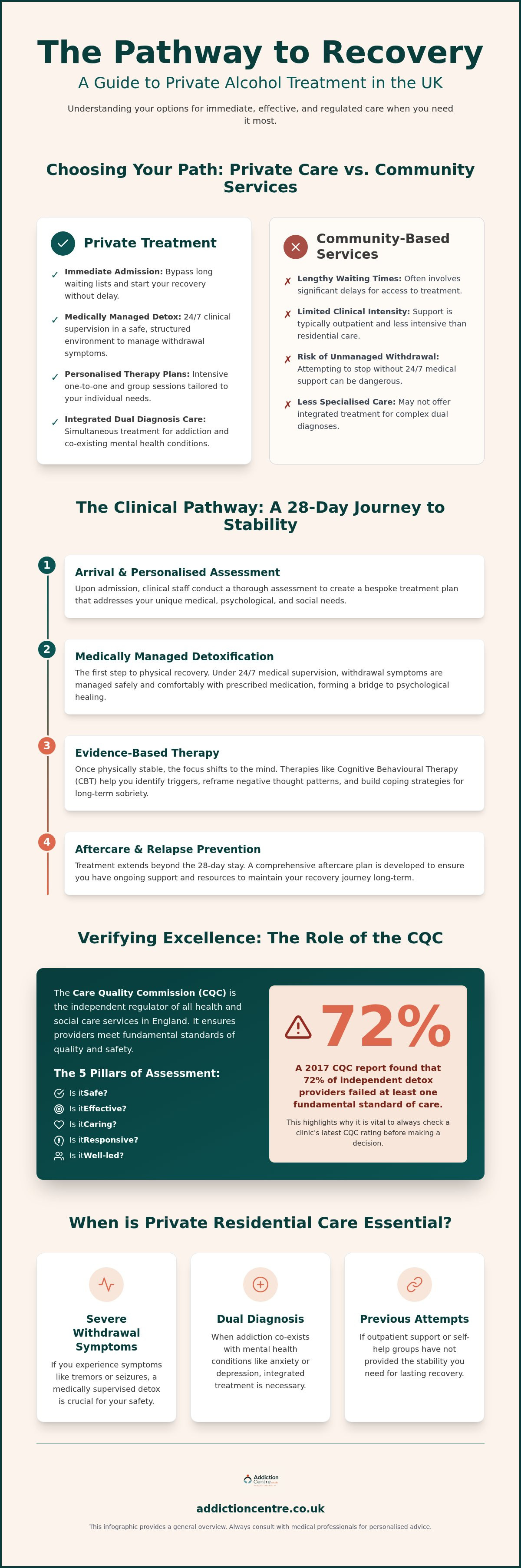
If you've found that outpatient support or self-help groups aren't providing the stability you need, residential care may be the next logical step. It's particularly vital if you experience severe withdrawal symptoms, such as tremors or seizures, which require a medically supervised residential alcohol detox. Many individuals also struggle with a dual diagnosis, where addiction co-exists with mental health conditions like anxiety or depression. Private clinics specialise in treating these issues simultaneously. This integrated approach ensures that the storm of crisis is met with a structured, professional response that prioritises your safety and long-term restoration.
The Role of CQC Regulation in UK Private Care
Safety is the foundation of clinical excellence. In England, the Care Quality Commission (CQC) is the independent regulator responsible for monitoring and inspecting all health services. They assess every provider based on five fundamental questions: Is the service safe? Is it effective? Are the staff caring? Does it meet the patient's needs? And is it well-led? As of March 2026, the CQC's assessment frameworks continue to use these five pillars to ensure high standards.
Whilst most centres strive for excellence, historical data highlights the need for vigilance. A report from the CQC noted that in the two years prior to November 2017, 72% of independent residential detox providers failed at least one fundamental standard of care. This underscores why checking the latest ratings is essential for your safety. Most reputable clinics will display their latest report directly on their website, allowing you to make an informed decision based on transparent, third-party data. You can also verify a clinic's current regulatory status by searching the CQC's online database directly.
The Clinical Pathway: Detox, Therapy, and Holistic Care
A typical private residential stay lasts 28 days. This duration isn't arbitrary; it's designed to give the brain and body sufficient time to stabilise. From the moment you arrive, clinical staff conduct a thorough assessment to build a personalised treatment plan. This document evolves with you, ensuring that medical, psychological, and social support are perfectly aligned. The atmosphere is intentionally non-judgemental. Staff understand that dependency is a health crisis, not a moral failing, and their behaviour reflects a commitment to your dignity and restoration.
Residential Alcohol Detox: The First Step
Physical recovery begins with a residential alcohol detox UK. This is a highly controlled process where safety is the absolute priority. Unlike attempting to stop at home, which can be dangerous, a private setting provides 24/7 clinical monitoring. Doctors often prescribe specific medications to manage withdrawal symptoms, ensuring the process is as comfortable as possible. This medical supervision acts as a bridge, allowing you to move past the physical cravings and into the deeper work of psychological healing.
Evidence-Based Therapies in Private Rehab
Once the body is clear of alcohol, the focus shifts to the mind. Private clinics utilise evidence-based therapies to help you understand the "why" behind your drinking. Cognitive Behavioural Therapy (CBT) is a cornerstone of this process, helping you identify specific triggers and reframe negative thought patterns. Whilst NHS alcohol treatment options often provide community-based support, private care allows for a much higher intensity of one-to-one sessions and peer group work.
Group therapy amongst others in recovery creates a powerful sense of shared purpose. It breaks the isolation that so often fuels addiction. Alongside these clinical sessions, holistic tools like mindfulness, art therapy, or yoga are often integrated into your daily schedule. These aren't just "extras"; they're essential for teaching you how to regulate your emotions without relying on substances. If you're unsure which clinical pathway is right for your situation, our team can provide expert recovery consultations to help you find the best fit.
Many people worry about what happens when the initial month ends. Clinical excellence doesn't stop at the clinic doors. A robust private alcohol treatment UK programme includes a detailed discharge plan that transitions you into long-term aftercare. This ensures that the progress you've made in a safe, controlled environment is sustained once you return to your daily life. By addressing the transition early, you build a bridge between the clinical setting and the reality of long-term sobriety.
Private vs NHS Alcohol Treatment: Why Choose Private Care?
Choosing between the NHS and private sector care is a deeply personal decision, often made during a time of high stress. While the NHS remains a cornerstone of British healthcare, the current state of UK alcohol treatment shows that public services are frequently overstretched. Community-based programmes usually offer a lower intensity of care, such as weekly group meetings or outpatient detox. For many, this isn't enough to break the cycle of dependency. Private alcohol treatment UK provides a residential alternative where the focus is entirely on your recovery. You benefit from significantly more one-to-one therapeutic hours, ensuring that the underlying causes of your drinking are addressed with the depth they require.
Immediate Admission and Crisis Intervention
The most significant advantage of private care is the speed of access. Addiction doesn't wait, and neither should your treatment. When you or a loved one decides to seek help, it's vital to act before that resolve fades. Public sector waiting lists can unfortunately last for months. Choosing a rehab without waiting list UK means you can often begin your detox within 24 hours of your first enquiry. This rapid response is a form of crisis intervention that saves lives. It ensures that the momentum of wanting to change is met with the immediate professional support needed to make it happen.
Bespoke Environments and Confidentiality
Private clinics offer a level of discretion that is difficult to achieve in a public hospital setting. Confidentiality is paramount, especially for those who fear the stigma associated with seeking help. Instead of shared wards, you'll find en-suite rooms and tranquil grounds designed to foster reflection. These settings are carefully chosen to act as a "calm in the storm," providing a sanctuary away from the triggers of your home environment. While there is an undeniable cost to private care, it's helpful to view it as an investment in a future free from the financial and emotional toll of addiction. The long-term value of a successful, sustainable recovery far outweighs the initial expense, offering you a genuine chance at restoration and a new beginning.
How to Evaluate Private Rehab Clinics Across the UK
Evaluating private alcohol treatment UK requires looking past the aesthetic appeal of a facility to scrutinise its clinical foundations. While a tranquil setting is beneficial for reflection, the quality of medical and therapeutic staff is what ultimately drives recovery. When vetting a clinic, ask for the specific credentials of their team. Are the doctors registered with the General Medical Council (GMC)? Are the therapists accredited by the British Association for Counselling and Psychotherapy (BACP)? High-quality care often includes trauma-informed specialisms, which address the deep-seated emotional pain that frequently fuels dependency. If you feel overwhelmed by the options, we can help you filter our addiction treatment directory to find a clinic that matches your specific clinical needs.
Be cautious when interpreting "success rates". These figures can be misleading if they only track the completion of a 28-day residential stay. Instead, ask how a facility measures long-term sobriety. A clinic that is transparent about its data collection at six and twelve months demonstrates a genuine commitment to lasting restoration. You should also ask about the staff-to-patient ratio; a lower ratio ensures you receive the personalised attention necessary for a complex recovery journey.
Assessing the Aftercare Provision
Aftercare is often the most critical factor for preventing relapse once you return to daily life. A robust programme should include more than just a list of local support meetings. Look for facilities that offer structured alumni groups, ongoing one-to-one sessions, and comprehensive family education. Dependency affects the entire household, and empowering your loved ones with the tools to support you creates a much stronger foundation for your new life. This continued connection acts as a safety net during the vulnerable first few months of sobriety.
Understanding the Costs of Private Care
The cost of private alcohol treatment UK varies based on location, amenities, and the intensity of clinical support. It's helpful to distinguish between luxury features, like private chefs or swimming pools, and clinical necessities, such as a high ratio of nursing staff or 24/7 medical cover. Many clinics accept private health insurance from major providers, whilst others offer structured self-funding plans. For a detailed breakdown of how to manage these expenses and explore your options, you can consult our paying for rehab in the UK guide. Making an informed financial decision allows you to focus entirely on the clinical work of getting better.
Finding Your Path to Recovery with Addiction Centre
Deciding to pursue private alcohol treatment UK is a significant milestone, yet the process of selecting a specific facility can feel overwhelming. With hundreds of clinics across the country, each offering different specialisms and therapeutic approaches, finding the right match requires more than just a search engine. Addiction Centre serves as an impartial bridge to a comprehensive addiction treatment directory. Our role is to provide you with the clinical clarity needed to make an informed choice. We ensure that your path to restoration is built on clinical suitability and a profound respect for your individual journey, rather than a one-size-fits-all approach.
A Compassionate Referral Process
When a family is in the midst of a crisis, the need for a steady, knowledgeable guide is paramount. Our referral service acts as a "calm in the storm," simplifying the often overwhelming choice of clinics. We don't just provide a list of names; we facilitate a confidential assessment process that evaluates the whole person. This involves understanding your physical health, the duration of your dependency, and any co-occurring mental health challenges that require dual-diagnosis support. By acting as a trusted advisor, we help you bypass the confusion and focus on facilities that meet the high standards of CQC regulation mentioned earlier. Our recommendations are always based on your unique clinical needs, ensuring you find a centre where you feel both safe and emotionally held.
Taking the First Step Today
You don't have to manage the transition from a state of crisis to a structured professional environment alone. Reaching out for a confidential recovery consultation is often the moment when the heavy burden of addiction begins to shift. It's a brave first step. There is an immediate sense of relief that comes from having a professional plan in place, moving you away from the uncertainty of waiting lists and into a space of active progress. Our team is dedicated to maintaining your privacy whilst walking alongside you as you explore the best options for private alcohol treatment UK. Whether you're ready for an immediate admission or simply need to understand your options better, taking that first step today is the most powerful choice you can make for your future health.
Embarking on a Future of Restoration
Choosing the right path involves more than just selecting a clinic; it's about matching your unique needs with a facility that prioritises both safety and empathy. You now understand that clinical excellence is defined by CQC standards, evidence-based therapies, and a robust aftercare plan that supports you long after you leave the centre. Private alcohol treatment UK offers the immediate intervention and bespoke care necessary to break the cycle of dependency and reclaim your health. This structured approach ensures that you aren't just stopping a habit, but building a foundation for a new way of living.
You don't have to navigate these complex choices alone. Our team provides impartial advice from addiction specialists and access to a national network of recognised, regulated clinics. Begin your recovery journey with a confidential assessment from Addiction Centre to receive expert recovery consultations and detox referrals tailored specifically to your situation. Taking this step brings you closer to the professional support you deserve. Restoration is entirely possible, and with the right clinical guidance, you can move toward a life of sustainable sobriety and lasting peace.
Frequently Asked Questions
How much does private alcohol treatment cost in the UK?
Private alcohol treatment UK costs are influenced by the length of stay and the level of clinical support required. Pricing typically reflects the quality of the facilities, the staff-to-patient ratio, and the inclusion of a medically supervised detox. Whilst we don't provide specific quotes, we can help you understand the different tiers of care available through our directory to find a facility that aligns with your budget and clinical needs.
Can I use private health insurance for alcohol rehab?
Many major UK health insurance providers do cover portions of residential alcohol rehab. Whether your policy covers detox, therapy, or the entire stay depends on your specific level of cover. We recommend contacting your insurer to confirm their approved providers. Our team can also help you identify clinics within our national network that are recognised by the leading insurance companies to simplify your admission process.
How long is a typical stay in a private alcohol rehab centre?
A standard residential stay is typically 28 days, which provides enough time for a safe detox followed by intensive psychological therapy. Shorter programmes lasting between 7 and 14 days are sometimes available for those who only require medical stabilisation. The most appropriate duration for your stay is determined during a confidential assessment, ensuring the timeline matches the complexity of your dependency and long-term recovery goals.
Is private alcohol detox safe for everyone?
Private alcohol detox is considered the safest method for stopping drinking because it provides 24/7 medical supervision. Clinical teams use specific medications to manage withdrawal symptoms, significantly reducing the risk of dangerous complications. Before you begin, a doctor will perform a full medical evaluation to ensure the detox plan is tailored to your physical health. This level of constant care is a primary reason families choose private intervention.
What is the difference between inpatient and outpatient private treatment?
Inpatient treatment requires you to reside at the clinic, offering a structured, trigger-free environment with round-the-clock support. Outpatient care allows you to remain at home whilst attending therapy sessions during the day. For those pursuing private alcohol treatment UK, the inpatient model is usually preferred for the initial detox phase. This ensures you are in a safe, medically managed setting during the most physically challenging part of your recovery journey.
Do private clinics in the UK treat dual diagnosis?
Most leading private clinics in the UK are equipped to treat dual diagnosis, where addiction co-exists with mental health conditions such as anxiety or PTSD. Addressing both issues simultaneously is essential for a sustainable recovery. These facilities employ multidisciplinary teams, including psychiatrists and accredited therapists, to ensure your treatment plan is holistic. This integrated approach helps you understand the emotional triggers that often lead to substance use in the first place.
Can I force a loved one into private alcohol treatment in the UK?
You cannot legally compel an adult to enter a private clinic in the UK against their will. Successful recovery typically requires the individual's consent and a personal desire to change. However, you can seek professional guidance to stage an intervention. This structured process helps families communicate the impact of the addiction in a non-confrontational way, often providing the gentle encouragement a loved one needs to accept a referral for professional help.
What happens if I relapse after leaving a private clinic?
If a relapse occurs, it's important to view it as a signal that your current recovery plan needs adjustment rather than a failure. Most private clinics include aftercare as part of their package, providing a safety net for these situations. You should reach out to your aftercare coordinator or alumni group immediately. They can offer a non-judgemental space to identify what triggered the lapse and help you re-engage with your sobriety goals.


