
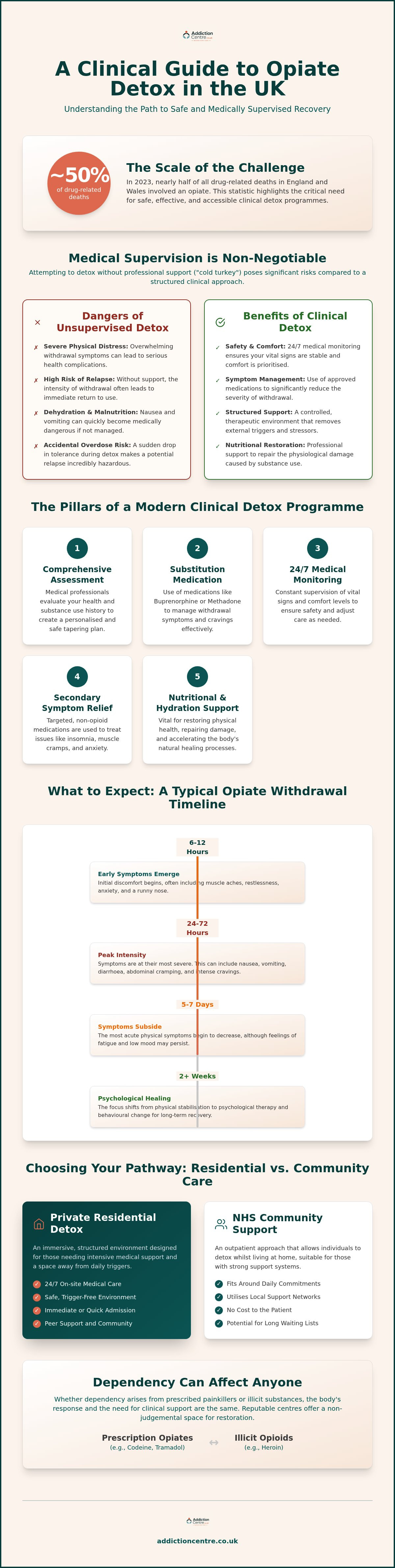
In 2023, nearly half of all drug-related deaths in England and Wales involved an opiate; a statistic that underscores the profound challenge of dependency. If you're reading this, you likely already know that the journey toward recovery feels daunting, particularly when the fear of physical pain during withdrawal overshadows the hope of a new beginning. You might be worried about how long a clinical opiate detox takes or whether you can afford the specialised care you deserve. These concerns are valid, but they shouldn't be the barriers that prevent you from reclaiming your health.
We're here to provide a steady hand through the confusion of the UK's treatment landscape. This guide outlines the safest clinical pathways available in 2026, ensuring you understand how modern medical interventions can manage withdrawal symptoms effectively. We'll examine the differences between NHS services and private residential treatment centres, whilst offering a clear roadmap for your next steps. By the end of this article, you'll have the knowledge needed to choose a reputable detox programme that offers a compassionate, structured environment for your long-term restoration.
Key Takeaways
- Understand why professional medical supervision is essential for safety and why "cold turkey" methods often lead to unnecessary distress and relapse.
- Discover how clinical tapering and modern substitution medications can help manage physical symptoms for a more comfortable withdrawal experience.
- Compare the benefits of private residential opiate detox against NHS community support to find the pathway that matches your personal urgency and needs.
- View a detailed recovery timeline so you know exactly what to expect from the first symptoms through to the 72-hour peak.
- Learn how to access impartial guidance and confidential assessments to connect with a recognised UK treatment centre that fits your specific situation.
What is Opiate Detox and Why is Medical Supervision Essential?
When you decide to break free from dependency, the first step is often the most physically demanding. An opiate detox is the clinical process of managing Opioid withdrawal whilst the body clears itself of the substance. It's a period of transition where medical expertise replaces the uncertainty of "going it alone." Rather than viewing it as a simple test of willpower, we should see it as a necessary medical intervention. Clinical supervision provides a safe harbour, ensuring that as your body adjusts, your safety and comfort remain the primary focus.
The physiological mechanism of opioid dependence is complex. Over time, these substances alter the way your brain's receptors function, making it difficult for the body to maintain balance without them. This is why "cold turkey" attempts are rarely successful. Without professional support, the nervous system can become overwhelmed, leading to severe distress. Beyond the intense physical discomfort, unsupervised detox carries significant risks. Dehydration from nausea, the sudden return of low tolerance leading to accidental overdose, and the high risk of immediate relapse are all dangers that a clinical environment is designed to prevent.
The Difference Between Physical Detox and Psychological Recovery
It's helpful to distinguish between the two distinct phases of getting well. Detox focuses on the physical dependency, clearing the substance from your system and stabilising your health. However, completing a detox alone often leads to a high rate of relapse because it doesn't address the underlying thoughts or habits that led to the dependency in the first place. A residential drug detox UK programme provides the essential physical foundation that allows you to engage meaningfully with later psychological therapy and behavioural change.
Prescription Opiates vs. Illicit Opioids
Dependency doesn't always begin in the same way. You might be struggling with illicit substances like Heroin, or perhaps you've found yourself dependent on prescribed painkillers such as Codeine or Tramadol. Regardless of how the situation started, the clinical need for support is exactly the same. The body's response to withdrawal doesn't discriminate based on the source of the opioid. Iatrogenic dependence refers to a physical or psychological reliance on medication that develops as a direct result of medical treatment or a doctor's prescription. Whether the substance was prescribed by a GP or obtained elsewhere, professional clinical centres offer a non-judgmental space to begin your restoration.
The Clinical Process: How Modern Opiate Detoxification Works
The journey begins with a thorough clinical assessment, where medical professionals evaluate your history, substance use, and overall health. This isn't a mere formality; it's the foundation for a bespoke tapering programme designed to minimise distress. Unlike self-led attempts, a clinical opiate detox uses evidence-based protocols to ensure your body stabilises safely. This structured approach replaces the chaos of withdrawal with a predictable, managed medical plan.
Clinicians often utilise substitution medications to manage Opiate and opioid withdrawal. Substances like Methadone or Buprenorphine are commonly prescribed because they occupy the brain's opioid receptors without producing the same "high," effectively dampening the intensity of withdrawal symptoms. Throughout this process, a residential team provides 24/7 monitoring of your vital signs. They don't just watch for safety; they ensure your comfort levels remain manageable, adjusting care plans as your body begins its restoration. This care is complemented by intensive nutritional support and hydration, which are vital for repairing the physiological damage caused by long-term substance use and accelerating the body's natural healing process.
Pharmacological Interventions in a UK Setting
In the UK, clinical teams are adept at managing what is colloquially known as "clucking"—the intense physical restlessness and discomfort of withdrawal. Whilst substitution medications do the heavy lifting, secondary symptoms like insomnia, muscle cramps, or digestive issues are treated with non-opioid medications. This multi-layered approach ensures that you aren't simply trading one substance for another, but rather using a controlled medical toolkit to bridge the gap to sobriety. Staff adjust these dosages in real-time based on your feedback, providing a level of personalised care that community-based settings often struggle to match.
Psychological Support During the Detox Phase
Physical stabilisation is only half the battle. The first 72 hours are often characterised by significant anxiety and emotional vulnerability. Detox-specific counselling helps you process these feelings as they arise, preventing the "fight or flight" response that often triggers early relapse. Within a residential centre, you'll also find peer support amongst others walking the same path. This shared experience provides a unique form of emotional stability that reminds you that you aren't alone.
Preparing for the transition into long-term recovery is the final piece of the detox puzzle. Once stabilised, you can begin exploring the addiction treatment directory to find a rehab programme that addresses the psychological roots of dependency. If you're feeling overwhelmed by the variety of choices, you can request a confidential consultation to help narrow down the best clinical environment for your needs.
Comparing Residential Detox vs. Community-Based Support in the UK
Choosing the right environment for opiate detox is a decision that balances medical necessity with personal circumstances. In the UK, you generally face two paths: NHS community-based support or private residential treatment. Whilst the NHS provides vital services, the "waiting list" factor is a significant hurdle. When you've reached a point of willingness to seek help, that window is often narrow. Waiting weeks for a community placement can lead to a loss of momentum, whereas private residential centres often offer immediate admission. This allows you to act whilst your motivation is highest, turning a moment of crisis into a structured path toward restoration.
A residential setting provides a "controlled environment" that community support cannot replicate. By removing yourself from local triggers and the easy access to substances in your home environment, you significantly reduce the risk of mid-detox relapse. Clinical teams follow established Clinical Guidelines for Withdrawal Management to ensure every stage of your recovery is handled with precision. Of course, budget is a primary concern for many families. Understanding how paying for rehab UK works can help you navigate the financial landscape, whether you're considering self-funding, using private health insurance, or exploring other options.
When is Residential Detox the Only Safe Option?
For certain individuals, a residential stay isn't just a preference; it's a medical requirement. If you have a history of seizures, multiple dependencies, or have tried and failed to detox several times before, the risk of complications is much higher. Safety becomes the absolute priority in these cases. This is also true for those with co-occurring mental health conditions. An integrated dual diagnosis treatment UK programme ensures that both your dependency and your mental health are treated simultaneously, preventing one from undermining the progress of the other.
The Limitations of Detoxing at Home
Attempting a "cold turkey" opiate detox at home has an exceptionally high failure rate. Without medical intervention, the physical and psychological pressure often becomes unbearable within the first 48 hours. There's also the hidden danger of "substitution," where people inadvertently switch one dependency for another, such as using alcohol to dull the pain of opioid withdrawal. Professional monitoring in a clinical centre allows staff to identify life-threatening complications early, providing the medical and emotional scaffolding you need to reach the other side of withdrawal safely. This constant care offers a sense of calm that's impossible to achieve in a domestic setting.
A Step-by-Step Timeline of Opiate Withdrawal and Recovery
Understanding the timeline of recovery can help reduce the anxiety that often accompanies the decision to start an opiate detox. Whilst everyone's experience is unique, the body generally follows a predictable pattern as it begins to heal. Knowing what lies ahead allows you to prepare mentally and physically for the journey, turning a daunting prospect into a series of manageable stages.
The first 6 to 24 hours often mark the onset of early symptoms. As the substance begins to leave your system, you may experience a growing sense of anxiety, muscle aches, and restless legs. This is the body's initial response to the absence of the substance, signalling the start of a deep physiological recalibration. By the 72-hour peak, symptoms typically reach their most intense point. This phase is often characterised by nausea, chills, and heavy sweating. In a clinical environment, this is when medical support is most intensive, ensuring that these physical challenges don't become overwhelming.
Between days 4 and 10, the most acute physical pain starts to subside. You'll likely notice the emergence of psychological clarity as the "fog" of dependency begins to lift. During the second week and beyond, the focus shifts. Whilst the physical crisis has passed, you may still face lingering fatigue and emotional volatility. This is a delicate period where professional guidance is vital to help you navigate the transition from physical stabilisation to emotional resilience.
Managing the "Peak" with Clinical Expertise
Clinical teams are trained to provide a "calm in the storm" during the most difficult hours of withdrawal. They use specific medical interventions to help you sleep and ensure you can tolerate light, nutritious meals to maintain your strength. Acute opiate withdrawal typically lasts between five and ten days, depending on the specific substance and the individual's history of use. During this peak, the presence of 24/7 medical staff ensures that you never have to face the intensity of your symptoms alone.
Understanding Post-Acute Withdrawal Syndrome (PAWS)
It's vital to recognise that brain chemistry takes longer to stabilise than the physical body. Post-Acute Withdrawal Syndrome (PAWS) refers to the lingering symptoms that can persist for weeks or even months after the initial detox. You might experience irritability, sleep disturbances, and significant "brain fog" as your dopamine receptors slowly recover. Long-term rehab programmes are specifically designed to manage these symptoms, providing the psychological tools and peer support needed to prevent late-stage relapse.
If you're concerned about the withdrawal timeline and want to discuss your options with an expert, you can book a confidential assessment today to find the right clinical support for your recovery.
How to Access the Right Opiate Detox Programme for You
Finding the right clinic can feel overwhelming when you're in a state of crisis. An impartial referral service acts as a steady guide, matching your specific clinical needs with the right environment. Through a confidential assessment, we determine the level of care required for a safe opiate detox, ensuring you aren't left to guess which path is best for your health. This personalised approach removes the burden of research during a time when you should be focusing on your physical and emotional well-being.
When evaluating a UK centre, you should prioritise facilities with high Care Quality Commission (CQC) ratings. These ratings provide an objective measure of safety, effectiveness, and the quality of leadership within the facility. Look for centres that offer 24-hour medical staffing and a clear aftercare provision that supports you once the initial stay is complete. It's also vital to ensure the facility facilitates an immediate transition from physical stabilisation into a structured therapy environment. This seamless move prevents the "gap" where many individuals feel vulnerable to relapse, providing a continuous narrative of care from the moment you arrive.
Preparing for the Transition to Residential Rehab
It's helpful to view detox as the "bridge" to long-term sobriety rather than the destination itself. Whilst it clears the substance from your system, the psychological work of rehab is what sustains your recovery. Organising logistics like work leave, family care, and finances can feel like a hurdle, but most centres are experienced in helping you manage these transitions. We encourage you to adopt a forward-looking mindset. Focus on the restoration of your health and relationships rather than dwelling on feelings of shame. This shift in perspective is often the first step toward a successful outcome.
Taking the First Step with Addiction Centre
Our addiction treatment directory is designed to simplify the search for recognised providers across the UK. We cut through the confusion of private versus NHS care, providing expert consultations that clarify your options and help you understand what to expect. You don't have to face this complex landscape alone. By using a structured directory, you gain access to a network of clinical providers who prioritise your dignity and long-term well-being. This ensures that the facility you choose isn't just a place to stay, but a clinical partner in your restoration.
Contact our team today to find a safe opiate detox centre and begin your journey toward a healthier, substance-free life.
Embracing a Future Free from Dependency
Choosing to undergo an opiate detox is a courageous first step toward reclaiming your life. We've explored how medical supervision transforms the withdrawal process from a period of crisis into a managed, clinical transition. By understanding the timeline of recovery and the unique benefits of residential care, you can move forward with the confidence that you don't have to face this challenge alone. Professional support ensures that your physical safety and emotional dignity remain the priority throughout every stage of your restoration.
Our team is here to act as your steady guide through the UK's treatment landscape. Through our network of CQC-recognised clinics and expert recovery consultations, we provide the confidential UK-wide support you need to make an informed choice. You can find a recognised UK opiate detox centre through our directory today. Remember that detox is only the beginning; it's the bridge to a healthier, more fulfilling future. With the right clinical partnership, lasting change isn't just possible; it's within your reach. Your path to wellness starts with a single, supported step.
Frequently Asked Questions
Is opiate detox dangerous if I do it at home?
Opiate detox can be physically and psychologically dangerous when attempted at home without medical supervision. The primary risks include severe dehydration from vomiting, heart palpitations, and the intense distress that often triggers a high-risk relapse. In a clinical setting, medical professionals monitor your vital signs 24/7 and provide interventions that ensure your safety. This professional oversight significantly reduces the likelihood of life-threatening complications. You are never left alone.
How long does the opiate detox process usually take?
A clinical opiate detox typically lasts between five and ten days for the acute withdrawal phase. The exact duration depends on several personal factors, including the specific substance used, the length of the dependency, and your overall physical health. Whilst the most intense symptoms usually peak within the first 72 hours, a structured programme ensures you remain stabilised until your body has safely cleared the substance and your health has begun to restore.
Will I be given medication to help with opiate withdrawal symptoms?
Yes, recognised clinical centres utilise various medications to manage withdrawal symptoms effectively. Substitution medications such as Methadone or Buprenorphine are often used to stabilise the brain's receptors and reduce cravings. Additionally, clinicians may prescribe non-opioid medications to alleviate secondary issues like insomnia, muscle cramps, or digestive distress. This multi-layered pharmacological approach is designed to make the process as comfortable as possible, allowing you to focus on your recovery.
Can I work whilst undergoing an opiate detox programme?
It is generally not recommended to work whilst undergoing the acute phase of a detox programme. The process requires significant physical and emotional energy as your body recalibrates. In a residential setting, the environment is designed to be a "safe harbour" away from daily stresses and triggers. Prioritising your restoration during these few days provides the best foundation for long-term sobriety. You can then return to work with greater health.
What is the difference between detox and rehab?
Detox and rehab serve two distinct but complementary roles in the recovery journey. Detox is the medical process of clearing substances from your body and managing physical withdrawal symptoms. In contrast, rehab addresses the underlying psychological causes of dependency through therapy and behavioural change. Whilst detox provides the essential physical foundation, rehab offers the tools needed for long-term emotional resilience. Completing both is vital. This dual approach ensures a more stable pathway to sustained restoration.
How much does a private opiate detox cost in the UK?
The cost of private residential treatment in the UK varies significantly depending on the duration of the stay and the level of clinical support provided. Factors such as the facility's amenities, staffing ratios, and aftercare provisions all influence the final price. Because every individual's needs are different, we recommend a confidential consultation to explore the options that match your budget. This ensures you find a recognised centre that offers high-quality care.
Does the NHS provide residential opiate detox?
The NHS does provide some residential options, but they are limited and often involve extensive waiting lists. Most individuals seeking help through the NHS begin with community-based support after an assessment by their GP or local drug and alcohol service. In many cases, a residential placement is only granted after community-based attempts have been unsuccessful. Private options are often sought by those who require immediate admission to capitalise on their window of willingness.
What happens if I relapse during the detox process?
If a relapse occurs during a clinical opiate detox, it is treated as a medical hurdle rather than a failure. Clinical staff are trained to respond with empathy and professional adjustments to your tapering programme. They will reassess your stabilisation needs and provide additional psychological support to help you navigate the emotional impact. The primary goal remains your safety and the continuation of your journey toward health, ensuring you feel held and supported throughout.


