
Did you know that whilst opiate-related deaths accounted for nearly half of drug-related fatalities in 2023, the clinical path to recovery in 2026 is more structured and accessible than ever before? It's natural to feel a sense of hesitation when considering heroin addiction treatment UK options, particularly if you're worried about the severity of withdrawal symptoms or the perceived stigma of seeking help. You might be feeling lost amongst the complexity of NHS waiting lists or the financial uncertainty of private care, but these obstacles don't have to define your future.
This clinical guide offers the steady, professional guidance you need to replace confusion with a clear, actionable plan for restoration and health. We've designed this resource to act as a bridge between your current state of crisis and a structured, supportive environment where your dignity is prioritised. It serves as a compassionate roadmap for anyone looking to understand their medical and therapeutic choices in a modern clinical setting.
We will examine the clinical distinctions between detox and maintenance therapy, outline the practical steps to access a specialist treatment centre, and provide a transparent look at the national support systems available to help you or your loved one reclaim a life of purpose. You aren't alone in this journey; expert support is ready to walk alongside you every step of the way.
Key Takeaways
- Understand your fundamental right to confidential support and why professional intervention is essential for managing the complex brain chemistry changes associated with heroin use.
- Learn to distinguish between maintenance therapy for long-term stability and medically supervised detoxification for those aiming to become entirely drug-free.
- Evaluate the practical differences between NHS community care and the immediate, immersive environment provided by private residential rehab facilities.
- Discover how using a professional directory can streamline your search for heroin addiction treatment UK by matching your specific needs with recognised clinics.
- Gain a clear understanding of the recovery journey, starting with comprehensive health assessments and moving towards therapy that addresses the root causes of addiction.
Understanding Heroin Addiction and Treatment Rights in the UK
Deciding to address a substance use disorder is a profound act of bravery. It's the moment where the weight of the past meets the possibility of a healthier, more stable future. Acknowledging the courage it takes to seek help is the first step toward restoration. You should know that heroin addiction is a treatable medical condition requiring clinical oversight. It isn't a reflection of your character; it's a complex health challenge that responds to the right medical and psychological interventions.
The Clinical Nature of Opiate Dependence
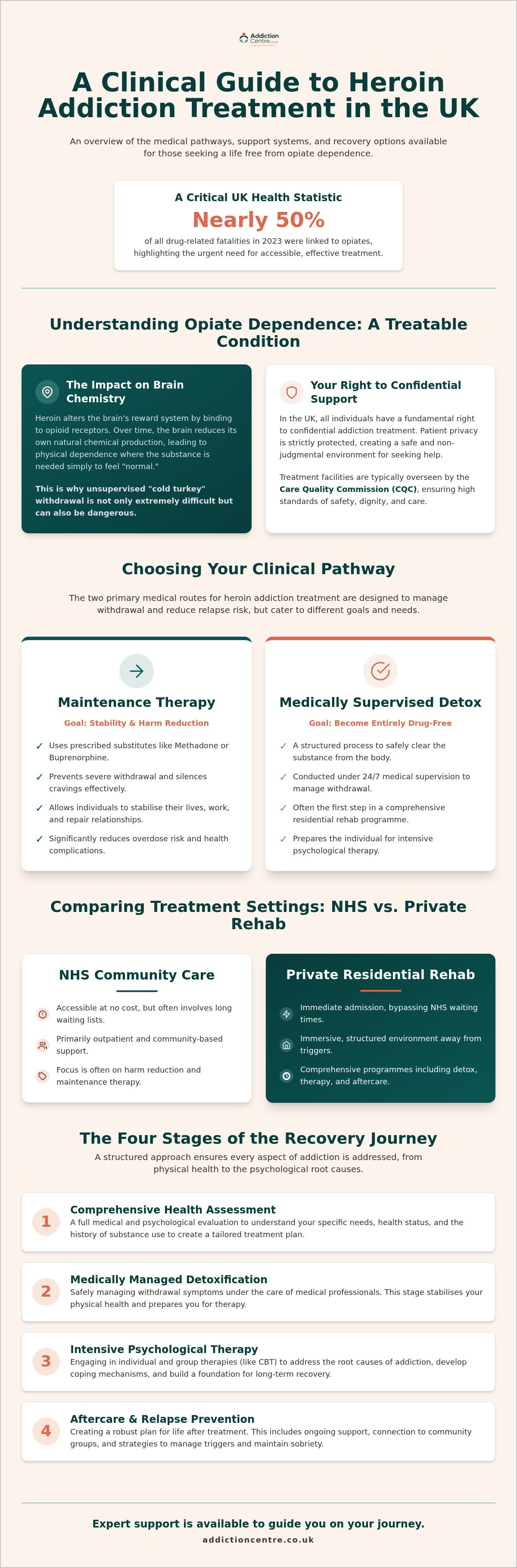
Heroin is a powerful opiate that alters brain chemistry, making professional intervention essential. When introduced to the body, it interacts directly with the central nervous system, binding to specific opioid receptors that regulate pain and reward. Over time, the brain stops producing its own natural chemicals, leading to a state where the individual requires the substance just to feel "normal." This is why "going cold turkey" without medical supervision is dangerous and often unsuccessful. The physical shock to the system can be overwhelming, frequently leading to a rapid return to use in an attempt to escape the pain.
Effective heroin addiction treatment UK protocols focus on stabilising this biological imbalance. Often, this involves Opioid replacement therapy to manage cravings and prevent the onset of severe withdrawal symptoms. Beyond the immediate physical need, recovery relies on neuroplasticity. This is the brain's remarkable ability to reorganise itself and form new neural pathways. With the right clinical support, the biological changes caused by long-term use can be repaired, allowing for a gradual return to cognitive and emotional health.
Your Right to Confidential Support
Under UK health guidelines, every individual has the right to confidential addiction support. This right is a cornerstone of the national healthcare framework, ensuring that you can seek help without fear of social or legal repercussions. Patient confidentiality is strictly maintained, protecting your identity and your medical history as you engage with heroin addiction treatment UK services. This privacy is designed to provide a sense of safety for those who may feel held back by the stigma often associated with opiate use.
You can expect a standard of care that's both professional and non-judgmental. In the UK, high-quality treatment is typically overseen by the Care Quality Commission (CQC). CQC-registered facilities must meet rigorous safety and effectiveness standards, ensuring that every person receives dignified care. Whether you're accessing community-based services or private residential programmes, you're entitled to a treatment environment that prioritises your safety and personal well-being above all else.
Clinical Pathways: Maintenance Therapy vs. Detoxification
Choosing the correct clinical pathway is a pivotal moment in the recovery process. It requires a careful balance between your long-term goals and your immediate physical stability. In the context of heroin addiction treatment UK, medical professionals typically recommend one of two primary routes: maintenance therapy or detoxification. Both pathways are designed to minimise withdrawal symptoms and reduce the risk of relapse, but they cater to different stages of readiness and physical health.
Maintenance Therapy: Stability and Harm Reduction
Maintenance therapy focuses on providing immediate stability by using heroin substitutes, most commonly methadone or buprenorphine. These medications occupy the brain's opioid receptors without producing the same intense "high" as heroin, effectively silencing cravings and preventing withdrawal. This stability allows individuals to return to daily functioning, re-engage with employment, and repair personal relationships. By removing the need to seek illicit substances, maintenance therapy significantly reduces the risk of overdose and associated health complications. When considering the various options for heroin addiction treatment UK, it's helpful to view maintenance as a bridge to stability.
According to the UK clinical guidelines on drug misuse, these programmes are often managed within community settings over a long-term period. The focus here is harm reduction. It provides a "safety net" that keeps you safe whilst you work on the psychological aspects of addiction. If you aren't yet ready for total abstinence, maintenance therapy offers a steady, life-saving alternative that prioritises your immediate safety.
Medically Supervised Detox: The Path to Abstinence
For those whose primary goal is to become entirely drug-free, medically supervised detoxification is the necessary first step. This clinical process involves the safe removal of toxins from the body under constant medical observation. Unlike "cold turkey" methods, a professional detox uses specific medications to manage the "peak" of withdrawal symptoms effectively, ensuring the process is as comfortable and safe as possible. This is often conducted in a residential setting where 24-hour support is available.
Detox is not a cure on its own; it's the foundation for further work. Once the physical dependence is addressed, the focus must shift toward psychological rehabilitation. This transition is vital because, whilst the body may be clear of the substance, the underlying triggers for use remain. Many people find that speaking with a recovery consultant helps them decide whether a residential detox or a community-based maintenance programme is the most appropriate starting point for their specific circumstances.
Your choice between these pathways will depend on several factors, including your history of use, previous attempts at recovery, and your current physical health. There's no "correct" choice, only the choice that's right for you right now. Both options represent a proactive step toward health and away from the chaos of active addiction.
Private Rehab vs. NHS Treatment: Comparing Your Options
Choosing between the NHS and private care is one of the most significant decisions you'll make when seeking heroin addiction treatment UK. Both pathways utilise evidence-based therapies, including Cognitive Behavioural Therapy (CBT), to address the psychological drivers of substance use. However, the delivery models and the speed of access vary considerably. The right choice for you often rests on the required speed of intervention and the level of clinical support your specific circumstances demand.
Accessing NHS Addiction Services
The NHS provides addiction services that are free at the point of use, ensuring that everyone has a path to help regardless of their financial situation. Your journey typically begins with a visit to a GP or by self-referring to a local drug and alcohol team. Once you're in the system, you'll be assigned a "key worker" who coordinates your community-based care and monitors your progress. This system provides a steady, long-term framework for recovery within your own environment.
Whilst the quality of clinical staff is high, the reality of the public system often involves waiting lists and a focus on outpatient programmes. Access to inpatient or residential beds is often limited and reserved for the most complex medical cases. For those who require a more immersive clinical environment, comparing these community services to the inpatient standards found in residential alcohol detox UK programmes can help clarify the difference in intensity and speed of admission. In early 2026, data showed that whilst over 90% of community referrals in some regions started within three weeks, the transition to residential care remains a slower process.
The Benefits of Private Residential Rehab
Private residential rehab offers an alternative defined by immediate admission and a highly structured, immersive environment. For many, 24/7 clinical supervision is the "gold standard" for opiate withdrawal. It ensures that medical professionals are always on hand to manage symptoms and provide emotional support during the most difficult hours of detox. This constant presence doesn't just offer physical safety; it provides a sense of being "held" through a period of high stress and vulnerability.
Another vital benefit is the total removal from triggers and environments that encourage use. By stepping into a dedicated recovery centre, you're physically separated from the people and places associated with your addiction. This physical separation is vital for creating the "breathing space" needed to focus entirely on your restoration. Many private centres also incorporate holistic care options, such as tailored nutrition and mindfulness practices, to ensure that the mind and body heal together. This comprehensive approach treats you as a whole person, acknowledging that your recovery involves much more than just the absence of a substance.
The Recovery Journey: What to Expect in Treatment
The recovery journey isn't a straight line; it's a methodical process of restoration that requires patience and professional oversight. It begins the moment you enter a facility with a comprehensive assessment of both your physical and mental health. Clinicians use this data to understand the full narrative of your history, ensuring that your plan for heroin addiction treatment UK is tailored to your specific biological and psychological needs. This initial phase ensures you're medically safe whilst setting the stage for the deeper therapeutic work that follows.
Evidence-Based Therapies for Opiate Addiction
Modern clinical care focuses on the underlying causes of addiction, not just the physical symptoms of withdrawal. Cognitive Behavioural Therapy (CBT) is a cornerstone of this approach, helping you identify and change the thought patterns that lead to drug use. By recognising the triggers that precede a craving, you can develop healthier coping mechanisms to replace old habits. For those who experience intense emotional volatility, Dialectical Behaviour Therapy (DBT) provides essential tools for emotional regulation and distress tolerance.
Many individuals find that their substance use is closely linked to underlying mental health challenges like trauma, anxiety, or depression. Addressing these issues simultaneously is vital for preventing relapse. You can explore how these integrated programmes work in our guide to dual diagnosis treatment UK. Therapy is where you uncover the "why" behind the addiction, allowing for a more profound and lasting sense of healing.
Group sessions and peer support also play a significant role in the recovery journey. These environments provide a sense of community and shared understanding that's often missing during the isolation of active addiction. Speaking with others who've walked a similar path can be incredibly empowering, fostering a culture of mutual accountability and hope.
Life After Detox: Sustaining Long-Term Recovery
The real work of restoration often intensifies once you leave the structured environment of a residential facility. Aftercare planning is crucial for maintaining sobriety, acting as a bridge between rehab and your return to daily life. Before your programme ends, your clinical team will help you develop a robust relapse prevention plan. This plan identifies your personal triggers and outlines the practical steps you'll take to stay safe when life becomes challenging.
Ongoing support is a lifeline during this transition. Engaging with groups like Narcotics Anonymous (NA) provides a consistent space for growth amongst peers. Additionally, many centres offer professional aftercare services, which may include:
- Regular therapy check-ins to monitor your emotional well-being.
- Alumni networks to keep you connected to a supportive community.
- Family support sessions to help repair and strengthen relationships.
If you're feeling overwhelmed by the choices ahead, you can access a recovery consultation today to help you understand which therapeutic environment will best support your long-term goals.
Navigating the Search: How an Addiction Treatment Directory Helps
Searching for the right facility whilst in the midst of a personal or family crisis can feel like an impossible task. The sheer volume of options for heroin addiction treatment UK wide is often overwhelming, leaving many unsure of where to turn. An addiction treatment directory simplifies this process by allowing you to compare dozens of recognised UK treatment centres in a single, structured space. Instead of navigating a fragmented system alone, you can access a curated network of providers that meet high clinical standards.
Expert consultations play a vital role in this journey, helping you determine whether residential care or an outpatient programme is most suitable for your current needs. A confidential assessment removes the guesswork from choosing a clinic, ensuring that your placement is based on your specific clinical requirements rather than generic marketing claims. By using professional referral services, you create a clear bridge between a state of crisis and a structured, personalised recovery plan.
Reducing Overwhelm Through Expert Guidance
During a family crisis, emotions often run high, making it difficult to remain objective. Having an impartial advisor is beneficial because they provide a steady, clinical perspective when you need it most. They can help you look past the immediate stress to identify the specific services required for long-term health, acting as a trusted guide through a complex landscape.
You can use an addiction treatment directory to filter for specific clinical needs, such as medically managed detox or dual diagnosis support. This targeted approach ensures that you don't waste precious time on facilities that aren't equipped to handle your unique challenges. It's about finding the right fit the first time, ensuring that your transition into care is as smooth and reassuring as possible.
Taking the First Step Today
Reaching out for a confidential consultation is a simple, non-committal process. It's a conversation designed to provide clarity, not to pressure you into a hurried decision. By sharing your situation with a dedicated advisor, you move from a state of uncertainty to a concrete plan of action. This shift in perspective is often the moment where hope begins to replace fear, allowing you to see a path forward.
Recovery is possible with the right professional support. Whilst the path ahead may seem daunting, you don't have to walk it alone. Professional guidance acts as a "calm in the storm," providing the structure and expertise needed to reclaim your life. Taking that first step today is the most powerful choice you can make for your future restoration and long-term well-being.
Your Path to Lasting Restoration
Reclaiming your life from addiction is a journey that starts with a single, informed choice. Whether you opt for the stability of maintenance therapy or the transformative process of a medically managed detox, the clinical pathways available in 2026 are more sophisticated and supportive than ever before. Success lies in finding a structured environment where your dignity is respected and your long-term health is the absolute priority.
Navigating the complexities of heroin addiction treatment UK doesn't have to be a solitary burden. We provide a steady, reliable bridge to a national network of CQC-registered clinics, ensuring you receive the highest standard of professional care. Our service offers confidential and impartial recovery consultations designed to support both individuals in crisis and the families who care for them. This expert guidance helps remove the uncertainty of the search, allowing you to focus entirely on your healing.
You possess the strength to move from a state of confusion toward a structured, professional environment. Contact our expert team for a confidential consultation today and begin your journey toward a healthier, drug-free future. Restoration is well within your reach, and the right support is ready when you are.
Frequently Asked Questions
How do I get help for heroin addiction on the NHS?
You can access help through the NHS by visiting your GP or self-referring to a local drug and alcohol service. Your GP acts as the first point of contact, providing a referral to community-based specialist teams. Once referred, you'll be assigned a key worker who coordinates your personalised care plan. This system ensures that every individual in the UK has a right to confidential support and evidence-based treatment without any upfront costs.
Is methadone or buprenorphine better for heroin treatment?
The choice between methadone and buprenorphine depends on your specific clinical needs and history of substance use. Methadone is a full opioid agonist that effectively suppresses withdrawal symptoms for those with high levels of dependence. Buprenorphine is a partial agonist, which often results in a clearer head and a lower risk of respiratory depression. Your clinician will evaluate your physical health and recovery goals to decide which medication will best support your long-term stability and restoration.
How long does a heroin detox programme typically take?
A medically supervised detox typically lasts between seven and ten days. During this period, toxins are safely cleared from your system under constant clinical observation. Whilst the physical symptoms of withdrawal are managed with specialist medications during this week, it's only the first stage of recovery. To prevent relapse, this physical process should be followed by several weeks of intensive psychological therapy to address the root causes of the addiction and develop new coping behaviours.
Can I access heroin rehab without a waiting list in the UK?
Immediate access is usually only available through private residential care, where admission can often be organised within 24 to 48 hours. In contrast, NHS community services often involve waiting lists, particularly for specialist inpatient beds. If you're in a state of crisis and require urgent heroin addiction treatment UK, private facilities offer a rapid transition into a safe environment. This speed of intervention can be vital for those who need to break the cycle of use immediately.
What is the difference between inpatient and outpatient heroin treatment?
Inpatient treatment requires you to reside at a clinical facility for the duration of your programme, providing 24-hour medical and emotional support. This immersive environment is ideal for detox as it removes you from daily triggers. Outpatient treatment involves attending scheduled therapy and medical appointments whilst continuing to live at home. Whilst outpatient care offers more flexibility and is the standard NHS model, it requires significant personal stability to manage cravings in your usual environment.
Will my heroin treatment be kept confidential from my employer?
Your treatment is entirely confidential, and healthcare providers are legally bound to protect your privacy. Your employer won't be notified of your treatment without your express written permission. If you require time off for residential rehab, you can provide a medical certificate that states you're unfit for work without disclosing the specific diagnosis. This ensures you can focus on your restoration and health without worrying about your professional reputation or job security.
Is heroin-assisted treatment (HAT) available in the UK?
Heroin-assisted treatment (HAT) is currently available in a small number of specialist clinics across the UK, though it remains a niche clinical option. It's reserved for individuals who have repeatedly struggled with standard maintenance therapies like methadone. Access is determined by local health trust funding and strict clinical criteria. You should check with your local drug and alcohol team to verify the availability of HAT in your specific area for the 2026 period.
What happens if I relapse after completing a treatment programme?
Relapse is a common challenge in the recovery journey and should be treated as a signal that your treatment plan needs refinement. If you return to use, it's essential to re-engage with your clinical team or aftercare service immediately. They'll help you stabilise and identify the specific triggers that led to the relapse. Many heroin addiction treatment UK programmes include relapse prevention as a core component, helping you build resilience for the future.


