
What if the greatest barrier to your recovery isn't a lack of strength, but simply the environment you're trying to heal in? You likely already know that the cycle of addiction is exhausting, and the prospect of facing withdrawal symptoms alone can feel genuinely terrifying. Many people find that the noise and triggers of a chaotic home life make it almost impossible to focus on getting better, leading to a sense of deep frustration after previous attempts haven't worked out as hoped.
By opting for a professional residential drug detox, you gain access to a sanctuary where clinical safety and expert supervision are the absolute priority. This controlled setting ensures that your withdrawal is medically managed and as comfortable as possible, giving you the vital psychological distance needed to finally break the cycle. It's about moving away from the storm and into a space designed for restoration.
This article explains how these CQC-regulated environments provide a clear, structured path toward lasting sobriety. We'll explore the benefits of 24-hour clinical care, how a managed detox sets the stage for long-term rehabilitation, and the ways in which professional support can help your family begin their own healing process alongside you.
Key Takeaways
- Understand the psychological importance of environmental distance and how 24-hour supervision provides the safety needed to begin your recovery journey.
- Learn how a residential drug detox uses clinical stabilisation and prescribed medication to manage withdrawal symptoms safely under expert supervision.
- Compare the success rates of inpatient programmes against outpatient alternatives to see why removing home-based triggers is often vital for long-term success.
- Discover how to evaluate treatment centres by checking for Care Quality Commission (CQC) registration and verifying the presence of GMC-registered medical staff.
- Find out how professional recovery consultations can simplify the search for a clinic, matching you with a facility that meets your specific clinical needs.
Understanding Residential Drug Detox: More Than Just Withdrawal
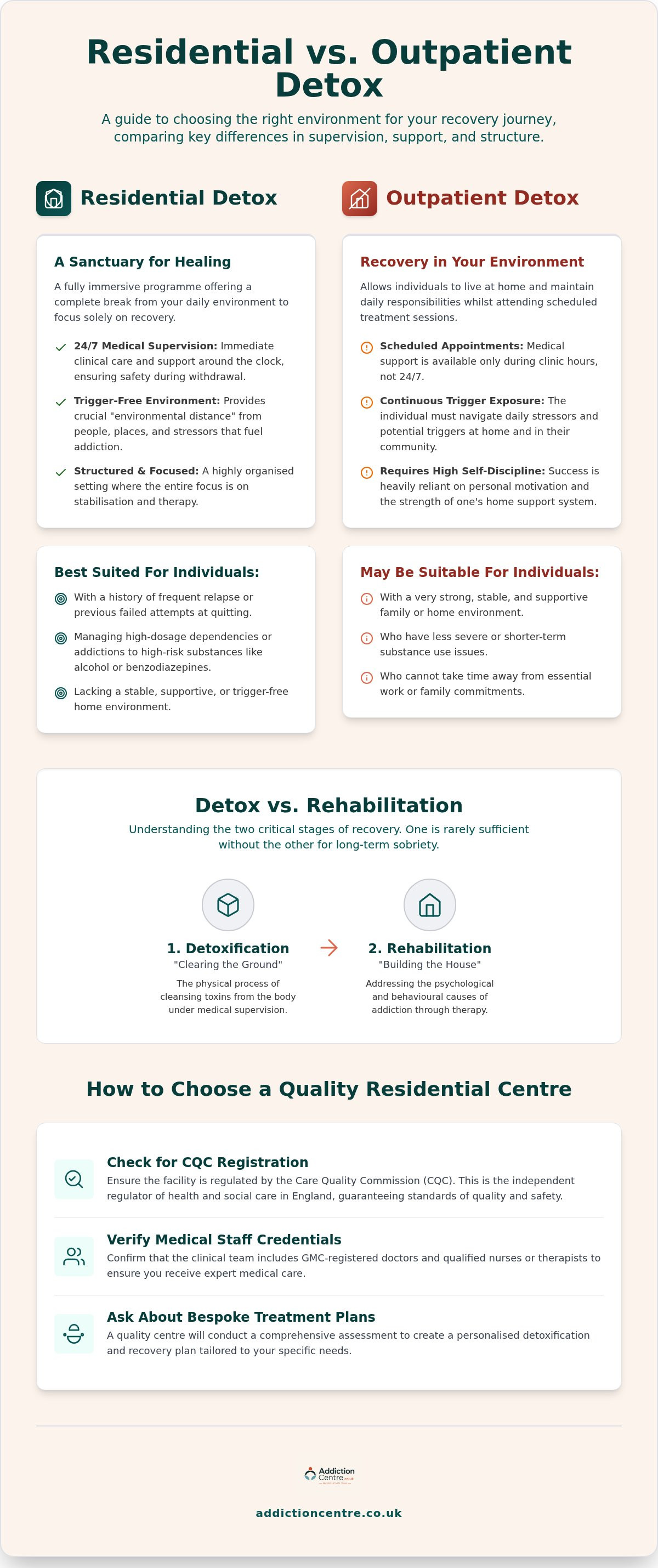
When you choose a residential drug detox, you aren't just signing up for a medical procedure; you're entering a 24-hour clinically supervised programme designed to protect your physical and mental well-being. At its core, this level of care provides a structured environment where medical professionals manage the complexities of withdrawal. Unlike attempting to quit at home, where the risks of complications are higher, a residential setting offers the safety of immediate clinical intervention if it's needed. It creates a necessary barrier between you and the substances that have come to define your daily life.
One of the most significant advantages of this approach is the concept of "environmental distance." Recovery is often hindered by local triggers, such as specific streets, social circles, or even the presence of local dealers. By stepping away from these familiar surroundings, you give your brain the space it needs to begin healing without constant external pressure. Understanding Drug Detoxification involves recognising that it is a three-stage process: evaluation, stabilisation, and fostering readiness for further treatment. Achieving this in a residential setting ensures that the stabilisation phase isn't interrupted by the chaos of your usual environment.
For families in crisis, this clinical path often acts as the "calm in the storm." When an individual is struggling with long-term dependency, the home environment can become a place of high tension and fear. Moving into a professional facility allows family members to step back from the role of "monitor" or "crisis manager," knowing their loved one is in capable, expert hands. It's the first step in restoring the health of the entire family unit, not just the individual.
The Difference Between Detox and Rehabilitation
It's vital to distinguish between these two stages of recovery. Detoxification is the physical process of cleansing toxins from your body, whilst rehabilitation focuses on the behavioural and psychological aspects of addiction. You might think of detox as clearing the ground and rehab as building the house. A residential drug detox is the essential foundation, but detox alone is rarely sufficient for long-term sobriety because it doesn't address the underlying reasons for substance use. Most residential centres integrate these stages, ensuring you move smoothly from physical stabilisation into deep psychological work.
Who Should Consider a Residential Programme?
Residential care is particularly recommended for those who have faced previous failed attempts at quitting or who have a history of frequent relapse. If you're managing a high-dosage dependency or lack a stable, supportive environment at home, the 24-hour supervision of a clinic becomes a lifeline. This is especially true for high-risk substances like benzodiazepines or alcohol, where withdrawal can be physically dangerous without medical oversight. Addiction Centre helps you navigate these choices through confidential recovery consultations, matching your specific clinical needs with the right CQC-regulated facility from our national network.
The Clinical Process: What to Expect During Your Stay
Entering a residential drug detox begins with a comprehensive clinical assessment. This isn't a mere formality; it's the foundation of your safety. Medical professionals will evaluate your physical health, psychological state, and drug history to create a bespoke detoxification plan. This initial stage ensures that the clinical team understands the specific challenges your body will face. You'll discuss any pre-existing conditions and previous experiences with withdrawal, allowing the staff to anticipate your needs before the process truly begins.
Once the assessment is complete, the focus shifts to stabilisation. This phase uses prescribed medication to manage withdrawal symptoms safely, preventing the "peak" of discomfort that often leads to relapse during home-based attempts. According to recent UK Drug Treatment Statistics, 310,863 adults were in contact with drug and alcohol treatment services between April 2023 and March 2024. This high volume of engagement underscores the importance of structured, professional care in navigating the complexities of substance misuse.
Medication-Assisted Treatment (MAT)
In the UK, clinical teams often utilise Medication-Assisted Treatment to ease the transition. For opiate withdrawal, medications such as Buprenorphine or Methadone may be prescribed, whilst sedatives like Chlordiazepoxide are frequently used for alcohol or benzodiazepine dependencies. A GMC-registered doctor oversees this process, adjusting dosages based on your real-time feedback and physiological markers. The goal is to make the residential drug detox as comfortable as possible, ensuring you don't feel overwhelmed by physical pain and can remain committed to the programme. If you're feeling overwhelmed by these choices, reaching out for a recovery consultation can provide the clarity you need to move forward.
24/7 Clinical Monitoring and Safety
Safety is maintained through constant observation. Withdrawal symptoms often peak during the night, making 24-hour supervision a critical component of residential care. Clinical staff are trained to manage co-occurring mental health conditions, often referred to as dual diagnosis, ensuring that your psychological well-being is supported alongside your physical health. Whether it's managing a sudden spike in anxiety or a medical emergency, having a team of experts just seconds away provides a level of security that outpatient care simply cannot match. This constant presence allows for a gradual reduction phase, where substances are tapered off under watchful eyes until your body is fully stabilised and ready for the next stage of recovery.
Residential vs. Outpatient Detox: Making an Informed Choice
Deciding between staying at home or entering a clinic is a pivotal moment in your recovery journey. Whilst outpatient services allow you to maintain some daily routines, they often lack the intensive structure required for a successful residential drug detox. In a residential setting, you're removed from the environment where your addiction developed. This shift is vital; it isn't just about physical distance, but about breaking the daily habits and social cues that trigger the urge to use. Accountability is built into the very fabric of the day, providing a level of discipline that's difficult to replicate when you're alone at home.
When weighing up the options, it's also helpful to consider the speed and safety of the process. Residential care is often the fastest route to stabilisation because medical staff can monitor your progress every hour, adjusting your care plan in real time. The UK government's 10-year drugs plan emphasises the critical need for high-quality treatment pathways to reduce drug-related harm. Choosing a residential programme aligns with these national standards, prioritising clinical safety over the convenience of staying at home. While the initial investment in private care is a factor, many find the value of a safe, successful first attempt far outweighs the emotional and physical cost of multiple failed attempts at home.
The Limitations of Home Detoxification
Attempting to detox in your usual environment carries a high risk of relapse, especially when withdrawal symptoms become uncomfortable or painful. Without 24-hour clinical support, the temptation to "self-medicate" to stop the discomfort can be overwhelming. Home detox also places a significant emotional and physical burden on family members. They aren't trained to manage the complex psychological shifts or potential medical emergencies that can arise. This lack of immediate medical intervention can turn a difficult situation into a dangerous one, particularly for those with long-term dependencies.
The Benefits of Professional Peer Support
One of the most transformative aspects of a residential programme is the community. You're amongst others who truly understand your experience because they're walking the same path. This shared journey helps to dismantle the stigma of addiction, replacing shame with a sense of collective purpose. These interactions often form the first foundations of a support network that lasts long after you leave the centre. Engaging with peers in a structured, drug-free environment fosters hope and provides practical insights into managing the early days of sobriety that you simply won't find in isolation.
How to Choose the Right Residential Drug Detox Centre
Selecting a facility for your recovery is a deeply personal process that requires careful scrutiny. To ensure your safety, the first step is verifying that the facility is registered with the Care Quality Commission (CQC). In England, the CQC inspects and rates services based on whether they are safe, effective, caring, responsive, and well-led. You should always look for the most recent inspection report on the centre's website to understand the standard of care you can expect. Beyond regulation, consider the clinical expertise on-site. A high-quality residential drug detox should have GMC-registered doctors and a high staff-to-patient ratio to provide the level of observation your recovery demands.
It's equally important to assess the facility's experience with your specific substance of choice. A clinic that excels in opiate withdrawal might have different protocols compared to one specialising in stimulant or benzodiazepine dependency. Ask about their aftercare provision as well; a successful detox is the beginning, not the end of the journey. You'll need a clear plan for what happens once you leave the clinical environment to maintain the progress you've made. This might include ongoing therapy, support group referrals, or transitional housing options.
Evaluating Treatment Philosophies
Treatment models vary significantly across the UK. Some clinics follow traditional 12-step programmes focused on abstinence and peer support, whilst others utilise clinical models like Cognitive Behavioural Therapy (CBT) to address the psychological triggers of addiction. Many modern facilities also incorporate holistic options, such as tailored nutrition, exercise regimes, and mindfulness practices, to support your physical restoration. The most effective centres are those that offer a bespoke plan, recognising that your personal history, physical health, and mental well-being require a unique approach rather than a one-size-fits-all solution.
Financial Planning and Accessing Treatment
Understanding the costs involved is a practical necessity when planning your recovery. Private treatment in the UK offers immediate access, bypassing the long waiting lists often found in community-based services. If you have private health insurance with providers like Bupa or AXA, you may find that your policy covers a significant portion of your residential drug detox. For a detailed breakdown of budgeting, funding options, and what to expect financially, you can read our Paying for Rehab in the UK: 2026 Financial Guide. If you need help navigating these choices, you can use our Addiction Treatment Directory to compare recognised clinics and find the right match for your needs.
Starting Your Recovery with Addiction Centre
The search for the right clinic can feel like an impossible task when you're already in a state of crisis. Addiction Centre exists to simplify this overwhelming process, acting as a bridge between your current situation and a structured, professional environment. We don't provide medical treatment ourselves; instead, we operate as a dedicated referral service that connects you with a national network of recognised, high-quality treatment providers. Our goal is to ensure you find a residential drug detox that perfectly aligns with your clinical needs and personal circumstances.
When you call our helpline, you'll encounter a team that combines clinical authority with deep human empathy. We understand the courage it takes to reach out, which is why our confidential recovery consultations are conducted with zero judgment. You aren't just another case to us; you're an individual deserving of dignity and safety. We provide the "calm in the storm," offering steady guidance whilst you navigate the logistical complexities of starting your recovery. Our commitment is to your long-term health, ensuring you are matched with providers that meet the highest standards of care.
The Addiction Centre Referral Process
Our methodical approach is designed to move you from uncertainty toward clarity in three simple steps:
- Step 1: The initial phone assessment. We begin with a confidential conversation to understand your drug history, physical health, and any co-occurring mental health conditions.
- Step 2: Reviewing curated options. Based on your assessment, we provide a list of CQC-regulated clinics that match your specific requirements and budget.
- Step 3: Facilitating admission. Once you've chosen a centre, we help manage the admission process to ensure you get help as quickly as possible, bypassing long community waiting lists.
Taking the First Step Today
The decision to change often comes in a brief moment of clarity. We encourage you to act whilst you have that motivation, as the path to restoration begins with a single, brave choice. Help is available regardless of the severity of your addiction or how many times you've tried to quit before. For more detailed information on what to expect from your journey, you can read our comprehensive Residential Drug Detox UK: A Guide to Safe, Clinical Recovery in 2026. Your journey toward lasting sobriety doesn't have to be a path you walk alone; our consultants are here to guide you every step of the way.
Your Path to Lasting Restoration
Choosing a professional setting for your recovery means you're prioritising your safety through 24-hour clinical supervision and removing the environmental triggers that often lead to relapse. A residential drug detox isn't just about the physical removal of toxins; it's about gaining the clarity and strength needed to build a sustainable life in sobriety. By opting for a CQC-regulated clinic, you ensure that your withdrawal is managed with the highest level of medical expertise and compassion.
We're here to help you navigate the choices ahead, offering access to a UK-wide network of specialised facilities and providing expert guidance on private health insurance coverage. We provide confidential support for families and individuals at every stage of the process. Speak with a Recovery Consultant today for a confidential assessment and take the first step toward your new beginning. You have the agency to change your story, and with the right professional support, a lasting recovery is well within your reach.
Frequently Asked Questions
How long does a residential drug detox usually take?
A typical stay lasts between seven and fourteen days, although the exact duration depends on the substance involved and the severity of the dependency. For instance, detoxing from opiates may require a longer period of stabilisation compared to stimulants. The primary goal is to ensure your body is physically clear of toxins and medically stable before you transition into the psychological phase of your recovery journey.
Can I go to work or use my phone during a residential detox?
Most facilities implement a "blackout period" during the initial days to help you focus entirely on your clinical recovery. Whilst policies vary between centres, you're generally discouraged from working or using your phone during the acute phase of detox. This environmental distance is vital for breaking the cycle of addiction and preventing external stressors from triggering a relapse before you've developed new coping mechanisms.
Is residential drug detox safe for everyone?
When conducted under 24-hour medical supervision, a residential drug detox is the safest way to manage withdrawal. However, a comprehensive clinical assessment is required to identify any high-risk factors, such as severe co-occurring mental health conditions or specific physical health issues. Medical professionals use this data to tailor the stabilisation process, ensuring that the withdrawal is as safe and comfortable as possible for your unique situation.
What is the difference between a detox centre and a rehab clinic?
Detoxification focuses on the physical cleansing of substances and the management of withdrawal symptoms through medical intervention. In contrast, rehabilitation addresses the psychological and behavioural aspects of addiction through therapy and counselling. Whilst they are distinct phases, most high-quality facilities integrate them to ensure a seamless transition. This combined approach is vital for long-term health, as it treats both the physical dependency and the underlying mental triggers.
Can I use my private health insurance to pay for residential detox?
Many private clinics in the UK accept insurance from providers like Bupa or AXA. The extent of your coverage depends on your specific policy and the clinical necessity of the treatment. Our recovery consultants can help you understand your policy's terms and facilitate the verification process with the centre. This ensures that you can access high-quality care without the stress of navigating complex insurance paperwork alone during a crisis.
What happens if I relapse after completing a detox programme?
Relapse is often a part of the recovery journey and is treated as an opportunity to refine your treatment plan rather than a failure. If you experience a relapse after completing a programme, it's vital to seek immediate support to prevent a full return to previous habits. Many clinics offer robust aftercare and rapid re-admission options to help you regain your footing and continue the progress you've already made.
Will I be forced to stay in the residential centre against my will?
No, you cannot be forced to stay in a residential centre against your will. Treatment is a voluntary process, and you have the right to leave at any time. However, if you choose to exit against medical advice, the clinical staff will discuss the risks with you to ensure you're making an informed decision. The most successful outcomes occur when an individual is fully committed and remains for the duration of the programme.
How soon can I be admitted to a residential drug detox centre?
Admission to a private facility is typically much faster than NHS alternatives, often occurring within 24 to 48 hours. Once you've completed a confidential assessment and a suitable clinic has been identified, the referral process begins immediately. This speed is a significant advantage, allowing you to enter a safe clinical environment whilst your motivation for change is strongest and before the chaos of your current situation escalates further.


