
Choosing a rehab centre based on a glossy brochure might seem like the fastest way to get help, but the most effective path is often the one you don't walk alone. As we move through 2026, professional treatment facility referrals have become essential for cutting through the noise of a crowded healthcare landscape. You likely feel overwhelmed by the choice between statutory waitlists and private care, or perhaps you're anxious about whether a recommendation is a genuine clinical fit or just a sales pitch. It's natural to feel protective of your recovery journey when the stakes are this high.
We believe that a referral shouldn't be a transaction; it's a vital clinical match that aligns your medical needs with the right environment. This guide will help you discover how professional referrals work in the UK and how to navigate the clinical pathway to secure the specific addiction support you require. We'll walk through the essential referral steps, explain the importance of CQC-regulated facilities, and show you how to move from a state of confusion toward a clear, personalised treatment plan that prioritises your dignity and long-term health.
Key Takeaways
- Understand how a professional assessment acts as a clinical bridge to ensure your recovery plan is based on medical necessity rather than guesswork.
- Compare the differences between statutory pathways and private treatment facility referrals to help you decide which route offers the speed and specialist matching you need.
- Learn why integrated support for dual diagnosis and medically supervised detox is vital for a safe and sustainable recovery.
- Discover how to prepare for a referral consultation by organising your medical history and defining your personal recovery goals.
- Gain confidence in selecting a provider by focusing on CQC-regulated facilities that offer personalised residential care and detox services.
Understanding the Landscape of Addiction Treatment Referrals in the UK
A treatment facility referral isn't just a recommendation; it's a professional bridge designed to carry you from a state of crisis to a structured environment of healing. In the UK, this process transforms a daunting list of options into a targeted clinical pathway. Without this guidance, many individuals find themselves lost in a sea of marketing, unsure which service actually addresses their unique physiological and psychological needs. A referral acts as a safeguard, ensuring that the transition into care is handled with precision and care.
Determining the right level of care requires more than a casual conversation. It demands a thorough clinical assessment conducted by someone who understands the complexities of dependency. Addiction isn't a singular experience, and a "one size fits all" model often leads to relapse because it ignores the specific nuances of a person's substance history and co-occurring mental health challenges. Impartial advice is vital, especially as the digital market grows. You need to know that a recommendation is based on clinical integrity rather than a broker's commission. Professional treatment facility referrals prioritise your health over profit, providing a clear-eyed view of the options available to you.
The Purpose of a Professional Referral
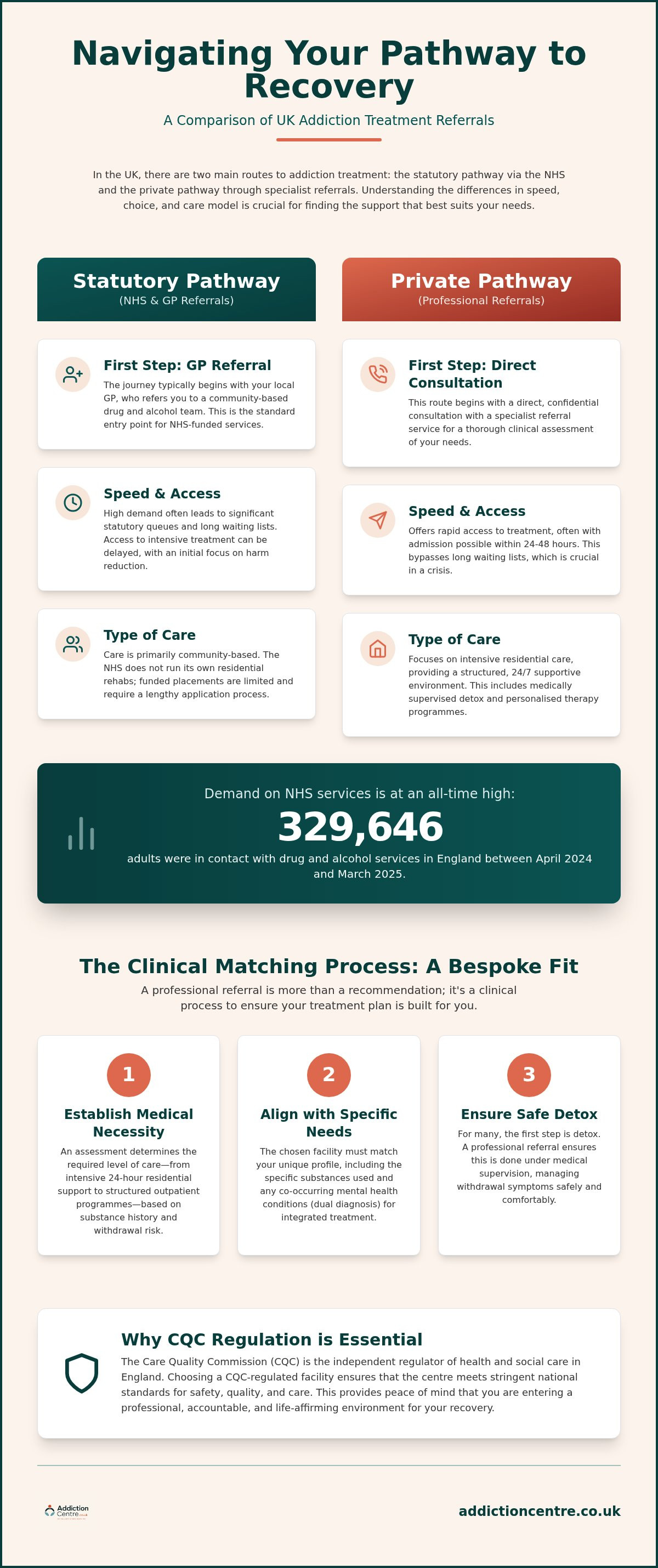
The primary goal of a referral is to establish medical necessity. Clinicians must decide whether you require the intensive, 24-hour support of a residential centre or if structured outpatient care is more appropriate. This decision is based on your substance use history, previous recovery attempts, and the risk of withdrawal. By matching you with specific drug rehabilitation programs, a referral ensures you receive the exact level of supervision required. This process typically involves:
- Establishing medical necessity for residential vs outpatient care.
- Ensuring the facility aligns with your specific substance history and usage patterns.
- Identifying the need for immediate clinical intervention or medically supervised detox.
The Evolution of the UK Referral System in 2026
By 2026, the UK's approach to treatment facility referrals has evolved to be more holistic and integrated. We've moved away from treating addiction in isolation, now prioritising pathways that simultaneously address mental health through dual diagnosis support. Digital directories have played a massive role in this shift, making it easier to find specialist care that was once hidden behind complex bureaucracy. However, this increased access makes the role of the Care Quality Commission (CQC) even more critical. Their oversight ensures that referral agencies and clinics meet stringent safety and quality standards. This regulatory framework provides you with the peace of mind that the support you're offered is both legal and life-affirming, acting as a steady guide in your journey toward restoration.
Statutory vs. Private Referrals: Navigating Your Pathway to Recovery
Understanding your options is the first step toward clarity. In the UK, you generally face two distinct routes: the statutory pathway through the NHS or the private sector through specialist treatment facility referrals. Both aim to support your recovery, but they differ significantly in speed, choice, and the intensity of the initial intervention. Deciding which path to take often depends on the urgency of your situation and the specific level of clinical care you require.
The NHS and GP Referral Process
Your local GP is often the first point of contact for NHS addiction support. They'll typically refer you to a community-based drug and alcohol team, which coordinates local treatment. Whilst these services provide essential care, they often operate under immense pressure. Between April 2024 and March 2025, 329,646 adults were in contact with drug and alcohol services in England, the highest number since reporting began. This volume can lead to statutory queues, where treatment often focuses on community-based harm reduction rather than immediate residential admission. It's important to remember that the NHS doesn't usually run its own residential rehabs; they commission placements at private providers, but funding for these is limited and the application process can be lengthy. A GP might recommend a private alternative if they feel your clinical needs require a faster intervention than local authority funding allows.
Specialist Referral Services and Directories
Private treatment facility referrals offer a different pace and a wider range of options. Instead of being restricted by your postcode, these services allow you to select a facility based on its therapeutic style and clinical expertise. Using an addiction treatment directory allows you to compare clinics across the country, focusing on those that specialise in your specific needs, such as dual diagnosis or complex detox protocols.
The benefit of choice is a powerful tool in recovery. Impartiality is the cornerstone of this process. A professional advisor helps you compare facilities based on CQC ratings and their specific approach to care, ensuring the recommendation is a bespoke fit for your recovery goals. If you're feeling stuck in a waiting list cycle, seeking a recovery consultation can provide the immediate clarity needed to move forward. This route often allows for admissions within 24 to 48 hours, providing a vital lifeline when you need to act quickly to secure your health. This speed and personalisation are why many choose to bypass statutory queues in favour of a more direct, specialist-led matching process.
The Clinical Matching Process: Ensuring a Bespoke Treatment Fit
Effective treatment facility referrals are built on the foundation of clinical suitability rather than mere availability. When you seek help, the goal is to align your specific medical profile with a facility's specialisms. This isn't just about finding a room; it's about ensuring the clinical team has the expertise to manage your unique recovery journey. According to the latest UK government drug and alcohol treatment statistics, nearly three-quarters (74%) of adults starting treatment report having a mental health treatment need. This data underscores why a generic approach to recovery is often insufficient.
Dual Diagnosis and Complex Needs
For many, addiction doesn't exist in a vacuum. It often coexists with conditions like anxiety, depression, or PTSD. Professional dual diagnosis treatment UK referrals ensure that both the addiction and the underlying mental health condition are addressed simultaneously. If a facility only treats the substance use without providing on-site psychiatric support, the risk of relapse remains high. Integrated care means your treatment plan is managed by a multidisciplinary team that understands how your mental health influences your recovery, creating a more stable foundation for long-term sobriety.
Detoxification and Medical Requirements
The first stage of recovery is often the most physically demanding. Safety during withdrawal is paramount, which is why matching your detox requirements with the right level of medical supervision is a non-negotiable step. Referrals for residential alcohol detox UK focus on facilities that provide 24/7 clinical monitoring to manage potentially dangerous withdrawal symptoms. Similarly, if you require residential drug detox UK, the referral process identifies clinics equipped to handle specific substances, whether that involves pharmaceutical intervention or specialised tapering protocols. This high level of medical oversight ensures your transition into sobriety is as safe and comfortable as possible.
Beyond medical needs, the matching process considers therapeutic modalities and the facility's environment. Some people thrive in a traditional 12-step setting, whilst others respond better to Cognitive Behavioural Therapy (CBT) or holistic approaches. Even the setting itself matters. A clinical, hospital-style environment might provide the structure some need, whereas a retreat-style setting can offer the peace required for deep reflection. A professional referral service weighs all these factors, ensuring the environment supports your dignity and fosters a sense of safety throughout your stay.
Preparing for Your Referral Consultation: A Step-by-Step Guide
Preparation turns anxiety into action. When you begin the process of seeking treatment facility referrals, you're taking a courageous step toward a more stable future. This initial consultation is a clinical bridge, designed to move you from a place of uncertainty to a structured environment of care. By arriving prepared, you ensure that the clinical match is as accurate and effective as possible.
Gathering your medical and substance use history is the first practical task. You'll need to discuss the substances involved, the duration of use, and any previous recovery attempts. It's also helpful to define your recovery goals. Think about what you want to achieve; perhaps it's a safe medical detox, or maybe you're looking for a complete lifestyle transformation through long-term therapy. Clear goals help your advisor align your needs with the right therapeutic environment.
Financial transparency is equally important for a smooth transition. Understanding how to pay for rehab UK allows you to focus on facilities that fit your specific budget or insurance coverage without unnecessary stress. Finally, consider the logistics of your stay. You'll need to discuss the duration of treatment, which often ranges from 28 to 90 days, and what aftercare requirements you might have to support your sobriety once you return home.
What to Ask Your Referral Advisor
You're an active partner in this journey, and asking the right questions will give you confidence in the path ahead. Don't hesitate to inquire about the following areas:
- Is the recommended facility CQC-regulated, and what are the specific qualifications of the clinical staff?
- What are the success rates for individuals with a similar substance history or dual diagnosis?
- Are there family involvement programmes to help your loved ones support your recovery?
- What is the admission timeline, and can the centre help with transport arrangements?
The Assessment Call: What to Expect
The assessment call is a confidential recovery consultation. It's a non-judgmental space where your dignity is the priority. Honesty is the foundation of this conversation; the more open you are about your history and current challenges, the more precise the clinical match will be. This isn't an interrogation; it's a supportive dialogue aimed at finding your best chance for restoration.
Once the assessment is complete, your advisor will move quickly to confirm a placement. You'll transition from a state of confusion to having a concrete, personalised plan in place, often within hours. If you're ready to move forward, you can book your recovery consultation today to secure the specialist support you need.
How Addiction Centre Facilitates Professional Treatment Facility Referrals
At Addiction Centre, we act as a steady guide through what is often the most turbulent period of your life. Our role in facilitating professional treatment facility referrals is to provide a sense of calm and order when everything feels overwhelming. We don't act as distant observers; instead, we position ourselves as compassionate advocates who walk alongside you from the first point of contact. By acting as a bridge between a state of crisis and a structured, professional environment, we help you regain the agency needed to begin your recovery.
Our Impartial Guidance Framework
We believe that your health and dignity must always come first. This is why our national directory of recognised addiction rehabilitation clinics is managed with strict clinical integrity. Every provider we recommend is carefully vetted to ensure they meet the high standards of care required by the Care Quality Commission (CQC). We don't believe in generic solutions because your journey is unique. Our framework focuses on providing personalised recommendations that match your specific substance history, medical needs, and personal preferences.
Choosing a facility through our expert-led service means you're not simply picking a name from a list. You're accessing a network of providers that have been evaluated for their clinical excellence and their ability to provide a safe, supportive atmosphere. This impartial approach ensures that the advice you receive is focused entirely on your long-term restoration rather than a facility's occupancy rates. We take the time to understand the nuances of your situation, ensuring the clinical match is as precise as possible.
Taking the First Step Toward Recovery
Your path to healing often begins with a quiet moment of reflection. Many individuals find clarity by using our confidential online self-assessments, which help identify the level of care required before speaking with our team. When you're ready, our referral team provides a non-judgmental space for a full recovery consultation. This conversation is the foundation of your personalised treatment plan, allowing us to identify whether you require residential drug detox, alcohol detox, or integrated mental health support.
The transition from an initial referral to a confirmed residential or outpatient admission is handled with methodical care. We manage the logistical details so you don't have to, allowing you to focus entirely on your health. Our support isn't limited to the individual; we also provide guidance for families across the UK, helping them understand how to support their loved ones through this transition. By engaging with our specialist team today, you're moving away from the uncertainty of addiction and toward a structured, hopeful future in a CQC-regulated environment.
Your Next Steps Toward Lasting Restoration
Securing the right help shouldn't be a source of further stress. By understanding the clinical pathway, you've already moved from a state of uncertainty toward a path of structured recovery. You now know that effective treatment facility referrals are about more than just finding a bed; they're about matching your specific medical needs with a CQC-recognised facility network that prioritises your dignity. Whether you require integrated dual diagnosis support or a medically supervised detox, the right environment is within reach.
Our commitment is to provide impartial and confidential support that simplifies the search for specialist care. We offer expert clinical guidance to help you navigate the complexities of the UK's addiction landscape, ensuring you don't have to face these decisions alone. You're now equipped to move beyond waiting lists and toward a personalised plan for health and restoration.
Begin your confidential assessment and secure a professional referral today. Recovery is a journey of gradual progress, and taking this first step is a profound act of self-care. We're here to walk alongside you as you build a foundation for a healthier, more hopeful future.
Frequently Asked Questions
How do I get a referral for addiction treatment in the UK?
You can secure a referral through two primary pathways: the statutory NHS route or a private specialist service. For NHS care, your GP will typically direct you to a local community drug and alcohol team for an assessment. Alternatively, private treatment facility referrals allow you to bypass these queues. This route involves a confidential consultation with a specialist advisor who matches your clinical needs with a recognised residential clinic.
Can I self-refer to a private drug or alcohol rehab centre?
Yes, self-referral is the primary route for almost any private drug or alcohol rehab centre in the UK. This process doesn't require a prior diagnosis from a doctor or a recommendation from a social worker. By contacting a specialist directory or referral service, you can undergo a clinical assessment and secure a placement. This path is often chosen by those who need immediate intervention and a high degree of privacy.
Is a GP referral required for private addiction treatment?
A GP referral is not a legal or clinical requirement for accessing private addiction treatment. Whilst it's often helpful to keep your doctor informed about your health, you have the right to seek specialist care independently. Private services provide their own internal medical assessments to ensure that the chosen facility can safely manage your detox and therapeutic requirements without the delays associated with statutory medical paperwork.
How long does the treatment facility referral process take?
The timeline for private treatment facility referrals is exceptionally fast, often resulting in admission within 24 to 48 hours. This speed is vital for individuals in crisis who need immediate clinical supervision. Statutory NHS referrals are significantly slower, as they're subject to local authority funding and availability. In the private sector, once your assessment is complete, a placement can be secured almost immediately at a CQC-regulated clinic.
What is the difference between a referral agent and an impartial directory?
An impartial directory provides a transparent overview of a national network of clinics, whereas some referral agents may only suggest facilities they have specific commercial ties with. Impartial services focus on clinical matching, ensuring the recommendation is based on your medical necessity and recovery goals. This distinction is crucial for ensuring you receive objective advice that prioritises your health and long-term sobriety over a facility's commercial interests.
Will my referral for addiction treatment be kept confidential?
Confidentiality is a cornerstone of the professional referral process. All assessments and consultations are handled with the utmost discretion, adhering to strict UK data protection standards. Your employer, family, or GP won't be notified without your explicit consent. This secure environment allows you to be completely honest about your substance history; this is essential for ensuring the clinical match is accurate and your recovery plan is effective.
Can a family member request a referral on behalf of a loved one?
Family members can certainly start the process by researching options and speaking with referral advisors to understand the available pathways. It's common for loved ones to take this first step when someone is in crisis. However, the individual themselves must eventually engage with the clinical team for a confidential assessment. This ensures they're medically suitable for the programme and are ready to participate in the recovery process.
Are mental health referrals included in addiction treatment services?
Many addiction services now prioritise integrated care that addresses both substance use and co-occurring mental health conditions. When you seek a referral, you can specifically request a facility that offers dual diagnosis support. These clinics provide on-site psychiatric care and specialist therapies for conditions like depression or anxiety. This holistic approach is essential for long-term health, as it treats the underlying causes of addiction rather than just the symptoms.


