
What if the most difficult part of overcoming dependency isn't actually the willpower to stop, but simply knowing which path to take first? Effective addiction recovery planning UK often begins with this single, quiet realisation: you don't have to navigate the entire journey on your own. You've likely spent hours searching through rehab directories or trying to understand the differences between NHS and private care, only to feel more lost than when you began. It's natural to feel overwhelmed by the volume of choices or the fear of what the detox process might entail.
This guide will show you how to build a structured, clinically-backed roadmap for your recovery, providing the clarity you need to move forward with confidence. We'll explore everything from safe medical detox and choosing the right residential centre to the essential aftercare strategies that sustain long-term sobriety. By breaking the process down into manageable, professional steps, you can replace uncertainty with a clear sense of purpose and a path toward lasting change.
Key Takeaways
- Understand how to create a structured roadmap that balances your clinical needs with personal goals for long-term sobriety.
- Learn why a professional clinical assessment is the essential first step to ensuring a safe and medically supervised detoxification process.
- Discover the differences between immersive residential rehab and flexible outpatient care to determine which environment best supports your unique healing journey.
- Build a sustainable future by integrating proactive relapse prevention into your addiction recovery planning UK, ensuring support continues long after you leave a facility.
- Simplify your search for the right treatment centre by using a comprehensive directory and expert consultations to reduce planning anxiety and find the best clinical fit.
What is Addiction Recovery Planning in the UK?
Recovery isn't just about stopping a habit; it's about building a new life. In the UK, addiction recovery planning UK serves as the essential bridge between the chaos of active dependency and the stability of long-term health. Think of it as a clinical roadmap. It moves you away from "crisis-mode" decision-making, where choices are often made out of fear or desperation, and replaces it with a structured, step-by-step approach. A well-constructed plan ensures that every stage of your journey, from the first day of detox to your first year of sobriety, is supported by professional oversight and personal goals.
A robust plan must be deeply personalised. It involves a thorough assessment of your clinical needs, your financial capacity, and your personal aspirations. Whilst every journey is unique, the framework that supports it should be based on proven medical evidence and professional standards. This methodical approach doesn't just improve your chances of reaching sobriety; it helps you sustain it by preparing you for the challenges that lie ahead.
The Core Components of a UK Recovery Plan
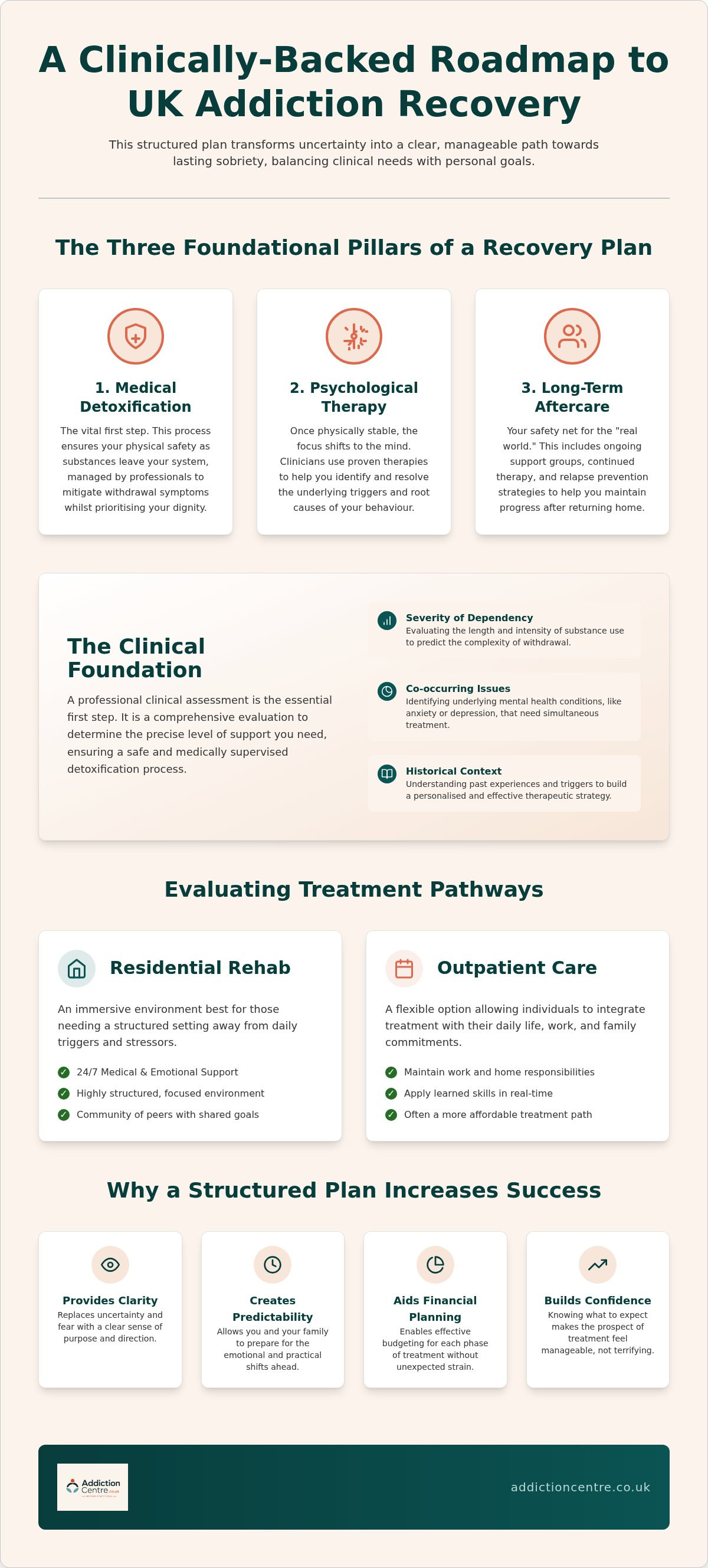
A comprehensive plan is more than just a list of treatment facilities. It's a holistic strategy that addresses the physical, psychological, and social aspects of your life. To be effective, it must align with the clinical standards set by recognised bodies such as the Care Quality Commission (CQC). Most successful plans include three foundational pillars:
- Medical Detoxification: This is the vital first step. It ensures your physical safety as substances leave your system, managed by professionals who can mitigate withdrawal symptoms whilst prioritising your dignity.
- Psychological Therapy: Once you're physically stable, the focus shifts to the mind. Using various addiction treatment therapies, clinicians help you identify and resolve the underlying triggers of your behaviour.
- Long-term Aftercare: This is your safety net for the "real world." It includes ongoing support groups and relapse prevention strategies to help you maintain your progress once you return home.
Why a Structured Plan Increases Success Rates
Structure provides something that addiction often takes away: predictability. When you have a clear timeline, you and your family can prepare for the emotional and practical shifts ahead. This preparation is particularly helpful when you're paying for rehab in the UK, as it allows you to budget effectively for specific phases of treatment without the stress of unexpected financial strain.
By integrating addiction recovery planning UK into your initial steps, you replace the weight of uncertainty with a sense of quiet confidence. Knowing what to expect during clinical assessments or how a daily schedule in a residential facility looks can make the prospect of treatment feel manageable rather than terrifying. Success in recovery isn't an accident; it's the result of a thoughtful, professional plan that walks alongside you every step of the way.
The Clinical Foundation: Assessment and Medical Detoxification
Before you can begin the deep psychological work of healing, your body needs a safe and stable foundation. In the context of addiction recovery planning UK, this foundation is built upon two critical clinical steps: a professional assessment and a medically supervised detoxification. It's natural to feel apprehensive about the physical reality of withdrawal, but entering this phase with a structured plan ensures that your safety and dignity remain the highest priorities. By understanding the science of addiction treatment, we can see that addiction is a complex condition that requires a methodical, medical response rather than a test of willpower alone.
Understanding the Assessment Process
A professional clinical assessment is far more than a simple questionnaire. It's a comprehensive evaluation conducted by specialists to determine the exact level of support you require. During this process, clinicians look at several vital factors:
- Severity of Dependency: Evaluating the length and intensity of substance use to predict the potential complexity of withdrawal.
- Co-occurring Issues: Identifying any underlying mental health conditions, such as anxiety or depression, that must be treated alongside the addiction.
- Historical Context: Discussing previous recovery attempts to understand what worked and what didn't, allowing for a more personalised approach.
- Personal Triggers: Mapping out the social and environmental factors that contribute to your behaviour.
This data is essential for deciding whether you need intensive inpatient care or if a community-based programme is more appropriate for your circumstances.
The Role of Medical Detox in Your Plan
Detoxification is the process of allowing substances to leave your body safely. Attempting to stop "cold turkey" is not only incredibly difficult but can also be clinically dangerous, particularly with certain substances. A structured plan replaces this risk with medical supervision. In a professional setting, clinicians may use prescribed medications to ease withdrawal discomfort whilst monitoring your vital signs around the clock. This level of care is often a primary reason why a residential alcohol detox UK is recommended for those with long-term dependencies.
The goal of detox is physical stabilisation. Once the "fog" of substance use begins to clear, your mind becomes better prepared for the intensive therapy and lifestyle changes that follow. It's the essential first hurdle that, once cleared, opens the door to lasting emotional and psychological restoration. If you're feeling overwhelmed by where to start, you can reach out for a confidential assessment to help clarify your next steps.
Evaluating Treatment Pathways: Residential vs. Outpatient Care
Once the initial physical stabilisation of detox is complete, the next pivotal decision in addiction recovery planning UK involves choosing the most effective environment for long-term healing. There is no "one-size-fits-all" solution. The path you choose must align with your clinical needs, your personal history, and the practical realities of your daily life. Whilst some individuals require the intensive, 24/7 support of a residential facility, others may find that a structured outpatient programme provides the necessary tools whilst allowing them to maintain their professional or family commitments.
The current landscape of care is influenced by the UK government's 10-year drugs plan, which aims to improve access to both community-based and residential services. However, it's important to understand the practical differences in how these services are accessed. Community-based NHS services are often the first port of call, yet they can sometimes involve waiting lists due to high demand. In contrast, private residential clinics typically offer much faster admission, which can be crucial for those in a state of crisis who need immediate intervention to prevent relapse.
When to Prioritise Residential Rehab
Residential rehabilitation is often considered the "gold standard" for those with severe dependencies or complex clinical profiles. By removing yourself from your usual environment, you eliminate the immediate social and environmental triggers that often fuel addictive behaviour. This immersive setting provides a safe space where you can focus entirely on your restoration without the distractions or stresses of the "real world."
This pathway is particularly vital for individuals who require dual diagnosis treatment UK. When addiction co-exists with mental health conditions like PTSD, bipolar disorder, or severe depression, an integrated approach within a residential centre ensures that both issues are treated simultaneously by a multidisciplinary team. If previous attempts at community-based recovery haven't resulted in sustained sobriety, a residential stay provides the higher level of intensity and accountability needed to break the cycle.
The Benefits of Structured Outpatient Programmes
Outpatient care offers a different kind of strength by integrating recovery directly into your daily life. For individuals with stable home environments and unavoidable responsibilities, such as caring for children or maintaining a career, this flexibility is invaluable. It allows you to attend therapy sessions and support groups whilst continuing to live at home. This model also offers the advantage of immediate application; you can take the tools learned in a morning session and apply them to real-world situations by the afternoon.
Cost is another factor where outpatient care differs significantly. Because it doesn't require the overheads of 24-hour accommodation and catering, it's generally more accessible for those who may be self-funding their treatment. When combined with a strong personal support network and a dedicated clinical team, outpatient programmes can be an incredibly effective component of a comprehensive addiction recovery planning UK strategy.
Building a Sustainable Aftercare and Relapse Prevention Strategy
Leaving a treatment facility is often a moment of mixed emotions: pride in your progress combined with a natural anxiety about returning to daily life. This is where the final, and perhaps most vital, stage of addiction recovery planning UK comes into play. Recovery isn't a destination you reach upon discharge; it's a continuous process of growth and vigilance. A sustainable aftercare strategy acts as your safety net, ensuring that the progress made during residential or outpatient care is protected as you transition back into your community.
By treating aftercare as a proactive plan rather than an afterthought, you move away from a reactive mindset. Consistent engagement with support networks is one of the strongest predictors of long-term success. It's about building a life where substances are no longer necessary, and having the professional and peer support in place to handle the inevitable stresses that life brings.
Essential Elements of a Relapse Prevention Plan
A robust relapse prevention plan is a practical document that you create whilst still in treatment. It shifts you from a state of uncertainty to one of prepared agency. Instead of waiting for a crisis to occur, you identify high-risk situations in advance and create specific "if-then" responses. If you feel a sudden surge of stress, then you call a specific member of your support network. If you're invited to a social circle where substances are present, then you have an exit strategy ready. This methodical preparation reduces the mental load during difficult moments.
- Identifying Triggers: You'll learn to recognise the emotional states, such as loneliness or anger, and environmental cues that historically led to substance use.
- Establishing a Sober Network: This includes family, friends, and recovery professionals who understand your journey and can offer non-judgmental support when you're feeling vulnerable.
- Developing Coping Mechanisms: Replacing old habits with healthy alternatives, such as mindfulness, physical exercise, or creative outlets, provides a constructive way to process emotions.
The Role of Ongoing Therapy and Support Groups
The first year of sobriety is often the most challenging, as you navigate life's daily trials without your previous crutches. Consistent engagement with therapy remains vital during this period. Weekly sessions provide a private space to process new challenges and refine the tools you learned during rehab. Many UK rehab centres offer their own aftercare programmes, which bridge the gap between the structured environment of a clinic and the independence of home life.
Mutual-aid groups, such as SMART Recovery or traditional 12-step programmes, offer a different but equally important kind of support. Being amongst others who share similar experiences reduces the sense of isolation that often accompanies addiction. These groups provide a community of peers who hold one another accountable whilst celebrating each other's milestones. By making these connections a permanent part of your addiction recovery planning UK, you significantly increase your chances of long-term restoration. If you're unsure which support networks are available in your area, you can consult our directory of UK recovery services to find the right fit for your ongoing care.
Navigating the UK Treatment Landscape with Expert Guidance
The UK's addiction treatment landscape is vast, featuring a diverse array of clinics, community groups, and specialised hospitals. This variety is a strength, yet it often creates a sense of paralysis for those in the early stages of recovery. When you're already dealing with the weight of dependency, the task of comparing dozens of facilities can feel insurmountable. This is where professional guidance becomes an essential part of your addiction recovery planning UK, transforming a confusing search into a clear, manageable process.
By seeking impartial advice, you ensure that your choice is based on clinical suitability rather than just proximity or aesthetics. Expert consultations help you cut through the noise, providing a bridge between your current crisis and a structured, professional environment that meets both your medical needs and your financial circumstances. Professional referrals ensure that the clinic you choose has the specific expertise to handle your unique profile, whether that involves complex physical health needs or specific psychological triggers.
How to Use a Treatment Directory Effectively
A well-organised directory is more than just a list; it's a powerful tool for refinement. Navigating the UK addiction treatment directory allows you to filter options based on the specific type of care you require. For example, if you have a physical dependency that requires 24-hour medical supervision, you can specifically search for residential drug detox UK facilities that specialise in safe, clinical withdrawal.
Safety should always be your primary filter. You should verify that any facility you consider in England is registered with the Care Quality Commission (CQC), which assesses services based on whether they are safe, effective, and well-led. Beyond regulation, use the directory to compare therapeutic approaches and facility amenities. Some may prefer a traditional 12-step approach, whilst others might look for clinics that offer holistic therapies like art therapy or equine-assisted recovery. Having these details in one place allows for a calm, methodical comparison.
Taking the First Step with Addiction Centre
At Addiction Centre, we act as a steady guide during what is often the most turbulent period of your life. We believe that every individual deserves a path to restoration that respects their dignity and unique journey. Our role is to simplify the complexities of addiction recovery planning UK by connecting you with a network of recognised rehabilitation clinics across the country. We don't act as a distant observer; we walk alongside you to ensure you find the right clinical environment for your needs.
You can begin this process by accessing our confidential self-assessments, which help determine the intensity of care best suited to your situation. Whether you require a referral for a residential stay or advice on outpatient recovery consultations, our focus remains on providing a clinical fit that fosters long-term change. You don't have to make these life-altering decisions in isolation. With the right information and a compassionate expert by your side, you can move forward with the quiet confidence that you're in capable hands.
Embracing a Future of Professional Support and Restoration
You've explored the essential pillars of a successful journey, from the safety of medical detoxification to the long-term security of a robust aftercare strategy. By prioritising a structured approach, you replace the weight of uncertainty with a clear, clinical roadmap. Effective addiction recovery planning UK is not merely about stopping a behaviour; it's about building a sustainable life where you feel supported at every turn. Whether you choose the immersive environment of residential rehab or the flexibility of outpatient care, the most important element is ensuring the path matches your unique clinical needs.
You don't have to navigate these complex choices alone. Our team provides access to a national network of recognised clinics and offers confidential assessments conducted by recovery experts. We are here to provide impartial advice on both residential and outpatient care, helping you find the specific environment where you can truly heal. Start your recovery journey today with a confidential consultation and take the first step toward the healthy, restored life you deserve. There is hope for a different future, and it begins with a single, professional conversation.
Frequently Asked Questions
How much does private addiction recovery planning cost in the UK?
The cost of private addiction recovery planning UK depends on the facility’s location and the intensity of the care required. Fees generally cover medical supervision, therapy sessions, and accommodation. Some individuals choose private care to avoid the waiting lists often associated with community services. It's best to discuss your budget during a consultation to find a clinic that matches your financial needs whilst providing the necessary clinical support.
Can I get addiction recovery support through the NHS?
Yes, you can access support through the NHS by visiting your GP or contacting your local council's drug and alcohol service. The NHS offers community-based programmes, including counselling and group therapy. Whilst these services are free, high demand can lead to significant waiting times. For those needing immediate intervention, private residential options are often explored as an alternative to ensure the recovery process begins without delay.
How long does a typical addiction recovery programme last?
The duration of a programme varies based on your clinical assessment and the severity of the dependency. A typical residential stay often lasts between 28 days and three months. This timeline usually begins with a week of detox, followed by several weeks of intensive psychological therapy. Long-term aftercare then continues for months or years to ensure the transition back to daily life remains stable and supported.
What is the difference between detox and rehab in a recovery plan?
Detox and rehab are distinct but connected phases of a comprehensive plan. Detox is the medical process of clearing substances from your system, focusing on physical safety and withdrawal management. Rehab is the subsequent therapeutic phase that addresses the root causes of addictive behaviour. Whilst detox stabilises the body, rehab provides the psychological tools and coping mechanisms needed to maintain sobriety in the real world.
Is family involvement necessary for a successful recovery plan?
Family involvement is not a strict requirement, but it can significantly enhance the success of your recovery. Many clinics offer family therapy sessions to help loved ones understand the nature of addiction and heal fractured relationships. This creates a more stable home environment, which is vital for long-term sobriety. However, if family dynamics are a trigger, your plan will focus on building a different, healthy support network.
What happens if someone refuses to follow a recovery plan?
Recovery is a voluntary journey that requires the individual’s active participation to be effective. If someone refuses to follow a plan, clinicians often use motivational interviewing techniques to explore the reasons for their hesitation. Whilst you can't force a person to change, professional guidance can help families set healthy boundaries. The goal is always to encourage the individual to engage with the process at a pace they can manage.
How do I find a CQC-registered rehab clinic near me?
Finding a safe facility is simplified by using a professional directory that specifically lists CQC-registered clinics. The Care Quality Commission is the independent regulator of health and social care in England, ensuring services are safe and effective. By filtering your search for these recognised centres, you can be confident that the clinical standards meet national requirements. This oversight is a crucial part of addiction recovery planning UK for ensuring quality care.
Does insurance cover addiction recovery planning and treatment in the UK?
Many private medical insurance policies in the UK include coverage for addiction treatment, though the extent of this support varies. Some insurers cover the full cost of a residential stay, whilst others may only fund outpatient therapy or detox services. It is essential to check your specific policy details and confirm whether your chosen clinic is an approved provider. Most private facilities can help you navigate this process during admission.


