What if the line between a heavy drinking habit and a clinical dependency isn't as clear as you've been led to believe? It's natural to feel a sense of quiet anxiety when reflecting on your relationship with alcohol, often caught between the shame of current behaviours and the fear of what a recovery journey might entail. You aren't alone in this uncertainty. Many people struggle to distinguish between high-risk drinking and a physical need for support, which is why an objective alcohol dependency test is such a vital starting point for your health.
In this article, you'll discover how professional screening tools like the AUDIT identify specific risk levels and provide the clarity you need to move forward without judgment. We'll outline the precise steps to take if your results suggest a need for clinical intervention, whilst exploring options from residential detox to consultations at a specialist referral centre. This guide provides a manageable, professional roadmap that replaces confusion with a steady, hopeful path toward restoration and holistic well-being.
Key Takeaways
- Understand the AUDIT framework, the clinical gold standard used to objectively assess drinking patterns and identify potential health risks.
- Discover how an alcohol dependency test evaluates your relationship with alcohol through consumption levels, physical dependence, and related life impacts.
- Learn to interpret your scoring tier, from lower risk to possible dependence, to determine the most appropriate level of professional support.
- Identify the clear clinical pathways available in the UK, ranging from outpatient therapy to structured residential detox and rehab programmes.
- Explore how confidential recovery consultations provide a safe and expert bridge to a network of recognised addiction rehabilitation clinics.
What is an Alcohol Dependency Test? Understanding the AUDIT Framework
An alcohol dependency test serves as a clinical mirror, reflecting your drinking habits with a level of objectivity that personal reflection often lacks. The most widely recognised version is the Alcohol Use Disorders Identification Test (AUDIT), a screening tool developed by the World Organisation (WHO) to detect hazardous and harmful patterns of alcohol consumption. In the UK, this framework is the primary method used by the NHS and private specialists to identify risks early and suggest appropriate pathways for restoration.
It's essential to understand that the test identifies where an individual sits on the spectrum of Alcohol Use Disorder (AUD). This condition isn't a simple "yes or no" state; it's a range of behaviours that can shift over time. Whilst the test is incredibly accurate, it functions as a screening tool rather than a final medical diagnosis. It's the first step in a broader clinical pathway, designed to highlight risks that might otherwise stay hidden behind social norms or personal habits.
The Role of Screening in Modern Recovery
Objective data is a powerful ally in overcoming the "denial phase" that often accompanies addiction. It's easy to rationalise an extra bottle of wine or a regular spirits habit until you see the metrics laid out professionally. UK healthcare professionals use these results to determine if you need simple advice, outpatient therapy, or a more structured residential detox programme. There's a significant difference between a self-led assessment and a professional recovery consultation. While a self-test offers immediate insight, a consultation provides the human empathy and clinical expertise needed to turn data into a viable recovery plan.
Who Should Take an Alcohol Dependency Test?
The AUDIT is a 10-question validated tool for identifying harmful drinking patterns. You might consider taking it if you've noticed your relationship with alcohol shifting from a social choice to a habitual necessity. Common indicators that it's time for an assessment include:
- Drinking to manage anxiety, stress, or emotional distress rather than for pleasure.
- Finding it increasingly difficult to stop drinking once you've started.
- Experiencing memory gaps or "blackouts" after a drinking session.
- Neglecting responsibilities at home or work because of your consumption.
Family members often notice these shifts first. If a loved one's behaviour has become unpredictable or their health is suffering, encouraging them to take a test can be a gentle, non-confrontational way to start a conversation about professional support. It's a starting point. By moving from subjective worry to objective screening, you gain the clarity required to make informed decisions about your future health.
The 10 Questions: How Alcohol Use Disorders are Identified
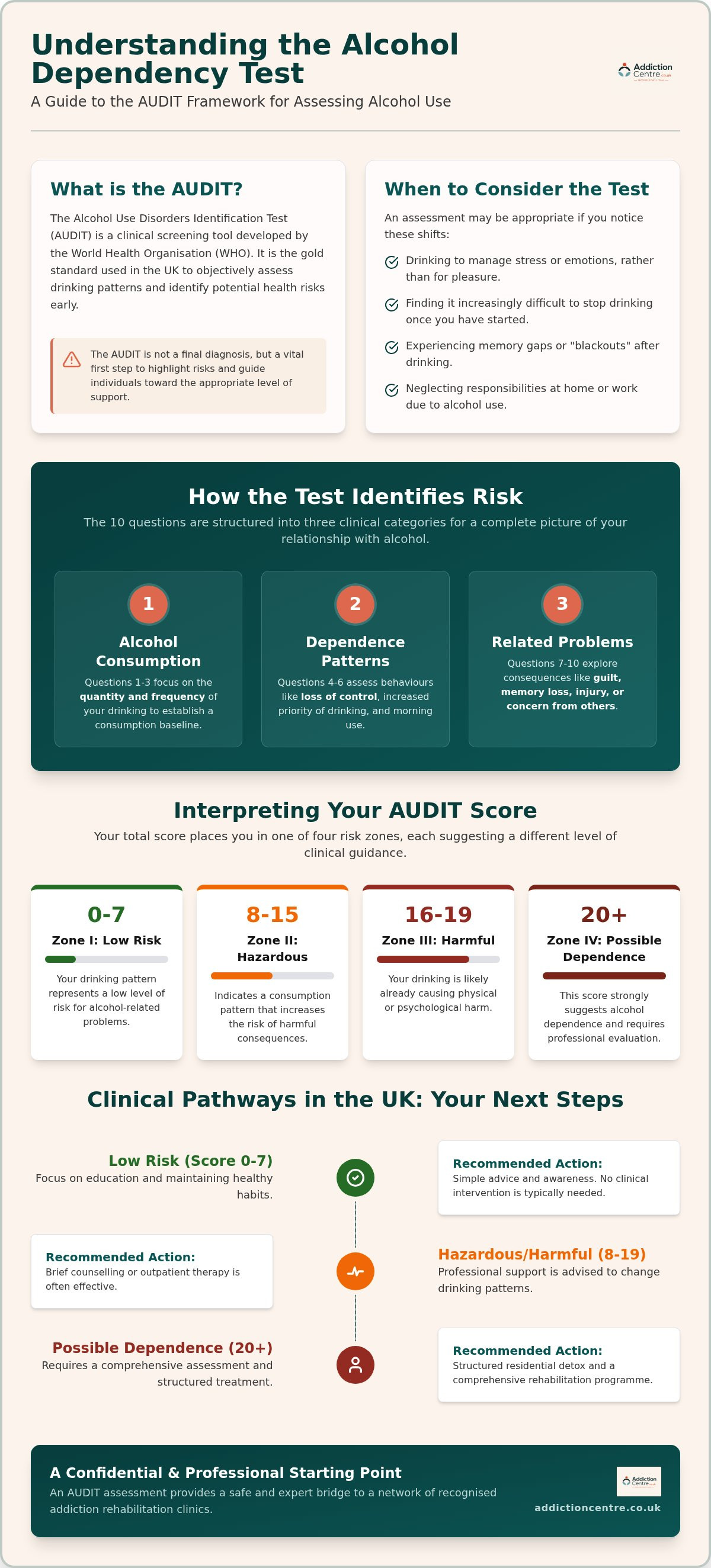
The 10 questions within an alcohol dependency test are meticulously designed to look past the surface of social drinking. According to the World Health Organization's AUDIT guidelines, these questions are grouped into three distinct clinical categories: alcohol consumption, patterns of dependence, and alcohol-related problems. This structure ensures that a high score isn't just a reflection of volume; it's a measurement of how alcohol is impacting your physical health and psychological stability.
Frequency of drinking is only one small piece of the puzzle. You might drink daily but maintain control, whilst someone else might drink less often but experience a severe "loss of control" once they start. Question 4 specifically addresses this inability to stop, which is a hallmark of clinical dependency. Similarly, Question 10 asks if others have expressed concern about your drinking. This is vital because external observations from family or colleagues often provide a more grounded perspective than our own internal narrative, which may be clouded by habit or stress.
Consumption vs. Dependency: The Crucial Difference
There's a significant distinction between drinking heavily and being physically or psychologically dependent. "How much" you consume matters, but "why" and "how" you drink are often more telling. Physiological markers, such as increased tolerance or withdrawal symptoms, suggest the body has adapted to the presence of alcohol. Psychological indicators are equally telling. Feelings of guilt or remorse after drinking, or experiencing memory gaps known as blackouts, suggest that alcohol is interfering with your brain's cognitive and emotional processing. If these patterns feel familiar, a confidential recovery consultation can help you make sense of these complex signals.
Interpreting the "Morning Drink" Question
One of the most serious indicators in the test is the question regarding the need for a drink in the morning to get yourself going after a heavy session. In a clinical context, this is a major red flag for physical dependency. It suggests that your central nervous system is struggling to function without alcohol, signalling a high risk for severe withdrawal symptoms if you were to stop abruptly. This specific behaviour often indicates that a residential alcohol detox UK programme is the safest path forward. In a residential setting, clinical professionals can manage these physical risks with dedicated care, ensuring your transition to sobriety is both safe and dignified.
Interpreting Your Results: Lower Risk to Possible Dependence
Completing an alcohol dependency test provides a clear, objective snapshot of your relationship with alcohol, moving beyond subjective feelings of guilt or worry. The Alcohol Use Disorders Identification Test (AUDIT) uses a cumulative score out of 40 to categorise your drinking patterns into four distinct tiers. This scoring system isn't designed to assign a label of failure; rather, it's a clinical tool used to identify the most effective level of support for your specific situation. By understanding where you sit on this spectrum, you can replace uncertainty with a structured plan for restoration.
Scoring Tiers and Their Clinical Implications
A score between 0 and 7 is considered "Lower Risk." In this bracket, you're likely maintaining healthy boundaries with alcohol that align with the UK Chief Medical Officers' guidelines of not exceeding 14 units per week. Whilst you may still benefit from occasional drink-free days, your current behaviour doesn't suggest a clinical need for intervention.
The "Increasing Risk" category, spanning scores from 8 to 15, represents a pivotal stage. This is where alcohol consumption begins to impact your physical health, sleep quality, or emotional stability. Approximately 10% of adults in England fall into this or the higher-risk bracket. This tier offers a significant opportunity for early intervention. Often, simple lifestyle adjustments or brief counselling sessions can prevent these habits from escalating into a more severe dependency.
Scores from 16 to 19 indicate "Higher Risk." At this level, there's clear evidence that alcohol is causing harmful consequences in your life. You might notice persistent physical symptoms, strained relationships, or a decline in your professional performance. This bracket suggests that self-management may no longer be sufficient and professional guidance is advisable to break the cycle of harm.
When a Score of 20+ Requires Immediate Action
Reaching the highest tier of the scale can feel overwhelming, but it's a moment for professional urgency rather than shame. A score above 20 on the AUDIT indicates a strong likelihood of alcohol dependence requiring clinical oversight. At this stage, your body and mind have likely developed a physical reliance on alcohol, making the recovery process more complex.
Attempting to stop "cold turkey" with a high dependency score can be physically dangerous. The risk of severe withdrawal symptoms, such as seizures or delirium tremens, makes medical supervision essential. Instead of navigating this alone, you can consult a professional addiction treatment directory to find a safe, clinical environment for your recovery. This ensures you receive expert care to manage the physical transition safely whilst beginning the deeper psychological work of long-term healing.
Life After the Test: Choosing the Right Path to Recovery in the UK
Receiving the results of your alcohol dependency test is a moment of profound clarity. It transforms a private, often heavy worry into an objective starting point for restoration. In the UK, the path forward isn't a one-size-fits-all solution; it's a clinical journey tailored to your specific score and personal circumstances. Whether your results suggest a need for brief intervention or more intensive support, the goal remains the same: a return to health and the dignity of a life led with purpose. This assessment is the beginning of your journey, providing the data needed to choose a manageable and professional roadmap.
For many individuals, drinking habits are closely intertwined with mental health challenges like anxiety or depression. A dual diagnosis approach is essential in these cases, ensuring that both the addiction and the underlying emotional distress are treated simultaneously. This holistic care is often most effective when supported by a dedicated family network. Their role is to act as a supportive bridge, helping you transition from the initial assessment into a structured environment where professional healing can finally begin.
The Necessity of Medical Detoxification
Individuals with high dependency scores, particularly those scoring 20 or above on the AUDIT, must prioritise physical safety. Attempting to stop drinking without medical supervision is dangerous due to the risk of severe withdrawal symptoms. A residential detox programme provides a secure, clinical environment where your physical needs are monitored by experts who understand the complexities of withdrawal. If your results indicate polydrug use alongside alcohol, exploring a residential drug detox UK programme may be the most appropriate next step to ensure your transition is handled with the highest level of clinical care.
Residential Rehab vs. Community Support
Whilst community support groups are valuable for maintaining long-term sobriety, residential rehab is often the most effective choice for those in the higher-risk brackets. A residential stay offers a structured, immersive environment away from the triggers and stresses of daily life. This allows you to focus entirely on your recovery amongst a community of peers and professionals. To explore your options and find a facility that matches your clinical needs, you can access our addiction treatment directory for impartial guidance on recognised clinics across the UK. This resource helps you move from the uncertainty of a test result to a concrete, professional plan for your future.
How Addiction Centre Facilitates Your Recovery Journey
Once you've completed an alcohol dependency test, the transition from objective data to meaningful action can often feel like the most daunting part of the process. At Addiction Centre, we act as a compassionate bridge between your current state of uncertainty and a structured, professional environment for healing. Our role is to serve as a trusted advisor, providing impartial guidance and confidential assessments to help you make sense of your results without fear or judgment. We understand that reaching out is a significant act of courage, and we're committed to walking alongside you as you explore the clinical pathways to restoration.
Our service is designed to provide calm in the midst of what might feel like a personal crisis. By offering recovery consultations, we transform a high AUDIT score from a source of anxiety into a manageable roadmap. We don't just provide information; we offer a dedicated partnership focused on your dignity and long-term well-being. Whether you require a residential alcohol detox or a comprehensive rehab programme, our expert team ensures you have the professional support needed to navigate the complexities of the UK treatment landscape.
Personalised Recommendations and Expert Guidance
Searching for the right treatment facility can be overwhelming when you're already managing the physical and emotional weight of dependency. We take the stress out of this search by providing access to a network of recognised addiction rehabilitation clinics across the UK. Every individual's journey is unique, which is why we prioritise a tailored approach. Your specific results from the alcohol dependency test help us identify which clinical environment will best meet your needs, whether that involves dual diagnosis support or a specific focus on medical detoxification.
Our commitment to quality means we only connect you with providers who maintain high clinical standards. We handle the logistical burden of finding available placements and explaining the different levels of care, allowing you to focus entirely on your health. This personalised guidance ensures that you aren't just finding a clinic, but the right clinic for your specific recovery goals.
Taking the First Step Today
The path to recovery begins with a single, confidential conversation. When you contact Addiction Centre for a recovery consultation, you're choosing to replace confusion with a structured plan. Between April 2024 and March 2025, nearly 100,000 adults in England were in contact with services for alcohol treatment only, proving that you're part of a significant community of people choosing a healthier future. Having a professional assessment provides the peace of mind that comes from knowing you're in capable hands.
Recovery is entirely possible when you have access to the right professional support. We're here to ensure that no question is left unanswered and no individual is left to navigate this journey alone. By choosing to act today, you're reclaiming your agency and moving toward a life defined by health and clarity rather than the constraints of dependency.
Moving from Uncertainty to a Structured Recovery Plan
Taking an alcohol dependency test is a significant step toward reclaiming your health and agency. It replaces the heavy weight of subjective worry with a clear, clinical framework, allowing you to understand your drinking patterns through the objective lens of the AUDIT. Whether your results indicate an increasing risk or a possible dependence, remember that these metrics are a starting point for restoration rather than a final judgment on your character. You've already done the difficult work of seeking clarity; now, you can focus on the manageable steps that lead to long-term well-being.
You don't have to navigate the complexities of clinical pathways alone. By choosing a professional referral service, you gain access to a national directory of recognised UK rehab clinics and expert guidance from compassionate addiction specialists. We provide a confidential and impartial service designed to connect you with the precise level of care your situation requires, from residential detox to immersive rehab programmes. This ensures that every decision you make is backed by clinical authority and deep human empathy.
Speak with a recovery expert today for a confidential consultation and begin the transition toward a life of clarity and purpose. It's never too late to seek the professional support you deserve, and a healthier, more fulfilling future is entirely within your reach.
Frequently Asked Questions
Is the alcohol dependency test confidential?
Professional online self-assessments are entirely confidential. When you use an alcohol dependency test on a reputable platform, your results are private and intended to help you understand your own health risks. This confidentiality is vital because it allows you to answer honestly without fear of judgment or professional repercussions. It's a safe way to move from subjective worry to objective data before deciding whether to share those results with a healthcare professional.
Can I take the AUDIT test on behalf of a family member?
You can certainly answer the questions based on your observations of a loved one's behaviour. Whilst this won't be as precise as a self-assessment, it can provide a helpful perspective on the level of risk they might be facing. We often suggest using these findings as a gentle, non-confrontational opening for a conversation. It's much easier to discuss objective clinical markers than to rely on emotional pleas when encouraging someone to seek professional help.
What happens if I score high on the alcohol dependency test?
Scoring high is a signal for professional action rather than a cause for alarm. If your results suggest a high risk, the next logical step is a recovery consultation with a specialist. They'll help you interpret the data and discuss the various treatment pathways available in the UK, such as detox or residential care. Taking this alcohol dependency test is simply the first step in a structured journey toward a healthier, more balanced lifestyle.
Is a high score on the AUDIT a medical diagnosis?
No, a high score on the AUDIT isn't a formal medical diagnosis. It's a screening tool designed to identify hazardous drinking patterns and the potential for dependence. A clinical diagnosis requires a more thorough assessment by a qualified healthcare professional or addiction specialist. Think of the test as an early warning system that highlights the need for a more detailed conversation about your physical and psychological relationship with alcohol.
Why does the test ask about morning drinking?
Needing a drink in the morning to steady your nerves or get through a hangover is a significant clinical marker. It suggests that your body has developed a physical reliance on alcohol to function. In a clinical context, this behaviour often indicates that your central nervous system is in a state of withdrawal when alcohol isn't present. It's a high-weight indicator that usually points toward the need for a medically supervised detoxification process.
Can I recover from alcohol dependency without residential rehab?
Recovery is possible through various pathways depending on your specific needs. For individuals in lower-risk brackets, outpatient therapy, community support groups, and specialist counselling can be highly effective. However, for those with a high level of physical dependency, residential rehab is often recommended. This immersive environment provides the structure and clinical safety required to manage the physical and psychological challenges of early sobriety, ensuring you have the best possible chance of long-term success.
How accurate is the AUDIT for identifying alcoholism?
The AUDIT is considered the gold standard for screening and is highly accurate when answered honestly. It was developed and validated through extensive international research by the World Health Organization. Its strength lies in its ability to look beyond just the volume of alcohol consumed. By assessing the consequences of your drinking and your physical dependence, it provides a far more comprehensive picture of your health than a simple unit-count ever could.
What should I do if I am worried about withdrawal symptoms?
If you're concerned about withdrawal symptoms, you should never attempt to stop drinking abruptly without medical guidance. Withdrawal can be physically dangerous, especially if you've been drinking heavily for a long period. Instead, reach out to a professional referral service or your GP to discuss a supervised detox plan. Clinical professionals can provide the necessary medication and monitoring to ensure your transition to sobriety is safe, controlled, and as comfortable as possible.


