
What if the most effective environment for your recovery isn't a clinical ward, but your own living room? For many, the prospect of a safe alcohol detox UK programme offers a vital middle ground between the isolation of trying to quit alone and the intensity of residential rehab. It's common to feel caught between the urgent need for change and the fear of dangerous withdrawal symptoms like seizures, especially when a 28-day stay away from home feels impossible.
We understand these pressures. This guide clarifies the clinical realities of medically supervised recovery, showing how professional care can be delivered in your own home. We'll explain how specific protocols manage the transition, ensuring your physical safety whilst maintaining your privacy and dignity. You don't have to choose between your daily responsibilities and your long-term health.
By the end of this article, you'll have a clear understanding of the medical eligibility requirements and the structured roadmap of a clinical home detox. We'll also show you how to connect with regulated services that provide the steady, professional guidance needed to bridge the gap between a state of confusion and a future of lasting restoration.
Key Takeaways
- Understand that a safe alcohol detox UK programme is a regulated medical intervention overseen by doctors, making it fundamentally different from high-risk unassisted withdrawal.
- Learn why a professional Recovery Consultation is a mandatory safety gate to assess your clinical eligibility and ensure a home environment is appropriate for your care.
- Discover the structured 7-to-10-day timeline of a clinical detox, starting with a comprehensive medical assessment by a GMC-registered doctor.
- Compare the intensity of 24/7 residential rehab against remote medical monitoring to determine which path offers the right level of support for your specific situation.
- Find out how to navigate regulated UK providers using a professional addiction treatment directory to ensure you receive high-quality, confidential care.
What is a Medically Supervised Alcohol Detox at Home?
A clinical home detox is a structured, regulated medical programme. It isn't a solo effort or a simple test of willpower. Instead, it's a doctor-led process designed to manage the physical transition from dependence to sobriety. When searching for a safe alcohol detox UK service, it's vital to understand that this involves professional oversight similar to what you'd receive in a hospital setting, but delivered remotely within your own residence. This approach ensures that the physical risks are managed by experts who specialise in addiction medicine.
Before any treatment begins, you'll speak with a Treatment Advisor. Their role is to assess your clinical suitability for this specific path, ensuring that your home environment and medical history meet strict safety criteria. If you're approved for the programme, a GMC-registered doctor prescribes specific medications to prevent the central nervous system from entering a state of shock. These clinical interventions are essential because they manage the dangerous side effects associated with What is Alcohol Detoxification?, allowing you to focus on your long-term recovery without the fear of physical collapse.
The Difference Between DIY and Professional Home Detox
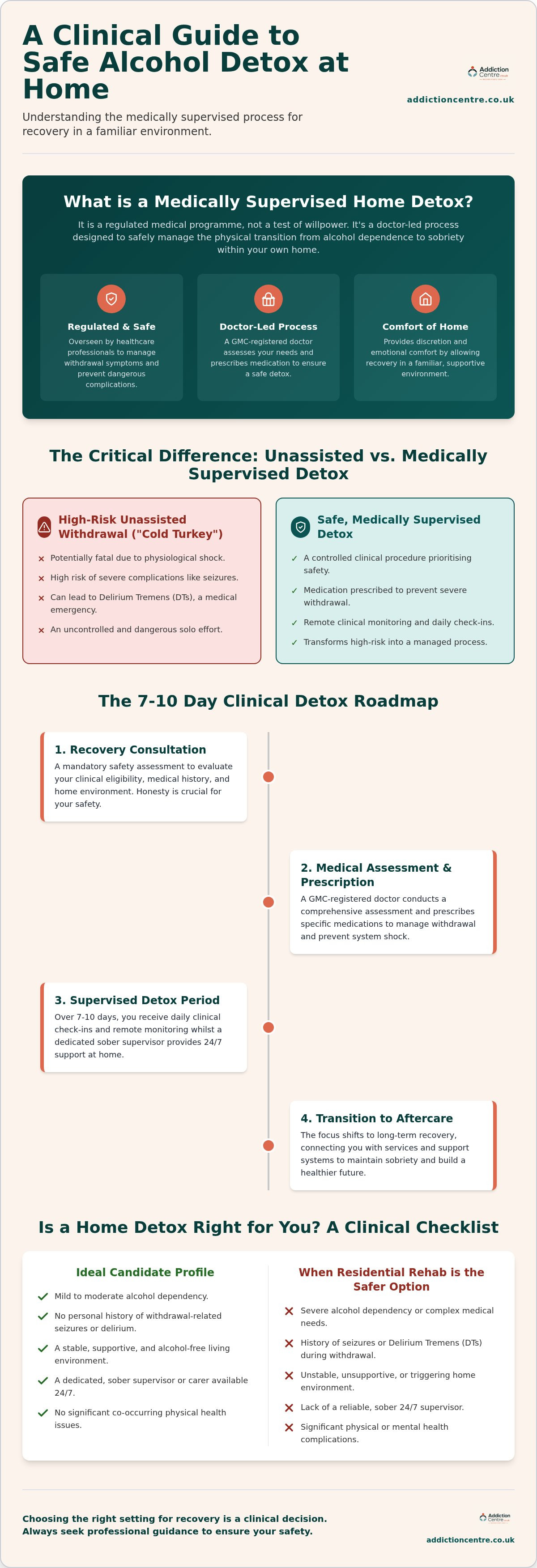
Stopping "cold turkey" or attempting unassisted tapering can be fatal. Without medical intervention, the brain’s chemistry, which has adapted to the presence of alcohol, can suddenly over-stimulate. This physiological overload leads to severe complications, including seizures and Delirium Tremens (DTs). In a UK domestic context, medical supervision is defined as a structured programme of remote clinical monitoring, medication management, and daily check-ins overseen by qualified healthcare professionals. It effectively transforms a high-risk situation into a controlled, clinical procedure that prioritises your safety at every stage.
Why People Choose Home-Based Recovery in the UK
Choosing this path often comes down to the need for discretion and continuity. Many individuals find that recovering amongst family and in a familiar environment provides a level of emotional comfort that residential facilities cannot replicate. It's a practical choice for those with unavoidable work or caregiving responsibilities who can't commit to a month-long absence from their daily lives. Whilst safety remains the absolute priority, these programmes are also a more cost-effective way to access a safe alcohol detox UK wide. They remove the overheads of residential boarding whilst maintaining the high clinical standards required for a successful and lasting recovery.
Safety and Eligibility: Is a Home Detox Right for You?
Determining the right setting for your recovery is a clinical decision, not just a matter of convenience. Safety serves as the absolute metric when choosing between home-based care and a residential facility. To ensure a safe alcohol detox UK wide, every prospective patient must undergo a Recovery Consultation. This mandatory safety gate allows medical professionals to evaluate your physical health, drinking history, and social support system. It's a non-negotiable step that protects you from the risks of unmanaged withdrawal.
During this initial assessment, honesty is your greatest asset. Under-reporting alcohol consumption or hiding past medical issues can lead to a medical crisis once the detox begins. Clinicians rely on your transparent input to cross-reference with the NICE guidelines for alcohol withdrawal, which dictate the safest level of intervention for your specific profile. If you're unsure about your suitability, a confidential Recovery Consultation can provide the clarity you need.
Who is a Candidate for Alcohol Home Detox?
Not everyone is suited for recovery at home. Generally, candidates for this path are individuals with mild to moderate dependency levels who don't have a history of withdrawal-related seizures or delirium. Clinical eligibility often requires:
- A stable, alcohol-free living environment where triggers are minimised.
- A dedicated, sober supervisor or carer who can remain with you 24/7 during the first week.
- No significant physical health complications, such as advanced liver disease or heart conditions.
When Residential Rehab is the Only Safe Option
In some cases, the risks of staying at home outweigh the benefits. If you've experienced hallucinations, convulsions, or severe tremors during previous attempts to stop drinking, a residential setting is the only safe environment. The 24-hour medical presence in a clinic provides immediate intervention that a home setting cannot offer.
Residential care is also necessary for those requiring dual diagnosis treatment UK services. When complex mental health conditions coexist with addiction, the level of integrated support needed is far more intensive. Additionally, if you've tried home detox before without success, an immersive residential environment may be required to break the cycle of dependence safely.
The Clinical Process: How Alcohol Home Detox Works
A clinical home detox typically spans a 7-to-10-day period. It's a methodical journey that replaces the chaos of active addiction with medically managed stability. This isn't just about stopping; it's about a safe alcohol detox UK experience that prioritises biological safety through every phase of withdrawal. By following a structured clinical path, you can navigate the most difficult days of recovery with the confidence that your physical health is being monitored by experts.
Step 1: The Comprehensive Medical Assessment
Before the first dose of medication is issued, a GMC-registered doctor conducts a thorough assessment. They review your drinking history, BMI, and vital physical health markers to ensure your body is prepared for the process. Crucially, the doctor verifies that your home environment is stable and that your 'detox buddy'-a sober friend or family member-is fully briefed on their role. This results in a bespoke prescription plan, tailored to your specific physiological needs rather than a one-size-fits-all approach.
Step 2: Medication and Withdrawal Management
In the UK, medications like Chlordiazepoxide are commonly used to suppress the central nervous system's over-activity. These sedatives act as a chemical bridge, preventing the brain from entering a state of shock as alcohol levels drop. As your body stabilises, the doctor implements a tapering process, gradually reducing the dosage over several days. This controlled descent prevents the return of acute symptoms whilst managing secondary issues like nausea, insomnia, and vitamin deficiencies. Many patients also find additional guidance through NHS alcohol support services when planning their long-term recovery path.
Step 3: Daily Support and Monitoring
Safety is maintained through daily clinical check-ins. Your medical team uses the Clinical Institute Withdrawal Assessment (CIWA) scale to track symptom severity in real-time. If tremors or anxiety levels spike, medication can be adjusted immediately to keep you comfortable. Emergency protocols are established on day one, ensuring you and your carer know exactly what to do if symptoms become unmanageable at home. This phase also includes family support sessions, helping your loved ones manage the emotional stress of the process. Once the physical toxins are cleared, the focus shifts to the psychological therapy required to maintain sobriety long-term.
Comparing Options: Home Detox vs Residential Rehab
Both home-based care and residential facilities are legitimate clinical paths. Choosing between them requires a balanced look at your medical needs and your personal circumstances. A safe alcohol detox UK programme at home provides a vital middle ground, but it's important to understand where the boundaries of this care lie compared to a full clinical admission. The decision often rests on the level of risk identified during your initial assessment.
The most significant difference is the intensity of supervision. In a residential setting, you have a 24/7 medical presence. This means immediate, hands-on intervention if your condition changes. Conversely, home detox relies on remote monitoring and scheduled daily check-ins. Whilst the clinical protocols for medication are similar, the response time in a facility is instantaneous. This is a primary reason why costs differ; residential rehab includes the high overheads of 24-hour staffing, secure accommodation, and onsite catering. For those who require a deeper level of support, our residential alcohol detox UK guide provides a thorough breakdown of that immersive experience.
Pros and Cons of the Home Environment
The familiar surroundings of your own house can offer immense comfort and reduce the psychological stress of recovery. For many, the lower cost and lack of disruption make a safe alcohol detox UK at home the most accessible option. However, the home environment also carries the "Trigger Factor." Environmental cues, such as a favourite chair or a specific cupboard, can spark intense cravings. Without the physical barrier of a clinic, the potential for isolation or relapse is higher if your support network isn't robust.
The Success Rates of Medically Managed Programmes
Detox is merely the physical foundation of recovery. Long-term success depends on what happens after the toxins have left your system. Medically managed programmes at home must be paired with follow-up psychological care, such as community meetings or one-to-one therapy. If you're managing underlying mental health issues, dual diagnosis support is essential to prevent the cycle of self-medication from restarting. To find a programme that balances clinical safety with long-term therapeutic support, you can contact a Treatment Advisor today for a confidential assessment.
How to Access Professional Alcohol Detox Services
Finding the right path to recovery shouldn't be a source of additional stress. When you're ready to make a change, the sheer volume of options for a safe alcohol detox UK can be confusing. Using a professional referral service simplifies this process by acting as a bridge between your current situation and a structured clinical environment. It ensures that you aren't just choosing a provider at random, but rather selecting a service that has been vetted for safety and clinical excellence.
An addiction treatment directory serves as a vital tool in this journey. It allows you to filter through recognised UK providers based on your specific medical requirements and financial considerations. By centralising this information, you can focus your energy on the actual recovery process rather than the logistics of research. This methodical approach ensures that your transition into treatment is as smooth and reassuring as possible.
The Role of an Addiction Treatment Referral Service
A referral service provides impartial guidance amongst a complex network of clinics. Unlike individual providers who may only offer one specific path, a referral expert looks at your holistic needs. They match your clinical profile, such as your dependency level and any previous withdrawal history, with the facility or home-detox team best equipped to manage your care. This tailored approach saves valuable time and reduces the burden on families who are often navigating a period of intense personal crisis. It provides a sense of certainty that the chosen route is both medically appropriate and safe.
Next Steps: Your Journey to Sobriety Starts Here
Your first step towards a safe alcohol detox UK is a confidential assessment. You can begin this process today by booking a Recovery Consultation or completing an online self-assessment. During your first call with a Treatment Advisor, it's helpful to have a brief overview of your drinking history and any current medications ready. The advisor will listen with empathy and without judgement, helping you understand the clinical roadmap ahead. They will explain the practicalities of the detox, from the initial doctor’s assessment to the daily monitoring protocols discussed earlier.
Taking this action whilst the window of willingness is open is crucial. Recovery isn't just a clinical goal; it's a restoration of your dignity and your future. With the right professional support and a structured medical plan, a life free from alcohol is entirely within your reach. You don't have to walk this path alone. Dedicated experts are ready to guide you from the storm of addiction into the calm of a stable, healthy life.
Your Pathway to Lasting Restoration
Choosing to address alcohol dependence is a profound act of courage. As we've explored, a safe alcohol detox UK programme isn't a solitary trial of willpower; it's a structured clinical journey. Success begins with understanding your medical eligibility and committing to a doctor-led process that prioritises your physical safety. Whether you opt for the familiarity of your own home or the immersive support of a clinic, the right professional framework turns a period of crisis into a foundation for health.
We provide expert guidance for residential and outpatient care through a network of recognised UK addiction rehabilitation clinics. By utilising our confidential online self-assessments, you can take the first step toward clarity. Recovery is a methodical process of restoration, and with the correct medical and psychological support, the life you want is achievable.
Don't let uncertainty hold you back from the change you deserve. Contact our expert team today for a confidential recovery consultation. You're in capable hands, and a brighter, healthier future starts with a single professional conversation.
Frequently Asked Questions
Is alcohol detox at home safe for everyone in the UK?
No, home detox isn't suitable for everyone. Eligibility is determined by a clinical assessment. Those with a history of seizures, delirium tremens, or severe co-occurring medical conditions require the 24-hour monitoring of a residential facility. For individuals with mild to moderate dependency and a stable living environment, a safe alcohol detox UK programme at home can be a viable and effective clinical option when overseen by GMC-registered doctors.
How much does a professional home alcohol detox cost?
Professional home detox is generally more cost-effective than residential rehab because it removes the overheads of 24-hour accommodation and onsite catering. Whilst costs vary amongst different UK providers, this option allows you to access clinical supervision and prescription medication at a lower price point. It's important to ensure that any programme you choose includes a full medical assessment and daily clinical monitoring to maintain high safety standards at all times.
What medication is used for alcohol detox at home?
Doctors typically prescribe benzodiazepines, such as Chlordiazepoxide, to manage the physical symptoms of withdrawal. These medications work by calming the central nervous system, which prevents dangerous complications like seizures. The dosage is carefully tapered over the course of the detox as your body stabilises. You may also be prescribed specific vitamins, particularly Thiamine, to address nutritional deficiencies and support brain health during the restoration process.
Can I work while undergoing a medically supervised home detox?
It's strongly recommended that you take time off work during the detox period. The medications used often cause drowsiness, and your focus needs to be entirely on your physical recovery. A safe alcohol detox UK protocol also requires a sober supervisor to be present with you at all times during the first week. Attempting to manage professional responsibilities whilst undergoing withdrawal can increase stress and significantly heighten the risk of relapse.
How long does the physical withdrawal process actually last?
The acute physical withdrawal process typically lasts between seven and ten days. Symptoms usually peak within the first 48 to 72 hours and then gradually subside as the medication is tapered. Whilst the physical toxins are cleared relatively quickly, the psychological aspect of recovery takes much longer. This is why a clinical detox should always be viewed as the first step in a more comprehensive, long-term therapeutic plan involving ongoing support.
Do I need a GP referral to start a private home detox programme?
You don't usually need a referral from your GP to access private detox services. Most professional providers perform their own comprehensive clinical assessments to determine suitability. This allows for faster access to treatment, which is often crucial when someone is ready to change. However, your clinical team may suggest informing your GP to ensure continuity of care for your long-term health and to update your medical records accurately.
What happens if I relapse during a home detox?
If a relapse occurs during a home detox, you must contact your clinical team immediately. They will perform an urgent review of your safety and may adjust your medication or monitoring levels. In some cases, a relapse indicates that the home environment isn't providing enough structure, and a transition to a residential facility may be recommended. The priority is always your physical safety and getting your recovery back on a stable, professional path.
Will my neighbours or employer find out if I detox at home?
Discretion is a fundamental part of professional home detox services. All consultations and treatments are strictly confidential, and there's no requirement to inform your employer or neighbours. Because the treatment takes place within your own home, your privacy is naturally protected. This allows you to focus on your health without the fear of social stigma, whilst maintaining the dignity of your personal and professional reputation during this important transition.


