
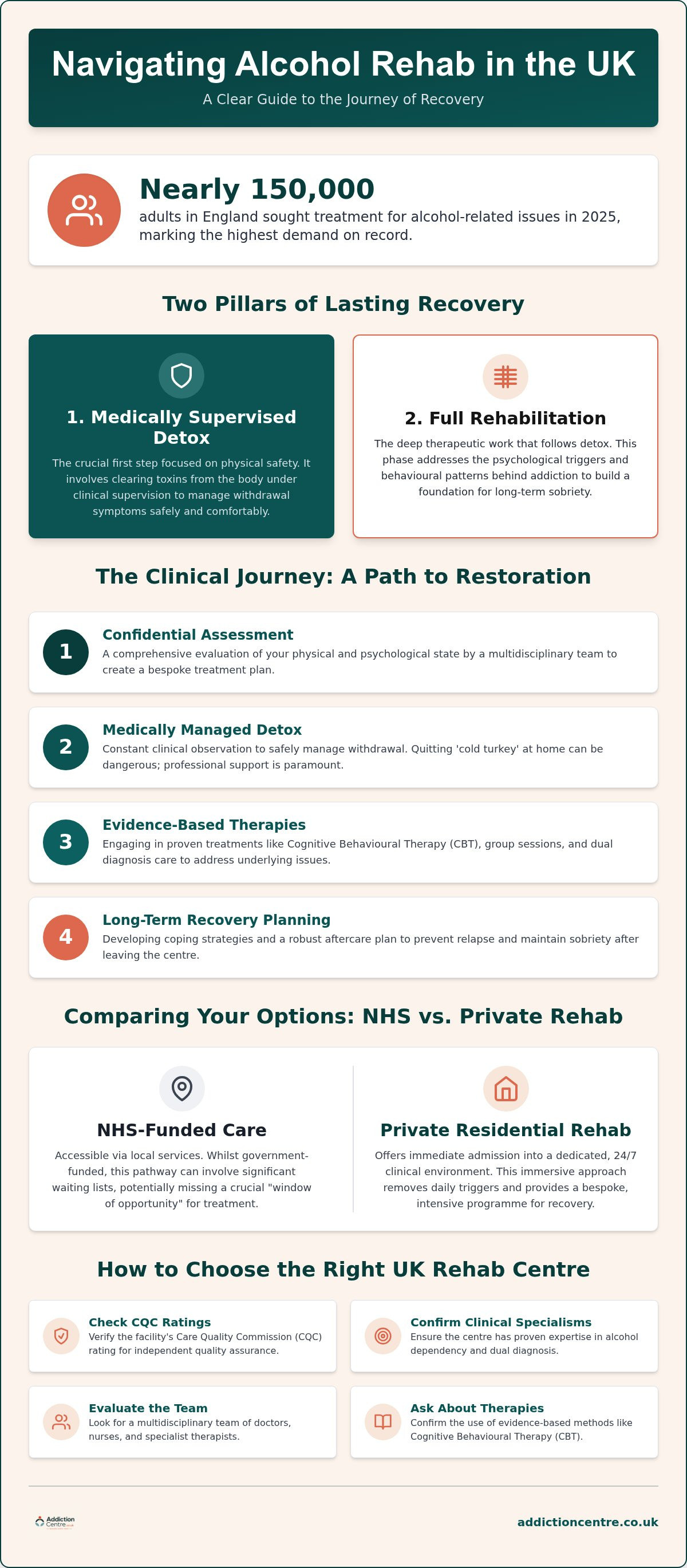
In 2025, nearly 150,000 adults in England sought help for alcohol-related issues, marking the highest demand for treatment since records began. If you find yourself amongst those searching for alcohol rehab UK options, you might feel lost in a sea of clinical terminology and conflicting advice. It's completely natural to feel anxious about the detox process or confused by the differences between NHS and private care pathways.
We're here to provide the clarity you need during this difficult time. This guide will help you understand how to navigate the current treatment landscape, from the initial clinical detox to finding a residential centre that fosters long-term recovery. You'll learn exactly how to evaluate a facility's credentials and what to expect from the latest 2026 care guidelines. By the end of this article, you'll have a clear, step-by-step understanding of the rehab process, empowering you to take that vital first step toward a healthier future with confidence and dignity.
Key Takeaways
- Understand the clinical journey from medically supervised detox to therapeutic graduation, ensuring a safe and structured transition to sobriety.
- Learn how to evaluate an alcohol rehab UK facility by checking Care Quality Commission (CQC) ratings and specific clinical specialisms to match your personal needs.
- Compare the accessibility of NHS-funded care against private residential options, helping you understand why it's vital to act during a "window of opportunity."
- Discover how a multidisciplinary team addresses both physical withdrawal symptoms and the psychological triggers that are essential for long-term restoration.
- Find out how a confidential assessment can simplify your search for treatment and provide a direct path to recognised rehabilitation clinics.
Understanding Alcohol Rehab in the UK: A Path to Restoration
Entering a residential facility for alcohol rehab UK isn't merely about finding a bed in a building; it's about stepping into a clinical environment designed for total restoration. This structured setting provides a safe space where the focus is twofold. First, we address the physical necessity of sobriety. Second, we delve into the complex psychological triggers that often fuel dependency. The UK residential model is widely regarded as a gold standard because it offers a level of immersion that outpatient care simply can't match, prioritising your dignity through every step of the journey.
Within these facilities, the atmosphere is intentionally non-judgmental and supportive. It's a place where clinical expertise meets human compassion. You aren't viewed as a statistic or a failure, but as an individual navigating a health crisis. This supportive frequency is vital for recovery, as it lowers stress and allows you to be honest about your struggles. When you feel emotionally held by a team of specialists, the path toward a solution becomes much clearer.
The Difference Between Detox and Full Rehabilitation
Many people confuse detoxification with the entire recovery process. Detox is the essential first step, focusing on the physical clearing of toxins from the body under medical supervision. However, stopping at detox often leads to a cycle of relapse because the underlying emotional and behavioural patterns remain untouched. the process of drug and alcohol rehabilitation involves the deep, therapeutic work required to understand why the addiction started. Residential care acts as a 24/7 safety net, providing professional support during the vulnerable days of withdrawal and the challenging weeks of psychological discovery that follow.
Who is Residential Treatment For?
You might wonder if your situation warrants a residential stay. This level of intensive care is particularly beneficial for those with a long-term history of dependency or individuals living in high-risk environments where triggers are constant. If you've tried to stop drinking on your own but found the withdrawal symptoms or social pressures too great, professional intervention is a logical next step. A residential alcohol rehab UK centre offers a vital change of scenery. By removing yourself from the stresses of daily life, you gain the mental clarity needed to break old habits. This physical distance creates a necessary pause, allowing you to focus entirely on your health without the noise of external responsibilities.
The Clinical Process: What Happens Inside a UK Rehab Centre?
The journey through a professional alcohol rehab UK facility is a methodical, patient progression toward health. It begins with a comprehensive admission process where a multidisciplinary team, including GMC-registered doctors, mental health nurses, and specialist addiction therapists, evaluates your physical and psychological state. This collaborative approach ensures that your care isn't a one-size-fits-all template. Instead, the team crafts a bespoke treatment plan that respects your unique history, previous health needs, and personal recovery goals.
Medically Managed Alcohol Detoxification
Safety is the paramount priority during the initial phase of your stay. Choosing residential alcohol detox UK services ensures you are under constant clinical observation by trained professionals. Attempting to quit "cold turkey" at home can be physically dangerous, often leading to severe complications such as seizures or delirium tremens. Within a controlled clinical setting, staff use evidence-based protocols to manage withdrawal symptoms with medication and monitoring. This ensures your safety. It also maximises your comfort whilst navigating the most challenging first 72 hours of the recovery journey.
Evidence-Based Therapies and Holistic Care
Once you are physically stable, the focus shifts toward the psychological work of recovery. Cognitive Behavioural Therapy (CBT) is a cornerstone of modern alcohol rehab UK, helping you identify and restructure the specific thought patterns that lead to addictive behaviours. You will also participate in group therapy sessions, finding strength amongst peers who share similar experiences. A critical aspect that sets high-quality UK care apart is the focus on dual diagnosis treatment UK. Because addiction often co-exists with conditions like anxiety, depression, or PTSD, treating both simultaneously is the only way to ensure the foundation of your recovery is solid.
True restoration involves the whole person, not just the management of symptoms. Modern centres integrate nutritional support and light exercise programmes to rebuild physical vitality that may have been lost during active addiction. These programmes are designed to be gentle, focusing on steady progress rather than intensity. This holistic approach prepares you for the eventual "graduation," the moment you transition from the residential setting back into your community. If you are unsure which clinical pathway is right for you, you can request a confidential assessment to help clarify your next steps.
NHS vs. Private Alcohol Rehab: Comparing Your Options
Deciding between public and private care is a significant crossroad on the journey to recovery. Whilst both paths share the goal of sobriety, the experience and speed of access differ greatly. For many seeking alcohol rehab UK services, the choice often depends on the urgency of the situation and the level of clinical immersion required. It's a choice between a system that is free at the point of use but heavily stretched, and one that requires a financial commitment but offers immediate, tailored intervention.
Accessing Support Through the NHS
Your GP is the primary gateway for NHS support. They can refer you to community-based alcohol services, which offer essential counselling and local support groups. However, you should be aware that residential NHS beds are extremely limited. These are typically reserved for individuals in life-threatening circumstances or those with complex medical needs. Because of the high demand on the public sector, the timeline from your first appointment to receiving a referral for inpatient care can be lengthy. Recent figures show that nearly 330,000 adults were in contact with drug and alcohol services in England during 2024/25. This record-breaking demand means that waiting lists are a reality. Managing expectations is crucial; the process is thorough, but it is rarely immediate.
The Advantages of Private Residential Care
The most distinct advantage of the private sector is speed. In addiction crisis management, there is often a narrow "window of opportunity" where a person feels ready and motivated to accept help. Private centres often facilitate admission within 24 to 48 hours. This bypasses the waiting lists that can sometimes hinder momentum in the public sector. Beyond speed, these facilities often provide a broader range of specialist treatments and enhanced privacy. You'll also receive a bespoke aftercare plan, which is vital for maintaining progress after you return home.
Choosing this route allows for a higher degree of personalised care in a premium environment. Understanding the private rehab cost UK is an important part of this decision. It represents a commitment to a clinical setting that prioritises your long-term success through intensive, one-to-one support. If your safety requires an immediate change of environment, the private route offers the most direct path to a alcohol rehab UK facility. This path ensures that you receive the right care at the exact moment you are ready to begin your restoration.
How to Choose the Right Rehab Centre for Your Needs
Selecting a facility for alcohol rehab UK is a decision that should be based on clinical evidence rather than just location. Whilst a quiet countryside retreat might seem ideal, the clinical foundation of the centre is what truly determines your path to restoration. You should always start by checking the Care Quality Commission (CQC) ratings. The CQC is the independent regulator of health and social care in England; their reports offer an impartial look at whether a facility is safe, effective, and well-led. A centre may look inviting, but it must demonstrate clinical rigour to ensure your safety during the most vulnerable stages of recovery.
Evaluate whether the centre handles your specific clinical needs. If you are managing co-occurring mental health issues, you need a multidisciplinary team capable of delivering integrated care. The physical environment is also a factor. Some people find that a rural setting provides the necessary distance from triggers, whilst others prefer an urban centre that mirrors the environment they will live in after treatment.
Questions to Ask During Your Initial Consultation
Don't be afraid to ask direct questions during your consultation. Ask about therapist qualifications and staff-to-patient ratios. A lower ratio typically allows for more intensive, personalised support. It's also vital to understand the family involvement policy, as addiction affects the whole household. If your situation involves polydrug use, inquire about their residential drug detox UK protocols to ensure the clinical team is prepared for a more complex withdrawal process.
Evaluating the Long-Term Aftercare Provision
The first 12 months following treatment are often the most challenging. Sobriety is a continuous journey, and the best centres provide a safety net for when you return home. Look for providers that offer alumni networks, weekly check-ins, and ongoing counselling. A structured relapse prevention plan, created before you leave, is essential for navigating the transition back to daily responsibilities. To find a facility that aligns with these standards, you can explore our directory of recognised clinics for impartial guidance on your recovery options.
Taking the First Step: How Addiction Centre Can Help
Finding the right alcohol rehab UK options can feel like a daunting task when you are already in a state of crisis or high stress. Our goal at Addiction Centre is to act as your steady guide through this transition. We provide a comprehensive addiction treatment directory that simplifies a complex marketplace. Instead of contacting dozens of clinics individually, you can access a curated network of recognised facilities. We use confidential online assessments to help determine the specific level of care you need, ensuring the recommendations we provide are grounded in clinical reality and tailored to your personal health history.
We also understand that the person seeking help isn't always the one making the first call. Families often struggle with the logistics of getting someone into rehab UK, especially when their loved one is hesitant or overwhelmed. We provide expert guidance on how to approach these conversations with compassion and clarity. Our team helps you find a clinical pathway that respects the dignity of your family member whilst addressing the urgency of their health needs, connecting you with clinics that match both your clinical requirements and financial considerations.
Impartial Advice and Personalised Recommendations
An impartial referral service offers a perspective that a single clinic cannot provide. Because we aren't tied to one specific location, our advice remains objective and focused entirely on your restoration. We filter options based on your unique health requirements and lifestyle needs. Whether you require a facility with specific medical equipment or a centre that accommodates professional responsibilities, our recommendations are personalised to your situation. Every interaction is handled with the highest level of confidentiality, ensuring you feel safe and supported from the very first contact.
Your Journey Starts with a Conversation
Moving from the research phase to taking action is often the most difficult step in the recovery process. When you contact us for a recovery consultation, you're connecting with a compassionate expert who understands the alcohol rehab UK landscape. We'll walk you through the referral process, explain what to expect upon admission, and help you find a recognised clinic that offers the best chance for long-term success. You don't have to navigate the complexities of the UK rehab system alone. We're here to act as the bridge between your current state of uncertainty and a structured, professional environment where healing can finally begin.
Your Path to Lasting Restoration
Navigating the landscape of alcohol rehab UK can feel overwhelming, but you now have the tools to make an informed decision. Successful recovery is built on a foundation of clinical safety and a personalised treatment plan that addresses both physical and psychological health. Whether you require the immediate access of a private facility or are exploring community support, the most important step is the one you take today.
By utilising our national network of recognised clinics and impartial expert guidance, you can bypass the confusion of the marketplace. Our confidential online self-assessments are designed to provide you with a clear starting point, ensuring you feel empowered rather than overwhelmed. You don't have to carry this burden alone; professional support is ready to walk alongside you as you transition toward health.
We're here to help you move from uncertainty toward a structured, professional environment. Begin your confidential assessment with Addiction Centre today. You've already shown immense strength by researching your options. Now, let us help you turn that knowledge into a sustainable plan for health and happiness.
Frequently Asked Questions
How much does private alcohol rehab cost in the UK?
Costs vary significantly based on the facility's location, the length of your stay, and the level of clinical intensity required. A comprehensive residential programme typically covers accommodation, medical supervision, and professional therapy. Whilst luxury facilities command higher fees, many mid-range centres provide excellent clinical care. It's best to check with individual providers for current rates that match your specific treatment needs to find a suitable solution.
Can I get alcohol rehab on the NHS?
You can access support through the NHS, though residential places are typically reserved for the most severe medical cases. Your GP is the first point of contact and will usually refer you to community-based services for counselling and detox support. Because demand for alcohol rehab UK services is at record levels, there are often waiting lists for public sector inpatient treatment, making private care a faster alternative.
How long does a typical alcohol rehab programme last?
A standard residential programme often lasts for 28 days, which allows sufficient time for both physical detox and intensive psychological therapy. Some individuals may opt for shorter 7 to 10-day detox-only stays, whilst others with complex needs might benefit from extended care lasting several months. The total duration is always determined by your clinical progress and the recommendations of your multidisciplinary team during your stay.
Is alcohol detox dangerous to do at home?
Withdrawing from alcohol without medical supervision can be life-threatening due to risks like seizures and delirium tremens. A clinical environment provides 24-hour monitoring and medication to manage these symptoms safely and comfortably. Attempting to quit "cold turkey" at home often leads to complications that could have been avoided in a professional setting where your safety and dignity are the primary priorities of the staff.
What is the difference between inpatient and outpatient alcohol treatment?
Inpatient treatment involves living at a residential centre where you receive 24-hour clinical support and a structured schedule of therapies. Outpatient care allows you to live at home whilst attending scheduled appointments at a clinic or community hub. For those with long-term dependency or high-risk home environments, the immersion of inpatient care is often the safer and more effective route to achieving lasting restoration and sobriety.
Will I be able to see my family while in residential rehab?
Most centres encourage family involvement as it's a vital part of long-term recovery, though many have an initial "rest period" where contact is limited. This allows you to focus entirely on your clinical progress during the early stages of detox. Once you are stable, facilities often arrange family therapy sessions or weekend visiting hours to help rebuild relationships and establish a supportive environment for your return home.
What happens if I relapse after leaving the rehab centre?
Relapse should be viewed as a signal that your treatment plan needs adjustment rather than a failure of the process. If this happens, you should immediately contact your aftercare coordinator or the facility where you received treatment. Many centres offer "top-up" therapy sessions or alumni support groups specifically designed to help you navigate these challenges and return to your path of sobriety with renewed confidence.
Do UK rehab centres treat mental health issues alongside addiction?
High-quality alcohol rehab UK facilities specialise in dual diagnosis treatment, addressing co-occurring mental health conditions like anxiety or depression alongside the addiction. Treating these issues simultaneously is essential because untreated psychological distress is a common trigger for relapse. By addressing the root causes of dependency, clinicians help you build a resilient foundation for your future health through integrated care plans that focus on long-term stability.


