
What if the reason you feel stuck isn't a lack of willpower, but a lack of recognition for the clinical complexity of modern cannabis dependency? Whilst many still view it as a 'soft' drug, the reality for the 28,845 people who entered treatment last year tells a different story. Seeking cannabis addiction treatment UK wide can often feel like an uphill battle, especially when you're met with long NHS waiting lists or a sense that your concerns aren't being fully understood by medical professionals. You may be worried about the psychological toll of withdrawal or feel overwhelmed by the variety of rehabilitation options available in 2026.
We understand that this uncertainty creates a heavy burden when you're already trying to regain control of your life. This guide provides a clear, empathetic roadmap to help you distinguish between private residential rehab and specialist outpatient support, ensuring you find the care that fits your specific needs. By exploring the most effective clinical pathways and evidence-based therapies, you'll gain the confidence to choose a structured route toward long-term sobriety and mental clarity. We'll look at the differences between intensive inpatient stays and flexible community programmes, helping you transition from a state of confusion to a place of lasting health.
Key Takeaways
- Understand the clinical reality of Cannabis Use Disorder (CUD) and why professional intervention is often essential for overcoming chronic dependency.
- Evaluate the differences between residential rehab and outpatient support to determine which environment best facilitates your personal journey to sobriety.
- Explore how private cannabis addiction treatment UK pathways provide immediate access to specialist programmes, allowing you to bypass lengthy waiting lists.
- Gain insights into managing the physical and psychological symptoms of withdrawal through clinically supervised detox and evidence-based therapeutic models.
- Discover how a confidential recovery consultation can streamline your search for a reputable clinic that meets your specific clinical and emotional needs.
Understanding Cannabis Addiction Treatment in the UK
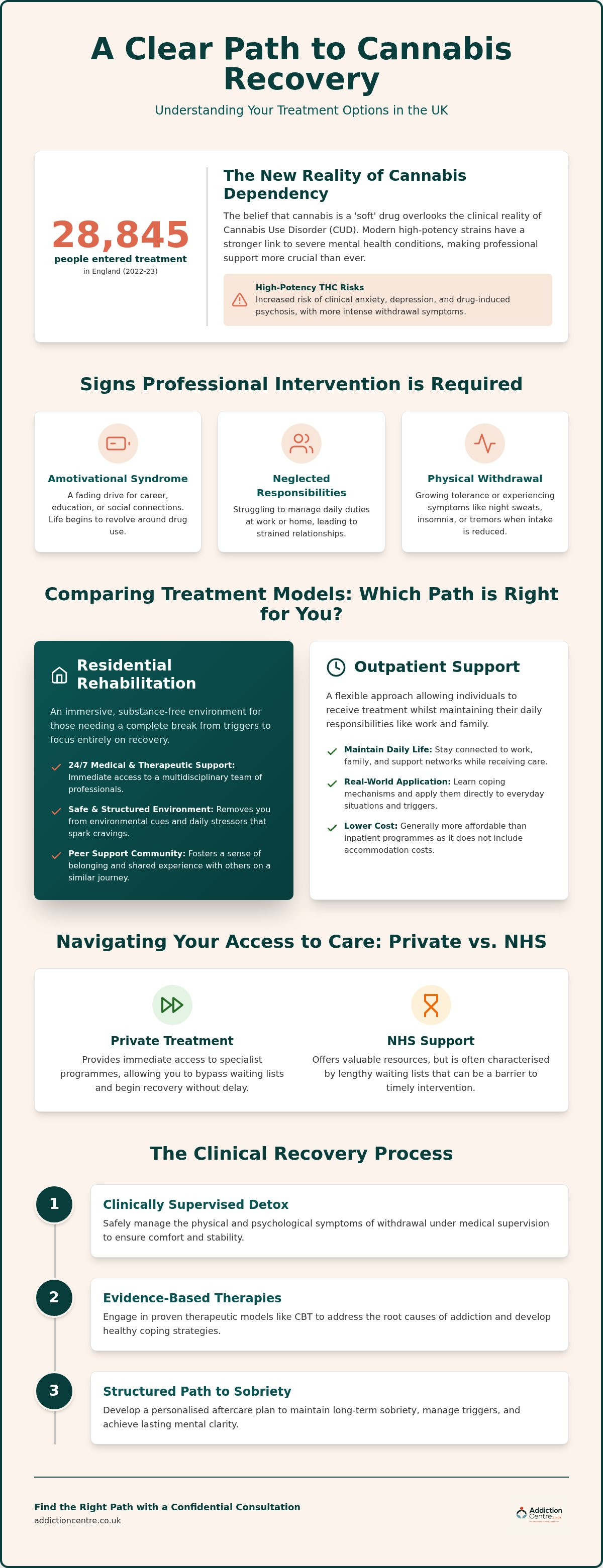
The perception of cannabis in British society has shifted significantly over the last decade, yet a dangerous misconception remains: the idea that it's a substance without clinical consequence. For many, what begins as occasional use evolves into a complex condition known as Cannabis Use Disorder. This isn't merely a habit or a lifestyle choice; it's a physiological and psychological dependency that alters the brain's reward system. In 2022-23, 28,845 individuals in England alone began treatment for cannabis-related issues, proving that the need for professional intervention is both real and widespread. Seeking cannabis addiction treatment UK services ensures that this condition is treated with the medical rigour and personal dignity it deserves.
Breaking the cycle of chronic use often requires more than just a personal desire to change. Professional treatment provides the necessary clinical framework to address the deep-seated triggers and neurochemical changes that maintain addiction. An addiction treatment directory plays a vital role here, acting as a trusted bridge between your current struggle and a national network of accredited clinics. It allows you to bypass the confusion of self-diagnosis and move directly toward a personalised recovery plan that addresses your unique circumstances.
The Impact of High-Potency Cannabis on Recovery
Modern cannabis is vastly different from the varieties found decades ago. High-potency strains, frequently referred to as "skunk," contain significantly higher levels of THC, which has fundamentally changed the recovery landscape. We now observe a much stronger link between heavy use and severe mental health conditions, including clinical anxiety, depression, and drug-induced psychosis. Because these strains are so potent, the withdrawal process is often more intense than users expect. It requires a structured clinical approach to manage symptoms like chronic insomnia, irritability, and intense cravings, which often lead to relapse when attempted without support.
Signs That Professional Intervention is Required
Recognising when social use has crossed the line into compulsive behaviour is the first step toward restoration. One of the most telling indicators is "Amotivational Syndrome," where your drive for career goals, education, or social connection begins to fade. You might find that your daily life has started to revolve around the drug, leading to neglected responsibilities and strained relationships. Physical red flags often include a growing tolerance or experiencing night sweats and tremors when you try to reduce your intake. If you're finding it impossible to stop despite the negative impact on your mental well-being, professional cannabis addiction treatment UK offers the safest and most effective path forward.
Comparing Treatment Models: Residential vs Outpatient Care
Deciding between residential and outpatient care is perhaps the most significant step in your recovery journey. This choice shouldn't be based on convenience alone; it requires an honest assessment of your dependency level and your current home environment. Following Public Health England guidance, clinical recommendations often hinge on whether a person can safely manage their triggers whilst remaining in their community. For those seeking cannabis addiction treatment UK wide, the intensity of care must match the severity of the psychological grip the drug holds over daily life.
Every individual's path is different. Some require a complete break from their routine to find clarity, whilst others find that staying connected to their support networks and work responsibilities provides the stability they need. A personalised recovery consultation can help you weigh these factors objectively, ensuring you don't underestimate the level of support required to achieve lasting cessation.
The Benefits of Residential Rehabilitation
Residential rehab offers a profound sense of safety by removing you from the environmental cues that spark cravings. In this substance-free setting, you have 24/7 access to a multidisciplinary team of therapists and medical professionals. This immersive environment allows you to focus entirely on healing without the distractions of daily life. Peer support is another cornerstone of this model. Living amongst others who share similar challenges creates a unique community of shared understanding and mutual accountability. It's often the most effective route for those who have tried to quit multiple times but found the triggers at home too powerful to overcome.
Specialist Outpatient and Community Support
Flexible outpatient programmes are designed to integrate with your existing schedule, making them an excellent option for those with stable home lives and manageable dependency levels. These services typically involve regular individual counselling and group therapy sessions held at a local centre. Outpatient care works best when you have a strong, drug-free support system already in place. It allows you to apply the coping strategies you learn in therapy directly to real-world situations in real-time. This model is often suited for individuals who have caught their dependency early or those transitioning out of a more intensive residential stay. Professional cannabis addiction treatment UK services ensure that even community-based care remains clinically rigorous and focused on long-term wellness.
Navigating the Choice: Private Rehab vs NHS Support
Choosing between the public and private sectors is a pivotal decision that often comes down to the urgency of your clinical needs. While the NHS provides a vital safety net, the reality of cannabis addiction treatment UK pathways in the public sector involves significant logistical hurdles. In June 2026, the general NHS waiting list in England reached 7.27 million cases, with median waiting times for various treatments extending to nearly 12 weeks. For someone experiencing a mental health crisis or the rapid onset of dependency, waiting months for an initial assessment can feel like an insurmountable barrier. We believe that when you're ready to seek help, that help should be available without delay.
To simplify this complex landscape, many individuals turn to an addiction treatment directory. This resource allows you to compare facilities based on their clinical specialities rather than just their location, ensuring your choice is driven by the quality of care. It acts as a compass, guiding you toward a facility that understands the specific nuances of cannabis dependency.
Pros and Cons of NHS Treatment Pathways
The primary advantage of NHS care is its accessibility and cost-free nature, offering community-based support through local drug and alcohol teams. These services are often integrated with other social care provisions, which can be helpful for those with complex housing or employment needs. However, residential rehab is rarely available directly through the NHS. Most patients follow a lengthy journey from a GP appointment to a referral, followed by several weeks of waiting for community-based talking therapies. While these services are excellent for maintenance, they often lack the therapeutic intensity required to break a chronic cycle of high-potency use.
The Advantages of Private Cannabis Recovery
Private treatment offers the benefit of "rehab without a waiting list," with many clinics facilitating admission within 24 to 48 hours. This immediacy is crucial when a "window of willingness" opens for an individual. Beyond speed, private facilities provide a broader range of therapeutic models, from cognitive behavioural therapy to holistic approaches like mindfulness and nutritional support. Understanding the physiological effects through resources like FRANK's guide to cannabis risks can help you appreciate why a customised, intensive plan is often necessary. These programmes also prioritise comprehensive aftercare, providing a safety net that remains in place long after you've left the clinic. This level of cannabis addiction treatment UK ensures you aren't just achieving sobriety, but maintaining it through life's inevitable challenges.
The Clinical Recovery Process: Detox and Therapy
The journey through recovery begins with a clear, clinical understanding of how the body and mind heal from chronic use. While some mistakenly believe that cannabis dependency is purely psychological, the physiological reality of withdrawal can be a significant barrier to early cessation. Providing professional cannabis addiction treatment UK wide involves a two-stage process: first, safely managing the physical transition through detoxification, and second, addressing the deep-seated behavioural patterns through intensive therapy. This structured approach ensures that you aren't just stopping the drug, but are also building the internal resilience needed to stay sober.
Managing Cannabis Withdrawal Safely
Cessation after long-term use often triggers a specific cluster of symptoms known as cannabis withdrawal syndrome. For many, this manifests as chronic insomnia, intense irritability, and unusually vivid or disturbing dreams as the brain's REM cycles attempt to rebalance. Physical symptoms like night sweats, loss of appetite, and tremors are also common. These symptoms typically peak within the first 72 hours and can last for up to two weeks. Accessing a residential drug detox UK programme provides a safe, clinical environment where medical professionals can monitor your progress and offer strategies to mitigate this discomfort. Being in a supervised setting reduces the risk of early relapse during these high-stress days.
Therapeutic Models for Long-Term Sobriety
Once the system is clear of the drug, the focus shifts to the psychological drivers of addiction. Cognitive Behavioural Therapy (CBT) is often the cornerstone of this stage, helping you to identify the specific triggers—whether they're social, emotional, or environmental—that lead to compulsive use. We also recognise that many individuals use cannabis to self-medicate for underlying issues like anxiety or trauma. This is where dual diagnosis treatment UK becomes essential, as it treats the addiction and the mental health condition simultaneously. Other evidence-based models include:
- Dialectical Behaviour Therapy (DBT): Focuses on emotional regulation and distress tolerance.
- Motivational Enhancement Therapy: Designed to rapidly evoke an internal desire for change.
- Relapse Prevention Planning: Creating a practical toolkit for navigating high-risk situations after leaving care.
Effective cannabis addiction treatment UK doesn't end when you leave a clinic. A robust aftercare network, including peer support groups and ongoing individual counselling, acts as a vital safety net. If you're ready to explore these clinical pathways, you can request a recovery consultation to find a facility that specialises in these therapeutic models.
Finding the Right Path with Addiction Centre
Finding your way through the maze of cannabis addiction treatment UK options can feel like a daunting task when you're already in a state of high stress. Many people find themselves trapped between long NHS waiting lists and a private sector that feels crowded with competing claims. At Addiction Centre, our role is to act as a steady guide, providing a bridge between your current state of confusion and a structured, professional environment. We don't just provide a list of clinics; we offer a methodical approach to finding the right care for your specific clinical needs.
By operating as an impartial referral service, we ensure that the advice you receive is based on your unique circumstances rather than a desire to fill a specific bed. We take the time to understand your history, the potency of the substance involved, and any co-occurring mental health challenges. This allows us to match you with a facility amongst our national network of recognised clinics that is truly equipped to support your recovery. From your initial enquiry through to the day of admission, we walk alongside you, ensuring that every question is answered with both precision and respect.
Personalised Recommendations for Your Journey
The benefit of impartial advice in a crowded treatment market cannot be overstated. We understand that what works for one individual might not be suitable for another. Because we aren't tied to a single provider, we can offer objective comparisons between different therapeutic models and facility environments. Whether you require a high-intensity residential stay or a more flexible outpatient programme, our recommendations are always driven by clinical necessity and your personal preferences for comfort and safety. This personalised approach removes the guesswork, allowing you to focus your energy entirely on the recovery process.
Taking the First Step Toward Recovery
Your journey begins with a confidential recovery consultation. During this first phone call, you can expect to be heard without judgment by a dedicated advisor who understands the weight of your situation. We handle every assessment with the utmost dignity, prioritising your privacy and safety above all else. For families who are watching a loved one struggle and feel unsure of how to help, we also provide expert guidance on interventions to help you take compassionate, effective action.
It's important to remember that securing a place in a specialist programme is often the turning point in a person's life. Acting now, whilst you have the motivation to change, can prevent the long-term psychological effects of chronic use from deepening. We're here to ensure you don't have to navigate this path alone, providing the clarity and professional support you need to choose the best cannabis addiction treatment UK has to offer.
Embracing a Future of Lasting Restoration
The path to overcoming dependency is rarely a straight line, but it's one you don't have to walk alone. We've explored how modern high-potency strains have changed the landscape of recovery, making specialist cannabis addiction treatment UK services more vital than ever. Whether you choose the immersive environment of a residential stay or the flexibility of community-based support, the most important step is moving from a state of uncertainty toward a structured clinical plan.
At Addiction Centre, we simplify this transition by providing expert impartial advice and access to a national network of CQC-recognised clinics. You can also utilise our confidential self-assessment tools to better understand your needs before speaking with a specialist. Taking action now ensures you can bypass lengthy waiting lists and begin healing in a safe, professional environment. It's time to prioritise your health and dignity.
Begin your recovery journey today with a confidential consultation. You have the strength to reclaim your well-being, and we're here to help you find the right path toward a healthier, substance-free future.
Frequently Asked Questions
Is cannabis actually addictive enough to require professional rehab?
Yes, modern high-potency strains significantly alter brain chemistry, making it very difficult to quit without clinical support. Professional rehab is often necessary when self-directed attempts lead to a cycle of relapse or severe withdrawal symptoms like chronic anxiety and insomnia. Clinical intervention addresses the psychological dependency and the 'amotivational syndrome' that often accompanies long-term use. It provides a structured environment where you can safely break the habit and regain your cognitive clarity.
How much does private cannabis addiction treatment cost in the UK?
The cost of cannabis addiction treatment UK wide varies based on several factors, including the type of facility, the length of your stay, and the level of clinical care required. Generally, fees cover your accommodation, 24-hour medical supervision, and all therapeutic sessions. Because every individual's needs are different, we recommend a confidential consultation to discuss the options within our national network. This ensures you find a programme that fits both your clinical requirements and your personal budget.
Can I get help for cannabis addiction on the NHS without a long wait?
Securing immediate help through the NHS is often difficult due to significant waiting lists for community-based drug teams. While your GP can provide a referral, the process to access specialist talking therapies or residential funding can take several months. If you're experiencing a crisis or need urgent intervention, private treatment is the most reliable route. It allows for immediate admission, often within 48 hours, bypassing the delays associated with public health services.
What happens during a typical day in a cannabis residential rehab?
A typical day is highly structured to help you restore a healthy routine. You'll usually begin with communal breakfast followed by group therapy sessions focused on developing coping strategies. Afternoons are often dedicated to one-to-one counselling, such as Cognitive Behavioural Therapy, or holistic activities like mindfulness and exercise. Evenings provide time for reflection and peer support meetings. This methodical approach ensures every hour is purposefully focused on your long-term recovery and mental well-being.
How long does a cannabis detox and rehabilitation programme usually last?
Most residential programmes last between 28 and 90 days, depending on the severity of the dependency. The initial 7 to 14 days are typically focused on the detoxification phase, allowing your body to clear the substance while managing withdrawal symptoms. The remainder of the stay is dedicated to intensive psychological therapy to address the root causes of your use. Some people transition into outpatient care after their initial stay to maintain their sobriety in the community.
Will my GP be informed if I choose private cannabis treatment?
Your privacy is protected when you choose private care. Clinics will not inform your GP or your employer about your treatment without your explicit written consent. Whilst some people find it helpful to involve their GP for long-term health monitoring, the decision is entirely yours. This confidentiality allows you to seek help with dignity and peace of mind, knowing that your medical records remain private unless you choose to share them.
How can I help a family member who refuses to admit they have a cannabis problem?
Supporting a loved one in denial requires patience and clear boundaries. It's often best to focus on how their behaviour affects the family rather than using accusatory language. You might consider organising a professional intervention, which provides a safe space for the individual to hear your concerns. Our advisors can offer expert guidance on how to approach these difficult conversations and can help you arrange a confidential assessment to encourage them toward a path of recovery.
What is the difference between cannabis rehab and general drug rehab?
Specialist cannabis addiction treatment UK clinics focus specifically on the unique psychological grip of THC and associated mental health complications like drug-induced psychosis. While general rehabs treat various substances, a cannabis-specific programme understands that withdrawal is often more protracted and psychologically driven. These programmes prioritises cognitive restructuring and motivational enhancement. This targeted approach helps you rebuild the drive and focus that chronic cannabis use often diminishes, ensuring a more effective path to lasting restoration.


