
What if the most significant barrier to your recovery isn't a lack of willpower, but the absence of a psychological strategy tailored specifically to your life? Many people seeking cocaine addiction rehab UK find themselves lost in a maze of conflicting advice, caught between the long waiting lists of the NHS and the perceived costs of private residential clinics. It's natural to feel anxious about the financial commitment or the prospect of a relapse after you've invested so much emotional energy into the decision to seek help.
We understand that you're looking for more than just a bed in a facility; you're looking for a transformation that lasts. In this guide, you'll discover how to navigate the UK’s rehabilitation landscape with confidence and find the professional support required for genuine, long-term sobriety. We'll demystify the rehab process, compare your care options, and provide a clear framework for selecting a facility that aligns with your personal needs. This article offers a steady hand to guide you from a state of confusion toward a structured environment where recovery becomes a practical, achievable reality.
Key Takeaways
- Learn why successful cocaine recovery focuses on psychological restoration rather than just physical detox, and why attempting to quit alone often leads to relapse.
- Gain clarity on the differences between NHS funding and private cocaine addiction rehab UK, including a realistic look at waiting times and care standards.
- Discover how to evaluate a facility based on its clinical evidence and CQC standards rather than just its aesthetic amenities.
- Understand the step-by-step journey from the initial medical detox and "crash" phase to long-term behavioural therapy and aftercare.
- Find out how a confidential recovery consultation can help you navigate the UK's directory of clinics to find a personalised treatment path.
Understanding Cocaine Addiction Rehab in the UK
Choosing to seek cocaine addiction rehab UK is a courageous step toward reclaiming a life that may currently feel fragmented. Unlike some other forms of recovery, cocaine rehabilitation is a deeply structured environment that prioritises psychological healing over mere physical abstinence. It addresses the neurological changes caused by both powder cocaine and crack cocaine, ensuring that the treatment plan respects the unique chemistry of the individual's dependency. In the UK, professional centres must adhere to strict clinical standards regulated by the Care Quality Commission (CQC). These 2026 standards ensure that every facility provides a safe, evidence-based environment for restoration, focusing on the dignity of the person throughout their stay.
Attempting to stop "cold turkey" at home often proves unsuccessful for cocaine users. While the physical withdrawal symptoms might seem less severe than those of alcohol or opiates, the psychological compulsion is extraordinarily powerful. Without professional intervention, the intense cravings and the "crash" that follows use can lead to a rapid cycle of relapse. Professional rehab provides the necessary distance from daily stressors, allowing you to break the cycle in a space designed for clarity and health.
Why Cocaine Recovery is Unique
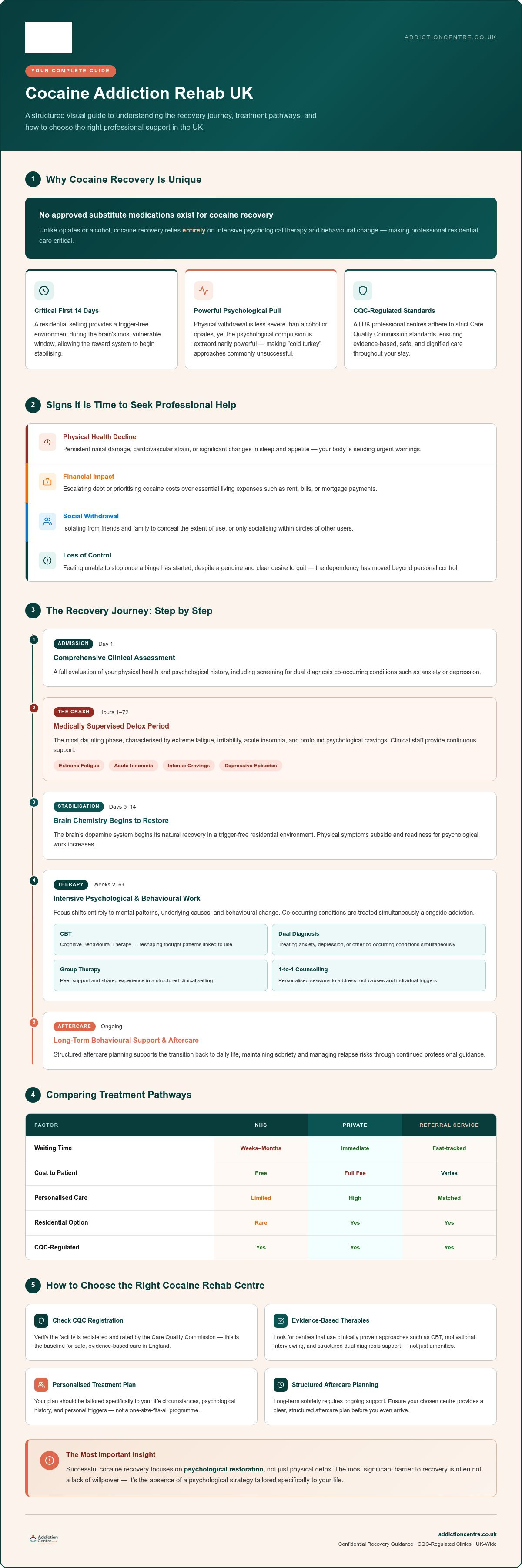
Cocaine recovery presents a distinct challenge because there are currently no government-approved "substitute" medications, such as those used in opiate recovery. The focus must remain entirely on intensive psychological therapy and behavioural change to address profound dopamine depletion. The first 14 days are particularly critical; a residential setting provides a safe, trigger-free space during this window. This allows the brain's reward system to begin its natural stabilisation process without the constant intrusion of environmental cues that typically spark a relapse.
Signs it is Time to Seek Professional Help
Recognising the need for help is often the most difficult part of the journey. You might notice your performance in the UK workplace is faltering, or perhaps your family relationships are strained by "binge" patterns and unpredictable mood swings. Physical and social indicators often serve as urgent warnings:
- Physical Health: Persistent nasal damage, cardiovascular strain, or significant changes in sleep and appetite.
- Financial Impact: Escalating debt or the prioritisation of cocaine costs over essential living expenses like rent or mortgages.
- Social Withdrawal: Isolating from friends and family to hide the extent of use or only socialising with other users.
- Loss of Control: Feeling unable to stop once a binge has started, despite a clear desire to quit.
If these patterns feel familiar, it's a sign that the dependency has moved beyond your personal control. Seeking a professional assessment through a trusted directory can provide the "calm in the storm" needed to identify the most appropriate clinical pathway forward.
The Recovery Journey: Detox, Therapy, and Behavioural Change
Recovery is a methodical process that begins the moment you step through the doors of a facility. It starts with a comprehensive admission phase, where a clinical team assesses your physical health and psychological history. The journey through cocaine addiction rehab UK is designed to move you from a state of crisis into one of sustained stability. This isn't a linear path, but a structured transition from physical detoxification to intensive psychological work. Many individuals also discover they have a "dual diagnosis," where an underlying condition such as anxiety or depression has been fuel for their substance use. UK facilities are increasingly equipped to treat these co-occurring disorders simultaneously, ensuring the root cause is addressed alongside the symptoms.
The Role of Residential Drug Detox
The first 72 hours of cessation are often the most daunting. This period, frequently referred to as the "crash," is characterised by extreme fatigue, irritability, and profound psychological cravings. Whilst cocaine withdrawal doesn't typically require the same tapering medications as alcohol, the presence of clinical staff is vital. They manage symptoms such as acute insomnia and depressive episodes, providing a safety net when the impulse to use is at its strongest. You can find more detail on this initial stage in our guide to residential drug detox UK.
Evidence-Based Therapies for Cocaine Addiction
Once you're physically stabilised, the focus shifts to the mental patterns that drive addiction. Cognitive Behavioural Therapy (CBT) remains the gold standard in UK clinical settings for those undergoing cocaine addiction rehab UK. It helps you identify high-risk situations and develop practical coping mechanisms to handle triggers. This individual work is complemented by group therapy, where sharing experiences with peers provides a sense of community that is often lost during active addiction. Modern recovery also embraces holistic support to restore the body and mind. This includes:
- Nutritional Support: Rebuilding physical health after periods of bingeing and neglect.
- Mindfulness and Meditation: Tools to manage the intense psychological cravings that can persist for weeks.
- Exercise Programmes: Naturally boosting dopamine levels to help the brain's reward system recover.
If you're unsure which therapeutic model suits your history, a confidential assessment can help clarify your options. This comprehensive approach ensures that by the time you reach the aftercare phase, you aren't just "clean," but possess a toolkit for a new way of living.
Comparing Treatment Pathways: NHS, Private, and Referral Services
Choosing the right environment for recovery is a decision that carries significant weight. In the United Kingdom, the options generally fall into three categories: community-based NHS services, private residential clinics, and managed referral directories. Each pathway offers different levels of support, and the best choice often depends on the severity of the dependency and the immediacy of the need for intervention. Understanding these distinctions is the first step toward finding a sustainable route to sobriety.
NHS Support vs Private Residential Rehab
The NHS remains a cornerstone of UK healthcare, providing community-based drug and alcohol services that are accessible to everyone. These programmes are excellent for those who require long-term, local support whilst maintaining their daily responsibilities. However, the reality of NHS residential funding is that it's often subject to strict criteria and extensive waiting lists. For someone in the midst of a cocaine-related crisis, these delays can be a significant barrier to safety. NHS care is typically delivered in a community setting, which means the individual remains in the same environment where their addiction developed, which can lead to higher relapse rates during the early, most vulnerable stages of recovery.
Private cocaine addiction rehab UK offers a different approach by providing immediate, immersive care. Admission can often be arranged within 24 to 48 hours, removing the individual from their triggers and placing them in a safe, clinical environment. Whilst this requires self-funding or private health insurance, the intensity of the care is significantly higher. Patients receive 24-hour supervision and a concentrated schedule of therapies that are difficult to replicate in a community setting. This immersive model is designed to break the cycle of addiction quickly and effectively, providing a solid foundation for long-term psychological change.
Navigating the UK Addiction Treatment Directory
For many, the choice between NHS and private care feels overwhelming. This is where a referral service provides a vital middle ground. By using a managed addiction treatment directory, you can access impartial advice that isn't tied to a single provider. These directories allow you to compare clinics based on their clinical specialisms and their latest 2026 CQC ratings, ensuring you find a facility that meets the highest standards of safety and care. This expert navigation helps you look beyond the marketing and focus on the clinical outcomes that matter most for your specific journey, providing a sense of calm and clarity during a difficult time.
How to Choose the Right Cocaine Rehab Centre
Selecting a facility for cocaine addiction rehab UK requires looking far beyond aesthetic appeal or hotel-style amenities. While comfortable surroundings certainly assist in the initial stages of recovery, clinical outcomes and safety standards are the true measures of a successful programme. In the United Kingdom, the Care Quality Commission (CQC) regulates all addiction centres to ensure they provide high-quality care. Always check a facility’s most recent 2026 inspection report to confirm they meet essential standards for safety, effectiveness, and leadership. A robust aftercare programme is equally vital; recovery doesn't end at the point of discharge, and the most reputable centres provide structured follow-up support to help you navigate the transition back to daily life.
Key Criteria for Selection
When you evaluate your options, ask specific questions about staff-to-patient ratios and clinical accreditation. Cocaine addiction is a stimulant-based dependency, which requires a different therapeutic approach than depressants like alcohol or opiates. It's essential to ensure the centre has specific experience in managing the intense psychological cravings and dopamine depletion associated with stimulants. Additionally, verify their provisions for dual diagnosis. If you're struggling with underlying depression or anxiety, the facility must be equipped to provide concurrent mental health support, as treating the addiction in isolation rarely leads to a sustained recovery.
The Logistics of Treatment
Practical considerations often dictate which path is most viable for your circumstances. Gaining a clear understanding of the private rehab cost UK is an essential part of your financial planning. These costs vary depending on the length of your stay and the level of clinical intervention required. Many leading UK providers now accept private health insurance from major companies such as Bupa, AXA, and Vitality, which can significantly reduce the immediate financial pressure. Admission speed is another critical factor for those seeking cocaine addiction rehab UK; many private clinics can facilitate a start date within 24 hours of your initial assessment, providing an immediate sanctuary for those in a state of high risk.
Finding the right fit doesn't have to be a journey you take alone. To find a facility that aligns with your specific clinical needs and budget, you can book a recovery consultation for impartial, expert guidance. This personalised approach ensures that your chosen path to recovery is built on a foundation of professional expertise and genuine care.
How Addiction Centre Supports Your Recovery
Finding the right facility for cocaine addiction rehab UK can feel like an insurmountable task when you are already in the midst of a personal crisis. Addiction Centre acts as a steady guide, bridging the gap between your current state of uncertainty and a structured, professional recovery environment. We don't simply provide a list of clinics; we offer a managed pathway to health. Our role is to act as your advocate, ensuring that the facility you choose is not just available, but is the most appropriate clinical fit for your unique history and psychological needs. By maintaining an impartial directory of recognised UK clinics, we prioritise your dignity and long-term success above all else.
Our commitment to your recovery is built on the foundation of integrity and professional knowledge. We understand that every individual's experience with stimulant dependency is different, which is why we reject the "one size fits all" approach. Whether you require a facility that focuses on intensive behavioural therapy or one that provides specialised support for dual diagnosis, we help you find the specific expertise required to sustain sobriety. We position ourselves as a "calm in the storm," helping you move from a state of confusion to a place of structured, professional care.
Expert Recovery Consultations
Your journey with us begins with a confidential recovery consultation. This isn't a clinical diagnosis, but a compassionate phone assessment designed to understand the specific challenges you face. During this call, we discuss your history of use, any co-occurring mental health concerns, and your practical requirements, such as budget or preferred location within the UK. This allows us to match you with a clinic that specialises in stimulant recovery rather than a generic programme. We also provide essential support for families, who are often the first to reach out. We help them understand the referral process, offering a sense of professional direction whilst they navigate the stress of a loved one's addiction.
Taking the First Step Today
It's entirely natural to feel a sense of trepidation before making that first phone call. However, experience shows that recovery is most successful when action is taken during the "window of willingness," that brief period where the desire for change outweighs the fear of treatment. Our referral process is methodical and thorough, ensuring no question is left unanswered. Once a suitable centre is identified, we facilitate the introduction, allowing for a smooth transition into care. We view ourselves as a lifelong partner in your recovery journey, committed to the belief that restoration is possible for everyone. If you are ready to explore your options, please contact Addiction Centre for an impartial consultation to begin your path toward a healthier future.
Your Journey Toward a Healthier Future
Recovery from cocaine dependency isn't just about the physical cessation of use; it's about developing a psychological strategy that addresses the root causes of addiction whilst rebuilding your well-being. We've explored how the right cocaine addiction rehab UK provides a structured, trigger-free environment where clinical expertise meets compassionate care. The path to restoration requires looking beyond simple abstinence to find a facility that aligns with your specific clinical needs and provides a robust aftercare plan for the years ahead.
You don't have to navigate these complex decisions alone. Our confidential UK-based referral network connects you to CQC-regulated treatment facilities, ensuring you receive personalised recommendations based on your unique circumstances. By acting now, you can move from a state of crisis toward a life of sustained sobriety and purpose. Speak to an expert advisor about cocaine rehab options today and take the first step toward restoration. You have the strength to change; we have the expertise to help you find the right path.
Frequently Asked Questions
How much does cocaine rehab cost in the UK?
The cost of treatment varies significantly based on the type of facility, the length of your stay, and the intensity of the clinical support required. Private residential options are funded through self-payment or private health insurance, whereas community-based services are often accessible through local authority funding. Factors such as the ratio of clinical staff to patients and the range of holistic therapies provided will influence the final investment in your recovery.
Can I get cocaine rehab on the NHS?
Yes, you can access support through the NHS, though it is primarily delivered via community-based programmes. Securing funding for residential cocaine addiction rehab UK through the NHS involves a rigorous assessment process by your local drug and alcohol team. Whilst this is a vital resource, demand often leads to substantial waiting lists. Many people find that private referral services offer a more immediate solution for those in an acute state of crisis.
How long does cocaine rehab usually last?
A typical residential programme lasts approximately 28 days, though the duration is often tailored to your individual progress and the complexity of your dependency. Some individuals benefit from extended stays of 60 to 90 days to solidify their behavioural changes and prepare for the transition back to daily life. Your clinical team will regularly review your recovery milestones to ensure you have the necessary tools for long-term sobriety before you depart.
What is the difference between powder cocaine and crack cocaine rehab?
While the underlying therapeutic approach is similar, rehab for crack cocaine often addresses more intense psychological cravings and a more rapid cycle of dependency. Both forms of the substance cause significant neurological changes that require bespoke psychological strategies. Clinical teams in the UK are trained to manage the specific "crash" associated with crack cocaine, providing intensive support during the initial period of dopamine depletion to ensure a safe and stable recovery.
Is cocaine rehab confidential?
Confidentiality is a cornerstone of the UK’s clinical standards. All CQC-regulated facilities must adhere to strict data protection laws and medical ethics, ensuring your treatment remains private. Your employer or family members won't be informed of your stay without your explicit consent. This secure environment allows you to focus entirely on your healing process, safe in the knowledge that your personal information is protected by both law and professional integrity.
Can I work whilst in residential rehab?
Most residential programmes encourage a complete break from professional responsibilities to allow you to focus fully on your recovery. The "therapeutic bubble" is designed to remove the daily stressors and triggers that often fuel addiction. However, some private facilities understand the needs of professionals and may offer scheduled "work blocks" where you can manage essential tasks. It's best to discuss these requirements during your initial recovery consultation to find a suitable match.
What happens if I relapse after completing rehab?
Relapse is not a sign of failure, but rather an indication that your recovery plan requires adjustment or additional support. If this happens, it's vital to re-engage with your aftercare team or referral service immediately. Many centres provide "refresher" sessions or structured support groups to help you understand the triggers that led to the relapse. This proactive approach ensures you can return to your path of sobriety with renewed clarity and stronger coping mechanisms.
How do I get a loved one into cocaine rehab?
The first step is to have an open, non-judgmental conversation during a period of calm. You can't force someone into treatment, but you can provide them with the information and support they need to make the decision themselves. Arranging a confidential assessment through a referral service can help facilitate this process. Experts can guide you through the logistics, helping you act quickly when your loved one is ready to accept professional help.


