
Choosing the most familiar environment for recovery might seem like the safest option, but for many, the comfort of home can actually present the greatest risks during the initial stages of withdrawal. When weighing up drug detox at home vs residential UK programmes, the decision often feels like a high-stakes choice between convenience and clinical safety. You're likely feeling a mix of anxiety about the physical reality of withdrawal symptoms and concerns over the costs of private care. It's completely natural to feel overwhelmed by conflicting advice on whether to attempt a 'cold turkey' approach or seek professional medical assistance.
This guide will help you navigate these complexities, offering a clear framework to determine which path provides the security and support you need for lasting sobriety. We'll examine the medical safety requirements of each route and the specific factors that make residential treatment a life-saving choice for many. You don't have to make this decision alone; professional guidance is available to ensure you find the most effective route to restoration and health.
Key Takeaways
- Learn the fundamental difference between a medically supervised home programme and the risks of an unmonitored 'DIY' detox.
- Discover how residential care provides a 'therapeutic bubble' that removes external stressors and environmental triggers during your most vulnerable days.
- Compare the intensity of medical support available for drug detox at home vs residential UK settings to determine which level of care aligns with your safety needs.
- Gain a clear decision-making framework to help you choose a treatment path based on a professional clinical assessment of your physical and psychological health.
- Understand how to access a network of recognised UK clinics to ensure your chosen facility meets the highest standards of professional care.
What is Drug Detoxification and Why is it Necessary?
Understanding the foundations of recovery begins with a clear definition of the first step. What is drug detoxification? Put simply, it's the physiological process where the body works to clear itself of toxins and addictive substances. This isn't merely a period of "waiting it out"; it's a critical medical bridge. It marks the essential shift from physical dependence to a state where psychological recovery can truly begin. Without this foundation, the mind is often too clouded by the body's urgent cravings to engage with therapy or long-term lifestyle changes.
The choice between drug detox at home vs residential UK care often hinges on the safety of this transition. Many people feel tempted to try a "cold turkey" approach, believing that willpower alone is enough. However, stopping a substance abruptly can cause the body's systems to rebound violently. In the UK, professional services often utilise Medically Assisted Treatment (MAT). This involves using specific, regulated medications to manage withdrawal symptoms safely. MAT ensures the process is as stable as possible, reducing the physical shock to your system and preventing the most distressing symptoms from reaching a crisis point.
The Biological Reality of Withdrawal
When you use a substance regularly, your brain and body undergo a profound transformation. They stop producing certain natural chemicals because the drug has taken over those functions. Neuroadaptation is the biological adjustment the body makes to the constant presence of drugs, essentially re-wiring its internal chemistry to function only when the substance is in the system.
When that substance is suddenly removed, the system goes into a state of acute shock. This leads to a range of common withdrawal symptoms that can be both physically exhausting and mentally draining. You might experience:
- Persistent tremors or shaking
- Severe insomnia and sleep disturbances
- Nausea, vomiting, or digestive distress
- Intense anxiety and panic attacks
The Importance of Clinical Supervision
Detoxification is an active medical event, not a passive one. It carries significant risks that require professional oversight. Without expert monitoring, complications such as sudden seizures or respiratory distress can occur without warning. These aren't just "side effects"; they are medical emergencies that require immediate intervention.
Clinical oversight involves the constant monitoring of your vital signs, including heart rate, blood pressure, and temperature. Clinicians can adjust your care plan the moment a reading fluctuates, ensuring your safety throughout the peak of withdrawal. This level of security is a primary reason why many individuals choose a residential drug detox UK programme. It provides 24/7 care in a controlled, neutral environment, ensuring that the transition into sobriety is managed by specialists who prioritise your dignity and physical health above all else.
Drug Detox at Home: Is it Safe and Who is it For?
Deciding between drug detox at home vs residential UK care requires a realistic look at your current circumstances and medical history. A home detox isn't simply a matter of willpower; it's a formal, medically supervised programme conducted within your residence. It's vital to distinguish this from an unmonitored "DIY" attempt, which can be life-threatening. In a professional home programme, community-based addiction teams or visiting nurses provide structured support, ensuring medication is administered according to UK clinical guidelines. They act as a vital link between your home environment and the medical expertise needed to manage withdrawal safely. This path allows for a degree of normality, but it requires a very specific set of conditions to be effective.
Criteria for Home Detox Suitability
Not everyone is a candidate for this approach. UK medical professionals typically only recommend home detox for individuals with a low to moderate severity of addiction. You'll need a clear history free from complicated withdrawals, such as previous seizures or delirium tremens. Crucially, your home must be a stable, drug-free environment. This includes having a "sober companion", a reliable person who can monitor your progress and call for help if needed. Finally, the absence of co-occurring mental health conditions is essential. Dual diagnosis cases often require the more intensive support found in a clinical setting to manage the complex interaction between physical symptoms and mental distress.
The Limitations and Risks of Staying at Home
Whilst the familiarity of home is comforting, it's often the very place where addiction flourished. This environment is typically filled with triggers: the phone that rings with a dealer's number, the stress of household bills, or the local pub just around the corner. These external pressures make it incredibly difficult to maintain focus. When comparing drug detox at home vs residential UK options, the clinical superiority of a neutral space becomes clear. At home, if symptoms escalate suddenly, there's no immediate, on-site medical team to intervene. This delay can be dangerous during the peak of withdrawal.
Many people also find it difficult to transition from the physical detox into long-term psychological therapy whilst remaining at home. Without the "break" from daily life that a clinic provides, old habits can quickly reclaim their hold. Successful recovery is about more than just clearing toxins; it's about changing your environment and your mindset simultaneously. If you're unsure which level of care fits your needs, you can speak with a recovery consultant to explore your options and find a path that ensures your safety.
The Clinical Superiority of Residential Drug Detox
Residential treatment is often described as a "therapeutic bubble." This isn't about isolation; it's about protection. By removing all external stressors, such as work pressures, family conflicts, and social anxieties, you create a dedicated space where the only priority is your restoration. When comparing drug detox at home vs residential UK care, this environmental shift is frequently the most significant predictor of success. You aren't just quitting a substance; you're stepping into a multidisciplinary safety net. Doctors, psychiatric nurses, and recovery coaches work in tandem to manage your physical health and emotional state simultaneously, providing 24/7 support that adapts to your needs as they change hourly.
This setting allows for a seamless transition that home-based programmes often struggle to replicate. Once the physical toxins are cleared and your system begins to stabilise, you don't have to wait or travel for psychological support. Intensive therapy begins the moment you're physically ready. This immediate move into the "why" of addiction helps to solidify the progress made during the "how" of detox, ensuring that the momentum of your recovery isn't lost during a vulnerable transition period.
A Structured Environment for Healing
Routine is a powerful tool in early recovery. In a residential centre, your day is carefully organised with medical check-ups, group therapy sessions, and holistic activities like mindfulness or nutritional guidance. This structure removes the constant, exhausting "choice" of whether or not to use drugs. By eliminating access and providing a full, purposeful schedule, the brain's reward system can begin to reset without the noise of everyday life. For those requiring dual diagnosis treatment UK, this integrated approach ensures that mental health conditions like depression or anxiety are treated alongside the addiction, rather than as an afterthought.
Safety and Regulation in UK Clinics
Safety in these facilities is governed by the Care Quality Commission (CQC). They monitor detox standards to ensure every clinic meets rigorous benchmarks for clinical effectiveness and patient dignity. Unlike a domestic setting, a residential clinic has immediate access to emergency medications and equipment that can only be administered by qualified medical professionals on-site. This immediate response capability is vital for preventing physical complications from escalating into a crisis. Residential care provides a level of safety that cannot be replicated in a domestic setting, offering you and your family peace of mind during the most challenging days of withdrawal.
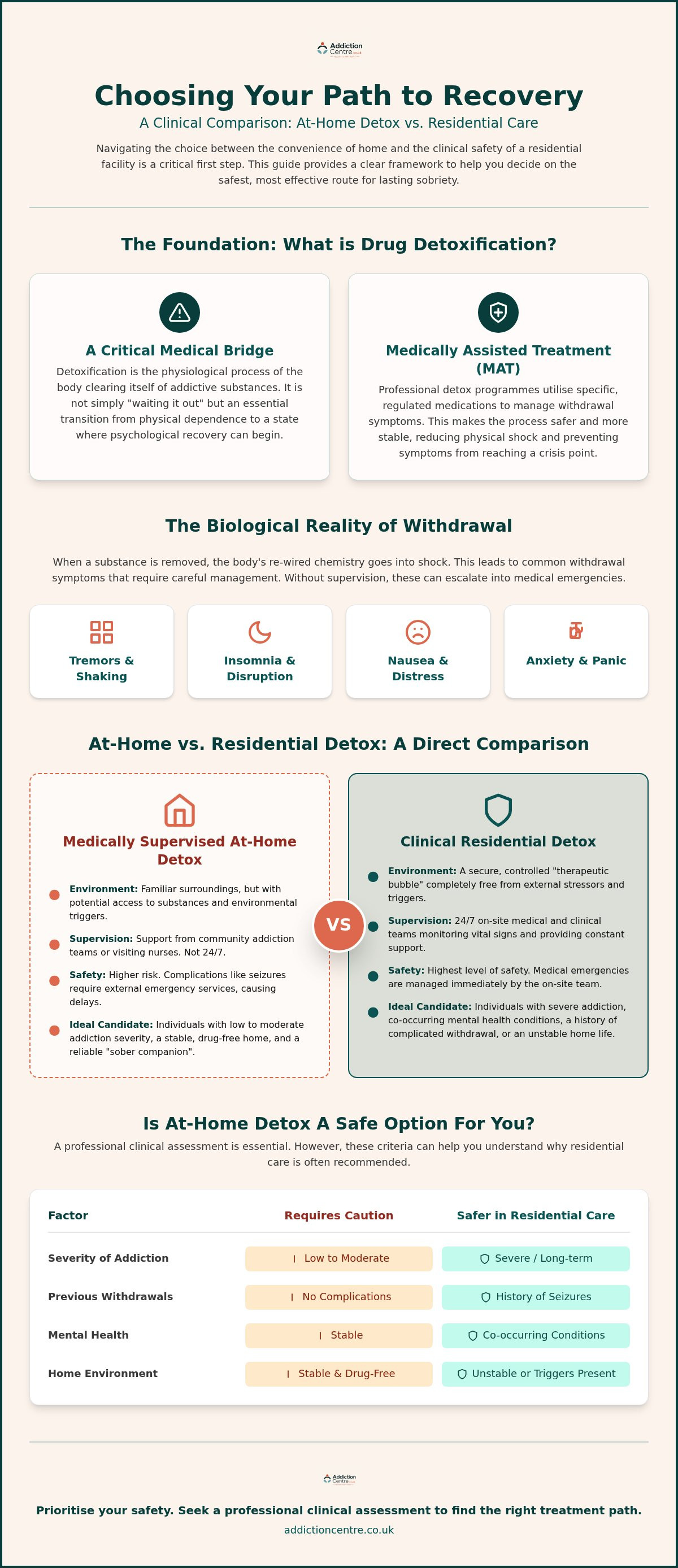
Home vs Residential Detox: A Direct Comparison
The core difference between drug detox at home vs residential UK care lies in the level of clinical intensity and the immediacy of support. In a home-based programme, medical monitoring is periodic. You'll receive scheduled visits from community nurses to check vitals and manage medication, but for the majority of the day, you rely on your own resolve and the support of a "sober companion." Residential care offers a constant, 24/7 clinical presence. This isn't just about physical safety; it's about the immediate emotional containment that prevents a moment of weakness from becoming a full relapse. Whilst home detox allows you to stay within your family unit, it lacks the peer support and group therapy integration that defines the residential experience. Being amongst others who share your struggle creates a unique sense of accountability that is difficult to replicate in isolation.
Cost, Privacy, and Commitment
Financial considerations often weigh heavily on this decision. Residential programmes generally carry a higher upfront cost, yet they are all-inclusive, covering 24-hour medical care, specialised therapy, accommodation, and all meals. Home detox may appear more accessible initially, but it often requires you to arrange your own additional support, nutritional needs, and childcare. For a deeper breakdown of these figures, you can consult our guide on paying for rehab UK. Beyond finances, residential care offers a significant privacy benefit. By stepping away from your local community, you remove the risk of being seen at local clinics and gain the freedom to focus entirely on your restoration without the watchful eyes of neighbours or colleagues.
Success Rates and Long-Term Outcomes
Residential care typically yields higher success rates during the initial 30 days because it physically removes the option to use substances. This "enforced" period of sobriety allows your brain chemistry to stabilise, making you more receptive to the intensive aftercare planning that follows. Regardless of the method you choose, the detox is only the beginning. Long-term sobriety depends on the quality of your transition back into daily life and your commitment to ongoing therapy.
To help you decide, consider this brief checklist:
- Do you have a history of severe withdrawal symptoms or seizures?
- Is your home environment currently free from substances and external stressors?
- Can you take a dedicated block of time away from work and family responsibilities?
- Do you require integrated support for an underlying mental health condition?
If you answered "yes" to the first or last questions, a clinical setting is likely the safest option. You can request a confidential assessment with our team to determine which path offers you the highest probability of lasting success.
Choosing Your Path: How to Access the Right Treatment
The journey towards sobriety is deeply personal, yet it shouldn't be walked in isolation. Whilst the comparison between drug detox at home vs residential UK care provides a helpful framework, the final decision should always be rooted in professional medical advice. A clinical assessment acts as your compass, moving you away from the uncertainty of choice and towards a structured, evidence-based plan for recovery. This professional guidance ensures that the path you choose isn't just the most convenient, but the one that offers the highest level of safety for your specific physical and psychological needs.
Addiction Centre serves as a bridge during this time of transition, connecting you with a network of recognised clinics across the country. By moving away from conflicting advice and towards a curated directory of professionals, you can begin to replace anxiety with a sense of purposeful action. The goal is to lay a foundation that doesn't just clear the body of toxins but prepares the mind for the restorative work that follows.
The Power of a Professional Assessment
During a confidential consultation, a specialist will explore the nuances of your situation with empathy and clinical precision. They look beyond the surface, considering your physical health, the duration of substance use, and any previous withdrawal experiences. This isn't an interrogation; it's a collaborative process designed to ensure your long-term safety. You'll discuss your daily environment, your support network, and any co-occurring mental health challenges. You must be entirely honest about your usage patterns and medical history to ensure your clinicians can build a safe medical plan that protects you from the most severe risks of detoxification.
Next Steps: Taking the First Move
Once you understand the level of care required, the next step is finding a facility that aligns with your specific needs. You can use our addiction treatment directory to filter recognised UK clinics by location, treatment type, and specialised services. This tool simplifies the search process, allowing you to focus on your health rather than administrative hurdles. When you contact a potential centre, consider asking the following questions:
- What is the current CQC rating for your detox services?
- Do you have medical staff on-site 24/7 to manage withdrawal complications?
- How do you integrate psychological therapy into the physical detox process?
- What aftercare support is available once the initial programme is complete?
Taking this first step often feels like the most daunting part of the process, but it's also the moment your restoration begins. Whether you choose a residential setting or a supervised home programme, remember that professional help is the foundation of a life free from dependence. Recovery is not just a possibility; it's a reality that thousands of people across the UK achieve every year by reaching out for the right support at the right time. You can reach out for a confidential consultation today to begin your journey towards a healthier, more stable future.
Securing Your Foundation for Lasting Recovery
Deciding on the right path requires a careful balance of clinical safety and personal readiness. Whilst home detox offers familiarity for those with lower-severity needs and a strong support network, the 24/7 medical supervision and environmental change provided by a residential centre often create the most secure bridge to long-term sobriety. Evaluating drug detox at home vs residential UK options isn't about finding the easiest route; it's about identifying the environment that ensures your physical safety and psychological restoration.
You don't have to navigate these complex choices alone. We provide expert guidance for families and individuals, offering access to an extensive network of CQC-recognised recovery centres across the country. By utilising our confidential online self-assessments, you can gain immediate clarity on your medical requirements and begin a structured treatment plan with confidence. Find the right detox programme for your needs in our UK directory and take that essential first step. Hope is always within reach when you lay the right foundation. Your journey towards a healthier, more stable life starts with a single, informed decision today.
Frequently Asked Questions
Can I safely detox from drugs at home in the UK?
You can safely detox from drugs at home in the UK provided you are enrolled in a formal, medically supervised programme. It is never safe to attempt a "DIY" detox alone, as withdrawal symptoms can escalate into medical emergencies without warning. A professional home programme involves regular monitoring by community nurses and the use of regulated medications to ensure your physical safety throughout the process.
Is home detox cheaper than residential rehab?
Home detox is typically less expensive than residential care because it doesn't include the costs of 24-hour accommodation, meals, and on-site clinical teams. However, when weighing up drug detox at home vs residential UK options, it's vital to consider the overall value. Residential care provides a level of intensive therapy and immediate medical intervention that can significantly reduce the risk of a costly relapse in the future.
How long does a typical drug detox programme take?
A typical drug detox programme usually lasts between 7 and 14 days, depending on the substance involved and the severity of the dependence. The most acute physical symptoms often peak within the first 72 hours and begin to subside after a week. Whilst the physical clearing of toxins is relatively brief, it's only the first step in a much longer journey of psychological restoration and therapy.
What medications are used during a medically assisted detox?
Medications used during detox vary based on the substance, but common examples include buprenorphine for opiate withdrawal or specific tapering medications for benzodiazepine dependence. These regulated treatments help to stabilise your brain chemistry and prevent dangerous complications such as seizures or respiratory distress. Your clinical team will prescribe a personalised combination of medications based on your health history and the intensity of your symptoms.
What happens if I relapse during a home detox?
If a relapse occurs during a home detox, you should contact your community medical team or visiting nurse immediately for guidance. A relapse isn't a sign of failure, but it is a clear clinical indicator that your home environment may contain too many triggers for this stage of recovery. In such instances, a transition to a residential facility is often the safest next step to provide 24/7 support.
Does the NHS provide drug detox at home?
The NHS does provide home-based detox services through local community drug and alcohol teams, though availability and wait times vary significantly by region. These programmes are often under immense pressure, leading many individuals to seek private referrals for more immediate access. Private options allow you to bypass long waiting lists and start your recovery journey when you feel most ready to make a change.
Can I work whilst undergoing a drug detox?
Working whilst undergoing a drug detox is strongly discouraged because the process requires your body's full energy and focus. Withdrawal symptoms like insomnia, nausea, and intense anxiety make it nearly impossible to maintain professional responsibilities safely. Taking a dedicated break from work allows you to prioritise your health and avoids the added stress that frequently triggers the urge to use substances.
How do I know if my addiction is too severe for home detox?
You will know the appropriate level of care after undergoing a professional clinical assessment with an addiction specialist. Factors such as a history of withdrawal seizures, very high daily dosages, or the presence of co-occurring mental health conditions usually indicate that home detox is too risky. If you lack a stable, drug-free environment or a sober companion, residential care is almost always the safer and more effective choice.


