
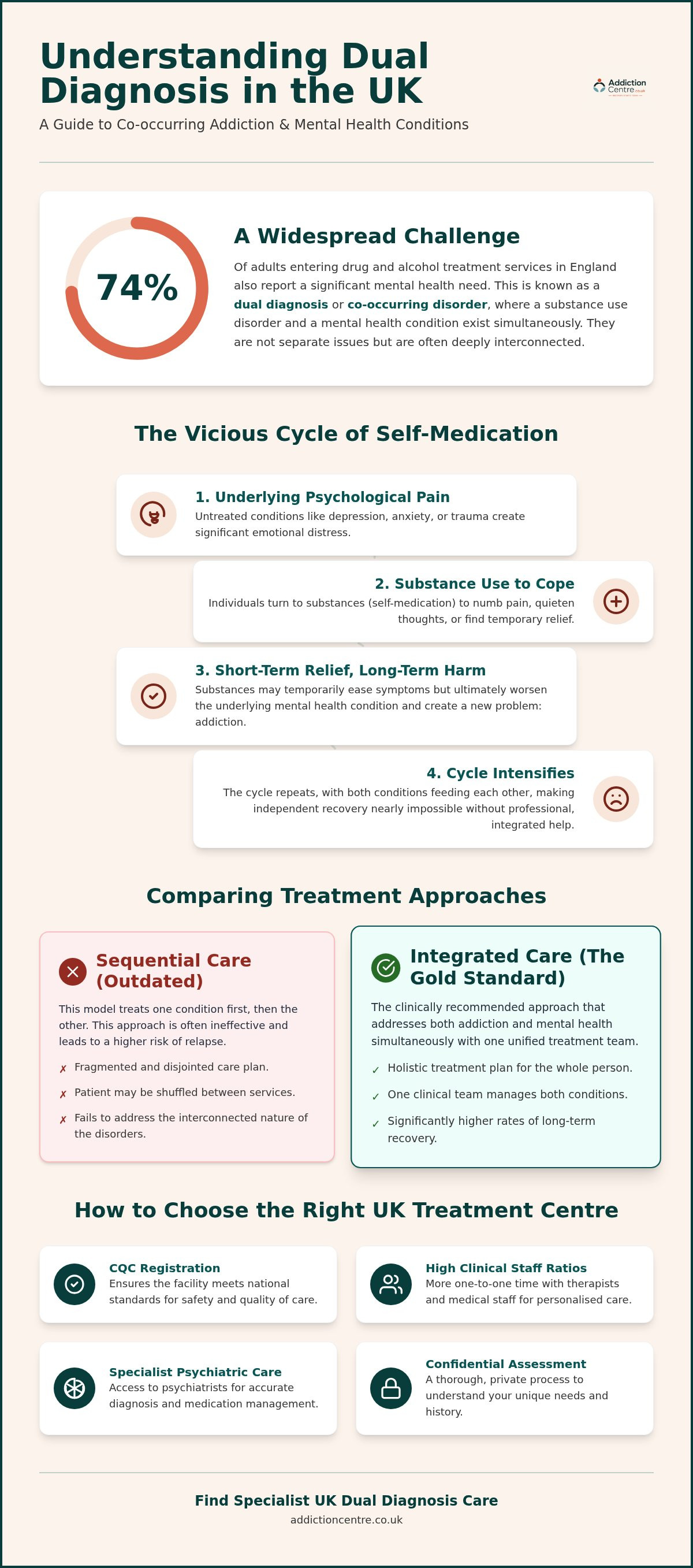
Did you know that 74% of adults entering addiction services in the UK also report a significant mental health need? If you feel caught in a cycle where you use substances to quieten internal pain, you aren't failing; you're likely dealing with a co-occurring disorder. Finding effective dual diagnosis treatment UK options can feel overwhelming when standard rehabs seem to only see one half of the problem. You deserve a recovery plan that acknowledges the complexity of your experience without making you choose which condition to treat first.
It's common to feel misunderstood by services that treat addiction and mental health as separate silos. However, the latest clinical frameworks for 2026 emphasise that integrated care is the only reliable way to break the pattern of self-medication. This article will show you how integrated recovery works and provide a clear roadmap to finding a recognised UK provider. You'll discover that long-term sobriety isn't just a hope, but a practical reality when your mental health is finally given the specialised attention it requires.
Key Takeaways
- Gain a clear understanding of co-occurring disorders and how to break the cycle of self-medicating psychological pain through professional intervention.
- Explore why integrated care is more effective than outdated sequential models for dual diagnosis treatment UK, ensuring both conditions are addressed at once.
- Learn how to verify the quality of a facility by checking for CQC registration, clinical staff ratios, and the availability of specialist psychiatric care.
- Discover how a confidential assessment can connect you with recognised rehabilitation clinics that offer the precise level of medical and emotional support you need.
- Find hope in a structured recovery roadmap that prioritises your dignity and provides the clinical expertise necessary for lasting restoration.
What is Dual Diagnosis? Understanding Co-occurring Disorders in the UK
When you or a loved one is struggling, the terminology can feel like just another hurdle to clear. In the UK, clinicians often use the terms "co-morbidity" or "co-occurring disorders" to describe what is commonly known as a dual diagnosis. Essentially, a foundational understanding of what is Dual Diagnosis involves recognising that it's the simultaneous presence of a substance use disorder alongside a mental health condition. These aren't two separate problems happening by chance; they're often deeply entwined, each making the other more difficult to manage without professional help.
Recent data from 2025 shows that 74% of adults starting drug and alcohol treatment in England reported a mental health treatment need. This high prevalence highlights why finding specialised dual diagnosis treatment UK is so vital. Using non-stigmatising language is a core part of the modern UK approach, as it shifts the focus from "blame" to "healing." Dual diagnosis represents a complex, symbiotic relationship where mental health struggles and substance misuse feed into and sustain one another, requiring a unified clinical approach for successful recovery.
Common Mental Health Conditions Linked to Addiction
Many people find themselves using substances as a way to cope with overwhelming emotions. Depressive disorders often lead individuals toward alcohol or sedatives in an attempt to lift their mood or find a moment of peace. Similarly, those living with generalised anxiety disorder (GAD) or social phobias might use substances to quieten a racing mind or feel more comfortable in social settings. Post-Traumatic Stress Disorder (PTSD) also has a frequent link to opiate or alcohol misuse, as individuals try to numb the pain of intrusive memories. Recognising these links is the first step toward a treatment plan that actually works.
The Challenge of Diagnosis
Getting an accurate diagnosis is often the most difficult part of the journey. Substance misuse can mask underlying psychiatric symptoms, making it hard for doctors to see the full picture during an initial assessment. For instance, alcohol withdrawal can mimic the symptoms of an anxiety disorder, whilst stimulant use can look like a manic episode. This is why a clinical detox period is usually necessary before a definitive mental health diagnosis can be made. It allows the brain to stabilise so that clinicians can see what remains once the substances are gone. Using a professional addiction treatment directory can help you find centres that specialise in this delicate diagnostic phase, ensuring you aren't misdiagnosed or left without the right support.
The Vicious Cycle: Why Mental Health and Addiction Are Linked
Understanding why these conditions coexist is essential for anyone seeking a way out. The self-medication hypothesis suggests that many individuals turn to substances as a way to manage untreated psychological pain. It's often an attempt to find relief from symptoms like intrusive thoughts, chronic insomnia, or crushing low mood. Paradoxically, whilst substances might offer a temporary escape, chronic misuse eventually triggers or worsens the very conditions a person is trying to manage. For example, heavy cannabis use is linked to an increased risk of psychosis, whilst alcohol is a known depressant that can deepen clinical depression over time.
In the UK, environmental pressures like social isolation or the ongoing cost-of-living crisis can exacerbate these vulnerabilities. It's vital to understand that neither the addiction nor the mental health struggle is a "choice." They are part of a complex health interaction that requires professional intervention. Accessing integrated dual diagnosis treatment UK is the most effective way to address both sides of the coin simultaneously. When evaluating your options, following the clinical standards for Choosing the Right Dual Diagnosis Treatment Centre ensures you receive evidence-based care tailored to your specific needs.
The Role of Trauma and Neurobiology
Trauma often acts as the primary catalyst for this cycle. Early-life experiences can rewire the brain's reward system, making it more sensitive to stress and more reliant on external substances for dopamine. This isn't a lack of willpower; it's a physiological response to past pain. Trauma impacts the brain in several specific ways:
- It increases the sensitivity of the 'fight or flight' response, leading to chronic anxiety.
- It disrupts the natural regulation of dopamine, making it harder to feel pleasure from everyday activities.
- It creates a psychological 'hunger' for relief that substances temporarily, yet destructively, satisfy.
Traditional recovery models that focus purely on "stopping" the substance use often fail because they don't address this neurobiological vulnerability. Effective dual diagnosis treatment UK must account for these changes in brain chemistry and provide the psychological tools to manage trauma triggers safely.
Breaking the Cycle with Professional Support
Recovery begins with stabilisation. You can't effectively treat a trauma-informed anxiety disorder if the body is still in a state of active withdrawal or chemical dependency. This is why a residential alcohol detox UK is often the essential first step. It provides a safe, medically supervised environment to break the physical loop, allowing the brain to begin its natural healing process. Once the body is stable, the psychological work can truly begin in an environment that understands the complexity of co-occurring symptoms. If you're feeling trapped in this cycle, reaching out for a confidential recovery consultation can help you find a path toward lasting restoration.
Integrated Treatment vs. Sequential Care: Which is More Effective?
Historically, many individuals in the UK were told they had to resolve their substance use before they could access mental health support. This is known as sequential treatment. It's an outdated model that often leaves people caught in a frustrating gap between services. If you've ever been told you're "too complex" for a standard rehab or "too unstable" for community mental health teams, you've experienced the failure of sequential care. Integrated treatment, the modern gold standard, removes these barriers by addressing both conditions simultaneously within a single, unified programme.
Clinical evidence across the UK shows that integrated care significantly reduces relapse rates. When both conditions are treated together, the risk of one triggering the other is managed in real-time. The 2025 "Co-occurring mental health and substance use delivery framework" reinforces this shift, advocating for a "no wrong door" policy where all services are equipped to handle complex needs. Integrated care is no longer just an option; it's the expected standard for effective dual diagnosis treatment UK.
This approach relies on a robust multidisciplinary team (MDT). In a high-quality UK facility, your care isn't managed by a single person but by a group of experts. This team typically includes consultant psychiatrists who specialise in addiction, mental health nurses, and psychotherapists. They meet regularly to adjust your care plan based on your progress. If your anxiety spikes, the psychiatrist can review your medication whilst the therapist introduces specific coping mechanisms. This synchronised effort ensures that no part of your health is overlooked, providing a safety net that sequential care simply cannot offer.
Core Components of Integrated Dual Diagnosis Care
Effective dual diagnosis treatment UK involves more than just standard counselling. It requires careful psychiatric medication management to stabilise brain chemistry whilst you engage in deep psychological work. Specialised therapies like Dialectical Behaviour Therapy (DBT) are particularly useful; they teach practical skills for emotional regulation and distress tolerance. Beyond clinical interventions, holistic support for nutrition, physical health, and sleep hygiene helps rebuild the body's natural resilience, ensuring you have the physical energy required for psychological healing.
The Benefits of Residential Rehab for Dual Diagnosis
Choosing a residential setting provides a favourite environment for healing, physically removing you from the local triggers and stressors that fuel the cycle of self-medication. It's a sanctuary where the only focus is your restoration. Having 24/7 clinical monitoring means that if a mental health crisis occurs at any hour, there's a qualified professional there to help you through it. For those with particularly complex needs, starting with a professionally managed residential drug detox UK ensures that the physical transition is safe and dignified before the intensive psychological recovery begins.
Choosing the Right Dual Diagnosis Treatment Centre in the UK
Selecting a treatment facility is a deeply personal decision that requires looking beyond standard marketing brochures. Not every rehabilitation centre is equipped to handle the complexities of co-occurring disorders. In the UK, the Care Quality Commission (CQC) regulates all health and social care services. For effective dual diagnosis treatment UK, you must ensure the centre is not just registered for "accommodation and substance misuse" but also possesses the clinical remit for psychiatric care. Check for the presence of on-site psychiatrists rather than those who only visit occasionally. A specialist who is part of the daily clinical team is essential for managing medication and responding to shifts in mental health.
Staffing levels are another critical indicator of quality. You should inquire about the ratio of clinical staff to patients. High-quality care relies on having enough professionals to provide individualised attention when symptoms of anxiety or depression flare up. Beyond the initial stay, assess the facility's approach to aftercare. Recovery is a long-term process, and a robust plan should include ongoing psychiatric reviews and relapse prevention strategies tailored to your specific mental health needs. Many private providers in the UK accept medical insurance from major companies, which can significantly offset the cost of specialist care. If you're feeling overwhelmed by the choices, you can book a confidential recovery consultation to help identify the most suitable facility for your needs.
Questions to Ask During a Recovery Consultation
When you speak with a potential provider, it's helpful to have a list of specific questions ready. This helps you gauge whether their care is truly integrated or simply two separate teams working under one roof. Consider asking the following:
- "How does your team coordinate daily between addiction specialists and mental health professionals?"
- "What specific therapies, such as DBT or trauma-informed care, do you offer for my particular mental health condition?"
- "What does the transition back to community care look like, and how will you support my local GP or therapist?"
Understanding the Costs of Private Care
It's a reality that dual diagnosis care often requires more intensive resources than standard addiction treatment. You're paying for a higher level of medical supervision, specialist psychological input, and a multidisciplinary team that works around the clock. For a detailed breakdown of funding options and what to expect, you can read our paying for rehab in the UK guide. Whilst private care involves a financial commitment, the long-term emotional and financial saving of a successful, lasting recovery is significant. Investing in the right clinical support now can break the cycle of repeated, unsuccessful treatment attempts.
How Addiction Centre Connects You to Specialist UK Care
Finding the right facility amidst a sea of options can feel like an impossible task when you're already in crisis. At Addiction Centre, we act as a steady guide, helping you move from a state of confusion toward a structured, professional environment. As a comprehensive addiction treatment directory, we don't just provide a list of names; we offer a pathway to clinical clarity. Our role is to bridge the gap between your current struggle and the specialist expertise required for long-term restoration.
The journey starts with a confidential assessment designed to identify your unique needs. We understand that a dual diagnosis treatment UK plan must be as individual as the person receiving it. Our advisors take the time to listen, ensuring we understand the specific interplay between your mental health and substance use. By accessing our pre-vetted network of recognised UK providers, you gain the peace of mind that comes from knowing every facility meets rigorous clinical standards. You don't have to navigate this overwhelming journey alone; we're here to walk alongside you.
Our Compassionate Referral Process
Our process is built on integrity and a deep-seated commitment to service. It begins with an initial confidential conversation where we seek to understand your history, your challenges, and your recovery goals. We then match you with a facility that specialises in your specific dual diagnosis combination, whether that involves trauma-informed care for PTSD or specialist support for depressive disorders. We also provide vital support for families who may be unsure of how to get someone into rehab. This holistic approach ensures that both the individual and their support network are prepared for the transformative work ahead.
Taking the First Step Toward Restoration
It's important to remember that a dual diagnosis is not a life sentence. It is a manageable health condition that, with the right integrated support, can be the starting point for a new, healthier chapter of your life. The cycles of self-medication and psychological pain can be broken when you have the correct clinical team behind you. Effective dual diagnosis treatment begins with a professional assessment that recognises the dignity of the individual.
If you're ready to move toward a life of stability and health, we're ready to help you find the way. Reach out for a professional dual diagnosis treatment UK consultation today to explore the residential and outpatient options that best suit your circumstances. Your recovery is possible, and taking that first step is an act of profound courage.
Begin Your Journey to Integrated Recovery
Breaking the cycle of co-occurring disorders requires a shift from managing symptoms to treating the whole person. You've seen how integrated care addresses the root causes of both addiction and mental health struggles simultaneously, offering a far more stable foundation than older, sequential models. Securing specialised dual diagnosis treatment UK is about more than just finding a bed; it's about matching your unique psychological profile with the right clinical expertise.
You don't have to navigate these complex decisions alone. Our compassionate recovery advisors are here to provide expert guidance and personalised referrals tailored to your specific situation. By accessing our national network of CQC-recognised clinics, you can feel confident that your care is in professional hands. Contact Addiction Centre for a confidential recovery consultation today to begin your path toward restoration. True healing is possible when your mental health and physical recovery are finally given the integrated attention they deserve.
Frequently Asked Questions
Is dual diagnosis treatment available on the NHS?
NHS support for co-occurring disorders is available, but it's typically delivered through separate community mental health and substance misuse teams. Whilst the latest clinical frameworks aim to integrate these services, many people find they have to navigate two different systems simultaneously. Accessing integrated residential care through the NHS is often difficult and usually involves long waiting lists via your local authority's community drug and alcohol team.
Can I be treated for mental health and addiction at the same time?
Yes, you can and should be treated for both conditions at once through an integrated programme. This approach ensures your mental health isn't ignored whilst you're detoxing, and your addiction isn't overlooked during psychological therapy. Integrated dual diagnosis treatment UK is designed to treat these co-occurring disorders as a single health challenge, which is far more effective than trying to resolve them separately.
How much does private dual diagnosis treatment cost in the UK?
Private treatment costs vary significantly depending on the level of psychiatric support required and the length of your stay. Because dual diagnosis care involves a higher ratio of clinical staff and specialist psychiatrists, it's often more intensive than standard rehabilitation programmes. Most recognised clinics will provide a detailed breakdown of fees after a confidential assessment, and many accept private medical insurance to help cover the costs.
What happens if I only treat the addiction and ignore the mental health issue?
If you only treat the addiction, the underlying psychological pain that drove the substance use remains unaddressed. This often leads to a "revolving door" of recovery where individuals relapse because they haven't learned how to manage their mental health without substances. True restoration requires healing the mind alongside the body to break the cycle of self-medication and ensure long-term sobriety is sustainable.
What are the most common signs that I might need dual diagnosis care?
Common signs include using drugs or alcohol to quieten intrusive thoughts, feeling unable to cope with social situations without a substance, or noticing that your mental health symptoms worsen when you try to stay sober. If you feel caught in a loop where your mood and your substance use fuel each other, it's a strong indicator that you require a specialist clinical approach that addresses both issues.
How long does a typical dual diagnosis rehab programme last?
A typical residential programme for dual diagnosis treatment UK usually lasts between 28 days and three months. Because this process involves stabilising both physical health and complex psychiatric symptoms, a longer stay is often recommended to ensure a safe transition. Your specific duration will depend on a professional assessment of your needs and the progress you make during the initial stabilisation phase of your recovery.
Can family members be involved in the dual diagnosis treatment process?
Yes, family involvement is a core component of most integrated treatment plans in the UK. Many facilities offer family therapy sessions and educational workshops to help your loved ones understand the complexities of co-occurring disorders. This collaborative approach helps build a stable and supportive home environment, which is essential for preventing relapse and maintaining long-term health once you return to your daily life.
What kind of aftercare is available for co-occurring disorders in the UK?
Aftercare typically includes ongoing outpatient therapy, regular psychiatric reviews, and participation in peer support groups that specialise in co-occurring needs. Many people find groups like Dual Recovery Anonymous helpful for maintaining their progress. A robust aftercare plan should be personalised, ensuring you have continued access to professionals who understand your history and can help you navigate the challenges of early recovery with confidence.


