
What if the most effective way to help your loved one recover from addiction is actually to prioritise your own stability first? You've likely spent countless nights awake, feeling a heavy weight of responsibility for their choices or exhausted from the constant, draining cycle of policing their behaviour. It's a lonely position to be in, caught between the uncertainty of NHS waiting lists and the complexity of private care. We understand that addiction is a family illness, and you shouldn't have to carry the burden alone.
This 2026 guide is designed to provide you with a clear map of family support for addiction UK, helping you navigate the landscape of treatment whilst reclaiming your own peace of mind. We will explore the differences between public and private referral paths, provide strategies to manage your mental health, and show you how to access professional assessments for residential recovery. By the end of this article, you'll have a structured path from a state of confusion toward a calm, professional environment where healing can truly begin for the whole family.
Key Takeaways
- Recognise how addiction functions as a family disease and identify the specific roles, such as the enabler or the hero, that members often adopt to survive the crisis.
- Navigate the full spectrum of family support for addiction UK, distinguishing between the shared experience of peer-led groups and the structure of clinical interventions.
- Evaluate the practical differences between NHS community-based models and private residential options to determine which path offers the necessary level of immediate care.
- Master compassionate communication strategies that avoid shame whilst learning how to organise a formal intervention with expert guidance.
- Access confidential recovery consultations and impartial advice to bypass lengthy waiting lists and connect with recognised rehabilitation clinics across the country.
The Ripple Effect: Understanding Addiction as a Family Disease
When a loved one struggles with substance misuse, the impact radiates outward, disrupting the delicate equilibrium of the entire household. It's often described as a family disease because the behaviour of one individual necessitates a shift in the actions and emotions of everyone else. You might find yourself constantly on edge, waiting for the next crisis or trying to manage the fallout of their choices. This state of hyper-vigilance isn't just exhausting; it's a physiological response to a prolonged period of instability that can lead to chronic stress and physical burnout.
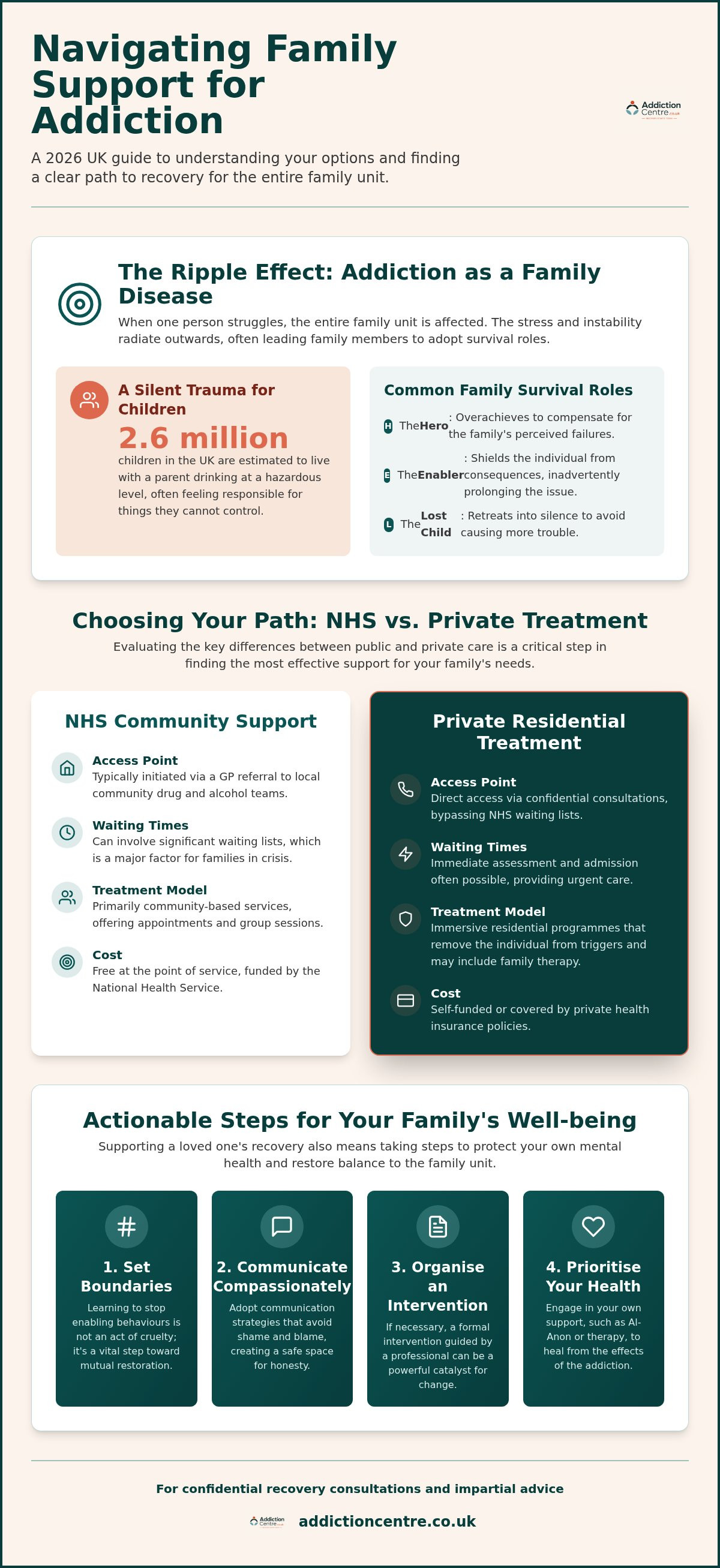
In many UK households, family members unconsciously adopt specific roles to survive the chaos. The "Hero" might overachieve to compensate for the addict's perceived failure, whilst the "Lost Child" retreats into silence to avoid causing more trouble. These roles are survival mechanisms, yet they often prevent the family from seeking the specific family support for addiction UK that addresses the unit as a whole. Organisations like Action on Addiction have long highlighted that for recovery to be sustainable, the family must embark on its own healing journey, independent of the individual in treatment. Healing isn't just about the person using substances; it's about restoring the health of every person who has been touched by the ripple effect.
Recognising Codependency and Enabling Behaviour
Codependency is a clinical term often misunderstood as a sign of weakness. In reality, it's a deep-seated pattern where a relative's self-worth becomes tied to "fixing" or controlling the addict's behaviour. It's a natural, albeit painful, response to loving someone in crisis. You might find yourself paying their debts or lying to their employer to protect them. Whilst these acts feel like support, they are often forms of enabling that shield the individual from the consequences of their addiction. Learning to set boundaries isn't an act of cruelty; it's a vital step toward restoration for both of you.
The Impact on Children and Young People
Children are particularly vulnerable when a parent or sibling struggles with addiction. According to 2026 data, an estimated 2.6 million children in the UK live with a parent who drinks at a hazardous level. These young people often experience a silent trauma, feeling responsible for things they cannot control. Professional family support for addiction UK prioritises age-appropriate honesty, helping children understand that the addiction is a health issue and isn't their fault. Accessing resources for young carers can provide them with a safe space to process their experiences away from the pressures of the home environment.
Accessing Help: Types of Family Support for Addiction in the UK
Finding the right path for family support for addiction UK can feel like searching for a lighthouse in a storm. The first step for many is visiting a GP, who acts as the primary gatekeeper for statutory NHS services. A doctor can provide referrals to community drug and alcohol teams, though waiting lists in 2026 remain a significant factor in how quickly care is received. Because of these delays, many families opt for a confidential assessment through a private directory to gain immediate clarity on their options. Whether you choose the public or private route, an initial assessment is vital to determine the level of care required for both the individual and the family unit.
Support in the UK generally falls into two categories: peer-led groups and professional clinical interventions. Peer-led support focuses on shared experience and emotional solidarity, whilst clinical interventions involve trained therapists who specialise in family systems. Both have their place in a comprehensive recovery plan. If you're feeling overwhelmed by the choices available, a confidential recovery consultation can help you filter through these options to find a service that matches your specific circumstances.
Peer Support Groups: Al-Anon and Families Anonymous
Al-Anon and Families Anonymous are cornerstones of the UK recovery community, operating on a 12-step philosophy adapted specifically for relatives. These groups are built on the principle that you didn't cause the addiction, you can't control it, and you can't cure it. This realisation is often the first step in reducing the intense shame and isolation many feel. Shared experience amongst peers provides a unique form of validation that clinical settings sometimes lack. You can find local meetings through their national databases or via resources like Adfam family support, which offers a robust network of meetings and digital tools for families across the country.
Specialist Mental Health and Dual Diagnosis Support
It is increasingly common for addiction to co-exist with mental health conditions, such as depression or anxiety. This is known as a dual diagnosis, and it requires a specialised approach. Families must often advocate for integrated care, as treating substance use in isolation whilst ignoring an underlying mental health issue frequently leads to a cycle of relapse. For a more detailed look at how these services are structured, our Dual Diagnosis Treatment UK guide provides essential information on integrated recovery paths. Ensuring that both conditions are addressed simultaneously is the most effective way to support long-term stability for your loved one.
Choosing the Right Path: NHS Support vs Private Residential Treatment
Deciding on the most appropriate care path is a pivotal moment for any family. You're likely weighing up the accessibility of the NHS against the intensive nature of private facilities. Both routes offer distinct frameworks for family support for addiction UK, and the right choice depends on your loved one's clinical needs and your family's current level of crisis. It's helpful to view this decision not as a binary choice between "good" and "bad" care, but as a search for the most effective environment for long-term stabilisation.
Safety should always be your primary concern. In the UK, every reputable treatment centre must be registered with the Care Quality Commission (CQC). These ratings provide an impartial assessment of whether a service is safe, effective, and well-led. When you're feeling overwhelmed by options, checking these reports offers a sense of clinical authority and peace of mind. Whilst cost is a natural concern, focusing on the quality of care and the potential for a successful outcome helps frame the expense as a vital investment in your family's future health.
Understanding NHS Waiting Times and Limitations
The NHS provides a dedicated service through community drug and alcohol teams, which is free at the point of use. Recent data from 2026 shows that in Scotland, 92.4% of individuals began specialist treatment within three weeks of referral. In England, the majority of people also access their first intervention within this timeframe. However, these services are predominantly outpatient-based, meaning your loved one remains at home whilst receiving support. This structure can place an immense burden on relatives who are already exhausted from managing the addiction daily. The availability and intensity of these services often depend on a postcode lottery, where the level of local council funding determines the depth of support your family receives.
The Advantages of Private Residential Detox and Rehab
Private residential care offers a level of clinical intensity that community-based models simply cannot match. The primary benefit is the speed of admission, which often happens within 24 to 48 hours, bypassing the administrative delays of statutory services. By removing the individual from their home environment, you break the cycle of triggers and high-stress interactions that fuel substance use. This creates a safe, contained space where they can focus entirely on recovery. For those facing a severe physical dependency, a residential alcohol detox UK provides 24-hour medical supervision, ensuring that the withdrawal process is managed with professional dignity and clinical safety.
Actionable Steps: Supporting Recovery whilst Protecting Your Well-being
Moving beyond understanding toward tangible action requires a shift in how you interact with your loved one. It is often the most challenging phase of the journey. You must learn to speak from a place of deep empathy whilst maintaining the resolve necessary to protect your own life from the chaos of addiction. This balance is the core of effective family support for addiction UK. It isn't about achieving perfection in your response; it's about being consistent, compassionate, and clear about the path forward.
How to Organise a Successful Intervention
An intervention is a structured conversation designed to break through the wall of denial that often accompanies substance use. It should never feel like an ambush or an outlet for pent-up anger. Instead, gather a small group of three to five significant people in a neutral, quiet location where your loved one feels safe. Using a "love first" approach means opening the session by expressing how much the person is valued before detailing the specific ways their behaviour has caused pain. This keeps the focus on health rather than shame.
Providing a concrete path to treatment is essential for a successful outcome. You should have a specific clinic and a potential admission date ready to offer the moment they agree to help. For many, the primary concern is what to do if the individual is resistant. Our guide on how to get someone into rehab UK explains the legal and ethical framework for these complex conversations. Having a professional interventionist present can act as a steady guide, ensuring the dialogue remains focused on restoration rather than conflict.
Maintaining Your Own Mental Health and Boundaries
Boundaries are not walls designed to keep people out; they are gates that protect your own mental health. Setting them requires clear, non-negotiable language that removes you from the cycle of enabling. You might say, "I love you, but I cannot fund your addiction," or "I will support your recovery, but I will no longer lie to protect your reputation." These statements define where your responsibility ends and theirs begins. They are vital for preventing the burnout that so many UK carers experience.
Protecting your well-being also means reclaiming your own identity outside of the crisis. Re-engage with your favourite activities and social circles to manage the chronic stress. Seeking your own therapy is a sign of profound strength, providing a confidential space to process the trauma of recent years. Remember that recovery is a marathon, not a sprint. Long-term aftercare for the family is just as important as the initial detox process. If you're ready to move toward a more structured solution, you can book a recovery consultation to explore clinics that offer comprehensive family programmes.
Finding a Way Forward: How Addiction Centre Supports the Family Unit
When you've reached the limit of what you can manage at home, finding a professional path forward is the most compassionate choice for everyone involved. Addiction Centre serves as a bridge between the uncertainty of a family crisis and the structured, clinical environment of a professional rehab clinic. Our primary mission is to provide comprehensive family support for addiction UK by connecting you with recognised facilities that specialise in healing the entire family unit. We understand that every family's journey is unique; that's why we prioritise impartial, expert advice that puts the dignity and safety of your loved one first.
The process begins with a confidential recovery consultation. This isn't a generic assessment. It's a methodical conversation designed to understand the specific dynamics of your situation. We look beyond the surface of the addiction to identify secondary needs, such as dual diagnosis support or specific detox requirements. By gathering this information, we can provide personalised recommendations that align with your family's emotional and practical needs. Our role is to act as your trusted advisor, whilst walking alongside you as you navigate a complex and often overwhelming landscape of treatment options.
Navigating the UK Addiction Treatment Directory
Our directory is a refined tool designed to give you agency in your search for care. It allows you to filter clinics by specific clinical specialisms, such as residential drug detox or integrated mental health support. Every facility in our network is recognised for its commitment to high standards of care, often evidenced by positive CQC ratings. For a deeper understanding of how to use these resources effectively, you can refer to our comprehensive guide to recovery. This resource helps you move from a state of confusion toward a focused, informed decision.
Your Next Steps: From Crisis to Consultation
If you're ready to take the first step, the transition from crisis to consultation can happen without delay. You don't need to wait for an NHS referral or a local authority assessment to explore your private options. We provide a clear path from your initial enquiry to a professional assessment, and ultimately, to a residential recovery programme that offers the intensity of care required for lasting change. Recovery is possible. With the right professional guidance, your family can begin to rebuild. Reach out today to speak with a consultant who understands the weight of your journey and is ready to help you find the way forward.
Reclaiming Stability for Your Family
Navigating the complexities of addiction requires a dual focus on your loved one's clinical needs and your own emotional health. You've seen how addiction functions as a family disease, shifting roles and creating cycles of stress that no one should manage alone. Whether you're balancing the wait times of statutory services or exploring the immediate intensity of private care, the most vital step is moving from a state of crisis toward a structured plan. Accessing professional family support for addiction UK ensures that you aren't just reacting to a situation, but actively leading your family toward restoration.
Our team provides impartial advice from UK addiction experts and connects you to a national network of CQC-rated clinics. We offer confidential assessments for families in crisis, helping you find a path that respects the dignity of every individual involved. You don't have to wait for things to get worse before they can get better. Speak with an expert today for confidential support and guidance. There's a way through the storm, and with the right professional partner, you can begin to rebuild a life defined by health and peace.
Frequently Asked Questions
How can I find family support for addiction in the UK?
You can access family support for addiction UK through several established channels, beginning with your local GP. They can refer you to statutory community drug and alcohol services. Additionally, national charities like Adfam and Al-Anon offer peer-led support groups. For those needing immediate, clinical guidance, using a professional directory like Addiction Centre allows you to book a confidential recovery consultation and receive impartial advice on recognised private treatment options across the country.
What is the best way to support a loved one with addiction?
The most effective approach involves a combination of compassionate communication and firm personal boundaries. You should encourage them to seek professional treatment whilst ensuring you don't enable their behaviour by shielding them from the consequences of their substance use. It's equally important to prioritise your own well-being through support groups or therapy. By maintaining your stability, you provide a consistent, healthy environment that is more conducive to their long-term recovery and restoration.
Can I get help for addiction on the NHS for my family member?
Yes, the NHS provides support through community-based drug and alcohol teams. Your family member will usually need to visit their GP to start the referral process. Whilst these services are free, they are often outpatient-based and can involve waiting lists. In 2026, many families find that these statutory options are a helpful starting point, though they may lack the immediate intensity and residential care found in private rehabilitation clinics.
How much does private rehab cost in the UK?
The cost of private residential rehab varies significantly based on the length of the programme, the level of clinical care required, and the facility's amenities. Generally, fees cover 24-hour medical supervision, detox services, and intensive therapeutic interventions. Whilst prices fluctuate across the industry, many families view the cost as a necessary investment in safety and clinical expertise. You can speak with a consultant to understand the different tiers of care available within our referral network.
What should I do if my loved one refuses to go to rehab?
If a loved one is resistant, you can organise a formal intervention with the help of a professional. This structured conversation focuses on "love first" to encourage them to accept help. If they still refuse, it's vital to maintain your boundaries and stop any enabling behaviours. Focusing on your own recovery through family support for addiction UK resources can sometimes shift the family dynamic enough to motivate them to reconsider treatment later.
Is there free support for families of addicts in the UK?
There are several free resources available, including Al-Anon and Families Anonymous, which provide peer-led 12-step support. The NHS also offers family interventions through local community teams, and charities like Adfam provide digital resources and support forums. These services are invaluable for reducing the isolation families often feel. Whilst they don't replace clinical treatment for the addict, they offer a safe space for relatives to process their own experiences and learn coping strategies.
How long does a residential drug or alcohol detox take?
A residential detox typically lasts between seven and ten days, though the exact duration depends on the substance involved and the severity of the dependency. This period is designed to safely manage withdrawal symptoms under constant medical supervision. After the physical detox is complete, it's highly recommended that the individual transitions into a structured rehabilitation programme to address the psychological aspects of their addiction, as detox alone is rarely sufficient for long-term recovery.
What is the difference between a support group and an intervention?
A support group is an ongoing, peer-led environment where family members share experiences and offer emotional solidarity over a long period. In contrast, an intervention is a specific, structured event designed to break through an individual's denial and motivate them to enter treatment immediately. Whilst support groups focus on the family's long-term well-being, an intervention is a clinical tool used to facilitate a crisis-point decision, often with the guidance of a professional interventionist.


