
Have you ever found yourself staring at the clock, meticulously counting the hours since your last drink whilst wondering if your body is truly clear? It is a common source of deep anxiety, especially when a workplace screening or a personal health milestone is approaching. You likely want to know exactly how long does alcohol stay in your system so you can move forward with confidence rather than uncertainty. It is completely understandable to feel overwhelmed by the conflicting information about units and timings, particularly when you are dealing with the physical discomfort of withdrawal.
We recognise the stress this confusion causes and offer a steady hand to guide you through the science. This 2026 clinical guide is designed to replace that worry with precise, evidence-based facts. You will discover the exact detection windows for blood, breath, and urine tests, alongside the unique biological factors like age and metabolism that influence your recovery rate. We also explore why you feel the way you do during the clearance process and how residential detox services can provide a safe, dignified path to sobriety. By the end of this guide, you will have a reliable roadmap for your journey back to health.
Key Takeaways
- Understand the precise timelines for different testing methods and the biological process your liver uses to break down ethanol.
- Learn exactly how long does alcohol stay in your system by differentiating between immediate detection in breath and longer-term markers found in urine.
- Discover how individual factors, such as your age and body composition, can significantly influence the speed at which your body processes drink.
- Identify common misconceptions about 'flushing' alcohol from your body and why methods like drinking black coffee cannot speed up your metabolic rate.
- Recognise the clinical risks of stopping heavy drinking abruptly and why a supervised residential alcohol detox offers the safest environment for recovery.
The Science of Alcohol Metabolism: How Your Body Processes Drink
Understanding how your body handles alcohol is the first step toward regaining a sense of control. Alcohol metabolism is the intricate chemical process where your liver breaks down ethanol, the active ingredient in alcoholic drinks, to clear it from your bloodstream. This is not a simple "on-off" switch. It is a methodical biological sequence that requires time and specific enzymes to complete. When you ask how long does alcohol stay in your system, you are really asking about the efficiency of this internal laboratory.
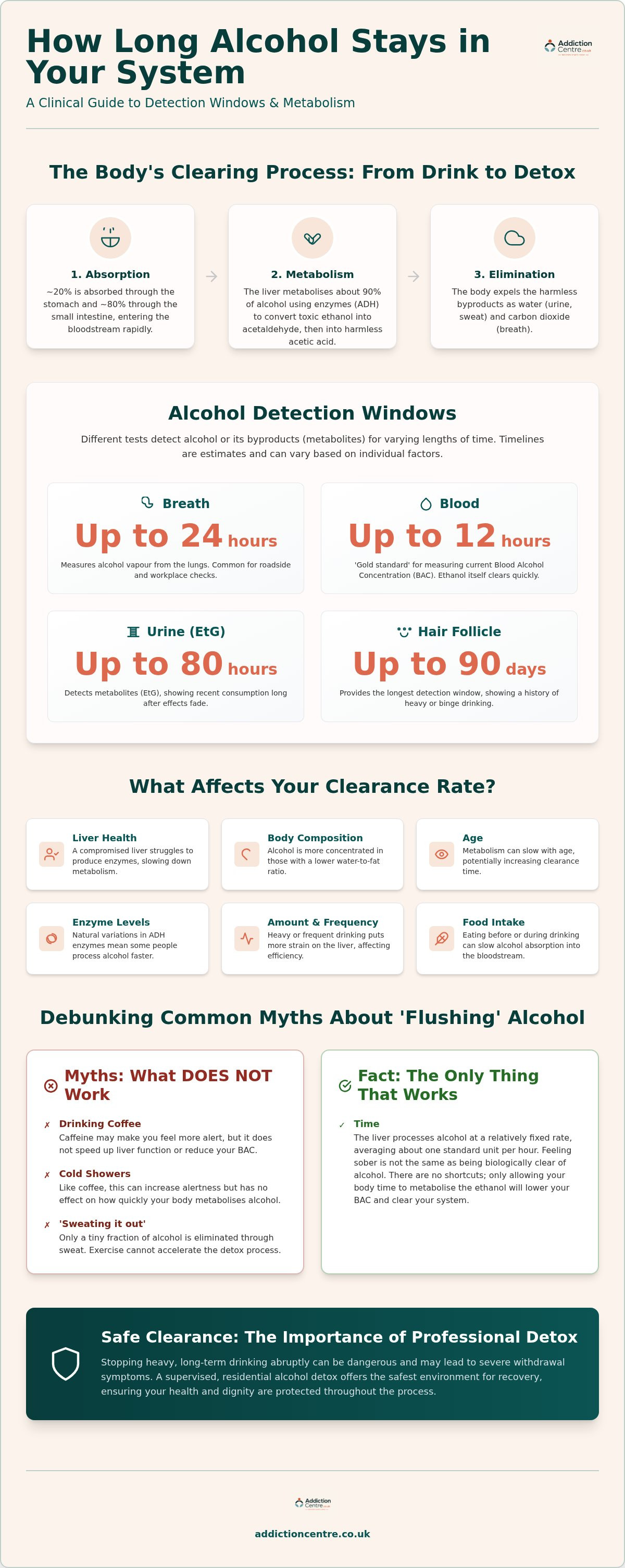
The liver is the primary site for this work, processing approximately 90% of the alcohol you consume. It relies on a specific enzyme called alcohol dehydrogenase (ADH) to convert ethanol into acetaldehyde. Because acetaldehyde is toxic, the body quickly uses another enzyme to turn it into harmless acetic acid, which eventually leaves the body as water and carbon dioxide. This sequence is a core component of The Science of Alcohol Metabolism, representing a fixed biological rate that cannot be rushed by external means like caffeine or cold showers.
The Journey of Ethanol Through the System
Ethanol's path begins the moment it is swallowed. Unlike food, it doesn't require complex digestion. Instead, roughly 20% is absorbed directly through the stomach lining, whilst the remaining 80% passes into the small intestine. This rapid absorption is why you may feel the effects of a drink within minutes. Once in the blood, alcohol travels to every water-rich tissue in the body. It reaches the brain quickly, which is why your coordination and judgment are affected so soon after your Blood Alcohol Concentration (BAC) begins to rise.
Why 'One Unit Per Hour' is Only an Estimate
In the UK, one standard unit is defined as 8g of pure ethanol. You have likely heard that the body processes one unit per hour, but this is a broad generalisation. Whilst it serves as a rough guide for the average person, metabolic speed varies significantly amongst individuals. Factors that change the timeline include:
- Enzyme levels: Some people naturally produce more ADH, allowing them to process ethanol slightly faster.
- Liver health: A compromised liver will struggle to maintain even the standard clearance rate.
- Tissue distribution: Because alcohol prefers water over fat, your body composition changes how concentrated the alcohol becomes in your blood.
It is also vital to distinguish between "feeling sober" and being biologically clear. Your brain can develop a tolerance that masks the feeling of intoxication, but how long does alcohol stay in your system is determined by your liver's metabolic capacity, not your perceived level of impairment.
Alcohol Detection Windows: How Long Do Tests Last?
When you are concerned about how long does alcohol stay in your system, it's essential to understand that different tests look for different things. Some screenings detect ethanol itself, which disappears relatively quickly. Others look for metabolites like Ethyl Glucuronide (EtG), which are byproducts created as your liver processes the drink. These metabolites act as biological footprints, remaining visible long after the physical effects of alcohol have faded.
Modern forensic and workplace testing in the UK has become incredibly sensitive. These Alcohol Detection Windows vary based on the specific sample being tested. Whether it's for a legal requirement or a professional screening, the method chosen depends on how far back the examiner needs to look. If you're feeling anxious about an upcoming test, our Addiction Treatment Directory can help you find professional support to manage your intake safely.
Short-Term Testing: Breath and Blood
Breathalysers are the most common tool for immediate roadside or workplace checks. They measure the alcohol vapour in your breath, which typically stays detectable for up to 24 hours. However, this window can be much shorter for a single unit. Blood tests are often considered the 'gold standard' because they provide a precise measurement of current intoxication. Whilst ethanol clears from the blood relatively quickly, usually within 12 hours, the impact on the brain can linger, affecting coordination even after the blood reading drops.
- Breath: Up to 24 hours depending on the volume consumed.
- Blood: Typically up to 12 hours for ethanol detection.
- Saliva: Increasingly used in 2026, detecting alcohol for roughly 24 to 48 hours.
Intermediate and Long-Term Testing: Urine and Hair
Urine testing is frequently used in UK healthcare and employment settings. A standard screening might only catch alcohol for 12 to 24 hours, but advanced EtG tests are far more rigorous. These can detect consumption for up to 80 or even 96 hours after your last drink. For those needing to prove long-term abstinence, hair follicle testing is the most robust option. Alcohol markers are trapped in the hair shaft as it grows, providing a history of use covering the last 90 days. Nail samples offer a similar long-term window, often reaching back several months.
It's important to be aware of potential false positives in these sensitive tests. Certain mouthwashes, hand sanitisers, or even specific foods can occasionally trigger a low-level reading. However, professional laboratories use secondary confirmation methods to ensure accuracy and fairness for the individual. This thoroughness ensures that the results reflect a genuine biological history rather than an accidental exposure.
Biological Factors That Influence Clearance Rates
The speed at which your body clears ethanol is as unique as your DNA. When exploring how long does alcohol stay in your system, we must look beyond the clock and consider the internal environment of your body. Biological sex plays a significant role; men typically have a higher percentage of water-rich muscle tissue, whilst women generally have a higher body fat percentage. Since alcohol is water-soluble, it remains more concentrated in individuals with higher body fat, leading to a higher Blood Alcohol Concentration (BAC) even when consuming the same amount.
Age is another critical factor that dictates your recovery timeline. As you grow older, the liver produces fewer enzymes, and blood flow to the organ naturally decreases. This makes the detoxification process less efficient than it was in your younger years. Additionally, chronic drinking can lead to long-term changes in liver function. Conditions such as fatty liver or cirrhosis create physical scarring, which reduces the number of healthy cells available to process toxins, significantly extending the time alcohol remains in your system.
The Role of Liver Health and Genetics
Your genetic makeup provides the blueprint for how the body metabolizes alcohol. Some individuals carry variations in the genes responsible for producing alcohol dehydrogenase (ADH) and aldehyde dehydrogenase (ALDH). A common example is the alcohol flush reaction, sometimes called the "Asian Flush," where the body struggles to break down toxic acetaldehyde. This genetic variation doesn't just cause physical discomfort; it indicates a biological bottleneck that slows the entire clearance process. If your liver is already struggling with the weight of heavy use, these genetic factors can make the path to sobriety feel much more physically demanding.
Physical Attributes and Hydration
There are many myths surrounding how to "sober up" quickly, but the reality is dictated by fixed chemical reactions. Hydration is perhaps the most misunderstood element. Whilst drinking water is essential for your overall health and can mitigate the severity of a hangover by preventing dehydration, it does not speed up liver metabolism. The liver processes ethanol at a relatively constant rate regardless of how much water you drink.
Physical attributes and external substances also influence this timeline. Consider these factors:
- Muscle Mass: Muscle tissue contains more water than fat, which helps to dilute alcohol in the bloodstream more effectively.
- Food Intake: Eating a substantial meal before drinking slows the absorption of alcohol into the blood, but it doesn't change how long does alcohol stay in your system once it has been absorbed.
- Medications: Many common prescriptions compete for the liver's metabolic resources, which can delay the breakdown of ethanol and lead to dangerous interactions.
Understanding these variables helps remove the shame often associated with how your body reacts to alcohol. It isn't a matter of willpower; it is a matter of biology. If you find that your body is taking longer to recover, it may be a signal that your system needs professional support to reset and heal.
Misconceptions About 'Flushing' Alcohol from the System
When the pressure of a deadline or the discomfort of a hangover sets in, it's tempting to search for a shortcut. You might have heard that a cold shower, a brisk run, or a litre of water can help. The reality is that these methods do nothing to change how long does alcohol stay in your system. They might change how you feel, but they don't change your fundamental biology. The liver processes ethanol at a steady pace that cannot be hurried by external factors.
Exercise or sitting in a sauna is often suggested as a way to "sweat it out." Whilst it's true that a tiny fraction of alcohol leaves the body through breath, sweat, and urine, this accounts for less than 10% of total clearance. The remaining 90% must be metabolised by the liver. Trying to force this process through physical exertion often leads to severe dehydration, which can actually make you feel worse and put additional strain on your organs. You are effectively just becoming a dehydrated person with the same amount of alcohol in your bloodstream.
Similarly, you should be wary of 'detox kits' or herbal supplements marketed as rapid clearance aids. There is no clinically proven supplement that can force the liver to produce enzymes faster than its natural capacity. These products are often unregulated and can sometimes interfere with other medications or cause digestive distress. Only time and a functioning liver can truly remove ethanol from your system.
The Danger of 'Quick Fix' Sobriety
Caffeine is perhaps the most common "remedy" used to mask impairment. Because coffee is a stimulant, it can trick you into feeling more capable or alert than you actually are. This creates a dangerous "wide-awake drunk" state where your judgment, reaction times, and motor skills remain severely compromised. Metabolic clearance is a fixed biological rate. Relying on a false sense of sobriety leads to accidents, especially if you mistakenly believe you are fit to drive or operate machinery.
Identifying the Need for Professional Support
For some, the desire to clear alcohol quickly isn't about a test; it's about escaping the mounting physical distress of heavy use. If you find that your system is struggling to cope, or if you experience tremors, hallucinations, or severe anxiety when you stop drinking, "waiting it out" at home can be life-threatening. These are signs that your body has developed a physical dependency that requires careful management.
In these instances, a structured environment is essential for your safety. A Residential Alcohol Detox UK provides the medical supervision needed to manage these symptoms whilst your body finally clears the toxins. If you are worried about your current levels and need guidance on the next steps, you can access our addiction treatment directory to find a safe path toward recovery.
Safe Clearance: When to Seek a Professional Detox
Whilst understanding how long does alcohol stay in your system is often a matter of practical concern for workplace testing, for many, it is a vital question of physical safety. If you've been drinking heavily or for a prolonged period, your body has likely adjusted its internal chemistry to compensate for the constant presence of ethanol. Stopping abruptly, often called "cold turkey," can cause your central nervous system to go into a state of dangerous over-activity. This reaction isn't merely uncomfortable; it can be life-threatening. A professional detox ensures that as the alcohol leaves your system, your body is supported through the transition with medical expertise and compassion.
The period when alcohol is clearing the body is precisely when the risk of severe withdrawal is highest. This is why a clinical environment is so beneficial. Rather than facing the anxiety of "waiting it out" alone, you're placed in a setting where your health is the absolute priority. If you're concerned about the costs associated with this level of care, our guide on Paying for Rehab in the UK provides a clear overview of the financial options available to you in 2026.
The Clinical Benefits of Residential Detox
A residential alcohol detox provides a level of safety that home-based attempts simply cannot match. You receive 24/7 medical monitoring from professionals trained to recognise the earliest signs of complications. This is crucial for preventing the most severe withdrawal symptoms, such as seizures or Delirium Tremens (DTs), which can occur within the first 48 to 72 hours of clearance. By managing these risks in real-time, clinicians ensure your journey to sobriety is as stable and dignified as possible.
Pharmacological interventions are often used to ease this transition. Clinicians may prescribe specific medications to dampen the nervous system's over-activity and reduce the physical pain of withdrawal. This structured environment doesn't just manage the immediate crisis of how long does alcohol stay in your system; it builds a foundation for long-term recovery by removing the immediate physical barriers that often lead to relapse during those difficult first few days.
Taking the First Step with Addiction Centre
Navigating the various treatment options in the UK can feel like a daunting task during a time of high stress. Addiction Centre acts as a bridge between your current situation and a safe, professional environment. We provide expert guidance and recovery consultations to help you understand which clinical pathway best suits your individual needs and biological profile. Our goal is to replace your confusion with a clear, actionable plan for restoration.
By using our addiction treatment directory, you can find a network of recognised rehabilitation clinics across the UK. These facilities are equipped to handle the complexities of alcohol clearance with the care you deserve. Taking this first step is an act of courage that moves you away from the uncertainty of addiction and toward a future of holistic well-being.
Your Path to a Clearer Future
Understanding the biological reality of alcohol clearance replaces anxiety with certainty. We've explored how your liver's metabolic rate is a fixed process and why common "quick fixes" like caffeine or exercise cannot change how long does alcohol stay in your system. Whether you're navigating workplace testing or simply want to understand your body's recovery, remember that your health is governed by biological timelines rather than willpower. It's a journey that requires patience and, in many cases, professional expertise.
If you find that clearing your system feels like an insurmountable hurdle, you don't have to face it alone. Our team provides confidential expert guidance to help you navigate your options with dignity. You can find a safe, clinical detox centre through our UK Directory, which connects you to a network of recognised UK clinics. We offer compassionate, non-judgmental support to ensure you have a steady guide during this transition. Restoration is entirely possible, and taking this first step is a profound act of self-care. You're in capable hands.
Frequently Asked Questions
How long does one unit of alcohol stay in your blood?
One unit of alcohol typically stays in your blood for about an hour, but it can be detectable for up to 12 hours depending on the test's sensitivity. Whilst the body metabolises ethanol at a relatively constant rate, factors like liver health and your individual metabolic speed influence the exact timeline. It's important to remember that blood tests are highly precise and are often used as the gold standard for recent consumption.
Can I pass a urine test 24 hours after drinking alcohol?
Whether you can pass a urine test 24 hours after drinking depends entirely on the type of screening used. A standard test might only detect ethanol for 12 to 24 hours, but an advanced Ethyl Glucuronide (EtG) test can see consumption for up to 80 hours. If you're concerned about how long does alcohol stay in your system for a workplace screening, these advanced tests are increasingly common in the UK.
Does drinking water or coffee help you sober up faster?
Drinking water or coffee won't help you sober up faster because they don't affect the liver's metabolic rate. Coffee is a stimulant that may make you feel more alert, whilst water helps with hydration, but neither can force your enzymes to process ethanol more quickly. Only time allows your liver to complete the chemical breakdown required to clear the alcohol from your bloodstream and tissues.
How long is alcohol detectable in a hair follicle test?
Alcohol is typically detectable in a hair follicle test for up to 90 days. As hair grows, metabolites from alcohol are trapped within the hair shaft, creating a permanent chronological record of your consumption. This method is often used in legal or forensic contexts in the UK to prove long-term abstinence or to identify patterns of heavy use over several months rather than recent intake.
What happens if I stop drinking suddenly after heavy use?
Stopping drinking suddenly after heavy use can lead to severe and life-threatening withdrawal symptoms, including seizures and Delirium Tremens. Your central nervous system becomes over-excited when the sedative effect of alcohol is removed, which requires urgent medical management to ensure your safety. If you're worried about the physical impact of clearing your system, seeking a professional residential detox is the safest way to transition to sobriety.
Is it possible to fail a breathalyser the morning after drinking?
It's entirely possible to fail a breathalyser the morning after drinking, as your liver may not have finished processing the alcohol overnight. If you consumed several units late in the evening, your Blood Alcohol Concentration (BAC) could still be above the legal driving limit at 8:00 am. Sleep doesn't speed up the metabolic process; your body continues to work at its fixed, steady rate regardless of whether you're awake.
Why does alcohol stay in some people's systems longer than others?
Alcohol stays in some people's systems longer due to biological variables such as age, sex, and liver health. Older individuals often have less efficient liver enzymes, whilst women generally have a higher body fat percentage, which leads to a higher concentration of alcohol in the blood. Genetics also play a role, as some people naturally produce fewer enzymes required to break down ethanol and its toxic byproducts.
Can certain medications make alcohol stay in your system longer?
Certain medications can indeed cause alcohol to stay in your system longer by competing for the liver's metabolic resources. When the liver is busy processing prescription drugs, it may slow down the breakdown of ethanol, leading to prolonged intoxication and an increased risk of side effects. This interaction is a critical reason to consult a healthcare professional about how long does alcohol stay in your system when taking regular medication.


