
What if the hardest conversation you ever lead is actually the bridge that saves your loved one's life? You've likely spent years walking on eggshells, exhausted by the cycle of hope and heartbreak. It's natural to feel trapped between the urgency of the crisis and the fear that initiating a family intervention for addiction UK will only cause more conflict or drive them further away. You aren't alone in this exhaustion; your desire for a professional solution is a courageous act of love that deserves a clear, supportive path forward.
We're here to provide a clinical and emotional roadmap for navigating the complexities of the UK healthcare system, giving you the tools to move from a state of uncertainty toward a structured plan. This guide offers a clear action plan for admission, whether you're weighing up NHS community services or private residential options. We will explore the legal realities of consent under the Mental Health Act, explain current 2026 waiting times, and show you how to find a reputable facility that offers the dignity and care your family deserves.
Key Takeaways
- Understand the legal landscape of consent in the UK, including why voluntary admission is the primary pathway and how the Mental Health Act applies to addiction.
- Learn how to organise a unified family intervention for addiction UK to create a supportive, non-confrontational environment that encourages your loved one to accept help.
- Compare the differences between NHS community referrals and private residential options, including current 2026 waiting times and admission procedures.
- Follow a structured roadmap for securing a placement, from providing a detailed clinical history to completing essential pre-admission medical screenings.
- Discover the value of a professional Recovery Consultation to help you navigate the UK's complex directory of recognised treatment centres with confidence.
Understanding the UK Legal Framework and the Reality of Consent
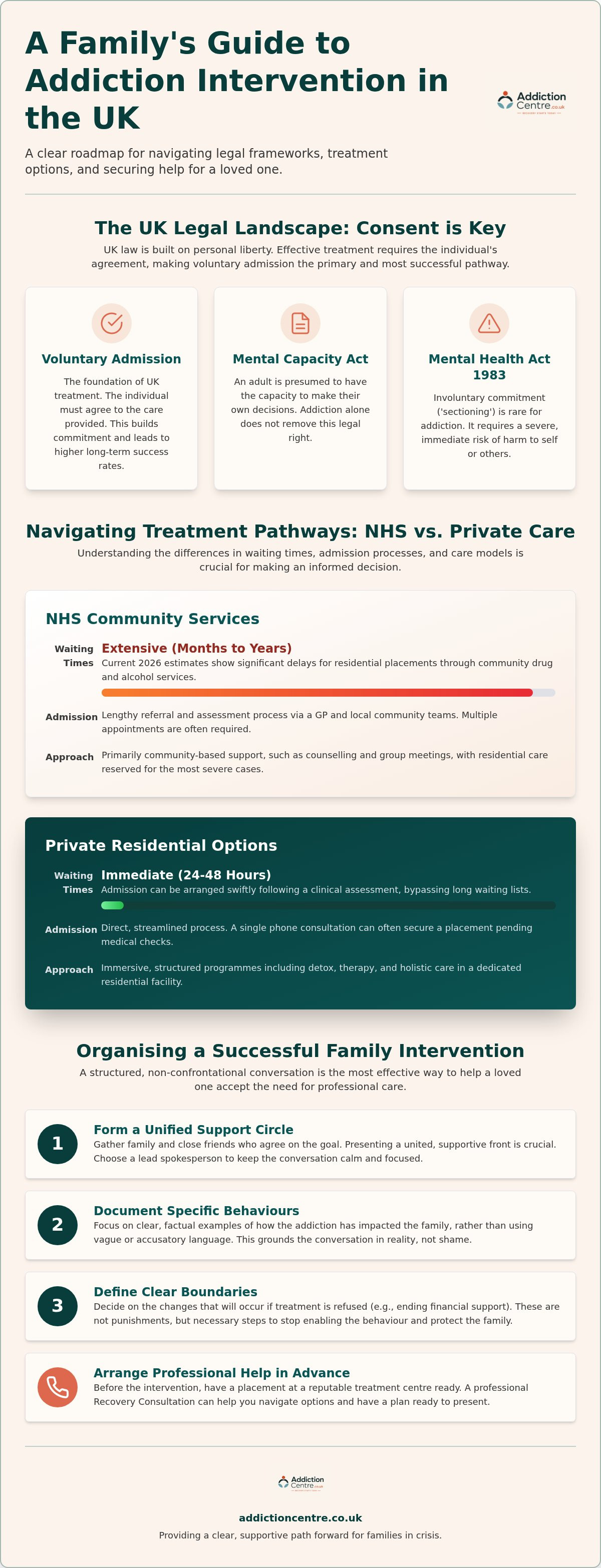
In the UK, the journey toward recovery begins with a fundamental legal principle: the right to individual liberty. While you may feel an urgent need to act, the healthcare system is designed around the principle of voluntary admission. This means that for a placement in a residential facility to be effective and legally sound, the individual must ultimately agree to the care provided. This framework isn't meant to be a barrier; rather, it ensures that treatment is built on a foundation of personal commitment. Clinically, this approach is far more successful. Forced entry into a treatment setting often leads to higher relapse rates because the internal motivation for change hasn't been established.
A comprehensive Substance abuse overview shows that recovery is a complex psychological and physical process. When someone is coerced into a clinical environment without their agreement, the underlying psychological work required for long-term sobriety is difficult to sustain. In the UK, we focus on "Motivated Consent." This involves helping a loved one reach a point where they recognise the need for professional help through calm, structured dialogue. A family intervention for addiction UK is often the most effective way to bridge the gap between a family's desperation and a loved one's willingness to accept a path forward.
The Legal Boundaries of Addiction Treatment in the UK
UK law prioritises the concept of "Capacity." Under the Mental Capacity Act, every adult is presumed to have the ability to make their own decisions unless it's proven otherwise. Having a substance use disorder doesn't automatically mean a person lacks legal capacity. They must be able to understand, retain, and weigh up the information regarding their treatment options. The Care Quality Commission (CQC) maintains rigorous 2026 standards for voluntary admission, ensuring that every individual enters a facility with their dignity and legal rights intact. This ensures that the patient is a partner in their own care from day one.
Can You Force Someone into Rehab? A Nuanced Reality
Many families ask if they can "section" a relative to get them help. The Mental Health Act 1983 does allow for involuntary commitment, but the criteria are exceptionally narrow. It's generally reserved for those whose mental health condition poses an immediate, significant risk of harm to themselves or the public. Addiction on its own rarely meets this threshold. Instead of pursuing legal force, which can be traumatic and damaging to relationships, families find more success through a structured family intervention for addiction UK. These professional sessions are designed to break through denial without the need for legal compulsion. For more detail on these specific legal pathways, you can read our Can you force someone into rehab UK guide for families.
Preparing for the Conversation: The Pre-Intervention Phase
The success of a family intervention for addiction UK often depends on the work done before the conversation even begins. It's a period of quiet preparation where the goal is to replace chaos with a structured, unified front. When a family is divided, the addiction can exploit those cracks; therefore, gathering a "Support Circle" of individuals who are committed to the same outcome is vital. This group must agree on the core message: that the individual is deeply loved, but their current behaviour is unsustainable and professional help is immediately available.
Documenting specific behaviours and their direct impact on the family is a crucial part of this phase. Instead of using vague accusations, which often trigger defensiveness, focus on clear examples of how the addiction has affected daily life. This approach keeps the dialogue grounded in reality rather than shame. You must also decide on personal boundaries. These are the changes that will occur if the loved one refuses treatment, such as ending financial support or no longer providing a place to stay. These boundaries aren't punishments; they're necessary steps to protect the family's well-being.
Organising the Family and Inner Circle
Addressing "enabling" behaviours amongst family members is a necessary first step. This might involve ending the habit of making excuses for the individual's missed work or covering their debts. By choosing a lead spokesperson, you ensure the atmosphere remains calm and focused rather than descending into a series of overlapping accusations. An intervention is a supportive meeting designed to offer a path to wellness rather than a trial to determine guilt. This mindset helps maintain a non-confrontational frequency that encourages the individual to listen rather than retreat.
The Logistics of Readiness
A common pitfall is having a successful talk but no immediate placement available. You should have a solution ready the moment your loved one agrees to accept help. This involves consulting a UK addiction treatment directory to identify clinics that align with your family's specific needs. Understanding the distinction between a 7 to 10-day detox and a full 28-day residential programme is crucial for setting realistic expectations for the recovery journey.
You should also investigate getting help for drug addiction through local services, whilst simultaneously checking private insurance policies or personal funding. In 2026, private facilities often require a financial agreement before admission, so having these details settled prevents momentum from being lost. If you feel overwhelmed by the choice of clinics, a recovery consultation can provide the impartial guidance needed to filter through the hundreds of UK clinics. By being prepared with a specific facility and a clear start date, you provide a tangible bridge from crisis to care.
Navigating UK Treatment Pathways: NHS vs Private Residential Rehab
Once a family intervention for addiction UK has successfully opened the door to professional help, the next step is choosing the right clinical environment. The choice between NHS and private care is often dictated by the urgency of the situation and the complexity of the medical needs. While the UK government addiction treatment strategy continues to invest in community-based research and support, there remains a distinct difference in how quickly a family can move from a crisis to a clinical bed. Understanding these pathways helps manage expectations and ensures your loved one receives the appropriate level of care.
The NHS Journey: Patience and Community Support
The NHS pathway begins with a GP, who acts as the gatekeeper for local community substance misuse services. In 2026, the standard model remains community-based "Outpatient" care, which is structured through a tiered system of support. Tier 1 and 2 provide basic advice and open-access services, while Tier 3 involves structured community treatment. Tier 4, which covers specialist residential services, is highly competitive and depends on local authority funding. Families should be prepared for waiting times; an initial assessment typically takes 1 to 6 weeks, whilst the wait for a funded residential spot can extend from 6 weeks to 9 months depending on the region.
The Private Journey: Immediate Clinical Intervention
Private treatment offers a significantly faster route, with many facilities providing admission within 24 to 48 hours. This immediacy is often vital when the "window of willingness" opened by a family intervention for addiction UK is narrow. Private clinics excel in providing structured residential alcohol detox UK, offering 24/7 medical supervision that manages high-risk withdrawal symptoms with clinical precision. This level of safety is a primary reason families choose the private route.
Beyond speed, the private sector is better equipped to handle complex cases. Integrated dual diagnosis treatment UK, where mental health conditions and addiction are treated simultaneously, is often more accessible through private referral services. Before committing to a placement, it's essential to verify a clinic's rating with the Care Quality Commission (CQC) to ensure they meet the latest 2026 safety standards. For families seeking a middle ground, some UK charities offer quasi-residential programmes, where treatment is provided during the day whilst accommodation is managed separately, often at a lower cost than full residential care.
The Step-by-Step Process of Securing a Rehab Placement
Securing a placement is where your plan becomes a reality. After the emotional intensity of a family intervention for addiction UK, the focus shifts to clinical precision and logistical coordination. This transition can feel overwhelming, but a structured approach ensures your loved one moves safely from the home environment into a professional care setting without unnecessary delays. It's about building a bridge between the moment they say "yes" and the moment they enter the safety of a clinical facility.
From Consultation to Clinical Assessment
The process begins with a detailed initial consultation. A referral specialist will ask specific questions about the type of substances used, the duration of the addiction, and any previous withdrawal experiences. This information is essential for tailoring a residential drug detox UK to the individual's unique physiological needs. For instance, a detox from benzodiazepines requires a significantly different clinical protocol than one for opioids or alcohol.
You'll also need to manage the financial logistics during this stage. Most private facilities in 2026 require a deposit to secure a room, and you can consult our payment guides to understand the various funding options available. Once the clinical history is reviewed and the financial arrangements are settled, a pre-admission screening ensures the facility's medical team can handle any specific psychiatric or physical health requirements. This thoroughness is what ensures the individual's safety from the very first hour of their stay.
Admission Day: What to Expect
On admission day, the primary goal is a safe and calm transition. Logistics and transport should be planned in advance to avoid any last-minute stress. Whilst some families choose to drive their loved one themselves, others arrange for professional transport to ensure the individual arrives safely and remains committed to the decision. Upon arrival at the centre, the on-site medical team conducts an "Arrival Assessment" to check vital signs and immediate psychological state. This is a standard safety procedure to ensure the detox process can begin with a clear baseline.
The handover is often the most emotional moment for the family. It's common for UK facilities to implement an initial "black-out" period for communication, often lasting the first 72 hours. This isn't a punishment; it's a clinical tool that allows the individual to focus entirely on their stabilisation without the complex emotional triggers of home life. Your role during these first few days is to focus on your own wellbeing and trust the professional team's expertise. If you're ready to begin this process, you can contact a referral specialist to start your confidential assessment today.
Professional Support: How a Referral Service Eases the Transition
Choosing a clinic is a significant decision that shouldn't be left to chance or a sponsored search result. Whilst search advertisements often point you toward a single provider with the largest marketing budget, an impartial directory offers a broader, more objective view of the clinical landscape. This transparency is vital when you're organising a family intervention for addiction UK. It allows you to compare facilities based on their specific specialisms, CQC ratings, and therapeutic approaches, ensuring the environment is a precise match for your loved one's needs.
Referral experts are specifically trained to handle the "denial" phase that often characterises the early stages of help-seeking. They understand that a loved one might still be resistant or fearful even after agreeing to a call. By acting as a neutral third party, these specialists can de-escalate tension and move the dialogue from emotional crisis management toward a structured, long-term recovery plan. This shift in focus helps families see beyond the immediate trauma and start planning for a future defined by health and restoration rather than constant emergency.
Expert Guidance in a Crisis
The period following a family intervention for addiction UK is often high-pressure and emotionally charged. Referral specialists act as a "calm in the storm," providing the professional distance and clinical knowledge that families in crisis may lack. Because they maintain direct relationships with multiple providers, they can often secure a residential bed within 24-48 hours, which is crucial when the window of willingness is narrow. Addiction Centre ensures that every facility within our network is a CQC-regulated provider that meets the highest standards of clinical safety and patient dignity.
Taking the First Step Today
You don't have to make these complex decisions in isolation or spend hours navigating confusing websites. The first step is often the simplest: using a confidential online self-assessment tool to clarify the level of care required. When you're ready to speak with a recovery consultant, it's helpful to have a brief history of substance use and any previous treatment attempts ready. This allows the consultant to provide the most accurate and personalised advice possible. Taking this step moves you from a state of uncertainty into a professional partnership. Speak with a UK recovery expert today for a confidential consultation to begin the process of restoration for your family.
Moving from Crisis to Clinical Restoration
Navigating the path to recovery is a process of moving from fragmented crisis management to a structured, clinical plan. You now understand that whilst the UK legal framework prioritises voluntary admission, a well-organised family intervention for addiction UK can act as the catalyst for that vital first "yes". By preparing your boundaries and understanding the clinical differences between NHS community support and private residential care, you've replaced confusion with a clear roadmap for the weeks ahead.
The weight of this journey doesn't have to rest solely on your shoulders. Professional support is available to filter through the complexities of the 2026 healthcare system and connect your loved one with the right environment for their specific needs. Whether you require immediate admission or impartial advice on detox protocols, taking that first step is an act of profound courage. It marks the moment you stop managing a crisis and start building a future.
Access the UK Addiction Treatment Directory and find a recognised clinic today. Our platform offers confidential online self-assessments and expert guidance from recovery consultants, providing you with direct access to a national network of CQC-regulated providers. You've carried the burden of this crisis for long enough; it's time to let a professional team guide your family toward lasting wellness.
Frequently Asked Questions
Can I legally force my partner or child into rehab in the UK?
You can't legally force an adult into rehab in the UK unless they meet the strict criteria for involuntary commitment under the Mental Health Act 1983. This process is reserved for situations where a person's substance use disorder poses a significant, immediate risk to themselves or others. Most families find that a family intervention for addiction UK is a more effective route, as it focuses on building "motivated consent" rather than using legal compulsion.
How much does private residential rehab cost in the UK in 2026?
During 2026, a 28-day fully residential rehab programme in the UK typically costs between £12,000 and £16,000. This fee usually covers accommodation, meals, medical detox, and intensive therapy. For those seeking a lower-cost option, quasi-residential programmes, where treatment is provided during the day but accommodation is separate, range from £6,000 to £8,000. Shorter, 7 to 10-day detox-only residential placements generally start at approximately £6,000.
How long is the waiting list for NHS drug and alcohol rehab?
Waiting times for NHS services vary by local authority. In 2026, you can typically expect a wait of 1 to 6 weeks for an initial assessment by a community substance misuse service. If residential treatment is deemed necessary and funding is available, the wait for a bed can range from 6 weeks to 9 months. Many local councils no longer routinely fund residential rehab placements, which often makes private care a more immediate option.
What happens if my loved one leaves rehab against medical advice?
Because admission is voluntary, an individual is legally free to leave a facility at any time, even against medical advice. If this occurs, the clinical team will attempt to de-escalate the situation and discuss the risks of leaving early. They'll also provide a basic discharge plan to ensure the individual's immediate safety. Families should prepare for this possibility by setting clear boundaries during the pre-intervention phase of the recovery journey.
Does private health insurance like Bupa or AXA cover rehab in the UK?
Many private health insurance providers, including Bupa and AXA, do provide coverage for addiction treatment in the UK. The extent of this coverage depends on your specific policy; it may cover the full cost of a residential stay or only the initial medical detox. We recommend contacting your insurer directly to confirm which CQC-regulated facilities are within their approved network before you start the formal admission process for your loved one.
How do I know if a UK rehab centre is reputable and safe?
The most reliable way to verify a facility's safety is to check its current rating with the Care Quality Commission (CQC). Every reputable UK rehab centre must be registered and regularly inspected by the CQC to ensure they meet national standards for care. Using a professional directory can also help you filter through recognised clinics and avoid clicking on unverified search advertisements that might lack the necessary clinical oversight and professional integrity.
Can I get someone into rehab if they have a mental health condition?
Yes, and it's quite common, as 72% of people accessing UK substance misuse services have an identified mental health need. This is known as "dual diagnosis." For these individuals, it's vital to find a facility that offers integrated treatment, where both the addiction and the mental health condition are treated simultaneously by a multidisciplinary team. A family intervention for addiction UK can help identify these specific clinical requirements early in the process.
What is the first thing I should say to someone I want to get into rehab?
The most effective opening is one rooted in love and concern rather than accusation. You might say, "I love you deeply, and I'm very worried about your health and how this is affecting our family." Using "I" statements helps prevent the individual from feeling attacked or judged. This approach creates a safer emotional space for them to listen, which is the primary goal of any initial conversation about seeking professional help.


