
Choosing to break free from substance dependency isn't simply a test of willpower; for many, it's a significant medical transition that requires expert supervision to manage safely. When you're searching for medical detox clinics UK wide, your primary concern is likely finding a space where the fear of dangerous withdrawal symptoms, such as seizures or delirium tremens, can be replaced by clinical certainty. You deserve a recovery journey that begins with professional care rather than the high-risk uncertainty of attempting to detox alone at home. It's a brave step to admit you need help, and finding the right environment is vital for your long-term health.
We understand that the current landscape of private residential care and NHS options can feel daunting, especially when you're already in a state of high stress. It's common to feel lost amidst varying costs and conflicting advice about which level of care is necessary for your specific situation. This guide provides a clear, compassionate roadmap for 2026, helping you understand what really happens inside a UK clinic and how to access a facility that aligns with your medical requirements. We will walk through the latest CQC regulations and the practical steps to secure a safe, supervised start to your restoration.
Key Takeaways
- Understand why medically supervised withdrawal is the safest path to recovery, specifically how it mitigates the life-threatening risks associated with unmonitored "cold turkey" attempts.
- Learn how medical detox clinics UK wide utilise bespoke clinical assessments and stabilisation medications to manage withdrawal symptoms with dignity and professional care.
- Discover how to evaluate the quality of a facility by interpreting Care Quality Commission (CQC) inspection reports and prioritising appropriate staff-to-patient ratios.
- Gain clarity on the differences between NHS community-based services and private residential care, including a realistic look at current 2026 waiting times.
- Find out how a confidential recovery consultation can simplify your search by providing impartial guidance and direct connections to recognised treatment providers.
Understanding Medical Detox Clinics in the UK
Medical detoxification is a precisely managed clinical intervention designed to help your body clear itself of substances while safely navigating the physical challenges of withdrawal. Unlike standard residential rehabilitation, which focuses on the psychological and behavioural aspects of addiction, medical detox clinics UK wide specialise in the acute physiological phase of recovery. Finding the right medical detox clinics UK provides is about matching your clinical needs to the expertise of the facility, ensuring you're physically stable before beginning the deeper therapeutic work of rehab.
Attempting to stop "cold turkey" at home can be incredibly dangerous, particularly for those dependent on alcohol or benzodiazepines. These substances alter brain chemistry to such an extent that sudden cessation can trigger life-threatening complications, including grand mal seizures or delirium tremens (DTs). Understanding the detox process involves recognising that withdrawal is a medical event that requires a controlled environment. In the UK, these facilities are strictly regulated by the Care Quality Commission (CQC), which ensures that clinics meet rigorous standards for safety, effectiveness, and compassionate care in 2026.
The Importance of Clinical Supervision
Safety in a clinical setting is underpinned by the presence of a multidisciplinary medical team. At the heart of this care are GMC-registered psychiatrists who specialise in addiction medicine. They're responsible for prescribing tailored withdrawal medications that mimic the effects of the substance on the central nervous system, gradually tapering the dose to prevent shock to your body. This is supported by 24-hour nursing care, which is considered the gold standard for UK clinics. Nurses monitor your vital signs, manage symptoms in real-time, and provide the calm, professional reassurance that's so vital during the first few days of abstinence.
Who Requires a Residential Medical Detox?
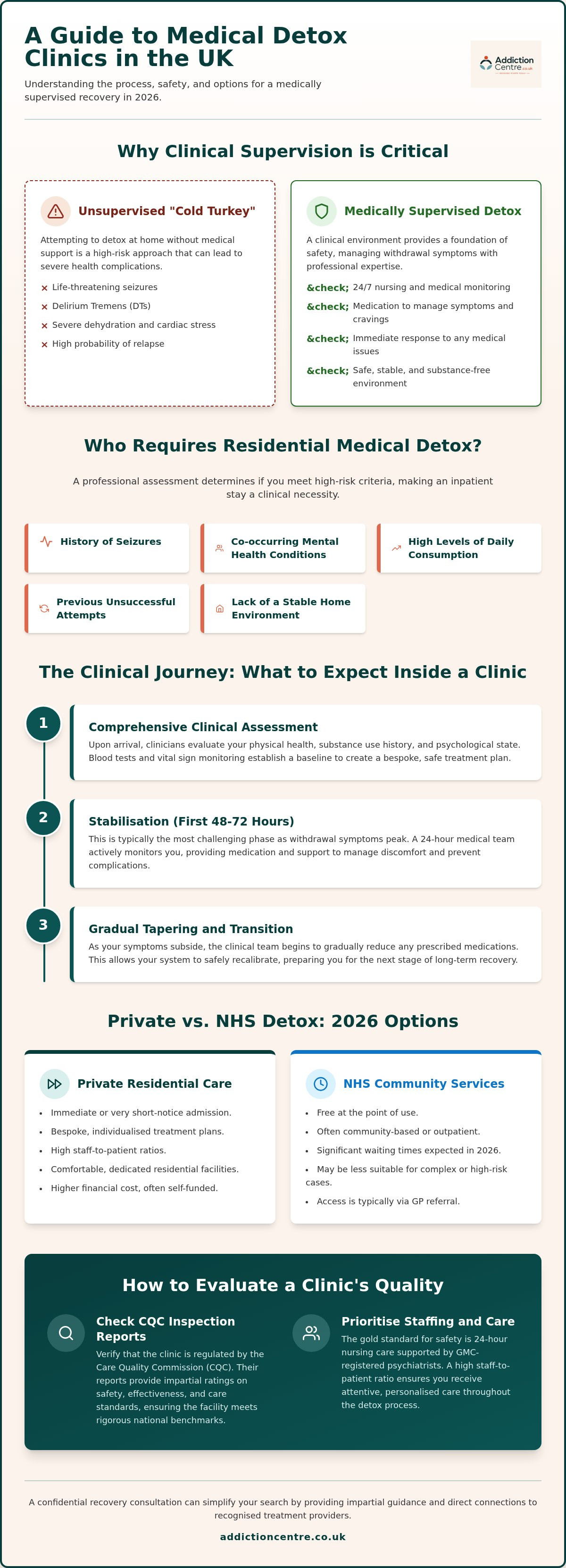
Not everyone requires an inpatient stay, but for many, it's a clinical necessity rather than a choice. A professional assessment is used to determine if you meet high-risk criteria, which often include:
- A history of withdrawal-related seizures, hallucinations, or DTs.
- Co-occurring mental health conditions, such as depression or anxiety, that may worsen during the detox phase.
- High levels of daily consumption that make home-based "social detox" (non-medical support) unsafe.
- Previous unsuccessful attempts to detox without clinical supervision.
- A lack of a stable, substance-free environment at home to support the initial withdrawal.
A medically managed withdrawal ensures that your physical health is prioritised. It provides a foundation of safety that simply cannot be replicated without professional oversight, acting as a bridge between the chaos of active addiction and the structure of long-term recovery.
The Clinical Process: What to Expect Inside a UK Detox Clinic
Entering one of the many medical detox clinics UK wide marks the transition from the uncertainty of addiction to the structure of professional care. Upon your arrival, the process begins with a comprehensive clinical assessment. This isn't just a formality; it's a vital diagnostic phase where UK-trained clinicians evaluate your physical health, substance use history, and psychological state. They use this data to create a bespoke treatment plan that anticipates your body's specific reactions to withdrawal, ensuring that your safety is never left to chance.
Step-by-Step Clinical Journey
The first few hours of admission involve detailed medical screenings, including blood tests and observations of your vital signs. Once your baseline is established, you'll enter the stabilisation phase. The most challenging window typically occurs within the first 48 to 72 hours, as the substance leaves your system and withdrawal symptoms reach their peak. During this time, the medical team is most active, providing 24-hour monitoring to manage discomfort and prevent complications. As your symptoms begin to subside, the clinical team initiates a gradual tapering of any prescribed medication, allowing your system to recalibrate at a pace it can handle. If you're unsure which facility offers the specific clinical pathway you need, speaking with a professional at Addiction Centre can help clarify your options.
Medication and Therapeutic Support
Clinicians in the UK follow the UK guidelines on clinical management to ensure every intervention is evidence-based. For those withdrawing from alcohol, medications like chlordiazepoxide are frequently used to prevent seizures and reduce anxiety. Opiate withdrawal may involve the use of buprenorphine or methadone to manage cravings and physical pain. Whilst the primary focus is medical, reputable medical detox clinics UK also integrate holistic support, such as nutritional therapy and gentle mindfulness, to support your psychological wellbeing during this vulnerable time.
Medical stabilisation is the primary goal of this phase, defined as the process of achieving a steady physiological state where withdrawal symptoms are controlled and the risk of acute medical crisis has passed. Once this stability is reached, the focus shifts from physical survival to psychological healing. You'll begin to transition into the therapeutic elements of rehab, where you can start addressing the underlying causes of dependency with a clear mind and a strengthened body. This methodical progression ensures you aren't rushed into therapy before you're physically capable of engaging with it.
Evaluating Medical Detox Clinics: Key Criteria for Safety
When you're searching for medical detox clinics UK based, the sheer volume of choices can feel overwhelming. It's not just about the aesthetic of the building or the comfort of the rooms; it's about the clinical rigour behind the doors. Safety must be your absolute priority. Evaluating a facility requires you to look past marketing materials and examine objective data regarding clinical governance and patient outcomes. You're looking for a partnership with a provider that treats your recovery with the medical seriousness it deserves.
CQC Ratings and Clinical Governance
The Care Quality Commission (CQC) is the independent regulator of all health and social care services in England. Every reputable clinic must be registered and undergo regular inspections. When you read a report, look for the "Overall Rating" first. A "Requires Improvement" rating should be viewed as a significant red flag for anyone requiring a medical detox, as it often indicates lapses in safety protocols or leadership. The CQC evaluates clinics based on five key questions: is the service safe, effective, caring, responsive, and well-led? A well-led clinic will have clear clinical leadership, typically headed by a GMC-registered psychiatrist who oversees all prescribing. Staff-to-patient ratios are also a critical metric of safety. In a high-dependency clinical setting, you need the assurance that a qualified nurse is available immediately, rather than being managed by support staff with limited medical training.
Specialist Care and Facility Standards
Not every clinic is equipped to handle every type of dependency. You should ask whether the facility has specific experience with your substance of choice and any co-occurring mental health conditions. For instance, clinics that strictly adhere to the NICE guidelines for opioid detoxification demonstrate a commitment to evidence-based safety standards that are quite different from alcohol-focused protocols. If you struggle with a dual diagnosis, such as addiction alongside depression or PTSD, specialist support is essential. Without integrated care, the risk of early discharge or relapse increases significantly.
The physical environment of medical detox clinics UK wide varies from clinical hospital-style units to luxury residential retreats. Whilst a peaceful setting can aid your psychological wellbeing, the quality of the aftercare planning is what sustains long-term sobriety. A comprehensive residential drug detox UK plan must extend beyond the final dose of medication. It should include a clear roadmap for the transition into therapy and connections to local support networks, ensuring you aren't simply left to manage the post-detox period alone.
Private vs. NHS Detox: Understanding Your Options and Waiting Times
Choosing between public and private care is one of the most significant decisions you'll make at the start of your recovery. For many, the choice is dictated by the urgency of the medical crisis versus the available financial resources. Whilst the NHS provides vital services, the structure of public addiction care in 2026 prioritises community-based support over residential stays. If you require the intensive, 24-hour supervision found in medical detox clinics UK wide, understanding the practical differences in access and funding is essential for making an informed choice. Speed saves lives, and knowing where to turn when the need is urgent can change the entire trajectory of your restoration.
The Reality of NHS Waiting Lists
NHS addiction services are currently under immense pressure. For most individuals, the first point of contact is a community drug and alcohol team. Initial assessments by these services typically take between 1 and 6 weeks. In Scotland, 92.4% of people referred for specialist treatment start their care within three weeks as of March 2026, but this is largely for community-based support. If your clinical assessment indicates that a residential stay is necessary for safety, the wait can be substantial. In England, the time from an initial referral to securing an NHS-funded inpatient detox bed can range from 3 to 9 months. This delay is often too long for those at high risk of physical complications. Securing a funded bed usually requires meeting strict criteria, such as having failed multiple community-based attempts. If you're concerned about the costs involved in bypassing these lists, you can read our guide on how to pay for rehab UK for a detailed breakdown of funding avenues.
Benefits of Private Residential Clinics
The most compelling reason to choose private medical detox clinics UK is the speed of admission. When you're ready to change, that "window of willingness" may only stay open for a few days. Private facilities often facilitate admission within 24 to 48 hours, providing immediate safety and clinical intervention. Beyond speed, private care offers a higher ratio of medical staff to patients, ensuring that your physical and psychological needs are met with constant attention. These facilities also provide a seamless transition into a residential alcohol detox UK programme, where the medical phase is immediately followed by intensive psychological therapy.
Funding for private care isn't limited to self-payment. Many major UK health insurance providers cover clinical detoxification, and some local authorities offer individual grants to help bridge the gap. If the complexity of these options feels overwhelming, our impartial referral service can help you identify a clinic that matches both your clinical requirements and your financial situation. This personalised approach ensures you don't spend valuable time searching for a facility that isn't the right fit for your specific recovery journey. Each clinic has its own specialisms, and matching your needs to the right clinical environment is the first step toward a safe, professional start to your recovery.
Finding Your Path to Recovery with Addiction Centre
Searching for the right clinical environment shouldn't be a solitary burden during a time of crisis. With an estimated 1.1 million people in the UK struggling with substance dependency in 2026, the need for clear, impartial guidance has never been more vital. Our referral service is designed to cut through the noise of competing marketing claims and varying price points. We act as a steady guide, bridging the gap between your current state of uncertainty and a structured, professional environment. By accessing our network, you're gaining entry to a curated selection of medical detox clinics UK wide that have been vetted for their clinical standards and CQC compliance.
Personalised Clinical Recommendations
Every individual's path to restoration is distinct. A treatment plan that works for one person might not be suitable for another, especially when co-occurring mental health needs are involved, which affected 72% of those accessing services in the last reporting year. Our expert advisors take the time to understand your specific medical history and addiction profile. We then match you with a facility that possesses the exact expertise required for your situation. This personalised approach is why many families find our addiction treatment directory so valuable. It transforms a confusing search into a clear, manageable path, ensuring you don't waste precious time on facilities that don't align with your clinical needs.
Taking the First Step Today
The process begins with a confidential recovery consultation. During this initial assessment, we'll discuss your situation with the warmth of a dedicated counsellor and the precision of a clinical resource. We'll explore factors such as your location, your budget, and the intensity of care required for a safe withdrawal. This isn't about fitting you into a pre-set programme; it's about finding a space where your dignity is prioritised. Once a suitable clinic is identified, we help you prepare for admission, ensuring you're ready to start your journey with confidence. If you're ready to move toward a life of health and restoration, you can consult our UK addiction treatment directory for immediate support and begin your journey today.
We understand that the first step is often the hardest. By providing a national directory of recognised medical detox clinics UK providers, we ensure that no question is left unanswered and no person is left to navigate this transition alone. Your recovery deserves a professional start, and we're here to ensure you find the most suitable environment for your long-term success.
Securing Your Safe Start to Recovery
The journey to sobriety begins with the safety of a clinical environment. We've explored how medical detox clinics UK wide provide the necessary supervision to navigate withdrawal without the life-threatening risks of unmonitored attempts. Whether you choose the immediate access of a private facility or navigate the pathways of the NHS, your priority remains the same: finding a space where medical expertise and human compassion meet. Professional stabilisation is the foundation that lets you engage with the psychological healing that follows.
You don't have to navigate these complex choices alone. Our team provides impartial advice from UK addiction specialists and offers personalised treatment referrals to a national network of CQC-regulated clinics. We're here to help you bypass the overwhelm of searching and connect you with a facility that matches your clinical profile. To begin your journey with a professional, confidential assessment, speak with a recovery expert for a confidential assessment. A life of restoration is within your reach, and the right support is ready when you are.
Frequently Asked Questions
Is it safe to detox from alcohol at home without medical supervision?
It's not safe to detox from alcohol at home if you've developed a physical dependency. Sudden cessation can lead to life-threatening complications like seizures or delirium tremens. Professional medical detox clinics UK wide provide the necessary clinical environment to manage these risks. If you're drinking daily or have experienced shakes in the past, a supervised setting is the only way to ensure your safety during the withdrawal phase.
How long does a typical medical detox programme take in a UK clinic?
A typical medical detox programme usually lasts between 7 and 14 days. The exact duration depends on the substance involved, your level of consumption, and your overall physical health. Whilst the most intense symptoms often peak within the first 72 hours, a full fortnight allows your body to stabilise completely under medical care. This timeframe ensures you're physically prepared to transition into the psychological phase of your recovery.
What medications are commonly prescribed during a medical detox?
Clinicians prescribe specific medications to mimic the substance's effect on your central nervous system, which prevents shock to your body. For alcohol dependency, chlordiazepoxide is the standard choice to manage anxiety and prevent seizures. Opiate withdrawal often involves buprenorphine or methadone to alleviate physical pain and cravings. Every prescription is tailored to your unique medical profile and is closely monitored by GMC-registered psychiatrists to ensure effectiveness and safety.
Can I use private health insurance to pay for a medical detox clinic?
Many private health insurance providers in the UK cover the costs of clinical detoxification. Companies like Bupa, AXA, and Vitality often include addiction treatment in their mental health coverage, though the extent depends on your specific policy. It's advisable to check whether your insurance covers residential stays or just outpatient care. Our advisors can help you verify your coverage and find a facility that accepts your particular insurance provider.
Will I have a private room during my residential detox stay?
Most private residential clinics provide private, en-suite rooms to ensure your comfort and dignity during a vulnerable time. Having a personal space allows you to rest and recover in a peaceful environment away from the clinical activity of the ward. Whilst some facilities offer shared rooms as a more affordable option, the majority of modern UK clinics prioritise individual accommodation to support your psychological wellbeing throughout the detox process.
What happens if I experience severe withdrawal symptoms during detox?
If you experience severe symptoms, the 24-hour medical team will intervene immediately with emergency stabilisation protocols. Nurses monitor your vital signs constantly, allowing them to adjust your medication the moment your condition changes. This rapid response prevents symptoms from escalating into a medical crisis. In rare cases where higher-level care is required, clinics have established links with local hospitals to ensure you receive the necessary life-saving treatment.
Do medical detox clinics in the UK also provide mental health support?
Yes, the majority of medical detox clinics UK providers offer integrated mental health support. Since 72% of those seeking treatment also have an identified mental health need, clinics employ specialists to manage co-occurring conditions like depression or PTSD. Whilst the primary focus of detox is physical stabilisation, you'll often have access to initial counselling and mindfulness sessions to help manage the emotional strain of the withdrawal process.
How much does a private medical detox cost in the UK in 2026?
The cost of private medical detox varies significantly based on the length of your stay, the level of clinical care required, and the facility's amenities. Prices are influenced by whether you choose a shared or private room and the intensity of the medical supervision provided. Because every individual's clinical needs are different, it's best to request a personalised assessment that reflects your specific requirements for a safe and professional withdrawal.


