
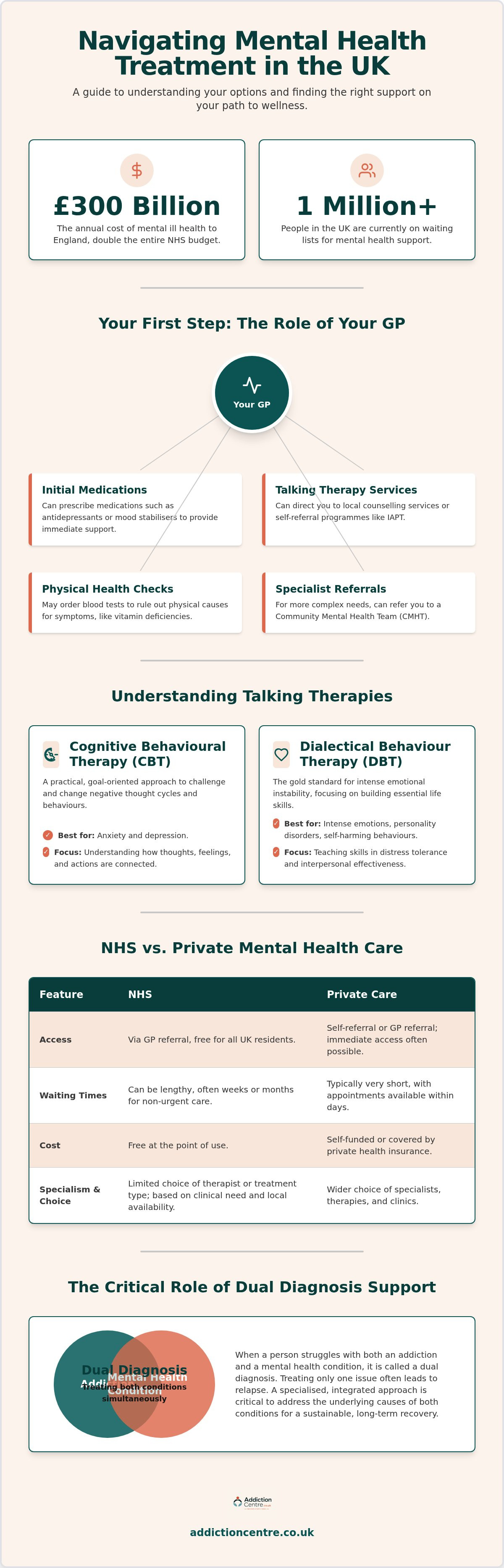
Did you know that mental ill health now costs England £300 billion every year, a figure that is double the entire NHS budget? This staggering statistic reflects a growing crisis where approximately one million people are currently on waiting lists for support. If you're feeling lost within this system, you aren't alone. Searching for mental health treatment options UK can often feel like an exhausting hurdle when you're already struggling with your well-being. Whether you're confused by the difference between CBT and counselling or you're unsure if your condition requires residential care, the path to recovery shouldn't be a maze.
We understand that the current landscape is overwhelming, especially with the recent legislative changes of the Mental Health Act 2025. This guide provides the clarity you deserve. You'll discover the full spectrum of clinical and therapeutic support available across the country to help you or a loved one find a sustainable path to wellness. We'll explore the practical differences between NHS and private care, explain specialised routes for complex needs like dual diagnosis, and help you move from a state of uncertainty toward a structured, professional plan for the future.
Key Takeaways
- Understand the essential role of your GP in the referral process and how to initiate a conversation about your mental health within the UK healthcare system.
- Compare various mental health treatment options UK, from evidence-based talking therapies like CBT to intensive residential care, to identify the most effective level of support for your needs.
- Evaluate the practical differences between NHS and private care, including how to navigate waiting lists and access specialised treatment more efficiently.
- Discover why a dual diagnosis approach is critical for those struggling with both addiction and mental health conditions to ensure a sustainable, long-term recovery.
- Learn how professional recovery consultations and specialist directories can simplify your search for recognised clinics, removing the uncertainty of finding the right provider.
Navigating the UK Mental Health Landscape: Where to Begin Your Journey
Taking that first step to address your well-being takes immense courage. In a society that often prizes resilience, admitting you need support is an act of strength, not a sign of failure. The landscape of Mental health in the United Kingdom can feel complex, but understanding the entry points is the key to accessing the right care. Whether you're exploring mental health treatment options UK for yourself or a family member, the journey typically begins within primary care. The system is designed to provide a tiered approach, moving from self-managed support to intensive clinical intervention based on your specific needs.
Primary Care and the Essential Role of Your GP
Your local GP serves as the primary gatekeeper to the wider healthcare system. Whilst they aren't specialist psychologists, they're trained to conduct initial clinical assessments and provide immediate support. To make the most of your appointment, it's helpful to prepare a brief list of your symptoms and how they've impacted your daily life over the last few weeks. This helps your doctor distinguish between temporary situational distress and more persistent conditions. Be honest about your feelings; your doctor is there to help, not to judge.
A GP can offer several immediate resources, including:
- Prescribing initial medications such as antidepressants or mood stabilisers.
- Directing you to local talking therapy services or self-referral programmes.
- Ordering blood tests to rule out physical causes for your symptoms, such as vitamin deficiencies or thyroid issues.
If your needs are more complex or involve risks that require a higher level of expertise, your GP will facilitate a referral to a Community Mental Health Team (CMHT). This multidisciplinary group includes psychiatrists, nurses, and social workers who coordinate long-term, specialised care plans.
Recognising When Specialist Intervention is Required
Distinguishing between everyday stress and a diagnosable condition is often the hardest part of the process. Stress is usually a response to a specific external pressure and often fades once that pressure is removed. However, a mental health condition persists even when life seems "fine" on the surface. Recognising "red flag" behaviours early can prevent a crisis from developing. These might include withdrawing from loved ones, a significant change in sleeping patterns, or an inability to perform basic daily tasks.
Early intervention is vital. Addressing symptoms in their early stages leads to significantly better long-term recovery outcomes and prevents the escalation of symptoms. When self-help strategies or basic primary care no longer provide relief, seeking specialised mental health treatment options UK becomes the next logical step. This shift toward targeted clinical intervention ensures that the underlying causes of your distress are treated with the professional precision they require.
Evidence-Based Treatment Modalities: From Talking Therapies to Residential Care
Recovery isn't a one-size-fits-all process. The effectiveness of mental health treatment options UK residents choose depends on a careful balance between clinical evidence and personal preference. From short-term interventions to intensive clinical stays, the goal remains the same: restoring your quality of life through a structured and supportive framework. Choosing the right modality involves matching the intensity of the treatment to the severity of your symptoms.
Talking Therapies: CBT, DBT, and Specialist Counselling
Cognitive Behavioural Therapy (CBT) is often the first point of call for anxiety and depression because it focuses on practical solutions to challenge negative thought cycles. It's a goal-oriented approach that helps you understand how your interpretations of events affect your feelings and actions. For individuals experiencing more intense emotional instability or self-harming behaviours, Dialectical Behaviour Therapy (DBT) is the gold standard. It teaches vital skills in distress tolerance and interpersonal effectiveness. You can explore the various NHS talking therapies to understand how these structured approaches differ from traditional person-centred counselling. Whilst counselling offers a non-judgmental space for self-exploration and emotional processing, CBT and DBT provide the specific clinical frameworks required to manage complex behavioural patterns.
Psychiatric Care and Medical Management
A Consultant Psychiatrist brings a level of medical expertise that goes beyond talking therapies. They're responsible for diagnosing complex conditions and managing the biological aspects of mental health through clinical oversight. Medication, such as mood stabilisers or antidepressants, isn't a "fix" on its own; however, it often provides the neurological stability required for a person to engage meaningfully in their therapy sessions. Psychiatric medical management serves as a supportive, clinical tool to ensure patient safety and treatment efficacy.
When weekly sessions don't provide enough support, higher levels of care are available. Intensive Outpatient Programmes (IOP) offer a compromise, providing several hours of clinical work each day whilst allowing you to maintain your home life. If your environment is a trigger or if your safety is at risk, residential inpatient care becomes vital. These facilities offer a structured, 24-hour clinical environment where you can focus entirely on your recovery without the distractions of daily life. If you're feeling overwhelmed by these choices, reaching out for recovery consultations can help you filter through the noise and find a facility that matches your specific clinical needs.
NHS vs Private Mental Health Care: Evaluating Accessibility and Specialism
Deciding where to access care is a pivotal step in your recovery journey. The UK is fortunate to have a robust public health system, but the reality of high demand often creates significant delays that can impact your well-being. When exploring mental health treatment options UK, you must weigh the benefit of free-at-the-point-of-use care against the potential for clinical deterioration whilst waiting for a first appointment. Understanding these trade-offs allows you to make an informed choice that prioritises your immediate and long-term health.
Navigating NHS Waiting Times and Accessibility
The current state of the public sector remains a challenge for many. As of April 2024, approximately one million people were on waiting lists for mental health services across the country. This backlog means that even after a GP referral, it might take months to begin a structured course of therapy. Whilst you wait for a referral to become active, it's vital to stay in regular contact with your primary care team and utilise local support groups. One limitation of public care is that sessions are often time-limited, typically offering a set number of interventions before discharge. This structure works well for mild conditions but may fall short for those requiring deep-rooted, ongoing psychological work.
The Advantages of Private Specialist Care
Private care offers a different trajectory, prioritising immediate access and clinical choice. You aren't just a number on a list; you're an individual who can select a clinician based on their specific area of expertise. For those struggling with physical dependency alongside mental health issues, the ability to choose a residential alcohol detox UK or a specialised drug facility can be life-saving. This immediate intervention prevents the escalation of symptoms and provides a safe, clinical environment for stabilisation.
Private providers offer enhanced privacy and the flexibility to build bespoke treatment programmes tailored to your unique history. These programmes aren't restricted by the same rigid budgetary constraints as the public sector, which allows for longer therapeutic sessions and more intensive daily support. This environment is particularly beneficial for those who feel their needs are too complex for a standard primary care setting. Comprehensive aftercare planning is also a hallmark of private care, ensuring you have a clear roadmap for long-term stability once your initial treatment concludes. This level of personalised attention bridges the gap between immediate crisis management and sustained, holistic wellness. If you're feeling stuck in a cycle of waiting, exploring these private pathways can provide the momentum needed to reclaim your life.
The Critical Role of Dual Diagnosis Support in Long-Term Recovery
Many individuals exploring mental health treatment options UK find that their struggles are deeply interconnected. Dual diagnosis occurs when a person experiences a mental health condition, such as depression or PTSD, alongside a substance use disorder. It's a common reality, yet many traditional services still attempt to treat these issues in isolation. This fragmented approach often leaves patients falling through the gaps, as untreated psychological distress fuels addiction, and active addiction masks the underlying symptoms of mental illness. To achieve lasting wellness, both sides of the coin must be addressed with equal clinical focus.
Addressing Addiction and Mental Health Simultaneously
The relationship between substance misuse and psychological health is bidirectional. For many, drugs or alcohol become a form of self-medication to numb the pain of trauma or anxiety. Conversely, the chemical impact of these substances can trigger or significantly worsen psychiatric symptoms. This is why integrated dual diagnosis treatment UK is considered the gold standard for sustainable recovery. It involves a multi-disciplinary team of psychiatrists, therapists, and medical staff working in unison to create a single, cohesive care plan.
Within this integrated model, clinical detox often serves as the necessary foundation. It provides a safe, medically supervised environment to clear the body of toxins whilst managing withdrawal symptoms. This stabilisation is crucial; it prepares the mind to engage effectively with intensive psychological therapies. Without this first step, the cognitive work required in therapy can often feel impossible to navigate. Specialised clinics manage these complexities by ensuring that medical and therapeutic interventions happen side by side, rather than in sequence.
Holistic Recovery: Beyond the Clinical Symptoms
True recovery requires more than just the absence of symptoms. It involves rebuilding a life that feels balanced and purposeful. Specialised clinics now incorporate nutrition, mindfulness, and physical wellness into their core programmes to support the brain's natural healing process. These elements help to regulate the nervous system and provide you with healthy coping mechanisms for the future. Family support and education are equally vital. By involving loved ones in the process, you create a supportive environment that understands the complexities of co-occurring disorders. Holistic care treats the whole person, not just a diagnosis.
If you or a loved one are struggling with the weight of both addiction and mental health challenges, you don't have to navigate this alone. Finding a facility that understands this intersection is the most important decision you'll make. You can access professional support and book a recovery consultation today to explore your path toward an integrated recovery.
Securing the Right Support: How a Specialist Directory Streamlines Your Path
Finding the right support amongst a sea of choices is often the most paralysing part of the recovery process. You've explored the various mental health treatment options UK residents can access, but the transition from research to action requires a clear, vetted pathway. The UK's healthcare landscape is vast; however, not every facility is equipped to handle every diagnosis. This is where professional guidance becomes an invaluable asset, acting as a bridge between your current state of confusion and a structured environment designed for healing.
Simplifying Your Search for Recognised Clinics
The primary benefit of using a professional addiction treatment directory is the rigorous vetting process that happens behind the scenes. You don't have to spend hours verifying clinical credentials or checking for Care Quality Commission (CQC) compliance; the directory does that for you. By filtering options based on your specific clinical needs, such as dual diagnosis or trauma-informed care, you ensure that your time is spent on healing rather than administrative hurdles. This targeted approach matches your specific diagnosis with a clinic that specialises in that field, significantly increasing the likelihood of a successful long-term outcome.
What to Expect from Your Initial Recovery Consultation
A confidential recovery consultation is designed to remove the guesswork from your decision-making. This isn't a high-pressure sales call; it's a non-judgmental, clinical conversation intended to understand your history and your goals. During this assessment, a specialist will help determine the most appropriate level of care, whether that's intensive residential support or a structured outpatient programme. It's also the perfect time for you to ask vital questions. You might ask about the staff-to-patient ratio, the specific therapeutic modalities they use, or how they handle physical health needs during detox.
Planning the logistics is the final step in moving toward stability. This includes discussing paying for rehab UK options, such as private health insurance or self-funding arrangements. Having these conversations early ensures that there are no surprises once treatment begins, allowing you to focus entirely on your psychological well-being. Taking the first step is often the hardest, but moving from uncertainty to a structured recovery plan is the moment your health begins to return. You don't have to navigate this journey alone; expert guidance is available to walk alongside you, ensuring you find the most effective mental health treatment options UK has to offer for your unique journey.
Taking Your Next Step Toward Lasting Wellness
Finding the right path to recovery is a deeply personal journey that requires both clinical precision and emotional support. We've explored how the landscape of mental health treatment options UK residents face is shifting, with a greater emphasis on integrated care for co-occurring disorders. Whether you choose to navigate the public sector or seek the immediate specialism of private clinics, the most important factor is that you don't wait for a crisis to act. Early intervention and a multi-disciplinary approach remain the most effective tools for reclaiming your quality of life.
You don't have to manage these complex decisions alone. Our team provides expert recovery consultations and confidential assessments to help you filter through a national network of recognised UK clinics. We specialise in finding support for complex needs, including dual diagnosis, ensuring you receive care that addresses the whole person. Find the right mental health support today with our confidential directory and move from a state of uncertainty toward a clear, structured plan for your future. There is hope, and a healthier life is within your reach.
Frequently Asked Questions
What are the main mental health treatment options available in the UK?
Mental health treatment options UK residents can access range from primary care talking therapies to specialist residential support. Common modalities include Cognitive Behavioural Therapy (CBT), Dialectical Behaviour Therapy (DBT), and person-centred counselling. For more complex needs, clinical options include psychiatric medication management, intensive outpatient programmes (IOP), and inpatient care. Each pathway is designed to match the severity of symptoms, ensuring that patients receive the most appropriate level of clinical intervention for their specific condition.
How do I access mental health support through the NHS?
Accessing NHS support typically begins with an appointment with your local GP. They act as the primary gateway, conducting initial assessments and referring you to local talking therapy services or a Community Mental Health Team (CMHT). In many areas, you can also self-refer to NHS Talking Therapies without seeing a doctor first. This process ensures your needs are categorised correctly, though it often involves a tiered approach before reaching specialist clinical services.
What are the current waiting times for mental health treatment in the UK?
As of April 2024, approximately one million people were on waiting lists for mental health services across the country. Whilst the government increased spending to £21.193 billion for the 2025/26 period, demand continues to outpace supply. Waiting times vary significantly depending on your location and the type of therapy required. Many people wait several months for a first appointment, which is why some choose to explore private alternatives for immediate clinical stabilisation.
What is the difference between counselling and Cognitive Behavioural Therapy (CBT)?
Counselling is generally a non-directive talking therapy that provides a safe space to explore emotions and life events. It focuses on self-discovery and emotional processing. In contrast, CBT is a highly structured, goal-oriented treatment that targets specific negative thought patterns and behaviours. Whilst counselling helps you understand your feelings, CBT provides practical tools to change how you react to triggers. Both are evidence-based, but CBT is often the preferred clinical standard for anxiety and depression.
Can I access private mental health treatment without a GP referral?
Yes, you don't need a GP referral to access most private mental health services in the UK. Many specialist clinics and independent therapists allow for direct self-referral, which can significantly speed up the start of your treatment. This route is particularly beneficial if you want to choose a specific consultant or require immediate residential care. However, sharing your treatment plan with your GP later is often recommended to ensure your medical records remain comprehensive and accurate.
What is a dual diagnosis and why does it require specialised treatment?
Dual diagnosis refers to the co-occurrence of a mental health disorder and a substance use condition. This intersection requires specialised treatment because the symptoms of addiction and mental illness often mask or exacerbate one another. Treating only one aspect typically leads to relapse. An integrated clinical team addresses both conditions simultaneously, using a multi-disciplinary approach that combines medical detox, psychiatric care, and intensive psychological therapy to ensure a sustainable and holistic recovery.
Is residential mental health treatment more effective than outpatient care?
Effectiveness depends entirely on the individual's clinical needs and safety. Residential treatment provides a highly structured, 24-hour clinical environment, which is vital for those in crisis or with complex, treatment-resistant conditions. It removes environmental triggers and allows for intensive daily therapy. Outpatient care is often suitable for mild to moderate symptoms where the person has a stable home life. A professional assessment is the best way to determine which level of care is appropriate for you.
How can I find a recognised mental health clinic in the UK quickly?
The most efficient way to find a recognised clinic is by using a specialist referral service or a professional directory. These platforms vet providers for clinical excellence and Care Quality Commission (CQC) compliance, removing the burden of research from the patient. You can book a confidential recovery consultation to match your specific diagnosis with a clinic that specialises in that field. This streamlined process bypasses traditional waiting lists for mental health treatment options UK residents often face.


