
What if the private habit you use to unwind is actually the silent architect of your current distress? For many people across the UK, the line between recreational viewing and a compulsive cycle is thin and easily blurred. If you've noticed a persistent need for more extreme content or feel a deep sense of shame after being online, you're likely searching for clarity on porn addiction symptoms. This isn't a moral failing or a sign that you're broken; it's a recognised behavioural pattern that often requires professional insight to resolve.
You probably already feel the strain this habit places on your intimate relationships and your focus at work. We understand how isolating this secrecy can be. This guide promises to help you identify the specific behavioural, emotional, and physical signs of compulsive use while offering a clear path toward recovery. We will examine the clinical reality of this condition and explain how to access expert, non-judgemental treatment that restores your sense of self and your future.
Key Takeaways
- Understand the clinical classification of Compulsive Sexual Behaviour Disorder (CSBD) and why this condition is a recognised health matter rather than a moral failing.
- Learn to identify the core porn addiction symptoms, such as an escalating loss of time and a growing reliance on more extreme content to achieve the same effect.
- Gain insight into how compulsive pornography use creates an emotional wedge in relationships, leading to a sense of isolation even when you are with your partner.
- Evaluate your own habits using a structured self-reflection guide designed to help you distinguish between recreational use and a behavioural disorder.
- Find out how to connect with confidential support and professional treatment directories to begin a structured path toward recovery in the UK.
Understanding Pornography Addiction: Is it a Clinical Condition?
Many people struggle to define where recreational interest ends and a clinical issue begins. Pornography addiction is increasingly understood not as a moral failing, but as a complex behavioural disorder. It involves a compulsive need to engage with adult content despite clear negative consequences in your personal or professional life. Because there are no physical hangovers or visible tracks, it's often described as a "silent" addiction. This invisibility allows the habit to remain hidden whilst it slowly erodes your sense of well-being and self-esteem.
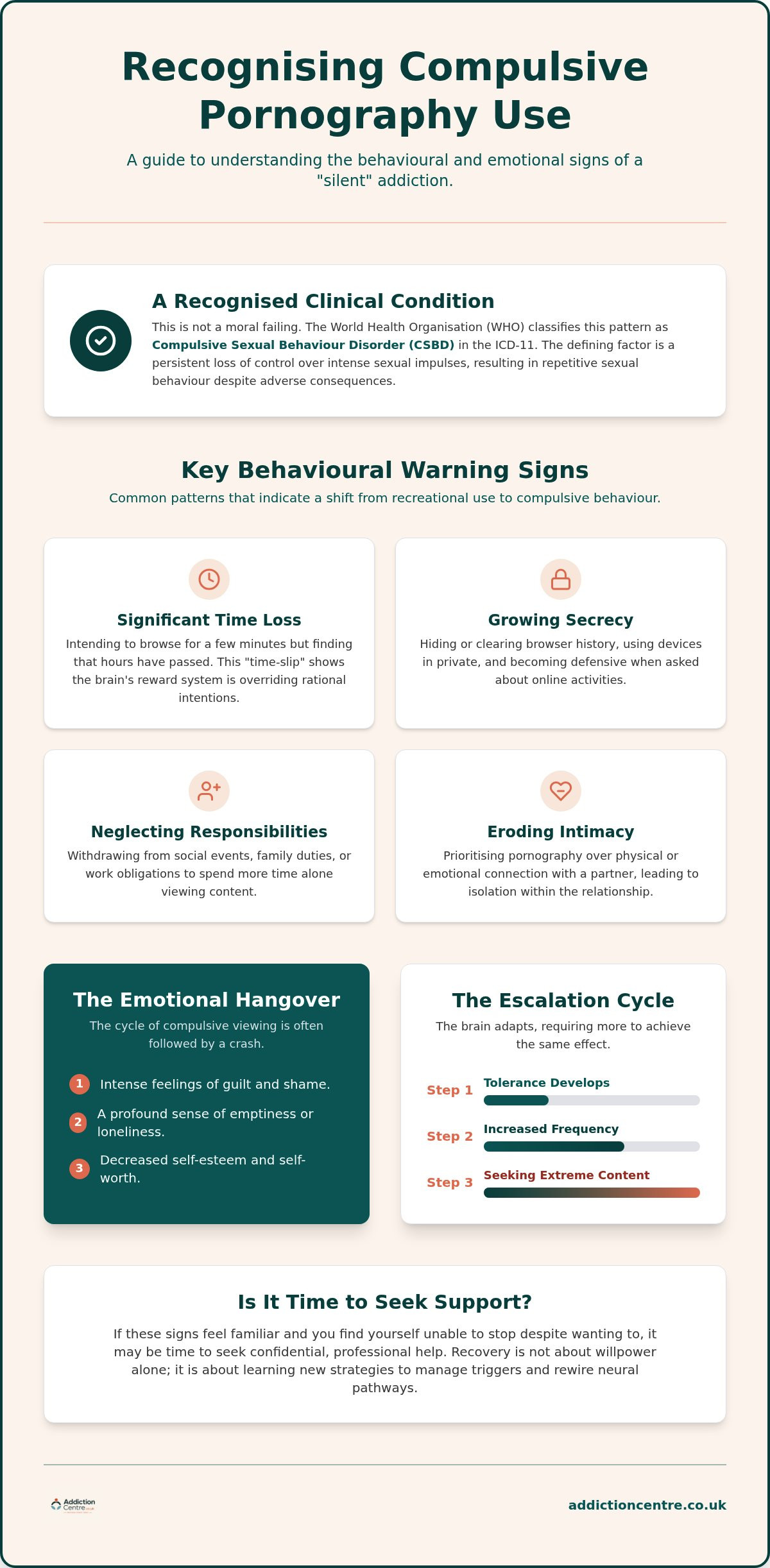
As of August 2026, clinical understanding has reached a point of significant clarity. The World Health Organisation (WHO) recognises this pattern under the classification of Compulsive Sexual Behaviour Disorder (CSBD), assigned the code 6C72 in the ICD-11. This shift is vital. It moves the conversation away from shame and toward medical reality. It's not simply about how often someone watches porn; many people exhibit high-frequency use without meeting the criteria for a disorder. The defining factor is a loss of control. If you find yourself unable to stop despite wanting to, or if you are ignoring responsibilities to seek out content, you are likely experiencing porn addiction symptoms that require professional insight.
The Science of Behavioural Addiction
When you view novel visual stimuli, your brain releases dopamine, a neurotransmitter associated with pleasure and reward. In a healthy state, this system encourages survival behaviours. However, with compulsive use, the "reward circuit" becomes overstimulated and eventually desensitised. To maintain the same level of satisfaction, the brain requires more frequent or more extreme imagery. Unlike substance-based addictions where a physical chemical is ingested, this is a process addiction. The brain effectively becomes its own pharmacy, creating a cycle of craving that makes everyday joys feel dull by comparison.
Why Willpower is Often Insufficient
Relying on willpower alone often fails because the disorder causes physical changes in the brain's neural pathways. The areas responsible for impulse control are weakened, whilst the pathways driving the compulsive behaviour are strengthened. This is why "just stopping" feels impossible for many. Environmental cues, such as being alone with a laptop or feeling stressed after a long day, act as powerful triggers that bypass rational thought. Recovery isn't about trying harder; it's about a structured process to rewire these pathways. Professional intervention provides the tools to manage these triggers and navigate the journey from compulsion to clarity.
The Warning Signs: Identifying Behavioural and Emotional Symptoms
Recognising the transition from a private habit to a compulsive disorder requires a courageous look at your daily patterns. Whilst the initial stages may feel manageable, the reality of porn addiction symptoms often surfaces through a gradual loss of autonomy over your time. You might start your evening with the intention of a brief distraction, only to find that hours have passed in a trance-like state of browsing. This "time-slip" is a primary indicator that the reward system in your brain is overriding your rational intentions.
Common behavioural indicators include:
- Increasing secrecy regarding your digital devices and browser history.
- Neglecting physical health, such as skipping the gym or losing sleep to view content.
- Withdrawing from social obligations or family gatherings to stay home alone.
- Feeling a sense of panic or intense irritability if your privacy is interrupted.
- Prioritising pornography over intimate moments with a partner.
Following these sessions, many individuals experience a profound emotional crash. This isn't just a mild sense of regret; it's often a heavy combination of guilt, shame, and a hollow feeling of emptiness. This cycle creates an emotional "hangover" that can last for days, affecting your productivity at work and your ability to engage authentically with the people you love.
Tolerance and Escalation
One of the most distressing aspects of this condition is the need for escalation. Over time, standard imagery may lose its potency, leading to a search for more frequent viewing or increasingly explicit content. You might find yourself seeking out "taboo" themes that actively contradict your personal values or moral compass. This shift is a hallmark sign of a deepening addiction; it indicates that your brain has become desensitised and requires higher levels of shock or novelty to achieve the same dopamine release. If you recognise these patterns in yourself, a confidential assessment can help you understand the severity of your situation without judgement.
Emotional Volatility and Withdrawal
When you are unable to access pornography, you may notice a significant shift in your temperament. Irritability, restlessness, and anxiety are common Signs of Pornography Addiction that mirror the withdrawal symptoms seen in substance use. In these moments, porn is no longer just about pleasure; it becomes a maladaptive coping mechanism used to numb the very stress and loneliness that the addiction itself has created. Breaking this cycle requires moving beyond willpower to address the underlying emotional triggers that drive the compulsion.
The Hidden Impact: How Pornography Affects Relationships and Daily Life
Unlike substance misuse, where physical evidence is often visible, this disorder is defined by its quiet, internal erosion. There are no slurred words or bloodshot eyes. Instead, the individual experiences a form of emotional bankruptcy that slowly drains their capacity for genuine connection. You might feel "fine" on the surface, yet inside, there is a growing void where your interests and passions used to be. This invisible nature is one of the most dangerous porn addiction symptoms, as it allows the behaviour to continue unchecked whilst the person remains functional in the eyes of the world.
The impact extends into your professional life through "cyber-slacking" or a persistent loss of focus. When the brain is preoccupied with the next "hit" of content, your productivity at work inevitably suffers. This isn't just about time spent viewing; it's about the mental energy consumed by cravings and the subsequent fog that follows a session. There is also a tangible financial cost. Premium subscriptions, cam-site interactions, and digital "tips" can accumulate into significant debt, adding a layer of financial stress to an already heavy emotional burden.
Impact on Intimacy and Sexual Health
One of the most distressing consequences is the development of porn-induced sexual dysfunction. When the brain is conditioned to respond only to high-intensity digital stimuli, real-world intimacy can feel underwhelming or physically impossible to maintain. This often leads to a loss of libido for physical encounters whilst your digital libido remains high. Unrealistic expectations regarding a partner's appearance or behaviour further widen the gap, creating a profound sense of dissatisfaction and rejection for both people involved. Recognising these porn addiction symptoms early is vital for preserving the health of your relationship.
The Burden of Secrecy and Deceit
Living a "double life" carries a heavy psychological toll. Every lie told to a loved one about your time or internet history erodes your own self-esteem and the foundational trust of your relationship. You may find yourself constantly on guard, fearing the moment your private world is exposed. This constant state of alert leads to chronic stress and a sense of isolation that only reinforces the need to escape back into the addiction. Secrecy is the fuel that keeps addiction burning. Resources from The University of Texas at Dallas on signs of pornography addiction highlight how these deceptive patterns are central to the disorder's progression, making professional guidance essential for those looking to break the cycle.
Taking the First Steps: Assessment and Self-Reflection
Performing an honest self-assessment is often the most challenging part of the recovery process. It requires a quiet moment of introspection, away from the distractions of digital devices, to evaluate the role pornography plays in your life. This isn't about self-criticism; it's about gaining the clarity needed to make an informed decision about your future. By looking closely at your habits, you can begin to see whether your use is recreational or if it has crossed into a compulsive pattern that requires intervention.
To help guide this reflection, consider the following questions carefully:
- Have I made repeated, unsuccessful attempts to stop or reduce my viewing?
- Do I find myself browsing for much longer than I originally intended?
- Is my use of pornography a way to numb feelings of stress, loneliness, or anxiety?
- Have I noticed that my interest in real-life intimacy has decreased?
- Do I feel a sense of irritability or restlessness when I am unable to access adult content?
A brief digital detox can serve as a powerful diagnostic tool. By committing to a period of 48 to 72 hours without any adult content, you can observe how your mind and body react to the absence of the stimulus. If you experience intense cravings, persistent intrusive thoughts, or a compulsive need to "check in," these are clear porn addiction symptoms that suggest your brain's reward system has become reliant on this specific behaviour. Breaking the silence by acknowledging these signs is the catalyst for genuine change.
Recognising the Need for Professional Help
There is a specific tipping point where self-help strategies, such as website blockers or willpower, are no longer sufficient to break the cycle. If your habits are causing significant distress or interfering with your ability to function at work or in your relationships, seeking expert guidance is the most effective path forward. A clinical diagnosis provides a structured recovery plan tailored to your specific needs. You can explore a range of support options through our addiction treatment directory, which serves as a comprehensive guide to recognised clinics across the UK.
Preparing for a Recovery Consultation
The prospect of discussing your private habits with a stranger can feel overwhelming, but addiction experts are trained to provide support in an environment free from judgement. During an initial assessment, the focus is on understanding the nature of your porn addiction symptoms and identifying the underlying triggers. This process is designed to help you move past the shame barrier by reframing the issue as a manageable health condition. Your privacy is a priority; every consultation is conducted with absolute confidentiality. If you feel ready to move from uncertainty to action, you can arrange a confidential recovery consultation to discuss your options with a specialist who understands your journey.
Finding Support: How Addiction Centre Connects You to Recovery
Identifying porn addiction symptoms is a courageous beginning, but the path to lasting change often requires a structured environment and professional guidance. Addiction Centre acts as a trusted UK guide, helping you navigate a complex network of treatment options to find the most appropriate care for your situation. Our referral service is designed to remove the burden of research during a time of high stress. We connect you with recognised clinics that specialise in behavioural disorders, ensuring that your specific needs are met with expertise and empathy.
It is common for compulsive behaviour to exist alongside other mental health challenges, such as chronic stress or social isolation. If you are struggling with low mood or constant worry, dual diagnosis treatment UK offers an integrated approach that addresses both the addiction and the underlying psychological distress. Treating these issues simultaneously is often the key to preventing relapse and achieving a stable, healthy future. By addressing the "why" behind the compulsion, you can build a more resilient foundation for long-term well-being.
Residential vs. Outpatient Treatment for Porn Addiction
Choosing between residential and outpatient care depends on the severity of the compulsion and your personal circumstances. Whilst outpatient therapy provides flexibility for those with work or family commitments, an immersive stay in a clinic allows you to step away from the digital triggers that permeate your daily life. Although typically associated with chemical dependency, a residential drug detox UK facility can be adapted to provide a "digital detox" environment for behavioural recovery. This clinical setting offers a safe space to begin intensive Cognitive Behavioural Therapy (CBT). This therapeutic approach focuses on identifying root causes and developing healthier coping mechanisms to replace the old, destructive patterns.
Your Path to a Healthier Future
Recovery is about more than just stopping a habit; it's a journey of restoration. It involves rebuilding the self-esteem, focus, and capacity for intimacy that may have been lost whilst you were struggling with porn addiction symptoms. This process takes time, patience, and professional support. You don't have to navigate this transition alone. Taking the first step is as simple as reaching out for a conversation that could change the trajectory of your life. Speak to an expert at Addiction Centre today for confidential advice and begin your path toward a clearer, more fulfilling future.
Embracing a Future Beyond Compulsion
Acknowledging that your habits have shifted from a choice to a compulsion is the most significant step you can take toward long-term wellness. Whether you have identified specific porn addiction symptoms or simply feel that your digital life is overshadowing your real-world relationships, it's vital to remember that professional support is available to help you rewire your brain's reward system. This condition is a manageable health matter, and seeking help is a sign of strength rather than a failure of character.
Addiction Centre provides a steady bridge to this new chapter of your life. We offer impartial advice from UK addiction experts and provide direct access to a national network of CQC-recognised clinics across the country. By developing personalised recovery plans tailored to your unique needs, we ensure that your path to restoration is both structured and compassionate. Begin your journey to recovery with a confidential consultation today. You deserve a life defined by genuine connection and presence. Restoration is within your reach, and the support you need is only a conversation away.
Frequently Asked Questions
Is porn addiction a recognised medical condition in the UK?
Yes, whilst "porn addiction" is a common term, the World Health Organisation formally recognises the condition as Compulsive Sexual Behaviour Disorder (CSBD). This classification in the ICD-11 acknowledges it as a clinical mental health issue rather than a moral failing. It's categorised by a persistent pattern of failure to control intense sexual impulses. This recognition helps individuals in the UK access professional support that focuses on neurobiological health and behavioural restoration.
Can porn addiction cause physical symptoms like erectile dysfunction?
Yes, compulsive use can lead to physical challenges, most notably porn-induced sexual dysfunction. This occurs when the brain becomes desensitised to real-life intimacy because it's been conditioned to respond only to high-intensity digital stimuli. You might find that physical arousal is difficult to achieve or maintain during encounters with a partner. These physical porn addiction symptoms are often reversible once the brain's reward circuitry begins to heal through structured recovery and abstinence.
How do I know if my partner has a porn addiction?
Identifying a partner's struggle often involves noticing subtle shifts in their digital habits and emotional presence. You might observe an increased need for privacy with devices, unexplained irritability when interrupted, or a significant decline in sexual interest. Secrecy is a major indicator; if they're frequently staying up late alone or hiding their browser history, it may suggest a deeper issue. Open, non-confrontational communication is the first step toward understanding the reality of their situation.
What is the difference between high use and addiction?
The primary distinction between high use and addiction is the loss of autonomy over the behaviour. High-frequency use is often a conscious choice that doesn't interfere with daily responsibilities or personal values. Addiction, however, involves a compulsive need to view content despite negative consequences, such as strained relationships or job loss. If you've tried to stop and failed, or if the habit feels like a "need" rather than a "want," it's likely crossed into a clinical disorder.
Does the NHS provide treatment for pornography addiction?
NHS support for this specific issue is often accessed through general mental health services or talking therapies. Whilst you can speak to your GP about your concerns, specialist residential programmes for behavioural addictions are rarely funded. Most people find that the NHS focuses on treating associated conditions like depression or anxiety. For those seeking intensive, specialised care for the addiction itself, private referral services often provide a more direct route to tailored clinical environments.
How long does it take to recover from a porn addiction?
Recovery is a highly individual process, and there's no universal timeframe for success. Most experts suggest that the brain's reward system requires several months of abstinence and therapy to begin "rewiring" itself. Whilst the initial phase of addressing porn addiction symptoms might take around 90 days, long-term restoration involves ongoing vigilance and the development of healthy coping mechanisms. The goal isn't just to stop the behaviour but to build a life where the compulsion no longer feels necessary.
Will my treatment for porn addiction be kept confidential?
Your treatment will be kept strictly confidential, protected by both UK law and professional ethical codes. Addiction specialists and private clinics operate with total discretion to ensure your privacy is maintained at every stage. This confidentiality extends from your initial assessment through to your time in a recovery programme. Knowing that your personal journey is safe allows you to focus fully on your health without the fear of social or professional repercussions.
What are the costs associated with private porn addiction rehab in the UK?
The price of private treatment in the UK depends on whether you choose outpatient therapy or a stay in a residential clinic. Costs vary significantly based on the level of care, the duration of the programme, and the specific facilities provided. Factors such as the location of the centre and the range of holistic therapies included will also influence the total investment. We recommend a confidential consultation to discuss the most appropriate options that align with your specific recovery needs.


