
If you are standing at the threshold of change, is the greatest hurdle the addiction itself, or the profound fear of the withdrawal process that lies ahead? It's a question many people face, and it's natural to feel overwhelmed by the sheer volume of residential alcohol detox centres UK while trying to distinguish between overstretched NHS services and private clinical options. You want more than just a bed; you want the assurance that your safety and dignity are the highest priorities during this vulnerable transition.
This clinical guide is designed to replace that uncertainty with a clear, medically grounded roadmap for your recovery journey in 2026. We'll examine how to identify high-quality, CQC-regulated facilities, the specific benefits of 24/7 medical supervision for pain management, and the vital steps for moving from a successful detox into a structured rehabilitation programme. By understanding the clinical standards and referral pathways available, you can move away from the chaos of addiction and into a professional environment built on expertise and empathy. Our goal is to provide the clarity you need to choose a path that offers a foundation for lasting sobriety.
Key Takeaways
- Understand why 24/7 medical management is the clinical gold standard for navigating high-risk alcohol withdrawal safely and comfortably.
- Learn about the specific pharmacological interventions and medical assessments used within UK facilities to manage physical symptoms and ensure patient safety.
- Identify the essential criteria for selecting residential alcohol detox centres UK, including the importance of CQC ratings and specialist staff-to-patient ratios.
- Plan your transition with confidence by understanding the typical timelines and financial considerations involved in entering private residential care in 2026.
- Discover how to access impartial guidance and expert consultations to bypass long waiting lists and secure immediate clinical support.
Understanding the Role of Residential Alcohol Detox Centres in the UK
Residential alcohol detox centres UK serve as a clinical sanctuary for individuals facing the complexities of moderate to severe dependency. Unlike community-based programmes, these facilities offer a 24/7 medically managed environment where your safety is the absolute priority. This level of immersive care is the recognised clinical standard in the UK for high-risk withdrawal, providing a structured setting that is physically and emotionally removed from the triggers of daily life. By stepping away from domestic stressors, you allow your body and mind the necessary space to begin the healing process without the immediate pressure of external responsibilities.
The role of these centres extends beyond simple supervision. They act as a vital bridge between the chaos of active addiction and the structured work of long-term rehabilitation. Within these walls, the focus is on stabilising your physical health, ensuring you're strong enough to engage with the psychological therapies that follow. It's a transition that prioritises your dignity, offering a professional hand to guide you through the most physically demanding phase of recovery.
Residential vs. Outpatient Detox: Which is Appropriate?
Determining whether you require a residential stay involves a thorough assessment of your dependency levels. Clinical professionals often utilise scales like the Clinical Institute Withdrawal Assessment for Alcohol (CIWA-Ar) to measure the severity of your symptoms. If you've a history of high daily consumption or have experienced previous withdrawal complications, attempting to stop "cold turkey" at home can be life-threatening.
Residential care becomes a medical necessity when the risks of unsupervised withdrawal are too high. It ensures that the clinical process of alcohol detoxification is overseen by specialists who can adjust treatment in real-time. For many, this isn't just a choice about comfort; it's a decision based on clinical safety and the need for a controlled environment that outpatient services simply cannot replicate.
The Safety Profile of UK Residential Centres
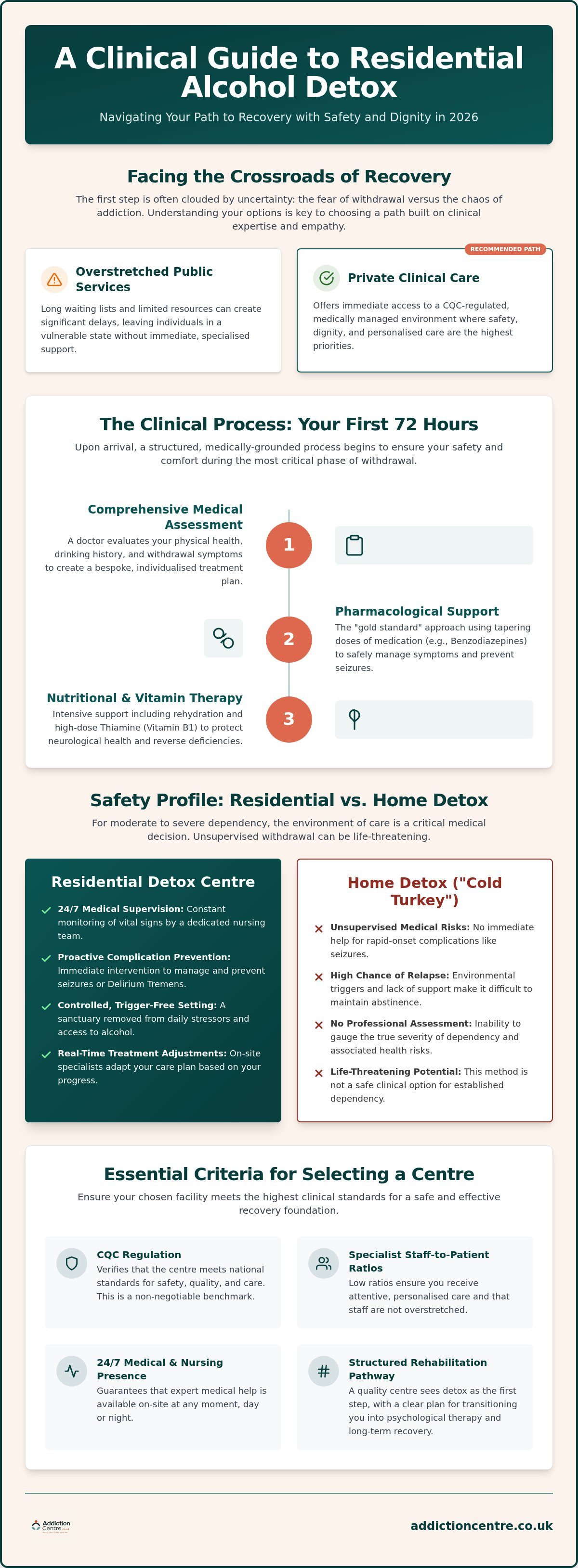
The core strength of a residential facility lies in its 24-hour nursing presence. These dedicated teams monitor your vital signs, such as heart rate and blood pressure, at regular intervals to detect any signs of physical distress early. This constant vigilance is essential for preventing severe complications, including seizures and Delirium Tremens (DTs), which can manifest rapidly during the first 72 hours of abstinence.
You can find more specific details on how these safety protocols are implemented in our specialised guide to residential alcohol detox UK. By choosing a regulated centre, you're ensuring that your recovery begins in an environment equipped with the medical expertise and emergency protocols necessary to manage even the most challenging withdrawal scenarios with professional composure.
The Clinical Process: What Happens Inside a Detox Facility?
When you arrive at one of the reputable residential alcohol detox centres UK, the focus shifts immediately to your clinical safety and physical stabilisation. The process begins with a comprehensive medical assessment. This isn't a mere formality; it's a vital diagnostic phase where a doctor or specialist nurse evaluates your physical health, drinking history, and current withdrawal symptoms. By understanding your unique physiological profile, the clinical team can design a bespoke treatment plan that addresses your specific risks and needs from the very first hour.
The core of the clinical experience involves pharmacological support. To prevent the nervous system from becoming dangerously overexcited, doctors typically prescribe tapering doses of medication, such as benzodiazepines. This approach is the gold standard for safely managing withdrawal, as it significantly reduces the risk of seizures and other life-threatening complications. Alongside these interventions, you'll likely receive high-dose vitamin therapy, particularly Thiamine (Vitamin B1), to protect your neurological health and reverse the deficiencies often caused by chronic alcohol use.
Physical recovery also requires intensive nutritional support and rehydration. Alcohol is a diuretic that depletes the body of essential electrolytes and minerals, leading to profound exhaustion and cognitive fog. Within a residential setting, your diet and fluid intake are carefully monitored to restore your body's natural balance. This physiological foundation is essential; it's much harder to engage with the psychological aspects of recovery if your body is still in a state of physical crisis. If you're feeling uncertain about the process, you can reach out for a recovery consultation to discuss what to expect in more detail.
Medically Managed Withdrawal
The multidisciplinary team (MDT), including doctors, psychiatric nurses, and recovery practitioners, works together to manage your tapering schedule with precision. They don't just follow a set chart; they monitor your progress day and night, adjusting medication levels based on your comfort and vital signs. This constant clinical presence helps soothe the emotional volatility and intense anxiety that often characterise the first few days of sobriety. You aren't left to face these feelings alone; professional support is always seconds away.
Addressing Co-occurring Mental Health Conditions
It's common for alcohol dependency to exist alongside underlying mental health challenges like depression, PTSD, or generalised anxiety. Treating the addiction without addressing the mental health component is often ineffective. Many specialist facilities provide integrated dual diagnosis treatment UK, ensuring that both conditions are managed simultaneously. This holistic approach provides a more stable platform for long-term sobriety by addressing the root causes of your substance use while your body undergoes the detox process.
Key Criteria for Selecting Residential Alcohol Detox Centres
Selecting between various residential alcohol detox centres UK requires a shift in focus from aesthetic appeal to clinical rigour. While a beautiful setting can aid relaxation, your primary objective is a safe, medically managed withdrawal. You should prioritise facilities that demonstrate high standards of clinical governance and transparency in their outcomes. This ensures that the care you receive isn't just comfortable, but scientifically sound and ethically delivered. A reputable centre acts as a steady guide, providing a sense of calm reliability when you're in a state of crisis.
A critical indicator of quality is the staff-to-patient ratio. High-quality centres ensure that medical doctors and psychiatric nurses are either on-site or immediately accessible 24 hours a day. This level of staffing allows for the constant monitoring of vital signs and the ability to intervene immediately if complications arise. When you're evaluating a facility, ask specific questions about who'll be managing your care during the night. The clinical resilience of a centre is truly tested at 3:00 AM, and you deserve the peace of mind that comes with knowing professional help is always seconds away.
Regulatory Standards and Accreditations
In England, all residential detox providers must be registered with the Care Quality Commission (CQC). This independent regulator inspects services to ensure they meet fundamental standards of quality and safety. You can verify a centre's status directly on the CQC website, looking specifically for "Good" or "Outstanding" ratings. These ratings are awarded based on five key questions:
- Is the service safe? Monitoring how risks are managed and patients are protected from harm.
- Is it effective? Ensuring care and treatment lead to good outcomes and are based on the latest evidence.
- Is it caring? Assessing if staff treat patients with kindness, dignity, and respect.
- Is it responsive? Checking if services are organised to meet people's individual needs.
- Is it well-led? Evaluating the leadership and clinical governance of the organisation.
A high rating in clinical governance is far more significant for your long-term recovery than the presence of luxury amenities. It indicates that the facility prioritises patient safety above all else.
Specialist Care and Inclusivity
Your recovery journey is deeply personal, and the environment should reflect your specific needs. Some residential alcohol detox centres UK offer gender-specific wings or specialised programmes for professionals and parents. These inclusive environments help reduce the stigma and anxiety often associated with entering treatment. It's also vital to ensure the facility can accommodate complex medical histories or physical accessibility requirements. A bespoke treatment plan that acknowledges your individual circumstances is always preferable to a generic approach, as it ensures that no aspect of your health is overlooked during the detox phase.
The therapeutic environment also plays a role in your choice. Rural settings often provide a sense of peace and seclusion, which can be beneficial if you're looking to disconnect from urban triggers. Conversely, urban centres might offer better proximity to specialist hospitals or easier access for family visits during the later stages of rehabilitation. There's no single correct choice; the decision depends on where you feel most secure and supported as you begin your journey toward restoration.
Preparing for Residential Treatment: Logistics and Expectations
The transition into a clinical facility often feels like the most daunting step. It requires a logistical shift that can feel overwhelming when you're already in a state of high stress. However, once the decision is made, the process is designed to be swift and supportive. In the private sector, admission to residential alcohol detox centres UK can often occur within 24 to 48 hours. This rapid response is critical for maintaining the momentum of your recovery and ensuring you don't lose heart whilst waiting for a bed.
You'll need to consider the financial commitment involved. Private care ensures immediate access and high staff ratios, but it requires a clear understanding of the investment. For detailed guidance on funding options, you may find our resource on how to pay for rehab UK helpful. When packing, focus on comfort and simplicity. Most centres recommend bringing comfortable clothing, basic alcohol-free toiletries, a journal, and any current prescriptions in their original packaging.
Managing work and family obligations is a common concern. Many professionals utilise medical leave or sick pay to secure their time away. Your employer doesn't need to know the specific details of your treatment. A doctor's note stating you're unfit for work due to a medical condition is often sufficient. This protects your privacy whilst allowing you to focus entirely on restoration.
The Admission and Referral Process
Navigating the landscape of residential alcohol detox centres UK is made significantly easier through a professional referral service. Instead of contacting dozens of clinics individually, you can reach out for a recovery consultation to match your clinical needs with a specific facility. This process often begins with a confidential online self-assessment. It provides a preliminary understanding of your dependency levels and helps the clinical team prepare for your arrival with precision.
Involving Loved Ones in the Journey
Recovery doesn't happen in isolation. Most centres encourage family involvement through scheduled visitation or family therapy sessions. These interactions are vital for repairing relationships and building a supportive home environment for when you return. If you're a family member concerned about a loved one who's resistant to help, our guide on can you force someone into rehab UK offers compassionate advice on how to navigate those difficult conversations with integrity and respect.
How Addiction Centre Connects You with Leading UK Detox Providers
Navigating the sheer number of residential alcohol detox centres UK can feel like an impossible task when you're in the midst of a personal or family crisis. It's a heavy burden to carry alone. Our role is to act as a steady guide, providing the clinical expertise and impartial perspective needed to make an informed decision. By using a national directory and referral service, you gain immediate access to a network of recognised addiction rehabilitation clinics without the delay of traditional waiting lists. We provide the bridge between your current state of uncertainty and a structured, professional environment where your recovery can truly begin.
Our recovery consultations are designed to help you identify which residential alcohol detox centres UK align with your specific medical needs and financial circumstances, providing a sense of order when everything else feels uncertain. Whilst the NHS provides vital services, the demand often leads to significant delays that aren't suitable for those requiring urgent clinical intervention. Private referrals through our directory allow for almost immediate admission, ensuring that the window of opportunity for change isn't lost to administrative red tape. We're here to help you bypass those barriers and secure the care you deserve.
A successful detox is only the first chapter of your restoration. To ensure long-term success, we focus on connecting you with providers that offer robust aftercare and post-detox rehabilitation plans. This comprehensive approach ensures that the physical stability you achieve during detoxification is supported by psychological growth and a clear strategy for maintaining sobriety in the weeks and months that follow. You aren't just finding a bed; you're building a foundation for a completely different way of living.
Impartial Advice and Expert Guidance
We prioritise clinical suitability over centre popularity. Not every facility is right for every individual, and our consultations focus on matching you with a clinic that specialises in your specific challenges, whether that's a complex medical history or a need for dual diagnosis support. By acting as a single point of contact for multiple UK providers, we simplify the search process whilst maintaining the highest levels of dignity and confidentiality. You can speak openly with our advisors, knowing that your story is held with profound respect and that our only goal is your successful recovery.
Taking the First Step Toward Recovery
The path to sobriety begins with a single, courageous decision to reach out. Accessing our comprehensive addiction treatment directory allows you to explore CQC-regulated facilities at your own pace, or you can choose to speak directly with an expert who can narrow down the options for you. Booking a recovery consultation is a straightforward process designed to reduce your anxiety rather than add to it. When you're ready to move from a state of confusion toward one of clarity and purpose, we're here to walk alongside you every step of the way.
Securing Your Foundation for Lasting Change
Choosing to enter a clinical environment is a profound act of self-care. It replaces the high-risk uncertainty of unsupervised withdrawal with the safety of 24/7 medical oversight. The right residential alcohol detox centres UK offer more than just a medical procedure; they provide a dignified space where your physical health is stabilised and your long-term recovery is prioritised. By selecting a facility with strong CQC ratings and a dedicated multidisciplinary team, you ensure that every step of your journey is grounded in clinical excellence and personal respect.
The transition from crisis to clarity doesn't have to be a journey you navigate alone. You can bypass the stress of long waiting lists and the confusion of conflicting options by utilising a professional referral network. Whether you're seeking help for yourself or a loved one, impartial guidance is available to match your unique medical needs with the most suitable clinical setting. Professional support acts as a steadying hand, helping you move from a state of vulnerability toward one of quiet confidence.
When you're ready to take that first step, contact Addiction Centre for a confidential recovery consultation. You'll gain access to our national network of CQC-regulated clinics and receive expert guidance from experienced recovery consultants. We provide confidential and impartial advice for families, acting as a trusted advisor whilst you focus on your restoration. Your path to a healthier, more vibrant life is within reach.
Frequently Asked Questions
How long does a typical stay at a residential alcohol detox centre last?
A typical stay at residential alcohol detox centres UK usually lasts between 7 and 10 days. This period is specifically designed to manage the acute physical withdrawal phase under constant medical supervision. If you choose to continue into a full rehabilitation programme, your stay will likely extend to 28 days or more to address the psychological aspects of your recovery.
Is residential alcohol detox available on the NHS in the UK?
Residential alcohol detox is available through the NHS, but it is typically reserved for the most high-risk clinical cases. Most NHS support is provided via community-based services rather than inpatient stays. To access a residential bed, you usually need to engage with your local drug and alcohol team for a comprehensive assessment and meet specific criteria for funding approval.
Can I leave a residential detox centre if I change my mind?
You are free to leave a residential centre at any time, as treatment is entirely voluntary. However, clinical teams will strongly advise against leaving "against medical advice" (AMA), especially during the first 72 hours. Leaving before the detox is complete can be physically dangerous and significantly increases the risk of an immediate relapse whilst your body is still unstable.
What is the average cost of private residential alcohol detox in the UK?
The cost of private care varies depending on the duration of your stay and the level of clinical support required. Prices are influenced by whether you opt for a detox-only programme or a longer rehabilitation stay that includes intensive therapy. It is best to discuss your specific needs during a consultation to understand the different financial options available for your circumstances.
Will I be prescribed medication to help with alcohol withdrawal symptoms?
Yes, you will typically be prescribed specialist medication to ensure your safety and comfort during withdrawal. Doctors often use tapering doses of benzodiazepines to prevent seizures and manage high levels of anxiety. You will also receive high-dose vitamin therapy, such as Thiamine, to protect your neurological health whilst your body begins the restoration process.
Are family members allowed to visit whilst I am in a residential detox centre?
Family members are usually allowed to visit, though most centres have specific policies regarding when these visits can occur. Some facilities implement a short "rest" period during the initial detox phase to allow you to focus entirely on physical stabilisation. Once you are through the most difficult days, family involvement and therapy sessions are often encouraged to help rebuild essential support networks.
What happens after I complete my residential alcohol detox?
Completing a detox is the first step in a longer journey, usually followed by a transition into a structured rehabilitation programme. This next phase focuses on the psychological triggers of addiction through therapies like Cognitive Behavioural Therapy (CBT). A comprehensive aftercare plan will also be established to provide ongoing support as you return to your daily life and maintain your sobriety.
How do I know if a detox centre is properly regulated and safe?
When researching residential alcohol detox centres UK, you should always verify that the facility is registered with the Care Quality Commission (CQC) in England. For centres in Scotland, Wales, or Northern Ireland, check for registration with their respective regulators, such as Healthcare Improvement Scotland. These independent bodies conduct regular inspections to ensure that clinical standards, patient safety, and quality of care are being upheld.


