
What if the most daunting hurdle on your path to sobriety isn't the physical challenge of detox, but the sheer exhaustion of trying to find the right support? When you're in the midst of a crisis, the search for a residential rehab UK can feel like an impossible maze of conflicting prices, varying clinical standards, and long waiting lists. You're likely feeling a mix of urgency and deep-seated anxiety about whether a facility is truly safe or if the withdrawal process will be manageable.
It's completely natural to feel overwhelmed when you're looking for a lifeline. You deserve a clear, honest map that replaces confusion with a structured plan for restoration. This guide provides exactly that. We'll explore how to identify CQC-regulated facilities, understand the reality of modern detox services, and clarify the costs involved for 2026. By the end of this article, you'll have the professional insight needed to choose a path that respects your dignity and sets a firm foundation for your long-term recovery.
Key Takeaways
- Understand that residential rehab UK offers a structured, 24-hour clinical environment designed to remove external triggers and facilitate deep psychological healing.
- Learn why a personalised treatment plan, tailored to your specific substance history and health needs, is essential for a methodical and lasting recovery.
- Compare the clinical pathways of NHS and private care to understand how wait times and resource availability might affect your access to crisis support.
- Discover how to evaluate facilities by prioritising CQC inspection reports and clinical excellence over the aesthetic appeal of the building.
- Find out how using an impartial directory can simplify your search by connecting you with high-quality, regulated clinics that match your unique requirements.
What is Residential Rehab and How Does it Work in the UK?
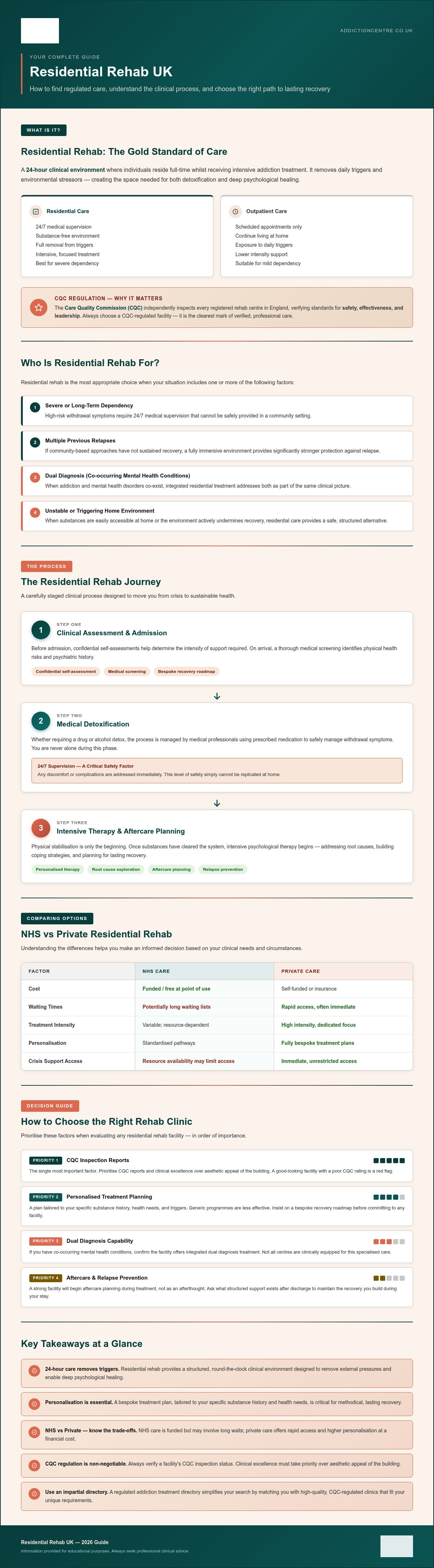
Residential rehab UK is a meticulously structured, 24-hour clinical environment where individuals reside full-time whilst receiving intensive addiction treatment. Within these centres, the primary objective is to create a physical and psychological buffer between you and your usual environment. By removing daily triggers and the stressors that often fuel substance use, rehab provides the essential breathing space required for both detoxification and deep-rooted psychological healing. It's a sanctuary designed for focus, where the only priority is your restoration.
In the UK, this level of care is often considered the gold standard, particularly for those facing severe dependency or complex mental health challenges. It's not merely about abstinence; it's about clinical safety. This is why the role of the Care Quality Commission (CQC) is so vital. The CQC regulates and inspects every registered rehab centre in the country, ensuring they meet strict standards for safety, effectiveness, and leadership. When you choose a CQC-regulated facility, you're choosing a service that has been independently verified to provide professional, high-quality care that puts your dignity first.
The Difference Between Residential and Outpatient Care
The choice between residential and outpatient support often depends on the intensity of care your situation demands. Outpatient services involve attending scheduled appointments whilst living at home, which can work for some individuals with mild dependencies. However, residential care provides 24/7 medical supervision. This constant presence is often a medical necessity rather than a choice, especially during the initial stages of recovery where the risk of relapse or medical complications from withdrawal is highest. A substance-free environment ensures that your focus remains entirely on recovery, without the distractions or temptations of the outside world.
Who is Residential Rehabilitation For?
Identifying the right time for residential care involves looking at the complexity of your journey. If you've experienced multiple relapses or live in an environment where substances are easily accessible, a community-based approach might not provide enough protection. It's also the most appropriate setting for dual diagnosis treatment UK. This specialised care ensures that mental health conditions and addiction are treated as part of the same clinical picture. For those with unstable home lives, the residential setting acts as a safe haven, offering the stability needed to build a new, healthier routine and a firm foundation for the future.
The Residential Rehab Journey: A Step-by-Step Clinical Process
Recovery is rarely a linear event or a quick fix. It's a methodical, clinical transition that requires patience and a structured environment. When you enter a residential rehab UK, you aren't just checking into a room; you're entering a carefully staged process designed to move you from a state of crisis to one of sustainable health. This journey prioritises your safety at every turn, ensuring that the transition from physical dependency to psychological freedom is handled with professional care.
Step 1: Clinical Assessment and Admission
Your journey begins with clarity. Before admission, confidential online self-assessments help determine the intensity of support required. Once you arrive, clinical experts perform a thorough medical screening. This isn't just a formality; it's a vital step to identify physical health risks and psychiatric history that might influence your treatment. By understanding your unique needs, the team creates a bespoke recovery roadmap. This ensures that your time in residential rehab UK is focused on the specific triggers and health requirements that matter most to your restoration.
Step 2: Medical Detoxification
The first physical hurdle is often the most daunting. Whether you require a drug detox or a residential alcohol detox UK, the process is managed by medical professionals who prioritise your comfort. They use prescribed medication to safely manage withdrawal symptoms, reducing the risk of complications and easing the transition to a substance-free state. You're never alone during this phase; 24/7 supervision ensures that any discomfort is addressed immediately, providing a level of safety that simply cannot be replicated at home.
Step 3: Intensive Therapy and Aftercare Planning
Physical stabilisation is only the beginning. Once the substances have left your system, the focus shifts to intensive therapy. Through modalities like Cognitive Behavioural Therapy (CBT) and group sessions, you'll explore the underlying causes of addiction and develop robust coping mechanisms for the real world. However, the most critical part of this step is looking forward. A structured aftercare plan is developed whilst you're still in the facility, creating a bridge back to daily life. If you feel ready to take this first step, you can speak with a recovery consultant to discuss which facility best suits your clinical needs.
NHS vs Private Residential Rehab: Comparing Your Options
When you decide to seek help, you'll find two primary pathways for addiction treatment in the UK: the NHS and the private sector. Both routes aim to support your recovery, but they operate with very different resource models and timelines. Understanding these differences is essential because the right choice often depends on the severity of your situation and how quickly you need to access a bed. Whilst the NHS provides vital community support, the availability of a residential rehab UK placement through public funding is often subject to strict criteria and significant delays.
Accessing Treatment via the NHS
The journey through the NHS typically begins with a self-referral to your local community drug and alcohol service. The UK uses a "tiered" system for addiction care. Residential treatment sits at Tier 4, the highest level of intensity. Because these beds are limited and expensive for local authorities to fund, you'll usually be required to complete several weeks or months of community-based programmes first to prove your commitment. If you're in an immediate crisis, the wait times associated with this process can be a significant hurdle. You should also be aware that you'll have limited choice over which facility you attend or when your treatment starts.
The Advantages of Private Residential Treatment
For many, the most compelling reason to choose private care is the speed of admission. In the context of addiction, a window of willingness can be brief. Private facilities can often facilitate admission within 24 to 48 hours, providing an immediate bridge from crisis to safety. Beyond speed, the private sector offers a much broader range of therapeutic programmes and specialist clinics. This allows you to select a centre that aligns with your personal values or specific clinical needs, such as trauma-informed care or dual diagnosis support. These environments also prioritise privacy and offer amenities that foster emotional well-being during a difficult transition.
Understanding the Costs of Private Rehab
The financial aspect of recovery is a common source of anxiety. Various factors influence the private rehab cost UK, including the length of your stay, the level of medical supervision required, and the specific facilities provided. It's worth checking if you have private medical insurance through providers like Bupa or AXA, as many policies now cover residential addiction treatment. If you're self-funding, using an impartial referral service can be invaluable. It helps you filter through hundreds of options to find a high-quality clinic that fits your specific budget without compromising on the standard of clinical care.
How to Choose the Best Rehab Clinic for Your Needs
Selecting a facility is a decision that carries significant weight. Whilst it's tempting to be swayed by glossy brochures featuring picturesque grounds, your priority must remain on clinical excellence. A beautiful view doesn't treat addiction; evidence-based protocols and qualified medical staff do. When evaluating a residential rehab UK, start by looking past the aesthetic appeal. Instead, focus on the facility’s ability to provide a safe, medically sound environment that aligns with your specific health needs.
One of the most reliable tools at your disposal is the latest report from the Care Quality Commission (CQC). These inspections offer an impartial look at whether a centre is safe, effective, caring, responsive, and well-led. Before committing, ask the provider direct questions: What is the staff-to-patient ratio? Do they have 24-hour medical cover? How do they handle medical emergencies? A transparent provider will welcome these enquiries, recognising that your safety is paramount. A "one size fits all" approach rarely works, so look for a team that listens to your concerns before suggesting a programme.
Specialist Care and Dual Diagnosis
Recovery is rarely about a single substance. Many individuals require support for co-occurring mental health conditions, such as depression or anxiety. If this applies to you, ensure the clinic offers integrated dual diagnosis treatment. It's also vital to check if they have residential drug detox UK specialists on-site who understand the specific physiological challenges of the substance you're withdrawing from. The qualifications of the medical team should be verifiable, ensuring you're in the hands of professionals who can manage complex withdrawal symptoms with precision and empathy.
Environment and Therapeutic Philosophy
The physical setting of a centre can profoundly influence your recovery experience, but it should match your personality. Some prefer a clinical, hospital-style environment that feels highly controlled and secure. Others find that a holistic, retreat-style setting helps them feel more at ease during the psychological exploration phase. Similarly, you should consider the therapeutic model used. Whilst 12-step programmes are widely recognised, alternative models like SMART Recovery or trauma-focused therapy may be more suitable for your journey. Choosing a path that respects your individuality is the first step toward a lasting, meaningful recovery.
Finding the right fit involves balancing these clinical and personal factors. If you're feeling overwhelmed by the choices, you can access our directory to compare CQC-regulated facilities that meet your specific criteria and budget.
Navigating the UK Addiction Treatment Directory
Searching for residential rehab UK often leads you to individual clinic websites, each claiming to be the best. This can create a sense of choice paralysis, especially when you're already in a state of high stress. An impartial treatment directory changes this dynamic by offering a comprehensive overview of the entire landscape. Instead of being limited to one provider's offerings, you gain access to a curated network of recognised clinics, allowing you to compare clinical standards and facilities objectively.
Addiction Centre acts as a bridge between your current state of uncertainty and a structured, professional environment. We simplify the search process by filtering through hundreds of UK facilities to find those that align with your specific recovery goals. Our role is to provide a steady, reliable resource that prioritises your dignity and well-being. By focusing on CQC-regulated care, we ensure every referral meets the highest standards of safety and effectiveness, removing the guesswork from your decision-making process.
Expert Guidance and Confidential Assessments
Our team provides a "calm in the storm" during what is often a chaotic period. Through confidential assessments, we help you identify the best rehab clinics UK for your unique circumstances. These recommendations aren't generic; they're personalised to your clinical needs, such as specific medical detox requirements, and your financial situation. This expert consultation ensures you're matched with a facility that can actually deliver the level of care you require, rather than one that simply has a bed available.
Securing Your Path to Recovery
If you're a concerned family member trying to help a loved one, the process can feel even more complex. You might be wondering how to get someone into rehab UK when they're resistant to change or unable to see the severity of their situation. We provide guidance on how to approach these sensitive conversations and the immediate steps to take once a facility is chosen. Once the decision is made, the transition to care happens quickly, often with immediate admission options. Don't let uncertainty delay your restoration. Contact Addiction Centre today for a confidential consultation and start building your structured plan for long-term sobriety.
Taking Your First Step Toward Lasting Restoration
Your path to recovery doesn't have to be a journey you take in isolation. By understanding the clinical structure of a residential rehab UK, you've already moved from a state of uncertainty toward a position of empowerment. You now know that clinical excellence and CQC regulation are the true markers of a safe facility, and that a methodical approach to detox and therapy is essential for your long-term health. Whether you're navigating the differences between private and NHS care or seeking a specialist for dual diagnosis, the right support is within reach.
We are here to act as your steady guide. Our directory provides access to a nationwide network of CQC-regulated clinics, supported by impartial advice from recovery experts who prioritise your dignity. If you're ready to move forward, you can begin your journey to recovery with a confidential consultation or complete one of our confidential self-assessments available online. Your restoration is possible, and choosing to seek help is the most courageous decision you'll ever make.
Frequently Asked Questions
How much does residential rehab cost in the UK?
Costs vary significantly based on the facility's location, the duration of your stay, and the level of medical supervision required. Luxury clinics with extensive holistic therapies generally sit at a higher price point than more clinical, community-based centres. Most private facilities require either self-funding or coverage through private medical insurance. Using a referral service can help you identify a high-quality clinic that aligns with your specific financial boundaries and clinical needs.
Can I get residential rehab on the NHS?
Yes, but it's often a complex and lengthy process involving local authority funding. You'll typically need to engage with community drug and alcohol services first and complete several preliminary stages before a residential bed is considered. Because Tier 4 funding is limited, beds are usually reserved for the most severe cases. Many individuals find that the wait times involved make private residential rehab UK a more viable option during an immediate crisis.
How long does a typical residential rehab programme last?
Most programmes range from 28 days to several months, depending on your clinical needs and progress. A standard 28-day stay is often the minimum recommended time to complete a full medical detox and engage in intensive therapy. Some individuals benefit from longer stays of 60 or 90 days to solidify their coping mechanisms and build a stronger foundation for sobriety. Your clinical team will help determine the most effective duration for your unique journey.
What is the difference between detox and rehab?
Detox focuses on the physical removal of substances from your body, whilst rehab addresses the psychological triggers of addiction. Detox is the essential first step, often involving medical supervision to manage withdrawal symptoms safely. Rehab follows this stabilisation, utilising therapy and counselling to explore the underlying causes of substance use. You cannot effectively have one without the other if your goal is long-term, sustainable recovery in a structured environment.
Can you force someone into rehab in the UK?
Under current UK law, you cannot generally force an adult into treatment against their will unless they meet specific criteria under the Mental Health Act. Recovery is most effective when the individual is willing to engage with the process. If you're a concerned family member, the focus should be on staged interventions and professional guidance to help your loved one recognise the need for help. Expert recovery consultants can provide strategies to facilitate these difficult conversations.
Will I be allowed to see my family during residential treatment?
Most facilities encourage family involvement, though there's often a "blackout" period during the initial detox phase to help you focus on stabilisation. After this period, many clinics facilitate family days or therapy sessions, as repairing these relationships is a vital part of long-term healing. Each centre has its own specific visiting policy, so it's important to check these details before admission to ensure the arrangement supports your emotional well-being and recovery goals.
What happens if I relapse after leaving residential rehab?
Relapse should be viewed as a signal to adjust your treatment plan rather than a failure of the process. If it occurs, you should immediately contact your aftercare team or the facility you attended. Many residential rehab UK programmes include a period of structured aftercare specifically designed to help you navigate these challenges. Re-engaging with support quickly ensures that a lapse doesn't turn into a full return to previous behaviours, protecting your progress.
Is private rehab better than NHS treatment?
"Better" often depends on your clinical urgency and need for personalisation. Private care typically offers immediate admission, a wider variety of therapeutic models, and more comfortable surroundings. The NHS provides excellent medical care but is often hampered by long waiting lists and a more rigid, tiered system of access. For those in an immediate crisis who require a specific type of specialist support, the private sector often provides a more responsive and tailored solution.


