
What if the most effective way to regain control of your life isn't about finding more willpower, but about following a structured path that millions have already paved for you? It's natural to feel overwhelmed when you're searching for a way out of addiction, especially when the various recovery options feel like a confusing maze of clinical terms and conflicting advice. You might worry that a 12 step programme UK is too "spiritual" for your personal beliefs, or perhaps you're struggling to distinguish between a local fellowship meeting and a private residential rehab centre.
We understand that this uncertainty often creates a barrier to the help you deserve. You want a solution that feels both professional and deeply human. This guide is designed to bridge that gap, showing you how the 12-step model integrates with modern UK clinical treatment to provide a clear, reliable path to lasting sobriety. We'll demystify the 12-step process, explain the difference between community support and residential care, and provide the knowledge you need to access national support with total confidence. By the end of this guide, you'll have a clear roadmap for your journey toward health and restoration.
Key Takeaways
- Understand how the 12 step programme UK has evolved into a modern, sequential framework that provides a structured path for overcoming addiction.
- Discover the three essential phases of recovery, foundation, action, and maintenance, and how they facilitate a psychological shift from isolation to community.
- Learn to distinguish between free community fellowships and private residential therapy, ensuring you choose the level of care that matches your clinical needs.
- Gain a clear, actionable roadmap for beginning your journey, starting with the vital step of a professional recovery consultation.
- Explore how to navigate the UK rehab market to find facilities that specialise in 12-step models alongside integrated dual diagnosis treatment.
What is the 12 Step Programme in the UK?
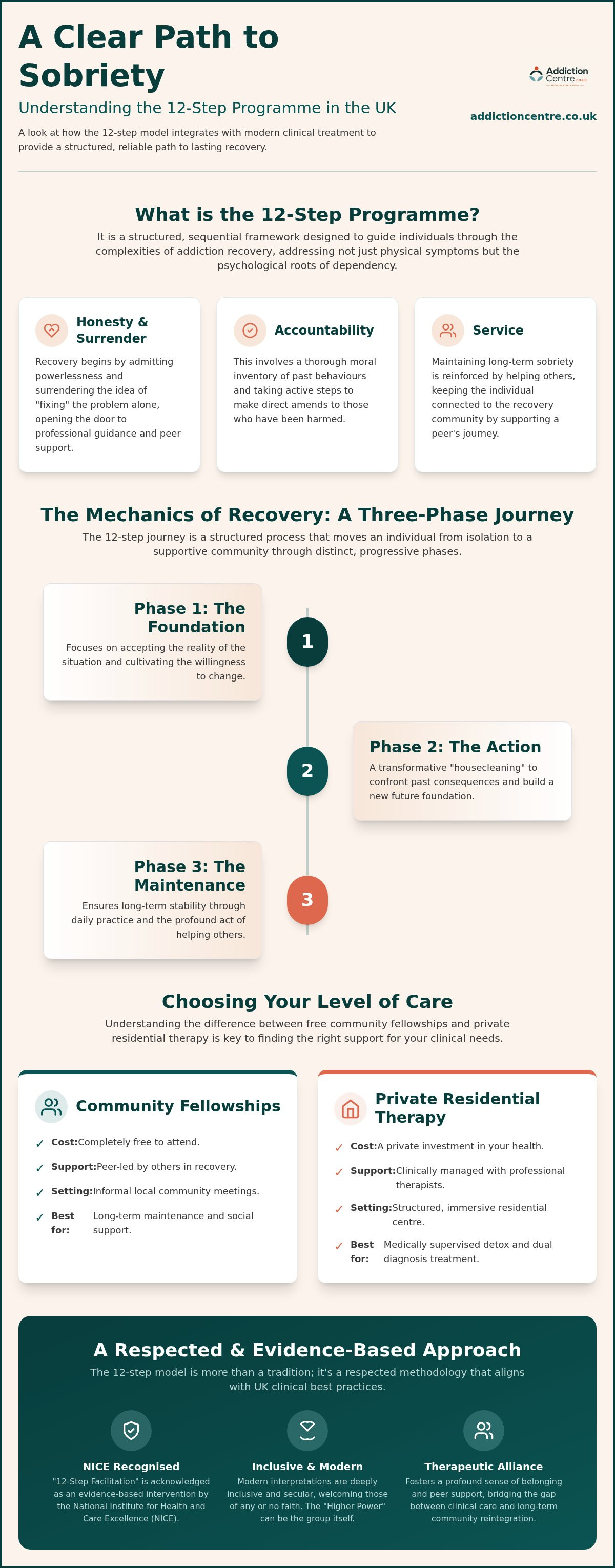
The 12 step programme UK is a structured, sequential framework designed to guide individuals through the complexities of addiction recovery. While it originated in the 1930s as a response to alcoholism, its modern application across the British healthcare system has expanded significantly. Today, this model serves as a foundational pillar for those struggling with drug dependency, gambling, and other compulsive behaviours. It isn't merely a set of rules; it's a holistic shift in how one interacts with the world and manages the internal triggers that lead to substance misuse.
At its heart, the Twelve-Step Program operates on a philosophy of radical honesty. This begins with admitting powerlessness over the addiction, a step that often feels counterintuitive or even frightening. However, in a clinical and peer-support context, this admission is the catalyst for seeking external help and eventually making amends to those affected by one's past actions. It transforms a solitary struggle into a shared journey of restoration, ensuring no one has to face the weight of recovery alone.
The Core Principles of the 12-Step Model
The success of the 12-step approach lies in its ability to address the psychological roots of addiction rather than just the physical symptoms. Three primary pillars sustain this growth:
- Honesty and surrender: Recovery cannot begin whilst denial remains. By surrendering the idea that they can "fix" the problem using the same thinking that created it, individuals open themselves to professional guidance and peer support.
- Accountability: This involves taking a thorough moral inventory. It's a process of looking inward to understand past behaviours and then taking active steps to make direct amends to those harmed, provided doing so doesn't cause further pain.
- Service: Maintaining long-term sobriety is often tied to the act of helping others. This principle ensures that the individual remains connected to the recovery community, reinforcing their own progress by supporting a peer's journey.
Why the Programme Remains a UK Standard
In the British healthcare landscape, the 12-step model is more than just a tradition. It's a respected methodology that aligns with clinical best practices. The National Institute for Health and Care Excellence (NICE) recognises "12-Step Facilitation" as an evidence-based intervention. This means that staff in UK treatment services are encouraged to provide information about these groups and help individuals make their first contact with local fellowships.
The longevity of the 12 step programme UK is largely due to the "therapeutic alliance" it fosters amongst its members. Unlike some clinical settings that might feel sterile or distant, the 12-step environment offers a sense of profound belonging. It bridges the gap between residential detox and long-term community reintegration, providing a reliable safety net that has supported thousands of people across the country for decades.
The Mechanics of Recovery: How the 12 Steps Work
The journey through a 12 step programme UK is often described as a movement from the shadows of isolation into the light of a supportive community. Addiction thrives in secrecy. By fostering connection, the 12-step framework disrupts the cycle of loneliness that so often fuels substance misuse. This process is generally divided into three distinct phases. The Foundation phase focuses on accepting the reality of the situation and finding the willingness to change. The Action phase is particularly transformative, involving a deep "housecleaning" where you confront the consequences of your past whilst building a new foundation for the future. Finally, the Maintenance phase ensures long-term stability through daily practice and the act of helping others.
Central to this journey is the role of the Sponsor. In the UK fellowship community, a sponsor is a peer who has successfully navigated the steps and offers one-to-one guidance. They act as a steady guide, providing a safe space to discuss challenges without fear of judgement. If you feel ready to take this step but don't know where to start, seeking a recovery consultation can help you find a community that aligns with your specific needs.
Modern Interpretations of a Higher Power
Many people in the UK feel hesitant about the 12 steps because of the mention of "God" in the original literature. It's vital to understand that modern interpretations are deeply inclusive and secular. You don't need religious faith to find success in this model. Many members use the acronym G.O.D. to mean "Group Of Drunks" or "Good Orderly Direction." The core idea is simply acknowledging that you cannot do this entirely alone and that there's immense strength in the collective experience of the group.
The 12 Steps as Cognitive Behavioural Change
From a clinical perspective, the 12 steps share significant common ground with Cognitive Behavioural Therapy (CBT). Both approaches focus on identifying harmful thought patterns and replacing them with healthier coping mechanisms. A comprehensive Cochrane Review on 12-step programs highlights how this structured support can be as effective as other clinical interventions. Step 4 serves as a structured method for identifying specific triggers and behavioural patterns that have previously led to relapse. By reframing addiction as a manageable health condition rather than a moral failing, the programme provides a sense of dignity that is often lost during active use. This shift is essential for long-term emotional sobriety.
Fellowship Meetings vs. Residential 12-Step Therapy
Choosing between a community meeting and a residential facility is a pivotal decision in your recovery journey. While both rely on the core principles of the 12 step programme UK, they serve very different functions depending on your current needs. Community fellowships like Alcoholics Anonymous (AA) or Narcotics Anonymous (NA) are peer-led, cost-free groups that provide lifelong support. In contrast, residential therapy is a clinical intervention designed for those who require a higher level of supervision and medical support. Understanding this distinction helps you choose the path that best supports your long-term health.
For many, the recovery journey begins with a residential alcohol detox UK. This clinical phase is essential because it addresses the physical withdrawal symptoms under medical supervision before the psychological work of the 12 steps can truly begin. Once you are physically stable, many UK rehabs utilise "12-Step Facilitation" as their primary therapeutic model. This approach bridges the gap between clinical treatment and the long-term support found in the community, ensuring that the transition from a medical environment to everyday life is as smooth as possible.
With an estimated 750,000 people in the UK addicted to alcohol and 400,000 addicted to illegal drugs as of 2026, the demand for structured support is significant. A residential environment offers the safety and focus needed to complete the early, often difficult steps without the distractions or triggers of everyday life. This structured setting allows you to immerse yourself fully in the recovery process amongst a community of peers who share similar goals.
The Role of Private 12-Step Rehab Centres
A typical 28-day stay in a private facility allows for an intensive focus on the first three steps: admission, hope, and surrender. By combining 12-step work with medical detox and one-to-one counselling, these centres provide a "jump-start" to the programme. This immersive experience helps you build a solid foundation in a matter of weeks, which might otherwise take months to achieve through weekly meetings alone. It provides a sanctuary where you can begin the deep work of recovery with professional guidance on hand at all times.
Community Fellowships: AA and NA in the UK
Once you leave a clinical setting, community fellowships become your primary safety net. These meetings are incredibly accessible, with thousands held weekly across the UK in town halls, community centres, and online. Because they are run on voluntary contributions, they offer a cost-free, lifelong aftercare solution. Whether you are dealing with alcohol, drugs, or gambling, there is a specific group tailored to your experience. Finding a meeting that suits your specific addiction type is often the key to maintaining the progress you have made during residential care.
How to Start Your 12-Step Journey in the UK
Starting the 12 step programme UK doesn't have to be a journey you take in the dark. It begins with a single, courageous step towards clarity. Whilst many people are tempted to jump straight into a meeting, the most sustainable path often starts with a professional clinical assessment. This ensures that your physical and psychological needs are prioritised from the outset. If you're unsure about what to expect, you might consider attending an "open" meeting first. These are available to anyone interested in the programme, including family members, and allow you to observe the process without the pressure of active participation.
Once you've observed how the fellowship operates, you can decide whether you're ready for "closed" meetings, which are reserved specifically for those who have a desire to stop using substances. This gradual entry helps lower the anxiety often associated with starting recovery. It allows you to build a sense of trust in the collective experience of the group before you begin the deeper work of the steps.
Step-by-Step Entry into the Programme
To begin effectively, it's helpful to follow a logical progression that matches the intensity of your needs. You don't have to figure this out alone. The following steps provide a reliable roadmap:
- Professional Assessment: Speak to a GP or a specialist referral service to understand the severity of your addiction.
- Consultation: Engaging in expert recovery consultations can provide the necessary insight to determine if you require community support or residential care.
- Clinical Detox: If you're struggling with physical dependency, you may need a residential drug detox UK to manage withdrawal safely before starting therapeutic work.
- Finding a Sponsor: Once you're stable, connect with a sponsor or therapist who can guide you through the foundational work of Step 1.
Finding 12-Step Aligned Support Nationally
Finding the right support for the 12 step programme UK requires a targeted approach. You can use a dedicated addiction treatment directory to filter for clinics that specifically utilise 12-step facilitation alongside medical care. It's also useful to understand how this model differs from non-12-step alternatives like SMART Recovery, which focuses more on secular self-empowerment and cognitive tools. Both are valid, but they offer different atmospheres for healing.
Don't forget that addiction affects the whole family. Accessing family support groups like Al-Anon or Nar-Anon can provide your loved ones with the space they need to heal. If you're ready to take the first step toward a new life, you can contact us for a recovery consultation today to find a facility that aligns with your specific journey.
Finding the Right 12-Step Aligned Treatment Facility
Finding the right facility for a 12 step programme UK can feel like a daunting task when you're already in a state of crisis. The UK rehab market is vast, and whilst many centres claim to offer the best care, the depth of 12-step facilitation varies significantly. Addiction Centre acts as a steady guide, helping you navigate these options with clarity and professional insight. We focus on matching you with a facility that doesn't just mention the steps but integrates them deeply into their clinical culture and daily routine.
It's equally important to consider whether you require dual diagnosis treatment UK. Addiction rarely exists in a vacuum; it's often intertwined with depression, anxiety, or trauma. A facility that addresses both the substance use and the underlying mental health condition provides a much stronger foundation for the 12-step work to take hold. This integrated approach ensures that you aren't just treating the symptoms, but are working toward holistic restoration of your well-being.
When evaluating a potential centre, look for a high rating from the Care Quality Commission (CQC), the independent regulator of health and social care in England. Beyond this, you should ask about the specific expertise of the staff in 12-step facilitation and the robustness of their aftercare programmes. Recovery is a lifelong commitment, and the support you receive after leaving a residential setting is just as vital as the treatment you receive inside. There's no "one size fits all" approach, so your choice should reflect your personal history and clinical needs.
The Value of Impartial Referral Services
Searching for the "best rehab clinics UK" often leads to a confusing array of advertisements and conflicting information. This is where the value of an impartial referral service becomes clear. Referral services provide a confidential bridge to recognised providers, ensuring you aren't making a life-altering decision based on marketing alone. Professional consultations allow you to be matched with a clinical team that understands your specific background, removing the stress of trial and error during a time when you need certainty.
Next Steps: From Consultation to Recovery
When you reach out for guidance, you can expect a methodical and patient conversation that prioritises your dignity. We'll help you understand the transition from clinical detox to long-term 12-step maintenance, ensuring you feel prepared for every stage of the process. This journey is deeply personal, and whilst the path may be challenging, you don't have to walk it alone. Sobriety is entirely possible with the right structure and a dedicated support network behind you. You've already taken a significant step by seeking information; now, let us help you find the professional environment where your recovery can truly flourish.
Your Path to a Renewed Life
The journey toward sobriety is rarely a straight line, but it's a path you don't have to walk alone. By understanding how a 12 step programme UK integrates clinical detox with lifelong fellowship support, you've already taken a vital step toward clarity. We've explored the essential difference between community meetings and residential therapy, and how professional assessments ensure your recovery is built on a safe, medical foundation. This structured approach replaces the chaos of addiction with a methodical, supportive framework for lasting change.
Finding the right environment for this transformation is essential. As a confidential UK-wide referral service, we're here to bridge the gap between your current struggle and a network of CQC-recognised treatment facilities. Our team provides expert guidance on residential detox and rehab, ensuring you're matched with a clinical team that respects your dignity and individual needs. If you're ready to move toward health and restoration, please Speak with a Recovery Consultant Today. Your future isn't defined by your past; with the right support, restoration is within your reach.
Frequently Asked Questions
Is the 12-step programme a religious organisation?
The 12-step programme is not a religious organisation, but rather a spiritual framework that welcomes people of all faiths and none. In the UK, modern groups are highly inclusive and secular-friendly, often using the concept of a "Higher Power" to refer to the collective strength of the group or a personal sense of direction. You don't need to subscribe to any specific theology to benefit from the programme's structure and peer support.
How much does it cost to join a 12-step programme in the UK?
Attending community fellowship meetings like AA or NA is entirely free of charge, as these groups are self-supporting through voluntary member contributions. However, if you choose a 12 step programme UK within a private residential rehab, there will be associated costs for clinical care and accommodation. These fees vary depending on the facility's location and the level of medical support provided. Referral services can help you understand these options based on your budget.
Can I use the 12 steps if I am also receiving medical treatment for addiction?
Yes, the 12 steps are frequently used alongside medical treatments such as clinical detox or psychiatric care. The National Institute for Health and Care Excellence (NICE) recommends 12-Step Facilitation as a psychosocial intervention that complements medical recovery. This dual approach ensures your physical health is managed by clinicians whilst your emotional needs are supported by the 12-step framework. It creates a comprehensive safety net that addresses both the body and the mind.
What is the difference between AA and NA in the UK?
The primary difference between Alcoholics Anonymous (AA) and Narcotics Anonymous (NA) in the UK is the specific substance of focus. AA meetings are dedicated to those struggling with alcohol addiction, whilst NA is for individuals dealing with any mind-altering drugs. Both fellowships follow the same 12-step principles and offer a similar atmosphere of peer support, allowing you to choose the group that best reflects your personal experience and specific recovery needs.
Do I have to speak at a 12-step meeting?
You are never required to speak or share your story during a 12-step meeting if you don't feel comfortable doing so. Many people attend "open" meetings simply to listen and observe the process. If it's your turn to speak and you prefer to remain silent, it's perfectly acceptable to say "I'll pass" or "I'm just here to listen." Your privacy and pace are always respected by the group members.
Is the 12-step programme effective for drug addiction as well as alcohol?
The 12-step model is highly effective for drug addiction and is the foundational framework for Narcotics Anonymous (NA) and Cocaine Anonymous (CA) across the UK. Whilst it began with alcohol recovery, the principles of surrender and accountability are universal. Many 12 step programme UK providers in residential settings use this model to treat poly-substance misuse, helping individuals address the underlying behaviours that drive all types of chemical dependency.
What happens if I relapse while working the 12 steps?
If you relapse, you are encouraged to return to the programme immediately without fear of judgement or shame. Relapse is viewed as a signal that the recovery plan needs adjustment rather than a total failure of the individual. The fellowship provides a safe space to discuss what happened and what triggers were missed. This allows you to refine your approach and strengthen your commitment to sobriety with renewed insight and group support.
How do I find a 12-step rehab centre that accepts private insurance?
To find a facility that accepts private insurance, you should consult an addiction treatment directory or a professional referral service. Many private UK providers like Bupa, AXA Health, and Aviva cover 12-step aligned residential rehab, though the level of coverage depends on your specific policy. A recovery consultant can help you verify your insurance details and match you with a CQC-recognised centre that fits your clinical requirements and personal preferences.


