
What if the clinic closest to your doorstep is actually the furthest from the clinical expertise your recovery requires? When you're facing the overwhelming urgency of addiction, it's natural to feel paralysed by the sheer volume of choices and the fear of selecting an unregulated or ineffective facility. You need a solution that feels safe and certain, yet the pressure to act quickly often leads to further confusion amongst the variety of treatment types available today.
By using a professional UK addiction clinic finder, you can move beyond basic geographic searches to discover a path tailored to your unique clinical and emotional needs. This article provides the clarity you've been seeking, offering a structured way to navigate the UK’s complex treatment landscape with confidence. We’ll examine the essential Care Quality Commission standards that ensure safety, the practical differences between private and NHS care in 2026, and how a personalised recommendation can bridge the gap between a state of crisis and a sustainable, healthy recovery.
Key Takeaways
- Understand how a professional UK addiction clinic finder acts as an impartial triage service to match your specific clinical needs with the right facility.
- Learn how to assess whether a medically supervised residential detox is a clinical necessity based on your substance use history and duration.
- Discover the practical differences between immediate private residential rehab and community-based NHS services to make an informed decision for your circumstances.
- Identify critical quality indicators, such as CQC ratings and on-site medical staffing, that distinguish high-quality treatment centres from unregulated options.
- Explore how a personalised referral process considers both your mental health and physical addiction for a truly holistic path to recovery.
Understanding the Role of a UK Addiction Clinic Finder
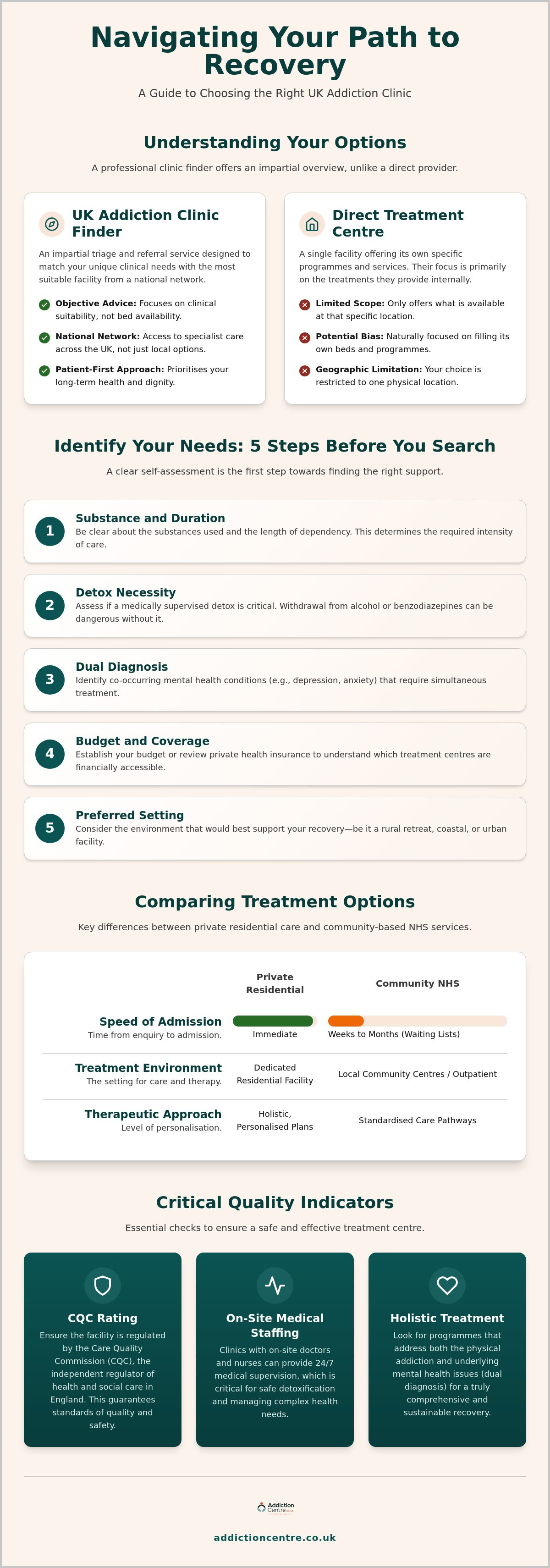
When you or a loved one reaches a point of crisis, the sheer volume of information regarding addiction treatment methods can feel overwhelming. A UK addiction clinic finder serves as a professional triage and referral service, designed to act as a bridge between your current state of uncertainty and a structured recovery environment. Unlike a direct provider, which is a single facility offering its own specific programmes, a clinic finder is an impartial resource. It doesn't sell you a specific bed; instead, it assesses your unique clinical and emotional requirements to identify which facility amongst a national network is best equipped to support your restoration.
This distinction is vital. Whilst a single clinic may offer excellent care, its primary focus is naturally on its own internal services. A professional directory provides a broader, more objective view of the UK’s treatment landscape. It ensures you aren't limited by what one provider can offer, but are instead matched with a centre that specialises in your specific challenges, whether that involves complex dual-diagnosis needs or a requirement for a specific type of residential detox. Having a steady guide during this time provides a sense of calm when everything else feels chaotic.
Why Impartial Advice Matters in Recovery
Choosing a path to sobriety is one of the most significant decisions you'll ever make. In the early stages of recovery, "decision paralysis" is a common obstacle, often fuelled by the fear of choosing an ineffective or unregulated facility. Impartial advice removes this burden by filtering out the noise of direct-to-clinic marketing. By focusing on clinical outcomes and facility specialisms rather than sales targets, a referral service ensures that your placement is based on suitability rather than just bed availability. This patient-first approach prioritises your dignity and long-term health above all else.
The Benefits of a National Treatment Network
Sometimes, the best facility for your specific needs isn't the one closest to your home. In fact, many individuals find that a change in environment is a key component of their success. Utilising a comprehensive addiction treatment directory allows you to compare national standards across different regions, ensuring you access specialist care that might be unavailable locally. This national reach also increases the likelihood of finding immediate availability for urgent requirements, such as a medically supervised residential detox. Having access to a vetted network means you can trust the quality of care, regardless of where in the country the clinic is located. It’s about finding the right fit, not just the nearest one.
Identifying Your Clinical Requirements Before Searching
Before you begin your search with a UK addiction clinic finder, it’s essential to pause and assess your specific clinical landscape. Finding the right treatment isn't just about locating a bed; it’s about identifying the precise level of medical and psychological support your situation demands. According to UK drug and alcohol treatment data, the complexity of cases entering the system is rising, which makes a thorough pre-search assessment more critical than ever. Start by clearly identifying the substances involved and the duration of the addiction, as these factors directly influence the intensity of care required.
You should consider these five vital steps to narrow your search effectively:
- Step 1: Substance and Duration. Be honest about what you're using and for how long. Long-term dependency typically requires a more intensive therapeutic approach than a recent relapse.
- Step 2: Detox Necessity. Determine if a medically supervised detox is a clinical necessity. For certain substances like alcohol or benzodiazepines, attempting to stop without medical intervention can be physically dangerous.
- Step 3: Dual Diagnosis. Identify if there are co-occurring mental health conditions like depression, anxiety, or PTSD that need simultaneous treatment.
- Step 4: Budget and Coverage. Establish a realistic budget or check your private health insurance parameters to see which centres are accessible to you.
- Step 5: Preferred Setting. Consider whether a rural retreat, a coastal sanctuary, or an urban facility would best support your emotional well-being.
Taking the time to define these parameters ensures that when you use a UK addiction clinic finder, the results are meaningful and clinically safe. If you feel overwhelmed by these questions, you can speak with a recovery consultant to help clarify your needs before making a final decision.
The Significance of Dual Diagnosis Care
Treating addiction in isolation often leads to a higher risk of relapse if the underlying emotional triggers aren't addressed. This is why dual diagnosis treatment UK is considered the gold standard of care. When researching clinics, ask specifically about their psychiatric and psychological staffing. Ensure they have on-site doctors or clinical psychologists who can manage medication and provide evidence-based therapies for mental health alongside addiction recovery. A holistic approach prioritises the dignity of the whole person, not just the symptoms of substance use.
Residential vs. Outpatient: Which Level of Care?
Residential rehab offers a safe, immersive environment that removes you from daily triggers and provides 24-hour support. It’s often the best choice for those with severe dependencies or unstable home environments. Conversely, outpatient care allows you to maintain professional or family commitments whilst receiving structured therapy. The right choice depends on your safety needs and the intensity of support required. Recovery doesn't end when primary treatment finishes; robust aftercare is essential for preventing relapse amongst those transitioning back into their daily lives.
Comparing Treatment Options: Private, NHS, and Charity
Choosing between private, public, or charitable care is often the most significant decision you'll face after identifying your clinical needs. Each pathway offers a different balance of speed, intensity, and cost. In a climate where 329,646 adults were in contact with drug and alcohol services between 2024 and 2025, the demand for support has never been higher. Utilising a professional UK addiction clinic finder helps you cut through the noise of these competing options, ensuring you select a route that aligns with both your recovery goals and your practical circumstances.
Private residential rehab is often the preferred choice for those requiring immediate intervention. It offers a level of bespoke care that is difficult to replicate in community settings, providing a sanctuary away from the triggers of daily life. For many, the decision comes down to the necessity of a structured, safe environment where medical and therapeutic support is available 24 hours a day. If you're concerned about the financial implications of this route, it's helpful to review a detailed guide on how to pay for rehab UK to understand the various funding and insurance options available.
Private Rehab: Speed and Clinical Specialisation
The primary advantage of private care is the speed of admission. When a person is ready to accept help, the window of opportunity is often small. Private facilities can typically facilitate admission within 24 to 48 hours, providing immediate 24/7 medical supervision. This is particularly vital for those requiring a residential alcohol detox UK, where withdrawal symptoms must be managed by clinical professionals to ensure safety. These centres also offer highly specialised programmes for prescription drug dependencies and behavioural addictions, which may not receive the same level of focus in general public services.
NHS and Community Support Limitations
The National Health Service remains a cornerstone of NHS addiction support, but it operates under significant pressure. Public treatment is usually community-based, meaning you remain at home whilst attending appointments. Whilst this works for some, the "triage" system means that residential placements are extremely limited and often involve long waiting lists. Many families find that the urgency of their situation doesn't allow for these delays, leading them to use a UK addiction clinic finder to identify private alternatives that can offer immediate safety. Charity-funded options do exist, though they often focus on specific demographics or require a demonstrated commitment to long-term community recovery before a bed is granted.
Key Quality Indicators to Look for in a UK Treatment Centre
Identifying a facility through a UK addiction clinic finder is a vital first step, but evaluating the clinical depth of that facility is what ensures your long-term safety. In England, the Care Quality Commission (CQC) acts as the independent regulator, assessing services against five key standards: safety, effectiveness, care, responsiveness, and leadership. An "Outstanding" rating signifies a centre that exceeds basic compliance, whilst a "Good" rating indicates the service meets all legal requirements and provides effective care. You should always prioritise providers that are transparent about their most recent inspection reports and current regulatory standing.
Clinical excellence is also reflected in the staffing structure. High-quality centres maintain low staff-to-patient ratios to ensure you receive personalised attention rather than becoming just another number. The presence of on-site medical doctors is non-negotiable for those undergoing complex withdrawal, as it ensures immediate intervention if complications arise. Beyond the initial residential stay, a structured aftercare programme of at least 12 months is the gold standard for preventing relapse. Evidence-based therapies like Cognitive Behavioural Therapy (CBT) should form the foundation of your treatment, though many successful clinics integrate 12-step models or person-centred counselling to provide a well-rounded therapeutic experience.
Clinical Governance and Safety Standards
Safe recovery requires more than just a comfortable bed; it demands rigorous clinical governance. Look for facilities that hold ISO certifications or whose therapists are members of professional bodies like the British Association for Counselling and Psychotherapy (BACP). These credentials indicate a commitment to ethical standards and continuous improvement. For those struggling with substances like alcohol or benzodiazepines, a medically managed detox is a safety requirement. You can learn more about the specific protocols involved by reading our guide on residential drug detox UK.
Holistic and Supplementary Therapies
Modern recovery involves the restoration of the whole person. Leading UK clinics now integrate nutrition, exercise, and mindfulness to support physical and mental well-being. Family programmes are equally vital; involving your loved ones in the process statistically increases the chances of a successful long-term outcome. Finally, consider the physical environment. En-suite rooms, tranquil gardens, and gym facilities provide the dignity and comfort necessary to focus entirely on your health. To ensure the facility you choose meets these high clinical and environmental standards, contact our assessment team for a confidential consultation.
How Addiction Centre Simplifies Your Recovery Journey
Choosing a recovery path shouldn't be a solitary burden. We understand that the transition from acknowledging a problem to entering a treatment facility is often the most fragile period of recovery. At Addiction Centre, we function as more than just a UK addiction clinic finder; we act as a partner in your restoration. Our role is to bridge the gap between your current distress and the clinical expertise you require. We achieve this by maintaining a meticulously vetted national directory of recognised clinics, each categorised by their specific specialisms, CQC ratings, and therapeutic approaches. This ensures that when we make a personalised recommendation, it isn't based on a simple geographic match, but on a profound understanding of your clinical and emotional needs.
Your privacy is our absolute priority throughout this entire process. We operate with the highest standards of data protection, ensuring that your journey remains confidential from the very first interaction. By functioning as an impartial advisor rather than a direct provider, we offer a level of objectivity that is often missing when speaking directly to individual facilities. By utilising our UK addiction clinic finder, you gain access to a curated selection of centres that have already been screened for quality and safety. We don't just provide a list of names; we provide a clear, structured path forward that respects your dignity.
A Compassionate Triage Process
Our advisors are trained to listen to your story with the warmth of a dedicated counsellor and the precision of a clinical expert. This triage process is designed to be non-judgmental, providing a sense of calm in what is often a state of high stress or crisis. We look at the "best fit" amongst hundreds of UK options, considering factors such as dual-diagnosis capabilities, staff-to-patient ratios, and the necessity for immediate medical detox. For families who are feeling overwhelmed, we offer guidance on interventions and the practical logistics of admission, acting as a steady guide that walks alongside you from that first difficult conversation to the day of entry.
Taking the First Step Today
Recovery begins with a single, courageous action. Our online self-assessment tool is designed for simplicity, allowing you to begin the process in your own time and at your own pace without any pressure. Once you're ready, speaking with a recovery consultant provides the opportunity to delve deeper into your specific needs and concerns. They'll walk alongside you, answering questions about clinical standards, therapeutic models, and what to expect during your stay. You don't have to manage this complex transition alone. To begin your journey toward a healthier, more stable life, speak with a recovery consultant today.
Taking Your Next Step Toward Lasting Restoration
Finding the right path to recovery is a journey that requires both clinical precision and deep human compassion. You've learned that selecting a facility isn't just about location; it's about identifying a centre that meets high Care Quality Commission standards and offers specialist support for complex needs like dual diagnosis. By understanding the differences between private and public care, you can make a decision that aligns with your urgency and long-term health goals. A professional UK addiction clinic finder removes the burden of decision paralysis, allowing you to focus entirely on your physical and emotional well-being.
You don't have to navigate this transition alone. Our team provides confidential and impartial expert advice, connecting you with a national network of CQC-regulated clinics tailored to your specific requirements. Whether you need an immediate residential detox or integrated mental health support, a structured and safe environment is within reach. Find the right treatment centre for your needs today and begin the process of reclaiming your life. Your future of health and restoration is waiting, and we're here to guide you every step of the way.
Frequently Asked Questions
How do I find a reputable addiction clinic in the UK?
The most reliable way to find a reputable facility is to verify its registration with the Care Quality Commission (CQC) in England or the equivalent regulatory bodies in Scotland, Wales, and Northern Ireland. Using a professional UK addiction clinic finder allows you to filter results based on these official ratings and clinical governance standards. You should also look for clinics that are transparent about their medical staffing and therapeutic qualifications, ensuring they hold relevant professional memberships.
Is private rehab better than NHS addiction treatment?
The choice between private and NHS care depends entirely on your clinical urgency and the intensity of support required. Private rehab offers immediate admission and 24/7 medical supervision, which is often necessary for those requiring a safe, residential detox. Whilst NHS addiction support provides vital community services, it often involves longer waiting lists and a triage system that may not facilitate the rapid intervention needed during a state of crisis.
How much does private addiction treatment cost in the UK?
Costs for private treatment vary significantly depending on the duration of your stay, the level of medical care required, and the facility’s amenities. Factors that influence the final price include whether you need a medically supervised detox, the staff-to-patient ratio, and the inclusion of long-term aftercare programmes. Many individuals find that their private health insurance covers a portion of these costs, making residential care more accessible than they initially thought.
Can I find a clinic that treats both addiction and mental health?
Yes, many high-quality facilities specialise in dual diagnosis care, which addresses substance misuse and mental health conditions simultaneously. It's essential to select a clinic that employs on-site psychiatric staff and clinical psychologists capable of managing complex needs like depression, anxiety, or PTSD alongside the addiction. Treating both elements together is the gold standard for achieving a sustainable and healthy recovery.
What is the fastest way to get someone into rehab in the UK?
Utilising a UK addiction clinic finder to identify private residential facilities is typically the quickest route to admission. Whilst public health pathways can take weeks or months to navigate, private centres can often facilitate entry within 24 to 48 hours of an initial assessment. This speed is vital when a loved one is ready to accept help, as it ensures the window of opportunity for treatment isn't lost to administrative delays.
Is my search for an addiction clinic confidential?
Your privacy is an absolute priority during the search and referral process. Professional advisors operate under strict data protection regulations and ethical guidelines, ensuring that your personal information and the details of your situation remain entirely confidential. This non-judgmental environment is designed to provide a sense of calm, allowing you to explore your options with the dignity and safety you deserve.
How long does a typical stay in a UK residential clinic last?
Residential programmes are typically structured in blocks, with the most common durations being 7 to 10 days for a focused detox or 28 days for a comprehensive therapeutic programme. Some individuals may require longer stays of 60 to 90 days if their clinical needs are particularly complex. The length of your stay is determined by a professional assessment that considers the severity of the addiction and your emotional readiness for the next stage of recovery.
What happens if I or my loved one relapses after treatment?
Relapse is viewed by clinical professionals as a signal that the recovery plan needs adjustment rather than a failure of the individual. Most reputable clinics provide a robust aftercare safety net, including support groups and secondary therapy sessions, to help you navigate these challenges. If a relapse occurs, the priority is to re-engage with support services immediately to evaluate the triggers and reinforce the tools needed for long-term restoration.


