
With NHS waiting lists reaching 6.8 million people in 2026, your medical policy is no longer just a safety net; it's your fastest clinical pathway to recovery. Using private health insurance for rehab UK can often feel like trying to solve a complex puzzle while you're in the middle of a personal crisis. You might feel overwhelmed by terms like pre-authorisation or anxious that hidden costs will stall your progress. It's understandable to feel this way when you're already carrying the heavy weight of active addiction.
We're here to help you move from a state of uncertainty towards a clear, structured resolution. In this 2026 guide, you'll discover how to navigate the specific requirements of major providers to fund your recovery with minimal out-of-pocket expenses. We'll provide a roadmap for securing residential treatment at a recognised centre, explaining how to bypass insurance jargon and ensure a fast admission to a facility that prioritises your dignity and health.
Key Takeaways
- Most UK insurers recognise addiction as a medical condition, though your access to residential care depends on whether you have standard or comprehensive mental health cover.
- We provide a clear roadmap for using private health insurance for rehab UK, including the practical steps for obtaining the clinical assessments required to validate your claim.
- You'll learn how to identify potential out-of-pocket costs by reviewing your policy excess and the specific duration limits set by your provider for inpatient treatment.
- Discover the specific criteria and referral pathways used by major insurers like Bupa and AXA to ensure your admission to a specialist facility is handled smoothly.
- Learn how to use a professional treatment directory to filter for insurance-approved clinics, helping you find a high-quality centre that aligns with your specific policy requirements.
Does Private Health Insurance Cover Rehab in the UK?
The landscape of Private healthcare in the UK has undergone a significant transformation. Your policy likely views addiction as a treatable medical condition rather than a lifestyle choice. This shift means that using private health insurance for rehab UK is now a standard clinical pathway for those seeking to bypass the current NHS pressures. Most major insurers recognise that addiction requires professional intervention, but the depth of your cover usually depends on whether you hold a standard or comprehensive mental health policy.
Standard policies often focus on outpatient care, such as weekly therapy sessions or psychiatric consultations. However, for those struggling with dependency, insurers are increasingly prioritising residential treatment. They do this for clinical safety. A residential setting provides 24-hour medical supervision, which is essential during the detox phase to manage withdrawal symptoms safely. Many providers now offer "Direct Access" schemes. These allow you to speak with a mental health specialist without waiting weeks for a GP referral, effectively fast-tracking your entry into a recovery centre.
The Shift Towards Mental Health Parity in 2026
In 2026, UK regulations have matured to ensure that mental health is not treated as a secondary concern. Mental health parity in 2026 UK insurance law ensures that psychological conditions, including substance use disorders, receive the same level of funding and clinical priority as physical illnesses. This evolution is vital for chronic relapsing conditions. It means insurers are more likely to provide ongoing support rather than just a one-off intervention, recognising that long-term restoration requires a sustained approach.
Commonly Recognised Insurance Providers
Different providers have unique protocols for addiction treatment. Understanding these nuances helps you manage your expectations before starting the claims process. Most insurers require a clinical assessment to confirm that residential care is the most appropriate level of support for your specific needs.
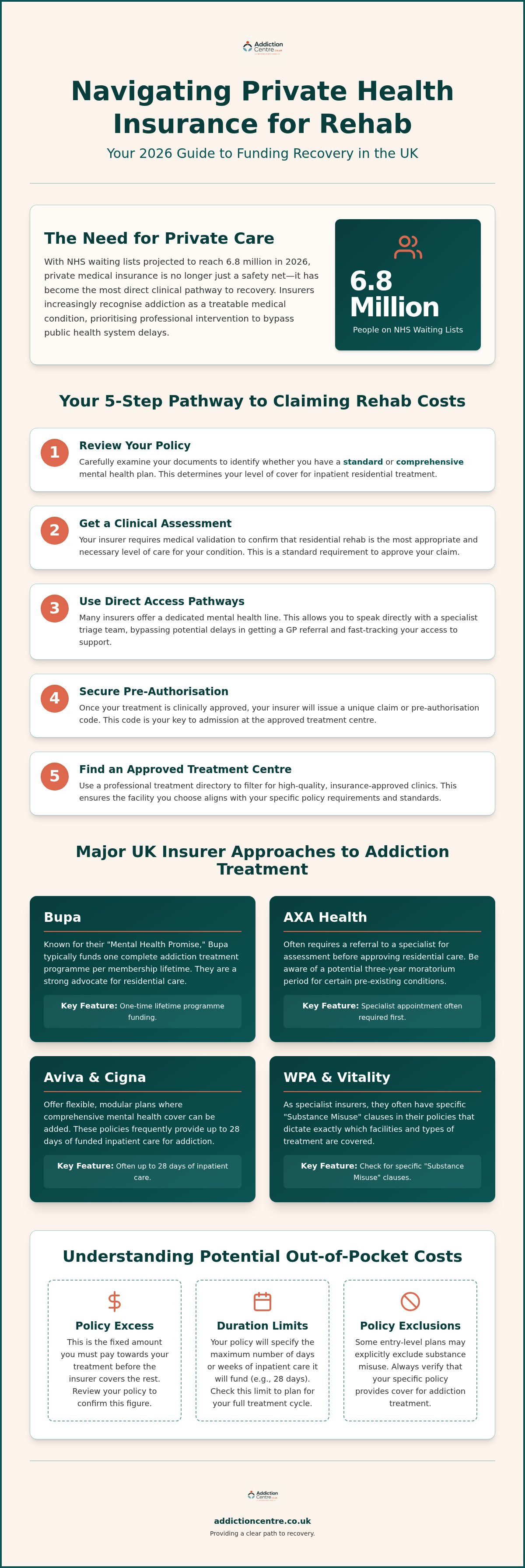
- Bupa: Known for their "Mental Health Promise," they typically fund one addiction treatment programme per membership lifetime.
- AXA Health: They often require a specialist appointment first and have a three-year moratorium period for certain conditions.
- Aviva and Cigna: These providers offer modular plans where mental health cover can be added, often providing up to 28 days of inpatient care.
- Specialist Insurers: Companies like WPA and Vitality Health often have specific "Substance Misuse" clauses that dictate exactly which facilities you can access.
It's vital to check your specific policy for these clauses. Some entry-level plans may exclude substance misuse entirely, whilst others might only cover it if the addiction is secondary to a primary mental health diagnosis like depression or anxiety. Checking these details early ensures you aren't met with unexpected hurdles during admission.
The Step-by-Step Process for Claiming Rehab Costs
Securing funding through private health insurance for rehab UK requires a methodical approach. It begins with a careful review of your policy documentation. You aren't just looking for the word addiction; you need to identify whether your cover is standard or comprehensive. Comprehensive plans usually offer more generous inpatient day limits, whilst standard plans might focus on outpatient therapy. Once you understand your limits, the next step is clinical validation. This process ensures that the treatment you receive is medically appropriate for your specific needs.
The journey from a policy review to an actual admission involves several moving parts. You must coordinate between your insurer, a clinical professional, and the treatment facility. This can feel daunting when you're already in a state of high stress. However, following a structured path can provide a sense of calm and clarity. Most insurers now use a pre-authorisation stage. This is where they issue a unique claim code once they've approved the clinical necessity of your treatment. This code acts as your digital key to admission.
Bypassing the GP: Direct Access Pathways
Many people assume a GP referral is the only way forward. In 2026, major insurers like Bupa and AXA offer Direct Access pathways. These dedicated mental health lines allow you to speak directly to a specialist triage team. This bypasses the local surgery entirely. It's often the fastest way to access rehab without waiting list UK. By using these lines, you can often secure a clinical referral in days rather than months, which is vital when you're in crisis.
The Psychiatric Assessment
Insurers require a psychiatric assessment to validate that residential care is medically necessary. This isn't a test you can fail; it's a professional evaluation of your physical and psychological needs. The psychiatrist will determine the appropriate length of your stay. For example, Bupa policies may fund up to 28, 45, or 90 days depending on the specific plan tiers. This assessment provides the insurer with the clinical evidence they need to issue your pre-authorisation. If you feel overwhelmed by the jargon, a recovery consultation can help you match your claim code with the right provider.
Once you have your pre-authorisation code, you must ensure your chosen facility is on your insurer's approved list. Not every private clinic accepts every insurance provider. Coordinating this early prevents delays and ensures that your admission is as smooth as possible. By following these steps, you move closer to a state of restoration with the confidence that your financial and clinical needs are fully aligned.
Understanding Coverage Limits and Out-of-Pocket Costs
When you consider the question of how much does rehab cost UK when using insurance, it's helpful to view your policy as a foundational support rather than a total exemption from payment. Most people using private health insurance for rehab UK will encounter some initial costs, primarily in the form of a policy excess. This is the fixed amount you agreed to pay towards any claim when you first took out your policy. Depending on your specific terms, this could range from £100 to £500. It's usually paid directly to the treatment centre at the start of your stay.
Your insurance is designed to cover the essential clinical components of your recovery. This includes your room, medical supervision, and structured therapy sessions. However, it rarely covers personal extras. You'll likely need to fund your own travel to the facility, laundry services, or any premium room upgrades that fall outside the insurer's standard provision. If your treatment needs exceed your annual inpatient limit, perhaps because you require a longer stay than your policy allows, you might also be responsible for the costs of those additional days.
Acute Detox vs. Long-term Rehabilitation
A common hurdle in the claims process is the distinction between a medical intervention and a therapeutic one. Some entry-level policies are restricted to "acute" care only. This means they might only fund a residential drug detox UK, which typically lasts between seven and ten days. Whilst this ensures you're physically safe during withdrawal, it creates a financial gap if you wish to stay for a full 28-day therapeutic programme. We recommend checking whether your policy includes "psychiatric inpatient cover" to ensure you have the funding for the vital psychological work that follows detox.
Co-payments and Top-up Fees
Even if your policy covers residential rehab, you might encounter what's known as a top-up fee. This happens when your chosen clinic charges more than your insurer’s "recognised rate" for a bed. A recognised rate is the maximum daily amount an insurer agrees to pay for a specific treatment type, which may be lower than the standard self-pay price charged by a private facility. To avoid these surprises, you can choose a clinic that fits strictly within your insurance "cap". If you've found a specific facility that you feel is the best fit for your restoration, you can often negotiate a co-payment plan to cover the difference between their fee and the insurer's contribution.
Major UK Insurers and Their Addiction Treatment Criteria
Each insurer operates with its own set of clinical criteria and referral pathways. Understanding these nuances helps you manage your expectations and streamlines the admission process. Bupa's "Mental Health Promise" is a standout feature in 2026. It ensures that addiction is treated with the same priority as any other medical condition, provided the issue isn't a pre-existing one. You can use their Direct Access service to speak with a specialist triage team almost immediately. This bypasses the traditional GP waiting list, offering a steady path toward a solution when you're in a state of high stress.
AXA Health takes a slightly different approach. They typically require an initial assessment with an AXA-approved psychiatrist before they authorise residential care. This ensures the treatment plan is clinically sound and appropriate for your specific needs. Meanwhile, providers like Aviva and Vitality often integrate their mental health support into wider wellness platforms. They focus on holistic restoration, though they still maintain strict clinical requirements for inpatient stays. For those on employer-provided group schemes, privacy is a common concern. It's reassuring to know that insurers maintain strict confidentiality; your HR department is usually only informed that a claim was made, not the specific clinical details of your recovery.
Using Family Policies for a Loved One
If you're seeking help for a partner or child, check the "Dependent" clause in your policy handbook. Most family policies allow you to extend your private health insurance for rehab UK to loved ones. However, you must navigate the privacy requirements carefully. Once a dependent turns 18, they have their own right to medical privacy. Even on a joint policy, the insurer may require their direct consent before sharing clinical updates with you. This ensures the dignity of the individual is maintained throughout the treatment journey.
Policy Exclusions: What Is Rarely Covered?
Pre-existing conditions remain the most frequent reason for a claim refusal. Insurers often distinguish between "acute" episodes, which are sudden and treatable, and "chronic" conditions, which require long-term management. If you're managing a dual diagnosis treatment UK, where addiction co-exists with another mental health disorder like depression or PTSD, it's vital to present the case as an integrated health need. Insurers are more likely to fund treatment when the addiction is shown to be inextricably linked to an underlying psychiatric condition. To find a facility that aligns with your specific insurer's criteria, you can browse our directory of recognised clinics to see which providers are currently accepted.
Finding an Approved Centre Through a Treatment Directory
Once you've secured your pre-authorisation code, the final challenge is selecting the right environment for your recovery. Using private health insurance for rehab UK gives you access to a wide range of facilities, but not every centre on an insurer's list will be the perfect clinical fit for your specific circumstances. This is where an independent directory becomes an essential tool. Instead of browsing a generic list of providers, you can filter for clinics that specialise in your primary dependency whilst also accepting your specific insurance policy.
The transition from a claim number to a residential bed requires careful coordination. You need to ensure the facility has the medical expertise to handle your detox and the therapeutic depth to support your long-term restoration. A recovery consultation can bridge this gap. It acts as a professional guide, helping you navigate the practicalities of admission, such as confirming bed availability and ensuring the clinic has received your clinical assessment details. This personalised support ensures that the momentum of your decision to seek help isn't lost to administrative hurdles.
Impartial Advice vs. Insurer "Preferred Lists"
Insurers often provide a "preferred list" of centres. These are facilities where the insurer has negotiated specific rates. Whilst these are convenient, the clinic that best suits your unique needs might be an independent provider that isn't at the top of their list. Using an addiction treatment directory allows you to compare facilities based on their clinical specialisms and Care Quality Commission (CQC) ratings. A high CQC rating provides an objective measure of safety and effectiveness. It ensures your insurance funds are being used in a facility that meets the highest standards of care, rather than just the one that is most cost-effective for the provider.
Starting Your Recovery Journey Today
There is a profound emotional benefit to having the financial and logistical aspects of your care handled professionally. It allows you to shift your focus away from insurance jargon and towards your personal health. At Addiction Centre, we assist in this referral process by connecting you with recognised clinics that align with your medical needs and policy limits. You don't have to walk this path alone. We're here to act as a steady bridge between your current state of stress and a structured, professional environment. If you're ready to take the final step, you can speak to an expert for a confidential recovery consultation today.
Your Path to Restoration Starts Here
The journey towards recovery often begins with a single, clear decision. By understanding how to use private health insurance for rehab UK, you've already taken the most important step in navigating the complexities of the healthcare system. You've learned that your policy is a powerful tool for bypassing lengthy waiting lists and that securing pre-authorisation is the key to unlocking immediate, high-quality care. Whether you're coordinating with Bupa, AXA, or a specialist provider, the focus remains on your clinical safety and long-term health.
Our team provides expert guidance from recovery consultants and access to a nationwide network of CQC-regulated clinics to ensure you find the right fit for your needs. This confidential and impartial referral service acts as your steady guide through every stage of the process. You don't have to carry the burden of insurance jargon or administrative hurdles alone. We're here to help you move from a state of confusion to a place of structured, professional support. Find an insurance-approved rehab centre in our UK directory and begin your journey towards health today. You're closer to a solution than you think.
Frequently Asked Questions
Does Bupa cover residential alcohol rehab in the UK?
Bupa typically covers residential alcohol rehab as part of their mental health provision. Most policies fund one addiction treatment programme per membership lifetime, provided the condition wasn't pre-existing when you joined. You'll need a clinical assessment to confirm that inpatient care is the most appropriate pathway for your recovery.
Can I use my employer-provided health insurance for addiction treatment?
Yes, employer-provided schemes often include comprehensive mental health support that extends to addiction treatment. These corporate policies frequently have fewer exclusions than personal plans. Your clinical details remain confidential, meaning your employer isn't informed of the specific nature of your treatment or the reasons for your absence.
How much does rehab cost UK if I pay with private health insurance?
When using private health insurance for rehab UK, your main financial responsibility is usually the policy excess. This fixed amount, often between £100 and £500, is paid at the start of your stay. Whilst the insurer covers clinical fees, you may need to fund personal extras like travel or premium room upgrades yourself.
Is medical detox covered by AXA or Aviva policies?
Both AXA and Aviva typically cover medical detox as an acute medical intervention. This phase of treatment ensures your physical safety during withdrawal under 24-hour supervision. It's often authorised as the initial stage of a longer residential programme, provided your policy includes psychiatric inpatient cover.
Will my insurance premiums go up if I claim for rehab?
Claiming for rehab usually doesn't lead to a direct premium increase on corporate schemes. For personal policies, you might lose a no-claims discount, but health insurance premiums are generally calculated based on age and regional trends rather than individual claims history. This provides a sense of security when seeking help.
Do I need a GP referral to use my private medical insurance for rehab?
You don't always need a GP referral if your insurer offers a Direct Access pathway. These schemes allow you to speak directly with a mental health specialist who can authorise your treatment. This is a vital option for those who want to avoid the wait for a standard GP appointment during a crisis.
What if my health insurance only covers outpatient treatment?
If your cover is limited to outpatient care, your insurance will fund therapy sessions and psychiatric consultations but not the residential bed. In this situation, you could use your insurance for the psychological support whilst self-funding the detox and accommodation costs. A recovery consultation can help you explore these hybrid funding options.
Are pre-existing addictions covered by private health insurance?
Pre-existing addictions are rarely covered by standard private health insurance for rehab UK policies. If you sought medical advice or treatment for the condition in the five years before your policy started, it's likely excluded under moratorium rules. However, some corporate "Medical History Disregarded" policies may still offer cover for these conditions.


